To manage mud around gates, feeders, and waterers, install proper drainage solutions like trenches or gravel-filled swales to divert water away from these areas. Elevate feeders and waterers to prevent water accumulation underneath, and use stable surfaces like gravel, crushed stone, or concrete mats for better footing. Regularly inspect and maintain drainage and surface conditions to keep mud at bay. Keep exploring for more effective tips to improve your farm’s mud control strategies.

Get garden gear delivered free with Prime
- Fast, free delivery on millions of items
- Prime Video, Amazon Music and more included
- Member-only deals all year
Key Takeaways
- Elevate feeders and waterers on platforms or pads to prevent water and mud accumulation.
- Use gravel, crushed stone, or rubber mats around gates, feeders, and waterers for stable footing and drainage.
- Install drainage solutions like trenches or French drains near high-traffic areas to redirect water away.
- Regularly inspect and maintain surface materials to ensure effective water runoff and prevent mud buildup.
- Create well-defined, sloped pathways to direct water away from key areas and reduce mud formation.

Managing mud around gates, feeders, and waterers is essential for maintaining a healthy, safe, and efficient farm or livestock area. Excess mud not only creates a messy environment but also increases the risk of injuries, hoof problems, and disease. To combat this, you need to focus on effective drainage solutions and choosing the right surface materials. Proper drainage prevents water from pooling and keeps the ground dry, while suitable surface materials provide a stable footing for animals and reduce mud formation.
Drainage solutions are your first line of defense. Installing trenches or French drains redirects excess water away from high-traffic areas. You can also consider adding gravel-filled swales or using perforated pipes beneath the surface to improve water runoff. These measures ensure that rain and runoff don’t linger around gates and feeders, which are particularly prone to becoming muddy due to frequent activity. When designing drainage systems, make sure they slope away from the area, ideally with a gentle grade to facilitate water flow without causing erosion. Regular maintenance of these systems is vital; clear out blockages and check for leaks or damage to keep water moving efficiently. Additionally, understanding the importance of drainage solutions is key to long-term mud management. Incorporating proper drainage can significantly decrease the amount of mud and improve overall farm hygiene. Implementing drainage maintenance practices is also crucial to keep the system functioning effectively over time. Furthermore, using appropriate surface materials can enhance the effectiveness of drainage by promoting quicker runoff and reducing mud buildup. Selecting surfaces that facilitate rapid drainage can also prevent water from pooling and creating muddy spots.
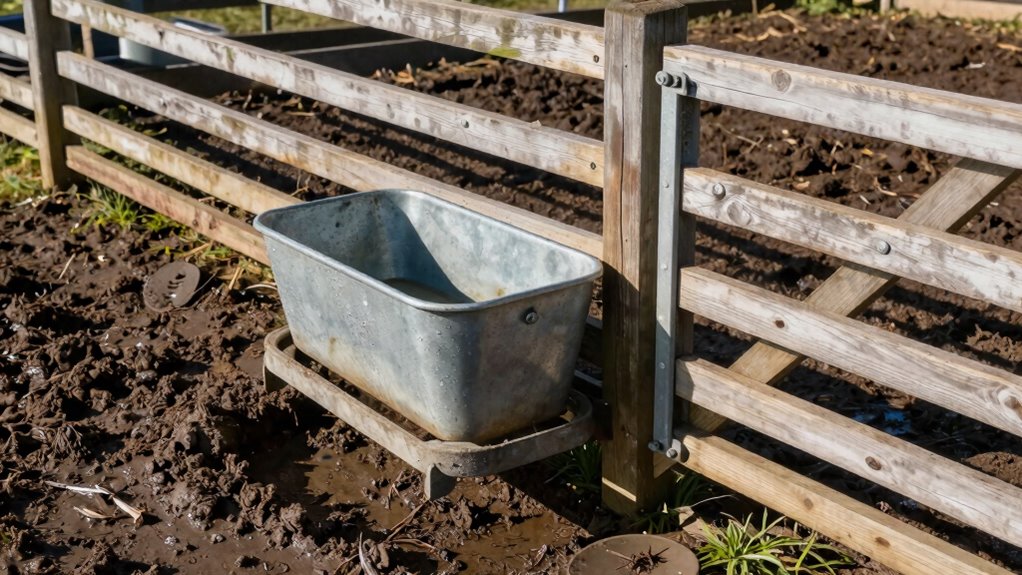
Surface materials play a key role in managing mud. You want to select materials that promote drainage while providing a firm, non-slip surface for your livestock. Gravel and crushed stone are popular choices because they allow water to drain quickly and are easy to replenish or level out over time. Geotextile fabrics beneath the gravel can prevent soil from mixing in, maintaining the integrity of the surface. For high-traffic areas, such as around gates and feeders, consider using rubber mats or concrete pads. These create stable footing and reduce mud buildup, especially during wet seasons. While concrete is durable, it can become slippery when wet, so adding textured surfaces or mats can improve traction.
Implementing a combination of effective drainage solutions and suitable surface materials creates a dry, safe environment for your animals. Consider elevating feeders and waterers slightly off the ground to prevent water from pooling underneath. Regularly inspecting and maintaining these areas helps catch problems early, preventing mud from becoming a bigger issue. By investing in proper drainage and surface choices, you’ll minimize mud, improve animal health, and make your farm more efficient overall. Ultimately, these strategies help you keep your livestock comfortable and your farm operations running smoothly, regardless of weather conditions. Proper drainage planning and surface selection are essential for long-term success in mud management.
As an affiliate, we earn on qualifying purchases.
Frequently Asked Questions
What Are the Best Materials for Preventing Mud Buildup?
The best materials to prevent mud buildup are gravel, crushed stone, and permeable pavers, which improve surface drainage. You should also install proper drainage systems, like French drains or sloped surfaces, to direct water away from problem areas. Using durable surface materials helps keep the area dry and stable, reducing mud. Regular maintenance and ensuring good drainage are key to minimizing mud around gates, feeders, and waterers.
How Often Should I Reapply Drainage Solutions?
You should reapply drainage solutions as needed to stay ahead of muddy messes. Regular drainage maintenance, especially after heavy rains, keeps soil stabilized and prevents water from pooling. Keep an eye on the area, and if you notice water seeping or muddy patches reappearing, it’s time for a touch-up. Consistent care guarantees your gates, feeders, and waterers stay dry, saving you from muddy headaches down the line.
Can Livestock Damage Mud Management Systems?
Yes, livestock behavior can damage mud management systems. Animals often scratch or rub against fencing, causing wear or breaks, which reduces fencing durability and allows more mud to accumulate. Additionally, their constant movement around gates and waterers can erode or displace drainage solutions. To prevent damage, reinforce fencing, use durable materials, and monitor livestock activity regularly, ensuring your mud management system stays effective and intact.
Are There Eco-Friendly Options for Mud Control?
Yes, eco-friendly options exist to combat mud, and they might surprise you. Imagine natural alternatives like wood chips, straw, or shredded leaves forming a barrier that absorbs moisture and reduces mud. Biodegradable options such as compost or eco-friendly mats break down safely, blending into the environment. These solutions keep your livestock comfortable while protecting the land, offering sustainable ways to manage mud without harmful chemicals or plastics.
How Do Weather Conditions Affect Mud Management Strategies?
Weather conditions greatly influence your mud management strategies. Heavy rain worsens soil erosion and creates drainage issues, making mud control tougher. During wet periods, you should focus on improving drainage and stabilizing soil with eco-friendly materials like straw or gravel. Conversely, dry weather helps reduce mud buildup, but you still need to monitor for erosion risks. Adjust your approach seasonally to keep gates, feeders, and waterers functional and clean.
Conclusion
By keeping the mud at bay, you create a cleaner, safer space for your animals, where the ground feels firm beneath their hooves and the air is clearer. Imagine a sturdy gate that opens smoothly, a feeder free of muddy mess, and waterers sparkling clean—each step you take helps prevent slipping and disease. With a little effort, your farm transforms into a well-maintained haven, where your animals can thrive in comfort and health.
Halloween Picks
halloween
As an affiliate, we earn on qualifying purchases.