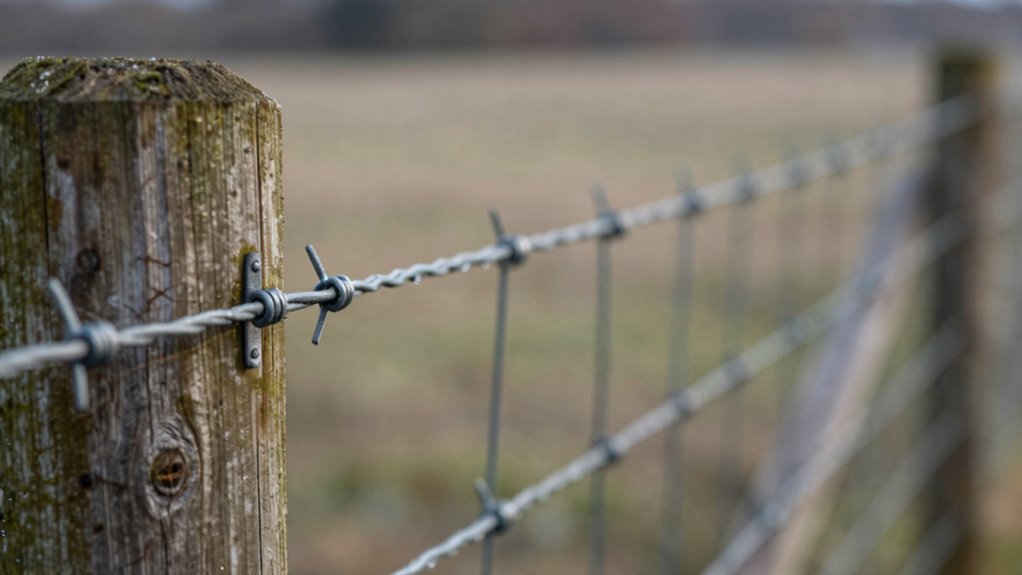

To check pressure points on your fence before animals find weaknesses, walk along the entire fence line and look for sagging sections or leaning posts. Test wire tension to guarantee it’s taut but not overly tight, and tighten as needed. Inspect posts for signs of leaning, rot, or damage, especially at pressure points. Clear debris or vegetation that may add pressure. Regularly monitoring these areas helps prevent issues; keep exploring to learn more tips.

Get garden gear delivered free — and shop member deals
- Fast, free delivery on millions of items
- Access to Prime Big Deal Days deals on October 6–7
- Prime Video, Amazon Music and more included
Key Takeaways
- Inspect the fence line for sagging, leaning posts, or loose wires indicating pressure points.
- Check for areas with environmental stress, like soil movement or weather effects, that may weaken the fence.
- Use a tension meter or manual gauge to ensure wires are taut but not overly tight at pressure points.
- Reinforce or replace posts showing signs of leaning, rot, or structural damage near pressure zones.
- Regularly test electric fence voltage and ensure proper tension to prevent animals from discovering weak spots.
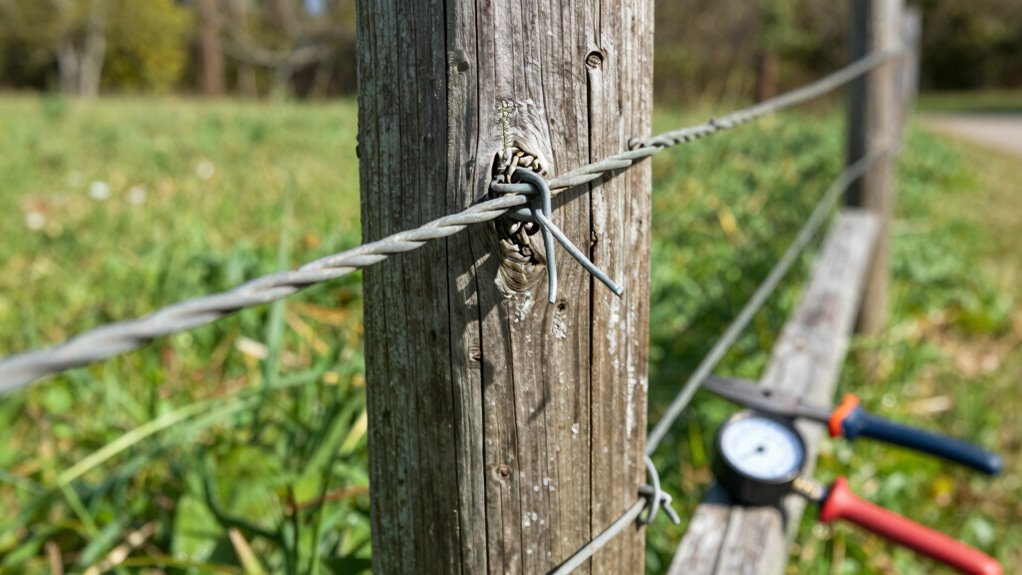
When it comes to maintaining a sturdy fence, regularly checking its pressure points is essential to prevent sagging, leaning, or failure. This is especially true if you have an electric fence, where ensuring proper tension not only keeps the fence secure but also promotes electric fence safety. Over time, environmental factors like wind, rain, or soil movement can loosen or shift fence posts and wires, so routine inspection is a must. You should start by visually inspecting the entire fence line for any sagging sections or leaning posts. If a wire appears loose or slack, it’s a clear sign that the tension needs adjustment. Remember, a tight, well-maintained wire ensures proper electric fence safety by delivering consistent shocks to intruders or animals trying to escape.
Regularly inspect your fence for sagging or leaning posts to maintain strength and safety.
Next, focus on the tension of the fence wires. Use a tension meter if you have one; if not, gently push or pull the wires to gauge their firmness. Wires should feel taut but not overly strained, which can cause damage or breakage. When wires are too loose, animals may find weak points and escape, and the electric current might not distribute evenly—undermining your fence maintenance tips and compromising electric fence safety. Tightening loose wires involves loosening or repositioning the fence posts and reattaching the wires securely. Be cautious not to over-tighten, as this can stress the posts or wires and reduce the lifespan of your fence. Regularly checking fence tension helps maintain the overall integrity of your fencing system. Incorporating routine inspections into your maintenance schedule ensures ongoing fence stability and safety. Additionally, understanding the impact of environmental factors on fence pressure points can help you anticipate and prevent issues before they arise. Being aware of potential soil movement can also guide you in planning preventative measures to keep your fencing stable over time.
Pay special attention to fence posts, especially at pressure points where tension is concentrated. Posts that lean or wobble need reinforcement or replacement. Proper post spacing and sturdy anchoring are critical for maintaining consistent pressure throughout your fencing system. As you check these points, keep an eye out for corrosion, rot, or damage that could weaken the overall structure. Regularly maintaining your fence also means clearing debris, plants, or snow that might exert additional pressure on certain sections. Additionally, fence pressure points can be affected by environmental conditions like soil movement or weather, which further emphasizes the importance of regular inspections. Staying vigilant about these factors ensures your fence remains resilient against natural wear and tear. In some cases, consulting with fencing professionals can help identify hidden issues that may not be immediately visible.
If your fence incorporates an electric component, double-check all connections and grounding. Faulty or loose connections can be dangerous and compromise electric fence safety. Always turn off the energizer before making adjustments to avoid shocks. Regularly testing your electric fence with a fence tester ensures it’s working at the right voltage, providing a safe environment for your animals and peace of mind. Following these simple fence maintenance tips will help you catch issues early, keeping your fence strong, secure, and safe for everyone involved.
As an affiliate, we earn on qualifying purchases.
Frequently Asked Questions
What Tools Are Best for Measuring Fence Tension?
You should use a fence tension meter or a digital force gauge to measure fence tension accurately. These tools help guarantee proper electrical conductivity and prevent sagging, which can compromise fence material durability. When testing, focus on various points along your fence line, especially at stress points or corners. Regularly checking tension helps maintain ideal electrical flow and prolongs your fence’s lifespan, keeping your animals safe and secure.
How Often Should Fence Pressure Be Checked?
You should check your fence pressure regularly—ideally every few months—to guarantee peak fence maintenance and animal safety. Factors like weather, soil conditions, and animal activity can affect tension over time. Frequent inspections help identify loose or sagging areas early, preventing escapes or injuries. By maintaining consistent pressure checks, you keep your fence reliable, protecting your animals and extending its lifespan, ultimately promoting a safe and secure environment for everyone involved.
Can Weather Affect Fence Pressure Readings?
Weather impact can definitely sway your fence pressure readings. Imagine a gust of wind pulling on your fence, or a sudden rain softening the ground — these changes disturb pressure stability. Cold snaps cause materials to contract, while heat makes them expand. So, as weather shifts, your fence’s tension varies, making it essential to check pressure regularly. This guarantees your fence stays secure, no matter the weather’s mood swings.
What Signs Indicate a Fence Pressure Problem?
You’ll notice signs like animals pushing or leaning against the fence, gaps, or sagging areas that indicate a pressure problem. Wildlife intrusion can be easier if the fence isn’t maintaining consistent tension, often caused by poor fence material durability or weather damage. Regularly inspect for loose wires, broken posts, or sagging sections to catch issues early, preventing animals from breaching your perimeter and ensuring your fence remains effective.
Is It Necessary to Adjust Fence Tension Regularly?
Yes, you should adjust fence tension regularly to maintain effective containment. Fence material can loosen over time due to weather and wear, and animal behavior might cause additional stress on the fence. By routinely checking and tightening your fence, you prevent gaps or sagging that animals could exploit. Consistent maintenance guarantees your fence stays secure, reducing escapes and keeping your animals safe.
Conclusion
Regularly checking your fence pressure points is essential to keep your animals safe and secure. By maintaining proper tension, you prevent escapes and minimize damage. Did you know that fences with consistent pressure are 30% less likely to break or sag? So, make it a habit to inspect and adjust your fence regularly. Staying proactive guarantees your animals stay where they belong and saves you time and money in the long run.
Fall Picks
fall essentials
As an affiliate, we earn on qualifying purchases.