
TL;DR
A two-year trial in Idaho, backed by USDA Western SARE and conducted with the University of Wyoming, found cardboard-mulched beds had less weed coverage and some crops yielded up to 97% more. A Gardening Know How writer later reported a weed-light bed and her best-ever harvest, but her home result was not a controlled test and does not prove cardboard alone caused the outcome.
A two-year trial in Idaho found that cardboard mulch reduced weed coverage and was associated with yield increases of up to 97% for some vegetable crops, according to a Gardening Know How report. The article’s writer also reported a strong harvest from a home garden bed, but her experience was an informal comparison, not a controlled test showing cardboard alone caused the result.

Get garden gear delivered free with Prime
- Fast, free delivery on millions of items
- Prime Video, Amazon Music and more included
- Member-only deals all year
The trial was a collaboration between the University of Wyoming and the U.S. Department of Agriculture’s Western SARE program, which supports sustainable agriculture research and education. It took place at Sweet Hollow Farm in Victor, Idaho, over two years and included a variety of crops grown across different seasons. The article says the site is in USDA Zone 4, where the growing season is short.
In the reported comparison, beds mulched with cardboard had 15% weed coverage, compared with 45% in beds managed with traditional tilling. Some crops in the trial produced yields as much as 97% higher with cardboard mulch, though the report does not identify those crops or provide the full trial data, methods or statistical analysis.
The Gardening Know How writer says she laid cardboard over a vegetable bed in summer and assessed it in October. She reported that the bed was 95% free of weeds and produced her best-ever harvest. She described the observation as “very unscientific,” noting that her moisture comparison with a nearby unmulched bed was not a formal experiment.
Less Weeding, Potentially Higher Yields
The reported findings matter to gardeners looking for a low-cost way to limit weeds and retain soil moisture without relying on repeated tilling. If the trial results apply in other settings, cardboard mulch could reduce time spent weeding while supporting vegetable production. The reported 15% versus 45% weed coverage offers a concrete comparison for the trial site, while the yield figure signals possible crop benefits.
Those figures should not be treated as a guaranteed result for every garden. Harvests depend on crop variety, soil, weather, planting practices and other factors. The writer’s 95% weed-free estimate and strong harvest are personal observations, and cannot establish how much of the outcome came from the cardboard or other conditions.
Popular right now

Shark Pet Cordless Stick Vacuum, Up to 40-Minute Runtime, Lightweight, IX141

Apple AirPods Pro 3 Wireless Earbuds with Active Noise Cancellation

Bose QuietComfort Ultra Headphones (2nd Gen), Wireless Noise-Cancelling Over-Ear Headphones with Spatial Audio, Driftwood Sand
As an affiliate, we earn on qualifying purchases.
How the Cardboard Trial Worked
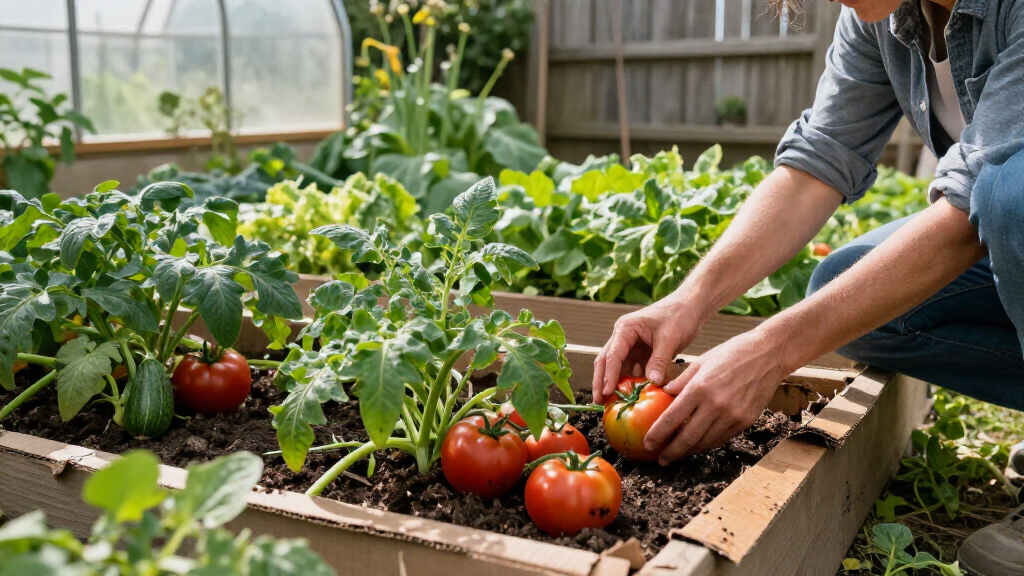
The trial used cardboard as a barrier beneath a 4-to-6-inch layer of compost, according to the report. Planting holes were made through the layers for seedlings. This setup let roots grow through the cardboard toward the soil while also accessing the compost above it. The trial used two layers of corrugated cardboard to obstruct persistent weeds such as field bindweed.
The writer used one layer at home and said it also suppressed weeds. Her article recommends corrugated, uncoated brown cardboard, removing tape and labels, and overlapping sheets by at least six inches where persistent weeds are a concern. These are practical recommendations in the report; they should not be mistaken for proof that every cardboard product or garden setup will perform the same way.
““My veg bed is not only 95% free of weeds but I’ve enjoyed my best-ever harvest.””
— Gardening Know How writer
Limits of the Reported Results
The article does not provide the trial’s full data, crop-by-crop yields, sample sizes, or statistical methods, so readers cannot independently judge how the up-to-97% increase was calculated or how consistently it appeared. It also does not specify which crops achieved that maximum, or whether the difference held across all seasons and growing conditions.
The home-garden account has additional limits: the writer compared her mulched bed with a nearby unmulched bed informally, and no controlled measurements or full harvest totals are reported. It is not clear how much compost, soil condition, weather or other care contributed to her result. The report also does not establish how the method performs over longer periods or in different climates.
What Gardeners Can Check Before Planting
The Gardening Know How report presents cardboard mulch as a method gardeners can try, while the trial figures remain specific to the reported research setting. People considering it can follow the article’s material-selection advice: choose uncoated brown corrugated cardboard, remove labels and tape, and cover the sheets with compost. For persistent weeds, the report says to overlap the cardboard edges by at least six inches.
Further trial details would help readers assess which crops benefited and whether the reported yield gains are repeatable. Until those details are available, gardeners should treat the figures as promising reported results, not a forecast for their own beds, and compare their own outcomes over time.
Key Questions
What did the Idaho trial find?
The report says cardboard-mulched beds had 15% weed coverage, compared with 45% in traditionally tilled beds. Some crops yielded up to 97% more, though the article does not name those crops or include the full trial data.
Does the writer’s harvest prove cardboard caused the higher yield?
No. The writer reported a strong harvest and fewer weeds, but described her comparison as informal. Her account does not isolate cardboard from other factors or prove it caused the harvest result.
What type of cardboard does the report recommend?
It recommends corrugated, uncoated brown cardboard. The writer advises removing all labels and tape, and says sheets should overlap by at least six inches when persistent weeds are present.
How was cardboard used in the trial?
According to the report, researchers placed two layers of corrugated cardboard beneath a 4-to-6-inch layer of compost, then made planting holes for seedlings.
Source: rss