During power outages in rural areas, you can safely cook with solar ovens and portable stoves. Solar ovens harness sunlight for quiet, eco-friendly daytime cooking, reducing your reliance on fuels. Portable stoves, powered by propane, butane, or wood, give you flexibility to cook anytime, outdoors or indoors. Combining these methods guarantees you can prepare nutritious meals safely across weather conditions. Explore how these options can improve your emergency preparedness and keep your family comfortable during extended outages.

Get garden gear delivered free with Prime
- Fast, free delivery on millions of items
- Prime Video, Amazon Music and more included
- Member-only deals all year
Key Takeaways
- Use solar ovens for quiet, eco-friendly daytime cooking without fuel or electricity.
- Keep portable stoves with fuel or wood ready for versatile outdoor cooking during outages.
- Practice using both solar and portable cooking methods to ensure preparedness and safety.
- Incorporate renewable energy tools to reduce environmental impact and enhance resilience.
- Stock supplies and plan for diverse weather conditions to maintain nutrition and comfort safely.
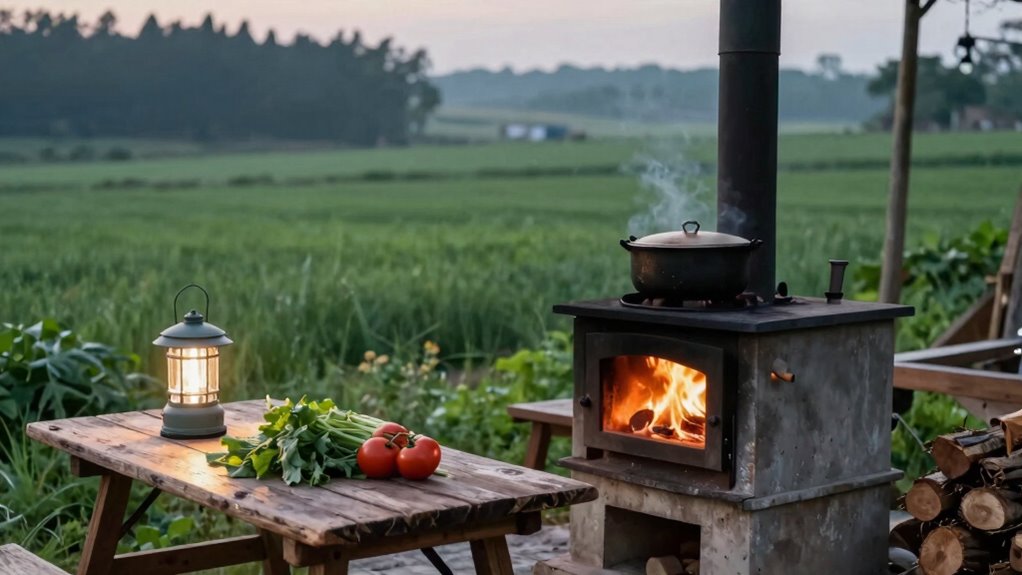
When the power grid fails, you need reliable ways to prepare meals without electricity. Living in a rural area often means you’re more prepared for outages, but it also requires having the right tools on hand. Solar ovens and portable stoves are excellent options for cooking safely and efficiently when grid power isn’t available. Solar ovens harness the sun’s energy, allowing you to cook food without fuel or electricity. They’re simple to use—just set the oven in direct sunlight, place your food inside, and let the sun do the work. This method is quiet, safe, and environmentally friendly, making it a great choice for rural settings where power outages might last days or even weeks.
Solar ovens offer quiet, eco-friendly cooking during outages by harnessing sunlight, ideal for rural, prolonged power failures.
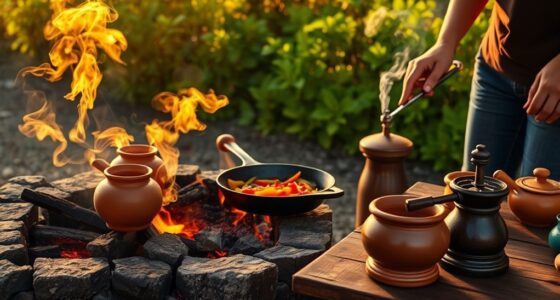
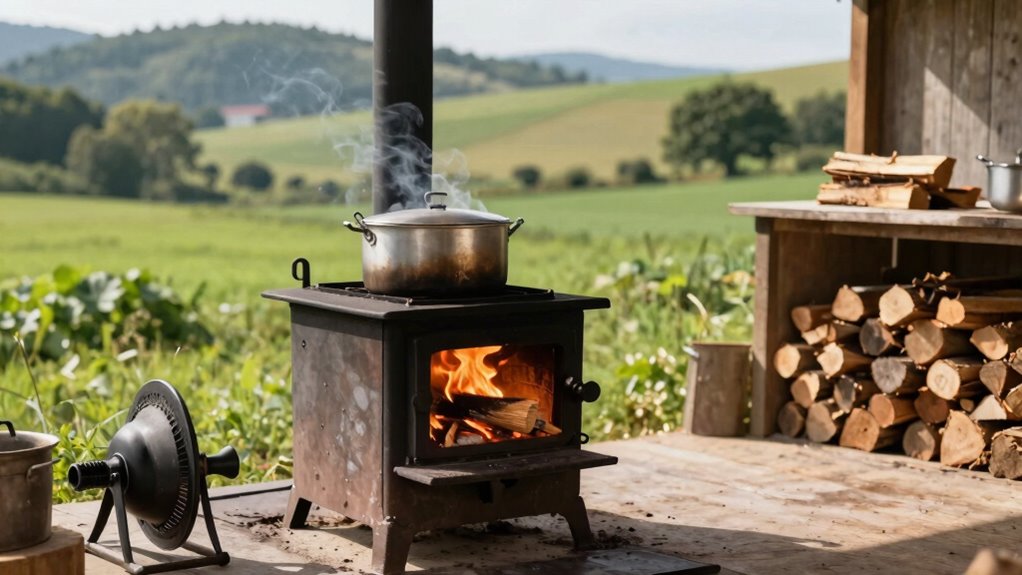
Portable stoves provide another dependable solution. They run on fuels like propane, butane, or even wood, giving you flexibility in how you cook. These stoves are lightweight, easy to store, and quick to set up, making them ideal for emergency situations. Whether you’re boiling water, frying, or simmering, a portable stove gives you control over your cooking process without relying on the electrical grid. Plus, they’re great for outdoor use, so you can cook meals outside if you prefer. Keep a supply of fuel canisters or wood nearby to ensure you’re always ready when needed.
Both solar ovens and portable stoves help you maintain a level of independence during power outages. Solar ovens are especially useful for daytime cooking and don’t require any fuel beyond sunlight, which makes them economical and sustainable. They also reduce the need for carrying extra supplies, since they rely solely on the sun. Incorporating renewable energy sources into your emergency plan can further enhance your preparedness and reduce reliance on fossil fuels. Conversely, portable stoves are more versatile for different times of day and weather conditions. They’re quick to ignite, heat up fast, and can handle a variety of cooking tasks, giving you more options in tight situations.
In a rural setting, having a combination of these tools offers peace of mind. Solar ovens provide a safe, quiet way to cook during the day, while portable stoves ensure you can prepare hot meals anytime, regardless of sunlight. Stock up on the necessary supplies—fuel, cookware, and spare parts—and practice using your equipment before an emergency strikes. That way, you’ll be comfortable and confident when the power goes out, knowing you can still prepare nutritious meals safely. Preparing with solar ovens and portable stoves makes a tangible difference, giving you practical solutions to stay self-sufficient and safe during grid outages. Incorporating reliable cooking methods like these can significantly enhance your emergency preparedness and overall safety. Additionally, understanding alternative energy sources can further improve your readiness for extended outages. Being familiar with biodiversity-friendly solutions can also help you choose eco-conscious options that support local ecosystems and reduce environmental impact.
solar oven for emergency cooking
As an affiliate, we earn on qualifying purchases.
As an affiliate, we earn on qualifying purchases.
Frequently Asked Questions
What Safety Precautions Should I Follow When Using Alternative Cooking Methods?
When using alternative cooking methods, always wear safety gear like gloves and eye protection to prevent burns or injuries. Keep a fire extinguisher nearby and stay alert to fire hazards, especially with open flames or hot surfaces. Make certain your cooking area is well-ventilated, and never leave your stove unattended. Follow manufacturer instructions carefully, and guarantee your equipment is in good condition to prevent accidents.
How Long Can Emergency Food Supplies Last Without Refrigeration?
Like a time capsule sealed tight, your emergency food supplies can last from a few days to several weeks without refrigeration, depending on the food type and storage techniques. Proper food preservation and storage techniques—such as using cool, dark places and airtight containers—extend shelf life. High-acid canned foods last longer, while dried or dehydrated foods stay safe for months or even years. Regularly check supplies and rotate stock for safety.
Are Solar-Powered Cookers Effective in Cloudy or Rainy Weather?
Solar-powered cookers can be effective even in cloudy or rainy weather, but their solar efficiency drops considerably. Weather resilience varies; some models are designed to perform better in less-than-ideal conditions by trapping more heat. While you might need extra time to cook or heat food, these cookers remain useful in rural emergencies, offering a safer, eco-friendly option when grid power isn’t available.
What Are the Best Fuel Sources for Portable Outdoor Stoves?
Imagine the perfect meal in the wild—what fuels your stove? The best fuel sources for portable outdoor stoves include alternative fuel types like propane, isobutane, and wood. These options offer quick ignition and reliable heat. Just remember, portable stove safety is essential; always operate in well-ventilated areas, keep fuels away from flames, and follow manufacturer instructions. With the right fuel, you’re ready for any outdoor adventure.
How Do I Maintain and Store Emergency Cooking Equipment Properly?
To maintain and store your emergency cooking equipment properly, prioritize cooking safety by cleaning equipment after each use to prevent residue buildup. Regularly inspect for damage, rust, or leaks, and replace faulty parts immediately. Store your gear in a dry, cool place away from direct sunlight, guaranteeing fuel sources are sealed tightly. Proper equipment maintenance and storage help prolong lifespan and ensure safety during emergencies, making your preparedness more effective.
Conclusion
When the power’s out, remember that necessity is the mother of invention. You can still cook safely and effectively with alternative methods like solar ovens, camping stoves, or fire pits. Preparing ahead and knowing these options keeps you resilient and ready for emergencies. As the saying goes, “A stitch in time saves nine”—being proactive now guarantees you’re not caught off guard later. Stay prepared, stay safe, and keep cooking no matter what.
Halloween Picks
halloween
As an affiliate, we earn on qualifying purchases.