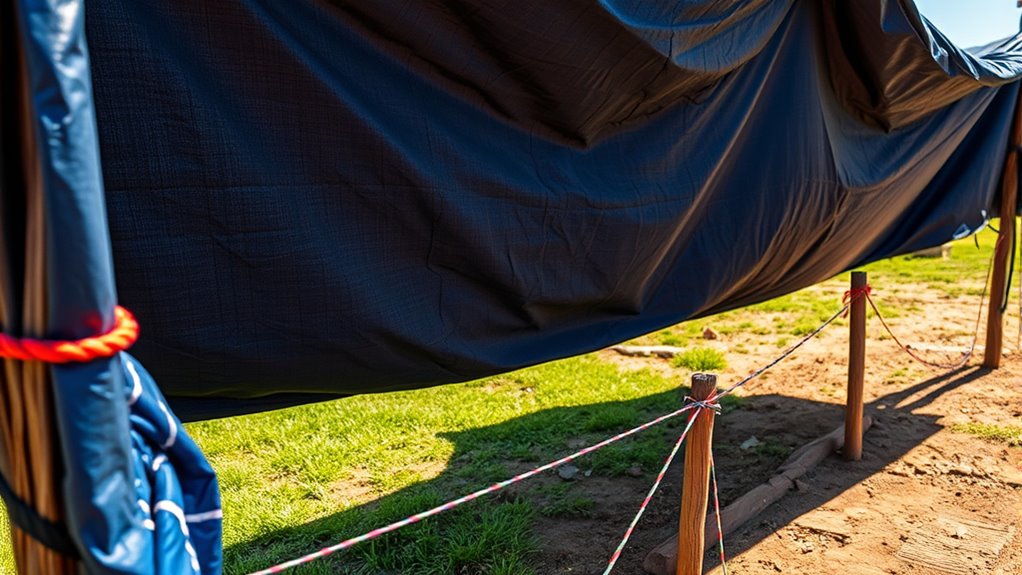

To build a shade structure with tarp and stakes, start by selecting weather-resistant fabrics like tarp or heavy-duty canvas and choose a suitable site with natural wind and sun considerations. Drive evenly spaced stakes at about a 45-degree angle into the ground and securely attach the tarp edges using reinforced points or grommets. Tension the tarp properly to prevent sagging and damage, adjusting as needed. Exploring further will help you master setup tips and maintenance for a durable, well-anchored shelter.
Key Takeaways
- Select durable, weather-resistant tarp material and proper stakes for secure anchoring.
- Plan site orientation to maximize shade and reduce wind impact based on environmental analysis.
- Properly stake the tarp at a 45-degree angle and evenly tension edges for stability and wind resistance.
- Attach the tarp securely using reinforced grommets, ties, or tensioning devices to prevent sagging and flapping.
- Regularly check and re-tension the structure, and disassemble carefully for storage and longevity.
Gathering Materials and Planning Your Shade Structure
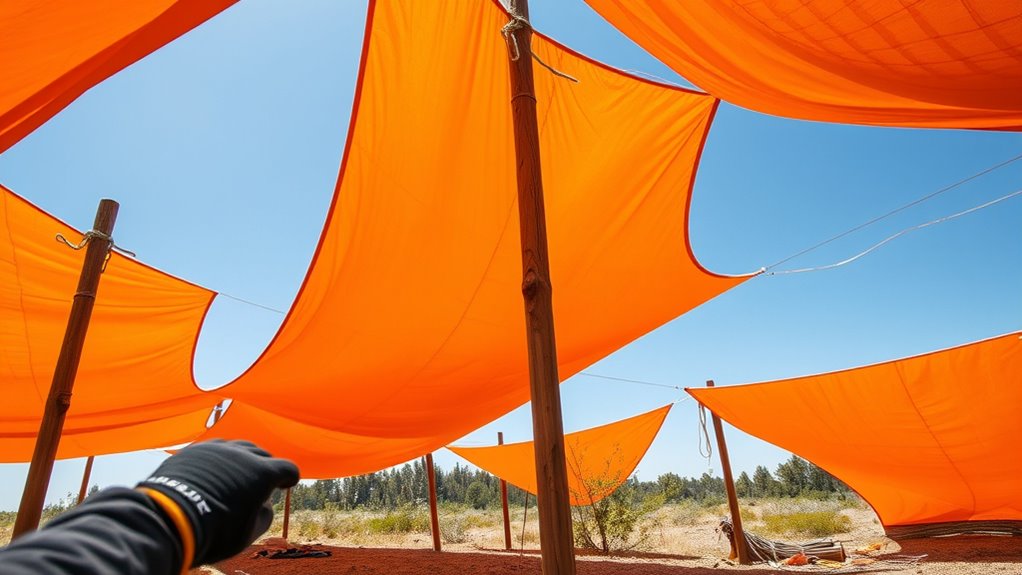
Before you begin building your shade structure, it is vital to gather all necessary materials and create a detailed plan. Start with material selection—choose sturdy, weather-resistant fabrics like tarp or heavy-duty canvas, and make sure you have strong stakes to anchor your structure. Consider the size and weight of your tarp to determine the number of stakes needed for stability. Proper stake placement is essential; plan where you’ll insert stakes to maximize tension and support. Mark these spots on the ground beforehand, maintaining even spacing to prevent sagging. Having all materials ready and a clear plan will streamline your project and help you build a durable, effective shade structure. Careful preparation is your first step toward a successful setup. Additionally, understanding the importance of stake placement can significantly enhance the stability of your structure. Incorporating natural elements like plants or water features can further improve the comfort and aesthetics of your shade area. Paying attention to proper tensioning techniques ensures your tarp remains taut and secure over time.
Choosing the Right Location and Orientation
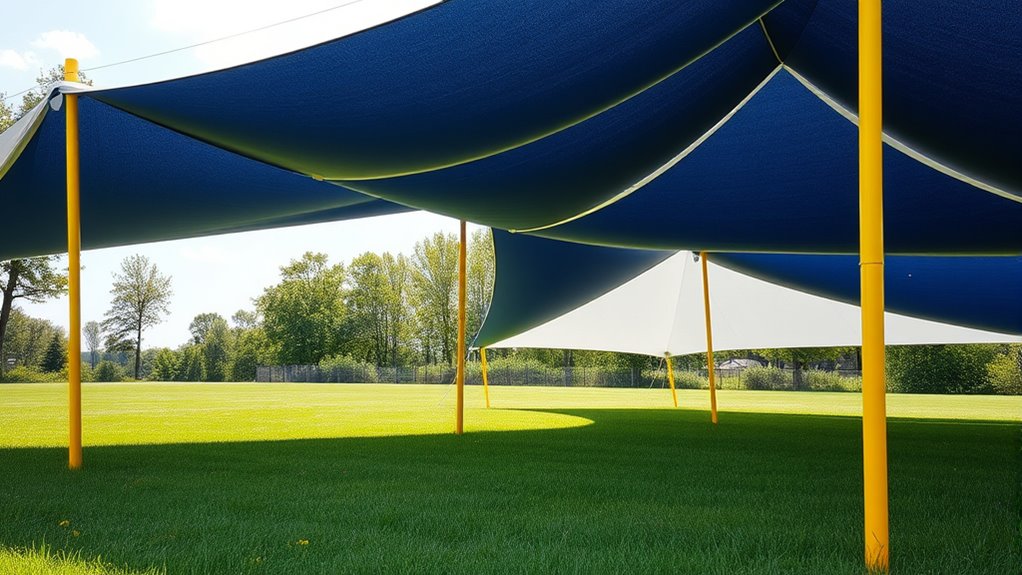
To maximize your shade, you need to consider the sun’s path throughout the day and seasons. Pay attention to wind directions to ensure your structure provides effective shelter without being exposed or unstable. Properly choosing the location and orientation makes your shade structure more comfortable and durable. Additionally, selecting a site with good natural materials can enhance the sturdiness and aesthetic appeal of your setup. Ensuring your structure complies with local fire safety regulations can further protect your investment and surroundings. Understanding optimal angles for pinball machines can also be useful if you plan to include recreational features or outdoor game setups adjacent to your shaded area. Incorporating cost and budgeting considerations, such as land and material expenses, can help you plan more effectively for your project. Incorporating crochet styles for locs into your outdoor space can add a unique decorative element if desired.
Sun Path Analysis
Have you ever considered how the sun’s path influences the placement of your shade structure? Solar elevation changes throughout the day and year, affecting shadow length and coverage. During midday, the sun reaches its highest point, creating shorter shadows, so placing your structure to block these intense rays provides maximum shade. In the morning and late afternoon, shadows grow longer, so positioning your shade to optimize coverage during those times is key. By analyzing the sun’s path, you’ll identify the best location and orientation to minimize direct sunlight and maximize comfort. Remember, understanding how solar elevation affects shadow length helps you design a shade structure that offers reliable protection, no matter the time of day or season. Considering solar angles can also help you select materials and positioning that improve overall comfort and energy efficiency, especially when accounting for seasonal variations and shade coverage. Additionally, incorporating local climate patterns into your planning can further enhance the effectiveness of your shade structure throughout the year.
Wind Direction Considerations
Wind direction plays a crucial role in determining the ideal location and orientation of your shade structure. Understanding wind influence helps you position your tarp for maximum stability and effectiveness. If prevailing winds come from one direction, orient your structure so that the wind hits it at an angle that reduces pressure and prevents damage. During storm preparedness, consider how strong gusts could impact your setup; placing stakes on the windward side and anchoring securely minimizes risk. Additionally, aligning the structure to block wind flow can create a more comfortable shaded area while protecting it from high winds. Properly accounting for wind direction ensures your shade structure remains stable, durable, and functional, even during adverse weather conditions. Investing in high-quality equipment such as durable stakes and anchors can further enhance stability against wind forces. Being aware of support hours and their traits can also inspire how you design and personalize your outdoor space for comfort and style. Recognizing wind pressure and its effects helps you choose the best materials and anchoring methods to withstand gusts and storms. Moreover, considering remote work flexibility can allow you to adapt your outdoor space for various weather conditions and personal needs.
Setting Up Anchor Points and Installing Stakes
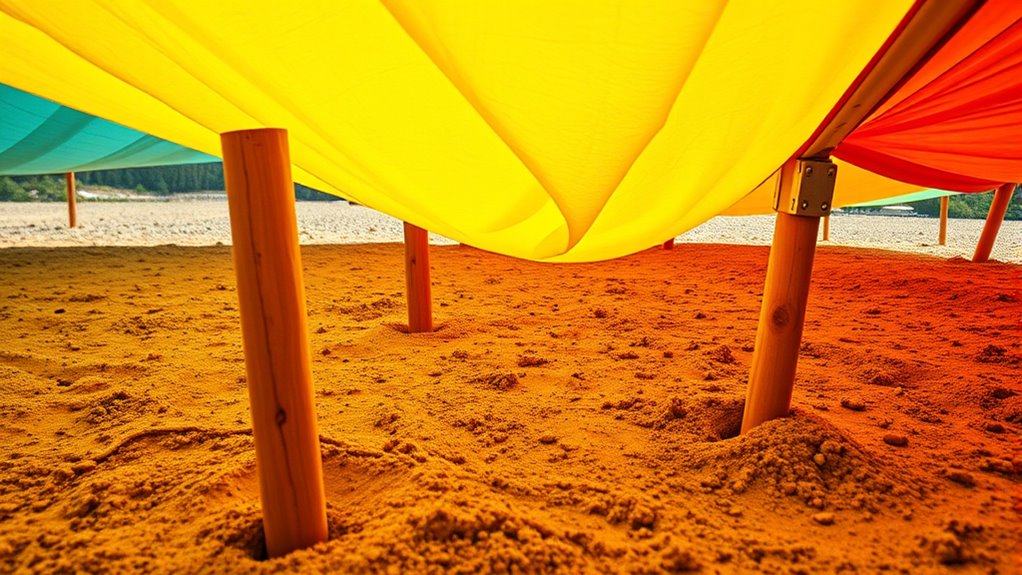
Start by identifying the locations where you’ll set up your anchor points, ensuring they are solid and well-positioned to support your shade structure. Proper stake placement is vital for stability, so choose spots with firm soil and minimal risk of shifting. When selecting your anchor points, consider the overall shape and tension needed for your tarp. Make sure the stakes are driven straight into the ground at a consistent angle, usually about 45 degrees, to maximize holding power. Keep in mind that the stakes should be spaced evenly and aligned with your tarp’s edges for even tension. Well-planned stake placement and careful anchor point selection will ensure your shade structure stays secure even in windy conditions. Additionally, understanding the importance of staking techniques in relationship dynamics can help you recognize the value of honesty and integrity in building trust and stability. Properly installed stakes and anchor points contribute to a stable structure, much like trust builds a strong foundation in relationships. To enhance durability, consider selecting stakes made from weather-resistant materials that withstand outdoor elements and prolong the lifespan of your shade setup.
Attaching the Tarp to the Stakes

To attach the tarp securely, you need to properly fasten its edges to the stakes. Using grommets or reinforced points guarantees the tarp stays in place under tension. Keep tension even and make adjustments as needed to prevent sagging or flapping.
Secure Tarp Edges Properly
Ensuring the tarp edges are securely attached to the stakes is essential for building a stable shade structure. Start by checking the grommet placement to make sure the holes are aligned and reinforced. When attaching the tarp, ensure each stake is driven deep enough into the ground—about 12 to 18 inches—to provide stability. Use strong ties or bungee cords through the grommets, securing them tightly around the stakes. Proper stake depth prevents shifting or tipping, especially in windy conditions. Keep tension even across all edges to avoid sagging. Double-check each connection to confirm it’s tight. This careful approach ensures your tarp stays secure and your shade structure remains stable, no matter the weather.
Use Grommets or Reinforced Points
Using grommets or reinforced points is key to securely attaching the tarp to your stakes. Proper grommet placement guarantees even load distribution, preventing tearing or damage over time. Position grommets along the edges, especially at corners and every few feet, to provide strong anchor points. Reinforced points offer added durability where the tarp experiences the most tension, making them ideal for heavy winds or frequent adjustments. The reinforced area’s benefits include increased lifespan and reduced risk of ripping. When attaching the tarp, always use sturdy stakes through these reinforced points or grommets, ensuring a tight, secure hold. This method ensures your shade structure remains stable and reliable, even under challenging weather conditions. Proper attachment points make all the difference in building a durable, effective shade.
Tension and Adjustment Tips
Achieving proper tension when attaching your tarp to the stakes is essential for a stable shade structure. Proper tension prevents sagging and wind damage, ensuring durability. Use tension techniques like gradually tightening straps and adjusting stake positions to keep the tarp taut. Keep handy adjustment tools such as pliers or a wrench to fine-tune tension quickly. Remember to check tension regularly as weather conditions change. To get the best results:
- Use tension knots or quick-release clips for easy adjustments
- Stake corners tightly first, then tighten the center points
- Apply tension gradually to avoid tearing the tarp
- Adjust stakes slightly if the tarp sags
- Use a tensioning device or bungee cords for extra tautness
Following these tension techniques and utilizing the right adjustment tools will help you build a secure, long-lasting shade structure.
Securing and Tensioning the Tarp for Stability
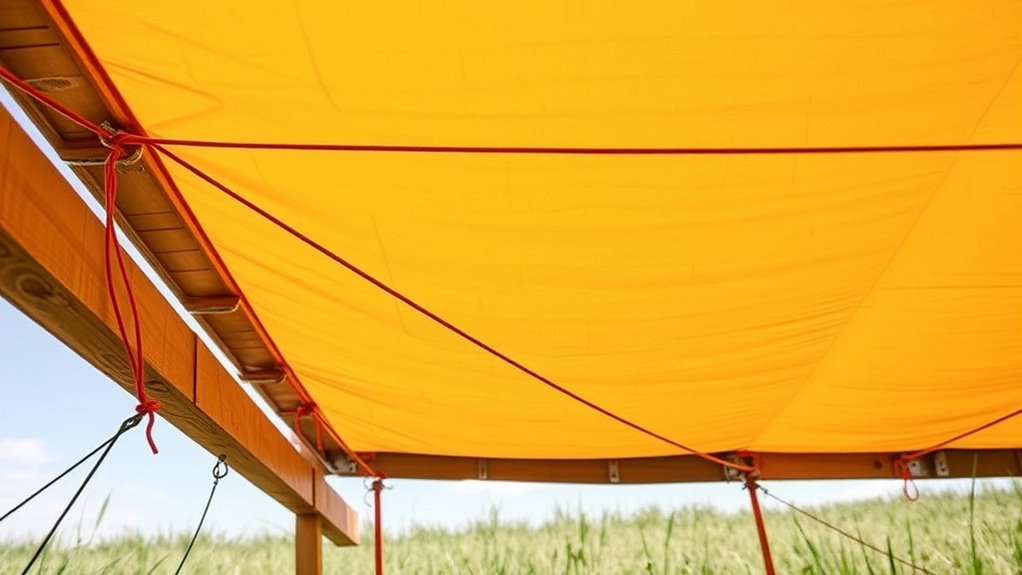
To keep your shade structure stable, it’s essential to properly secure and tension the tarp. Start by choosing the right tarp material; durable, heavy-duty tarps resist tearing and withstand weather. When installing stakes, use proper stake installation techniques—drive stakes at an angle and deep enough into the ground for maximum hold. Attach the tarp securely using strong ties or bungee cords, ensuring the tension is tight but not overstretched. Proper tension prevents sagging and ensures stability during wind gusts. Regularly check the tension and re-secure as needed. Focusing on quality stake placement and selecting the right tarp material helps your shade structure stay sturdy and reliable, providing effective shelter for longer periods.
Adjusting and Fine-Tuning Your Shade Structure
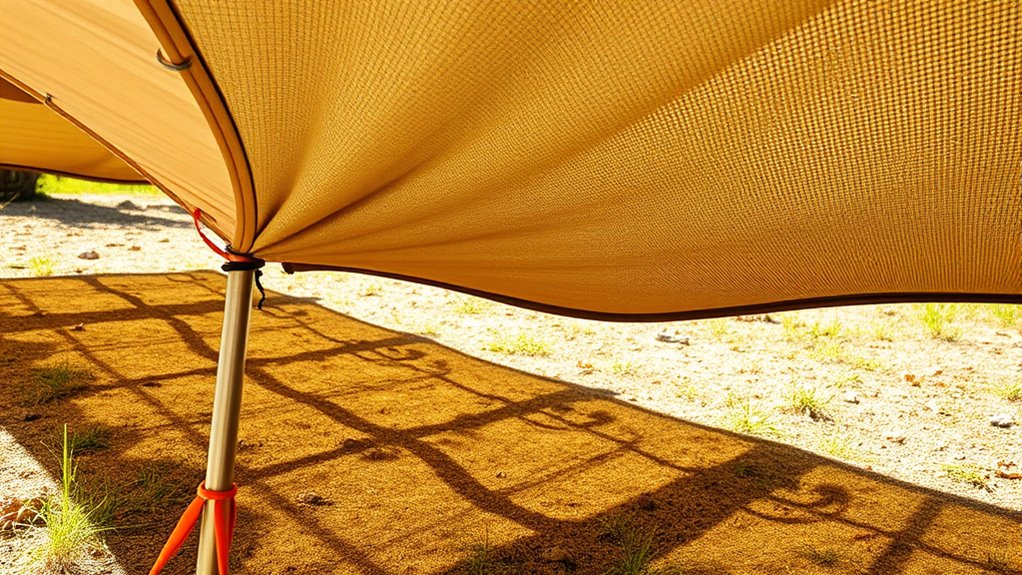
Once your shade structure is securely in place, fine-tuning becomes essential to guarantee maximum stability and comfort. Start by adjusting the tension of the tarp to prevent sagging and ensure even coverage. Consider different color options for your tarp; lighter shades reflect heat, keeping the area cooler, while darker ones absorb warmth. Use weatherproofing tips like adding sealant or choosing durable materials to extend your setup’s lifespan against rain and wind. Check all stakes and ties, tightening where necessary to maintain stability during changing weather conditions. Remember, small adjustments can make a big difference in overall comfort and durability. Keep a toolkit nearby for quick fixes, and regularly inspect your structure for any signs of wear or loosening.
Tips for Maintaining and Removing Your Shade Setup
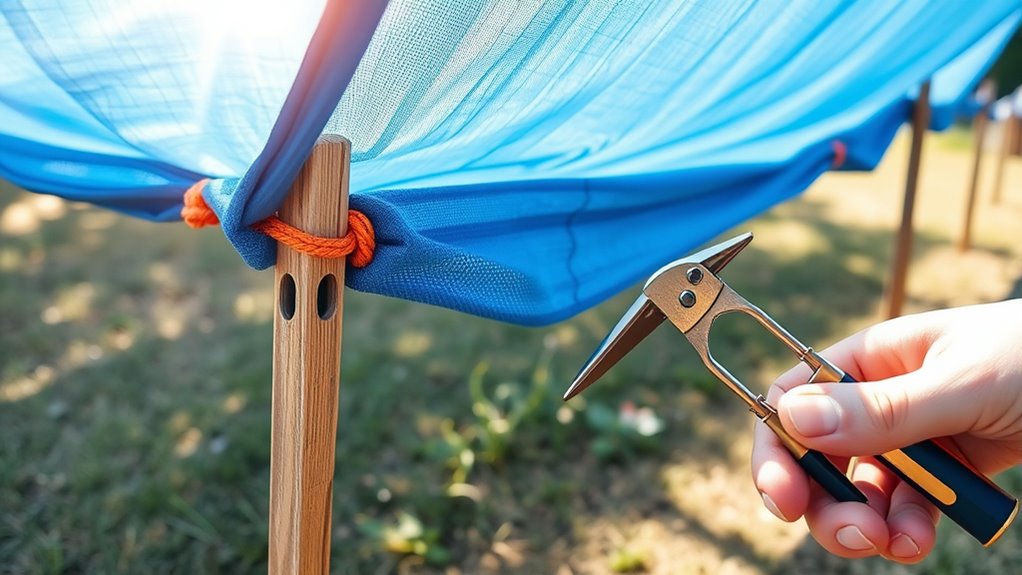
Regular maintenance is key to guarantee your shade setup remains in good condition and lasts longer. To keep your tarp clean, use gentle cleaning tips like rinse with water and mild soap, avoiding harsh chemicals. After use, carefully remove stakes and fold the tarp neatly to prevent damage. Proper storage solutions are essential; store your shade structure in a cool, dry place away from direct sunlight. Use the following table to guide you:
| Maintenance Step | Tools Needed | Tips |
|---|---|---|
| Cleaning the tarp | Mild soap, water | Rinse thoroughly, air dry |
| Removing stakes | Gloves, hammer | Remove gently to avoid tears |
| Storage | Storage bag, dry space | Fold neatly, keep dry |
Consistent upkeep guarantees your shade stays durable and ready for next time.
Frequently Asked Questions
How Long Does a Tarp Shade Structure Typically Last Outdoors?
A tarp shade structure usually lasts between 1 to 3 years outdoors, depending on factors like UV resistance and wind resistance. If your tarp has high UV resistance, it’ll better withstand sun damage, extending its life. Good wind resistance helps prevent tearing or damage during storms. Regularly checking for wear and tear can also prolong its lifespan, ensuring you get the most out of your shade structure.
Can I Build a Shade Structure Without Professional Tools?
You might think building a shade structure is rocket science, but with DIY projects, you can totally do it yourself! Sure, you don’t need professional tools, but safety considerations are vital—use sturdy stakes and secure the tarp tightly. Just follow simple steps, and you’ll create a cool, functional shade in no time. Remember, a little caution keeps your project safe and successful, even without fancy equipment.
What Are the Best Tarp Materials for Durability?
When choosing tarp material types for durability, you want options that withstand weather and wear. Look for heavy-duty polyethylene or vinyl tarps, as they offer excellent durability considerations like tear resistance and UV protection. Reinforced edges and grommets also enhance longevity. Avoid thinner or cheaper materials that may tear easily. Your goal is a tarp that holds up over time, providing reliable shade and protection without frequent replacements.
How Do Weather Conditions Affect the Stability of the Setup?
Did you know that strong winds can cause up to 60% of tarp failures? Weather conditions greatly impact your setup’s stability—wind impact can loosen stakes or tear fabric, while rain resistance determines how well the tarp handles heavy rainfall. To guarantee durability, choose tarps with high water resistance and secure stakes firmly, especially during storms. Regularly check your setup to prevent weather-related damages and keep your shade structure safe.
Are There Eco-Friendly Options for Creating Shade With Tarps?
You’re wondering if eco-friendly options exist for creating shade with tarps. Yes, you can choose biodegradable fabrics or recycled materials, which reduce environmental impact. These options are durable and effective for shade, offering a sustainable alternative to traditional tarps. By selecting eco-friendly materials, you help protect the environment while providing shade for your outdoor space. It’s a simple way to combine functionality with environmental responsibility.
Conclusion
Now that you’ve built your tarp shade with stakes, enjoy your cool refuge even in the blazing sun. Remember to check and tighten your setup regularly, just like a trusty steed in a jousting tournament. With a little care, your shelter will stand strong through many a summer’s day, giving you comfort and shade. So go forth and relax, knowing you’ve crafted a versatile, budget-friendly oasis—your very own modern-day castle in the great outdoors.