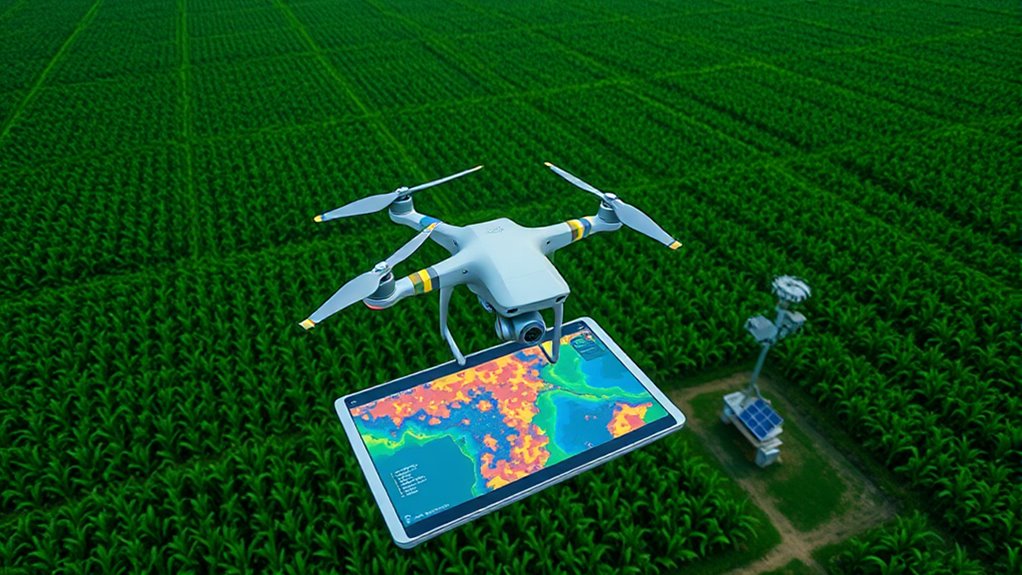
AI and data analytics for crop management help you make smarter, more precise decisions. By using real-time insights, predictive tools, and soil moisture data, you can optimize irrigation, reduce water waste, and prevent pest outbreaks early. These advanced systems simplify monitoring through user-friendly dashboards, allowing you to respond quickly to environmental changes. As technology evolves, you’ll discover more ways to boost productivity while promoting sustainable farming practices—so exploring further will be worth your while.
Key Takeaways
- AI-driven predictive analytics enable farmers to forecast crop yields and environmental conditions for better planning.
- Data integration from sensors, satellites, and drones facilitates real-time monitoring of crop health and soil status.
- Precision irrigation systems use data to deliver water efficiently, conserving resources and optimizing crop growth.
- Pest prediction tools analyze environmental data to detect early infestations, reducing chemical use through targeted interventions.
- User-friendly dashboards simplify data interpretation, supporting proactive decision-making for sustainable crop management.

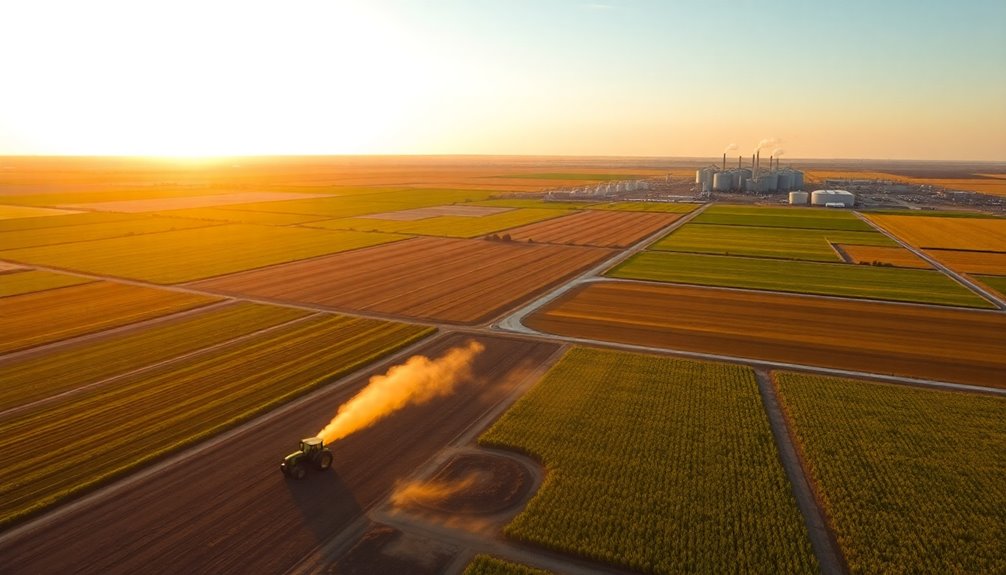
Artificial intelligence and data analytics are transforming crop management by providing farmers with real-time insights and predictive tools. These technologies empower you to make smarter decisions, optimize resource use, and increase yields. One key area where AI is making a significant impact is in precision irrigation. Instead of relying on traditional schedules or visual cues, AI-driven systems analyze data from soil moisture sensors, weather forecasts, and crop health indicators. This allows you to deliver the right amount of water exactly when your crops need it, reducing waste and conserving water resources. Precision irrigation not only boosts crop growth but also minimizes the risk of over- or under-watering, which can lead to diseases or poor yields. With AI, you gain a detailed understanding of your field’s moisture levels, enabling you to fine-tune irrigation schedules for maximum efficiency.
Another critical application is pest prediction. By harnessing data from satellite imagery, drone surveys, and on-ground sensors, AI models can identify early signs of pest infestations before they become visible or widespread. This proactive approach means you can take targeted action, applying pesticides only where needed and at the right time. Pest prediction tools help you avoid blanket pesticide applications, which are costly and environmentally damaging, and instead focus your efforts precisely, reducing chemical use and protecting beneficial insects. AI algorithms continuously analyze weather patterns, crop health data, and pest behavior models to forecast potential outbreaks. This predictive capability gives you a vital head start, allowing for timely interventions that safeguard your crops and improve overall yield quality. Additionally, integrating advanced projector technology can provide visual support during planning and training sessions for farm staff, enhancing understanding and communication of complex data insights.
As these technologies evolve, they become more accessible and easier to integrate into your daily farming routines. You no longer need to rely solely on intuition or traditional practices; instead, you can harness a wealth of data-driven insights to guide your decisions. AI-powered platforms often come with user-friendly dashboards that display relevant metrics and alerts, making it simple to monitor your fields and respond quickly to changing conditions. This integration of data analytics into crop management helps you optimize input use, reduce waste, and enhance sustainability. Ultimately, by embracing AI tools for precision irrigation and pest prediction, you position yourself to achieve higher productivity, lower costs, and a more resilient farming operation capable of adapting to the challenges of modern agriculture.

Innovative Methods of AI Use for Precision Irrigation of Individual Crops (AI Made Practical Series: Smart, Step-by-Step Guides for Agriculture, Small Business & Workplaces)
As an affiliate, we earn on qualifying purchases.
As an affiliate, we earn on qualifying purchases.
Frequently Asked Questions
How Cost-Effective Is Implementing AI in Small Farms?
Implementing AI on small farms can be cost-effective, as it helps reduce operational costs through precise resource management. While initial investment might seem high, it often leads to quicker investment payback by increasing yields and minimizing waste. You’ll save money in the long run, making AI a smart choice for small farmers seeking to boost productivity without considerably increasing expenses. Overall, the benefits often outweigh the costs, ensuring a good return on investment.
What Are the Privacy Concerns With Data Collection?
Did you know that 75% of farmers worry about their data privacy? You should be concerned about farmer privacy and data security when collecting data. Unauthorized access or sharing can lead to loss of control over your farm information, risking theft or misuse. Protect your data by implementing strong security measures and understanding who accesses your data. Staying informed helps you safeguard your farm’s privacy and maintain trust in your data practices.
How Long Does It Take to See Results From AI Tools?
You can typically see results from AI tools within a few weeks to a few months, depending on your crop yield goals and environmental factors. These tools analyze weather forecasting data and other variables to optimize planting and harvesting times. As you implement insights, you’ll notice improvements in crop health and yield. Consistent use and monitoring help refine predictions, so patience and ongoing data analysis are key for achieving the best outcomes.
Can AI Predict Pest Outbreaks Accurately?
You can trust AI to predict pest outbreaks with about 75% accuracy, substantially improving outbreak forecasting. This means you’ll get earlier alerts, allowing you to take proactive measures and reduce crop damage. AI models analyze weather patterns, crop data, and pest behavior to identify outbreak risks. While not perfect, this technology offers a powerful tool for pest prediction, helping you make smarter, timely decisions to protect your harvest.
What Training Is Needed for Farmers to Use AI Systems?
You need farmer training focused on AI literacy to effectively use AI systems. This training should cover basic AI concepts, data interpretation, and how to operate specific tools. Hands-on workshops, online courses, and ongoing support help build confidence and skills. By improving your AI literacy, you’ll better understand system recommendations, make informed decisions, and optimize crop management practices, ultimately increasing productivity and sustainability on your farm.
Conclusion
By leveraging AI and data analytics, you can optimize crop management, boosting yields and reducing resource waste. For instance, imagine using predictive analytics to detect pest outbreaks early, saving your crops from severe damage. With these technologies, you gain precise insights into soil health, weather patterns, and crop performance. Embracing AI-driven solutions empowers you to make smarter decisions, ensuring a more sustainable and profitable farming future.