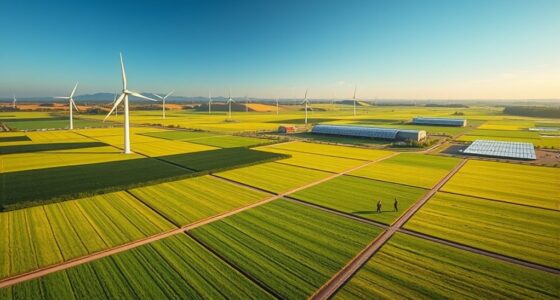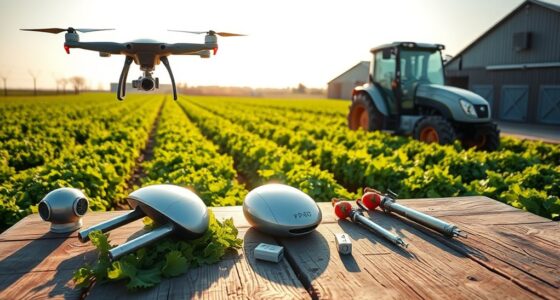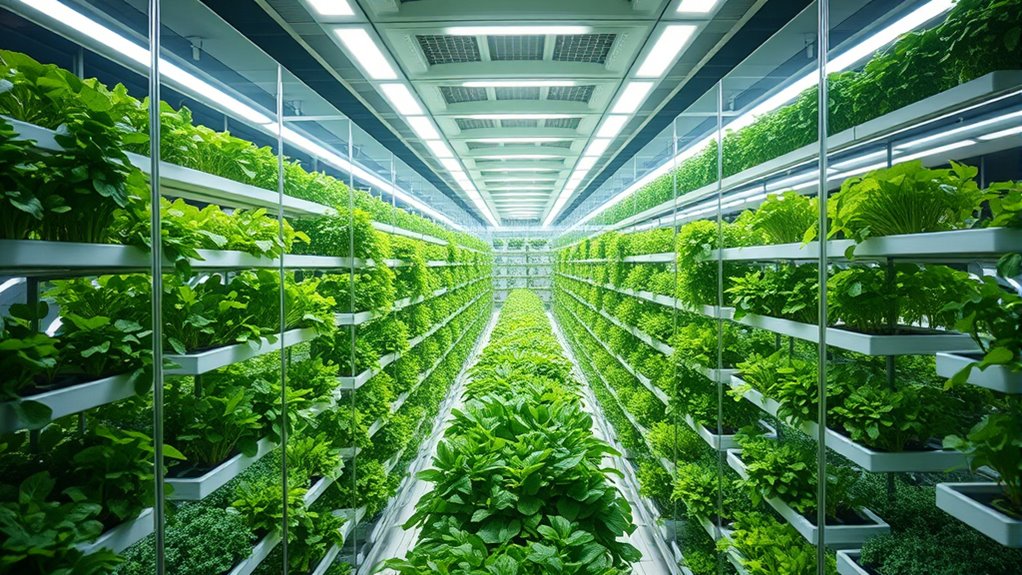

Vertical farming and controlled environment agriculture transform urban food production by allowing you to grow crops efficiently within city spaces using advanced technology. You can produce a variety of fresh, local, and organic foods year-round while reducing transportation emissions and environmental impact. This approach maximizes space through vertical stacking and precise control of light, temperature, and nutrients. As you explore further, you’ll discover how these innovative systems are shaping sustainable, resilient urban food ecosystems.
Key Takeaways
- Vertical farming utilizes controlled environment agriculture (CEA) to optimize light, temperature, humidity, and nutrients for crop growth.
- CEA enables year-round production of diverse crops within urban vertical farms.
- Precise climate control reduces pests, diseases, and reliance on chemical inputs in vertical farming systems.
- Vertical farms integrate hydroponic, aeroponic, and other soilless systems for efficient resource use in CEA.
- Controlled environment agriculture enhances sustainability, resilience, and local food security in urban vertical farming.
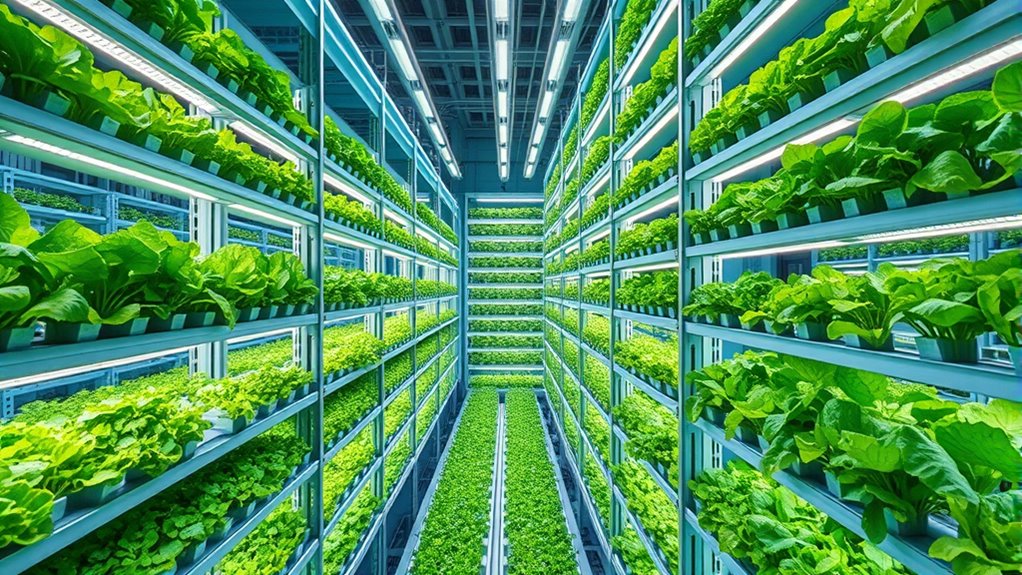
Vertical farming and controlled environment agriculture (CEA) are revolutionizing how we grow food by using innovative techniques to maximize space and optimize conditions. As urban populations expand, these methods enable you to produce fresh, local produce within city limits, reducing transportation costs and environmental impact. When you consider urban integration, vertical farms become more than just food sources—they turn into integral parts of city landscapes, blending seamlessly with residential, commercial, and industrial areas. You might find vertical farms on rooftops, abandoned buildings, or dedicated indoor spaces, transforming underused urban spaces into productive green zones. This approach helps you to reconnect cities with nature, creating green corridors and enhancing local ecosystems.
Vertical farms integrate seamlessly into urban landscapes, transforming underused spaces into sustainable green zones that reconnect cities with nature.
Crop diversity stands at the heart of successful vertical farming and CEA. Instead of relying on monocultures, you can grow a wide variety of plants—leafy greens, herbs, strawberries, even root vegetables—within the same controlled environment. This diversification not only boosts nutritional variety for communities but also strengthens resilience against pests and diseases, which typically threaten single-crop systems. When you grow different crops together in a carefully managed environment, you reduce the need for chemical inputs, making your farm more sustainable and eco-friendly. additionally, crop diversity allows you to meet a broader range of consumer demands, supporting local markets with fresh, seasonal produce year-round. Incorporating organic methods further enhances the sustainability and health benefits of your urban farm.
In an urban setting, integrating various crops becomes easier because you can precisely control factors like light, temperature, humidity, and nutrients. This precision agriculture approach means you can tailor conditions to optimize each crop’s growth, resulting in faster harvests and higher yields. You don’t need sprawling fields or arable land—just vertical stacks of growing trays or hydroponic systems—making efficient use of limited space. As you experiment with different plant varieties, you’ll discover new combinations that thrive together, creating a vibrant, diverse food system within the city. This diversity also makes your urban farm more resilient to climate variations and market fluctuations.
Ultimately, by prioritizing urban integration and crop diversity, you turn your vertical farm into a sustainable, productive hub that benefits both the environment and the community. You help reduce urban heat islands, lower food miles, and promote local food security. Every plant you cultivate adds to the city’s green infrastructure, making urban agriculture not just a trend but a crucial component of modern city living. As you embrace these innovative techniques, you become part of a movement transforming urban spaces into resilient, diverse, and sustainable food sources. Incorporating soil health and organic practices ensures the longevity and ecological balance of your farming system.

JPWDDWYT Hydroponics Tower Indoor Growing System Vertical Garden Planter Indoor Smart Garden Kit with Pump and Movable Water Tank Vegetable Plant Gift for Gardening Lover (35-Plants)
- Soilless Hydroponic Cultivation: Uses water-based growing system
- Automatic Watering Cycle: Timed top-down watering reduces waste
- Compact and Portable Design: Easy to move indoors or outdoors
As an affiliate, we earn on qualifying purchases.
As an affiliate, we earn on qualifying purchases.
Frequently Asked Questions
What Are the Initial Startup Costs for Vertical Farms?
You’ll find that initial startup costs for vertical farms typically range from $200,000 to over $1 million. Conducting a thorough cost analysis helps identify expenses like equipment, lighting, and space. To manage costs, explore funding strategies such as grants, investor funding, or loans. Planning carefully guarantees you cover essential investments without overspending, setting a solid foundation for your vertical farming venture.
How Do Vertical Farms Impact Local Ecosystems?
Vertical farms can positively impact local ecosystems by enhancing urban biodiversity, providing habitats for diverse species. They also improve water runoff management, reducing pollution and erosion. By integrating green spaces into cities, you help support pollinators and other wildlife while managing stormwater more effectively. This creates a healthier environment, encourages ecological balance, and benefits urban communities by promoting sustainable development and resilience.
What Are the Most Common Pests in Controlled Environment Agriculture?
Like uninvited guests crashing your garden party, common pests in controlled environment agriculture include aphids, spider mites, whiteflies, and fungus gnats. You need effective pest management and insect control strategies to keep these intruders at bay. Regular monitoring, biological controls, and targeted treatments help protect your crops. Staying vigilant guarantees pests don’t take over, allowing your plants to thrive in a healthy, controlled environment.
How Energy-Efficient Are Vertical Farming Systems?
Vertical farming systems can be quite energy-efficient, especially when you optimize energy consumption and use efficiency metrics like LED lighting and climate control. You’ll find that these systems use less water and land while maximizing crop yields. To improve efficiency, focus on integrating renewable energy sources and smart automation, which help reduce overall energy use. This makes vertical farming a sustainable, productive option compared to traditional farming methods.
Can Vertical Farms Grow All Types of Crops Effectively?
Like a Renaissance painter, you can’t expect to use the same brush for every masterpiece. Vertical farms excel at growing a variety of crops, but their success depends on plant adaptability and crop diversity. While leafy greens and herbs thrive, root vegetables or crops needing large space may struggle. You’ll find that selecting adaptable plants and optimizing conditions is key to growing a broad range of crops effectively.
Conclusion
Imagine a future where your food grows effortlessly like stars in the night sky, all within sleek, controlled spaces. Vertical farming and controlled environment agriculture are transforming cities into lush, green jungles, defying the limits of traditional farming. As you embrace these innovations, you’re planting seeds for a sustainable tomorrow—where hunger wanes, and nature flourishes in harmony with technology. Step into this vibrant future, and watch how it blossoms right before your eyes.