
Integrating livestock into crop systems offers many benefits like improved soil health, natural fertilization through manure, and better nutrient cycling. By rotating grazing areas, you prevent overgrazing and encourage healthier plant growth. Manure becomes a valuable resource, reducing reliance on synthetic fertilizers and boosting crop yields. This approach also enhances sustainability by conserving soil and reducing environmental pollution. To maximize these advantages and guarantee proper management, explore further strategies and best practices tailored to your farm’s needs.
Key Takeaways
- Rotational grazing prevents overgrazing, promotes healthy plant growth, and maintains soil cover for erosion control.
- Manure is a valuable nutrient resource, enriching soil naturally and reducing reliance on synthetic fertilizers.
- Integrating livestock enhances nutrient cycling, improves soil health, and boosts crop yields and resilience.
- Effective management involves planning grazing schedules, monitoring pasture conditions, and using tools like portable equipment.
- Combining livestock with cropping creates a sustainable, resilient farm system that minimizes environmental impact and boosts productivity.
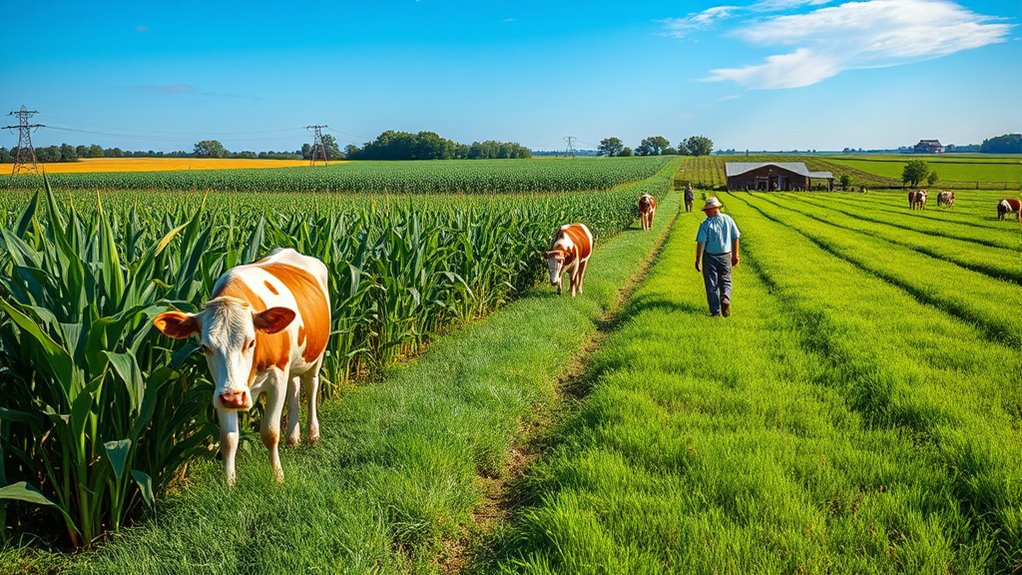
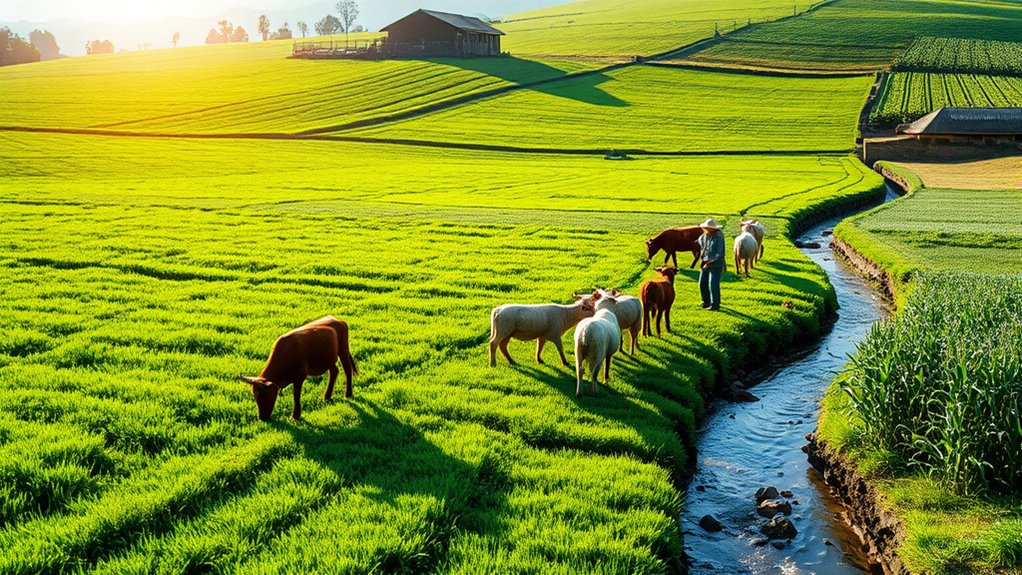
Integrating livestock into crop systems offers a sustainable way to enhance farm productivity and environmental health. When you incorporate animals into your cropping practices, you create a symbiotic relationship that benefits both. One effective method to manage this integration is rotational grazing. Instead of allowing livestock to graze freely over large areas, you move them systematically between paddocks. This approach prevents overgrazing, encourages healthier plant growth, and maintains soil cover. By rotating animals regularly, you give pasturelands time to recover, which reduces soil erosion and promotes biodiversity. Additionally, rotational grazing helps distribute manure evenly across different sections of your fields, naturally fertilizing the soil without relying heavily on chemical inputs.
Rotational grazing promotes healthy pastures, prevents overgrazing, and enhances soil fertility naturally through manure distribution.
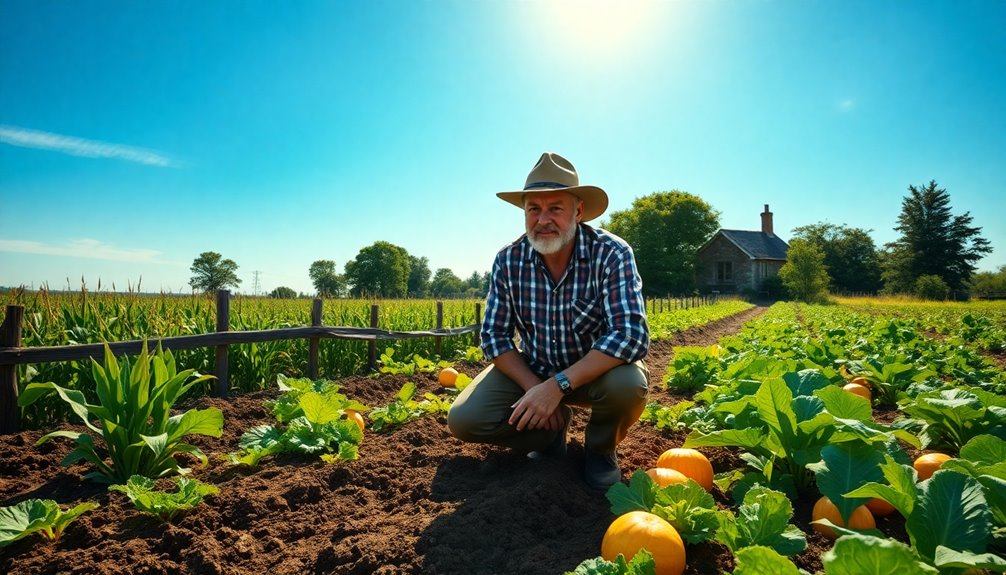
Manure management becomes a critical aspect when combining livestock with crop production. Instead of viewing manure as waste, you see it as a valuable resource. Proper manure management involves collecting, composting, and applying manure strategically to boost soil fertility. This practice enriches the soil with essential nutrients like nitrogen, phosphorus, and potassium, which are crucial for crop growth. When managed correctly, manure application minimizes runoff and leaching, preventing environmental pollution. You can also tailor manure application rates based on crop needs, ensuring plants receive the right nutrients without excess. This integrated approach reduces your dependence on synthetic fertilizers, lowers production costs, and enhances soil health over time.
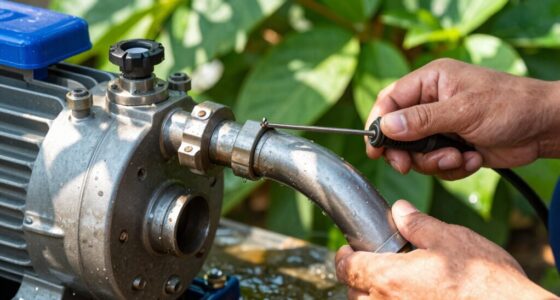
Furthermore, integrating livestock into crop systems encourages nutrient cycling. As animals graze, they consume plant material and deposit manure, which decomposes and releases nutrients back into the soil. This natural cycle enhances soil organic matter, improves water retention, and fosters a thriving microbial ecosystem. Such benefits contribute to increased crop yields and resilience against pests and diseases. You also gain greater control over your farm’s nutrient balance, making your system more resilient to market or climate fluctuations. Incorporating portable livestock equipment can further streamline your management practices, making it easier to move animals efficiently and maintain pasture health.
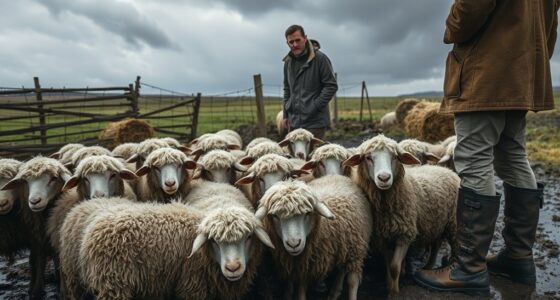
Of course, successful integration requires careful planning. You need to take into account the type and number of livestock, pasture capacity, and crop rotation schedules. Monitoring soil health and pasture conditions helps you adjust grazing intensity and manure application accordingly. By adopting these practices, you create a self-sustaining system that maximizes productivity while minimizing environmental impacts. Overall, integrating livestock with crop systems through rotational grazing and manure management offers you a pathway to a more sustainable, efficient, and resilient farm.
As an affiliate, we earn on qualifying purchases.
Frequently Asked Questions
How Does Livestock Integration Affect Soil Biodiversity?
Livestock integration boosts soil biodiversity by increasing soil microbes and creating biodiversity hotspots. When animals graze, manure adds organic matter, fostering diverse microbial communities. This process improves soil health and supports a resilient ecosystem. You’ll notice richer microbial life, which enhances nutrient cycling and plant growth. Overall, integrating livestock into crop systems actively promotes soil biodiversity, making your land more productive and sustainable over time.
What Are the Long-Term Economic Impacts of Integrating Livestock?
Integrating livestock boosts your farm’s economic resilience by providing multiple income streams, reducing reliance on a single crop market. It also encourages market diversification, opening opportunities for selling meat, dairy, and manure-based products. Over time, this diversification helps stabilize your income during crop failures or price fluctuations, ensuring long-term financial stability. Additionally, livestock can improve soil health, leading to better crop yields and sustained profitability.
How Can Pest Management Be Optimized in Mixed Systems?
You can optimize pest management in mixed systems by implementing effective pest control strategies that include regular monitoring and targeted treatments. Using crop rotation helps break pest cycles, reducing their populations naturally. Combining these methods creates a sustainable approach, minimizing chemical reliance and promoting healthier crops. By actively managing pests through integrated practices, you enhance crop yields and protect your system’s long-term productivity.
What Are the Best Practices for Water Management?
To optimize water management, you should focus on effective irrigation scheduling to match crop needs precisely, reducing waste. Implement water conservation techniques like drip irrigation and mulching to minimize evaporation and runoff. Regularly monitor soil moisture levels and weather forecasts to adjust watering times accordingly. By practicing these strategies, you guarantee efficient water use, support healthy crop growth, and conserve this essential resource for sustainable farming.
How Does Integration Influence Crop Variety Selection?
When you integrate livestock into crop systems, you influence your crop variety selection by favoring diverse options like those suited for crop rotation and resilient seed selection. This approach encourages you to choose crops that complement livestock grazing, improve soil health, and reduce pest issues. You’re actively diversifying your planting choices, rotating crops to optimize land use, and selecting resilient seeds that thrive in varied conditions, creating a balanced, productive system.
Conclusion
By integrating livestock into your crop systems, you not only boost soil health and productivity but also create a balanced, sustainable farm. It’s like nature’s own cycle, where animals and plants support each other in harmony. When you see a herd grazing peacefully beside thriving crops, it’s a reminder that this synergy isn’t just coincidence—it’s the future of farming. Embrace these practices, and you’ll witness the land’s resilience unfold right before your eyes.