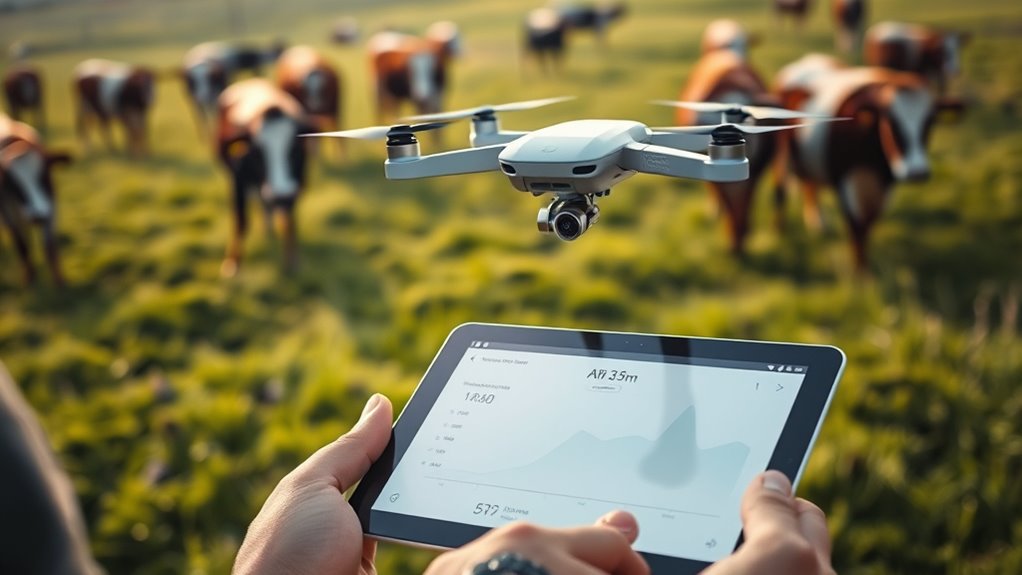

IoT plays a crucial role in livestock monitoring by giving you real-time data on animal health, activity, and environmental conditions. Sensors help you detect issues early, improve animal care, and optimize farm operations. Accurate sensors ensure reliable information, while security measures protect your farm’s data. Continuous monitoring reduces costs and boosts animal well-being. To create a smarter, safer farm, it’s important to follow best practices and stay informed about the latest IoT advancements. Keep exploring to learn more.

Get garden gear delivered free with Prime
- Fast, free delivery on millions of items
- Prime Video, Amazon Music and more included
- Member-only deals all year
Key Takeaways
- IoT enables real-time monitoring of animal vital signs, activity, and environmental conditions for better health management.
- Sensors detect early signs of illness or abnormalities, facilitating prompt intervention and improved animal welfare.
- Data integration from IoT devices streamlines farm operations, enhances decision-making, and boosts productivity.
- Ensuring sensor accuracy and regular maintenance is vital for reliable data and effective livestock management.
- Robust data security and privacy measures protect sensitive farm information from unauthorized access and breaches.
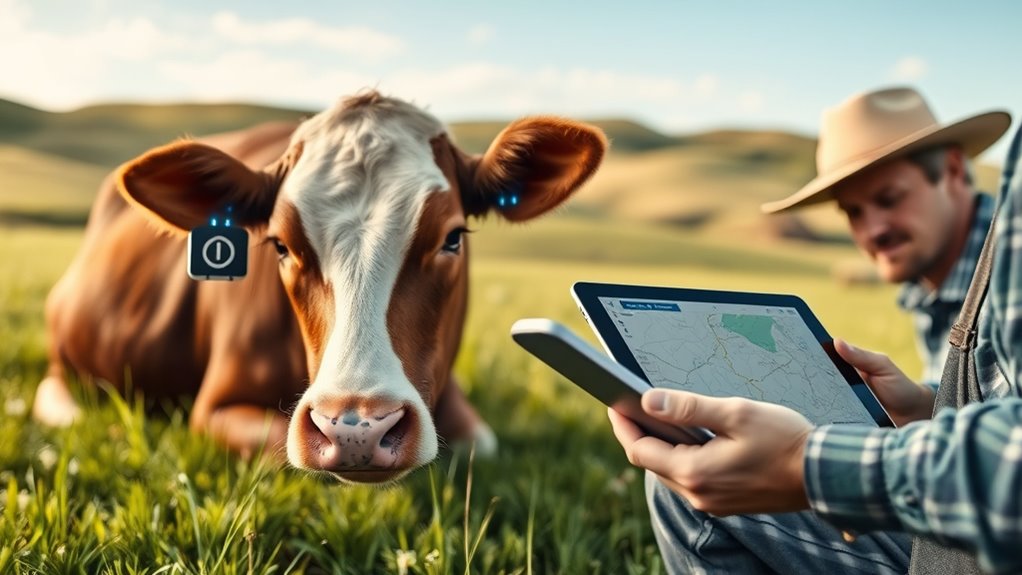
Have you ever wondered how technology is transforming livestock management? With the rise of the Internet of Things (IoT), farmers now have access to real-time data that can greatly improve how they care for their animals. Central to this innovation are sensors that monitor vital signs, activity levels, and environmental conditions. But as you adopt these technologies, it’s crucial to understand the importance of sensor accuracy and data privacy. The effectiveness of IoT in livestock management depends on the precision of data collected. If sensors are inaccurate or unreliable, you risk making decisions based on faulty information, which could negatively impact animal health and farm productivity. Investing in high-quality sensors ensures you receive precise readings, allowing you to detect issues early and optimize care. Equally important is data privacy; as more information about your livestock and farm operations becomes digitized, safeguarding this data becomes critical. Unauthorized access or data breaches could compromise your farm’s security or lead to misuse of sensitive information. You should prioritize secure communication protocols and data encryption to protect your data from cyber threats. Transparency about how your data is stored and used can also foster trust and ensure compliance with privacy regulations. Another aspect to weigh is how sensor accuracy influences overall farm management. Accurate sensors enable you to monitor animal health continuously, identify patterns, and respond swiftly to any abnormalities. This proactive approach reduces illness, minimizes medication costs, and enhances the overall well-being of your livestock. Additionally, integrating sensor data into farm management systems can streamline operations, making it easier to track individual animals, analyze trends, and make informed decisions. As you expand your IoT setup, keep in mind that sensor calibration and regular maintenance are crucial for maintaining accuracy over time. Neglecting these can lead to drift in sensor readings, compromising data quality. On the privacy front, establish clear policies regarding data access and sharing, especially if you collaborate with third-party service providers. Ensuring that your farm’s data remains confidential will protect your competitive edge and prevent potential misuse. As IoT technology continues to evolve, staying informed about advancements in sensor accuracy and data security will help you leverage these tools effectively. Incorporating dog names into your farm branding or marketing strategies can also create a memorable identity that resonates with clients and visitors. By choosing reliable sensors and implementing robust data privacy measures, you set the foundation for a smarter, safer, and more productive livestock operation. Ultimately, embracing these principles will enable you to harness the full potential of IoT, transforming your farm into a modern, efficient enterprise.
As an affiliate, we earn on qualifying purchases.
Frequently Asked Questions
How Secure Are Iot Devices Against Hacking in Livestock Monitoring?
IoT devices in livestock monitoring face cybersecurity vulnerabilities, but you can improve their security. Regular updates and strong passwords help protect against hacking attempts. You should also guarantee data privacy by encrypting data and limiting access. While no system is completely foolproof, taking these measures markedly reduces risks. Staying informed about cybersecurity best practices helps keep your livestock data safe and secure from potential breaches.
What Is the Cost of Implementing Iot Systems on Large Farms?
Implementing IoT systems on large farms requires a significant initial investment for devices, sensors, and infrastructure. Operational costs include maintenance, data management, and software updates. While the upfront expenses can be high, the long-term benefits like improved efficiency and livestock health can offset costs. You should carefully assess your farm’s size and needs to determine the total investment and ongoing expenses involved in adopting IoT technology.
How Do Iot Sensors Impact Animal Welfare and Behavior?
IoT sensors positively impact animal welfare by enabling real-time animal health and behavior monitoring. You can quickly identify signs of illness or distress, reducing stress and improving overall well-being. These sensors help you observe behavioral changes that indicate discomfort or injury, allowing for prompt intervention. As a result, you create a healthier environment, promote better animal behavior, and enhance productivity, all while ensuring your livestock’s comfort and safety.
Can Iot Technology Be Integrated With Existing Farm Management Systems?
Your farm can become a seamless smart farm integration marvel by integrating IoT technology with existing management systems. Imagine your data interoperability skyrocketing, connecting sensors, devices, and software effortlessly. You’ll streamline operations, reduce manual work, and gain real-time insights. Most systems support standard protocols, making integration smoother than ever. With a little effort, your farm transforms into a high-tech powerhouse, optimizing productivity and animal welfare simultaneously.
What Are the Long-Term Maintenance Requirements for Iot Livestock Devices?
You’ll need to regularly check the battery life of your IoT livestock devices, as it impacts their continuous operation. Calibration frequency varies depending on the device, but you should plan for periodic recalibration to guarantee accurate data. Maintenance also includes software updates and cleaning sensors to prevent malfunctions. By staying proactive with these tasks, you ensure your devices remain reliable and effective in monitoring your livestock long-term.
Conclusion
Embracing IoT in livestock monitoring transforms your farm into a futuristic powerhouse, where real-time data saves you hours of guesswork and potential losses. By adopting this technology, you’re not just keeping up—you’re revolutionizing your approach to animal care. Imagine having the precision of a master scientist at your fingertips, ensuring healthier, happier animals. The future of farming isn’t coming; it’s already here, and it’s more powerful than you ever imagined.
Fall Picks
fall essentials
As an affiliate, we earn on qualifying purchases.