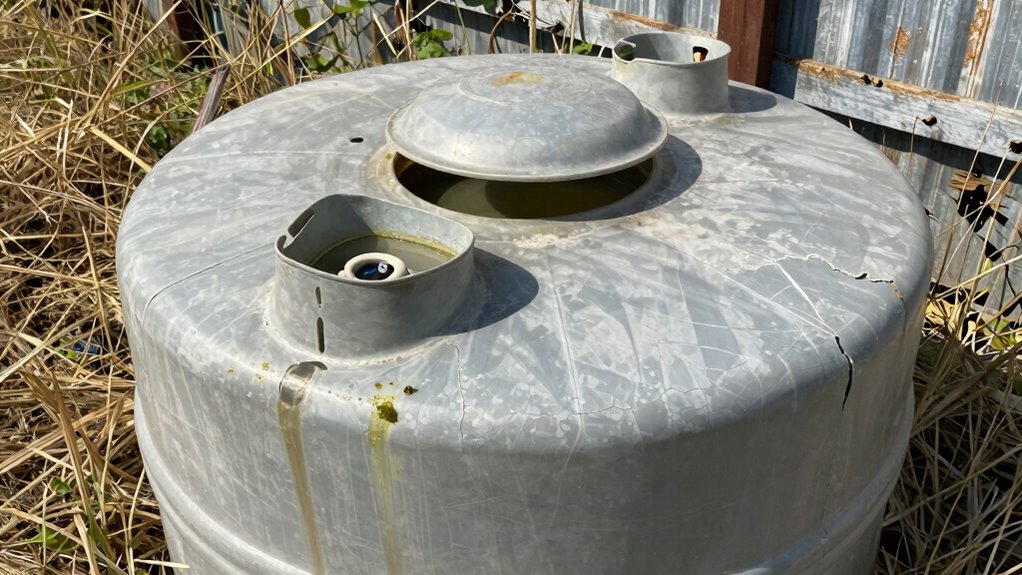

Storing rainwater improperly can ruin your water supply by allowing contaminants like bacteria, algae, and debris to thrive. Using unsuitable containers, leaving tanks uncovered, or exposing water to sunlight speeds up microbial growth and contamination risk. Without proper treatment, your water may become unsafe for household use. To avoid this common mistake, it’s essential to choose food-grade containers, keep tanks sealed, and maintain your system regularly. Keep exploring to discover how to guarantee your water stays safe and clean.

Get garden gear delivered free — and shop member deals
- Fast, free delivery on millions of items
- Access to Prime Big Deal Days deals on October 6–7
- Prime Video, Amazon Music and more included
Key Takeaways
- Using unsealed or transparent containers exposes water to sunlight, promoting algae and microbial growth.
- Failing to cover storage tanks allows debris, insects, and animals to contaminate water.
- Neglecting regular cleaning causes sediment buildup and algae formation that compromise water quality.
- Relying solely on rainwater collection without proper purification risks consuming pollutants.
- Installing inappropriate or damaged storage systems increases contamination risk, jeopardizing water safety.
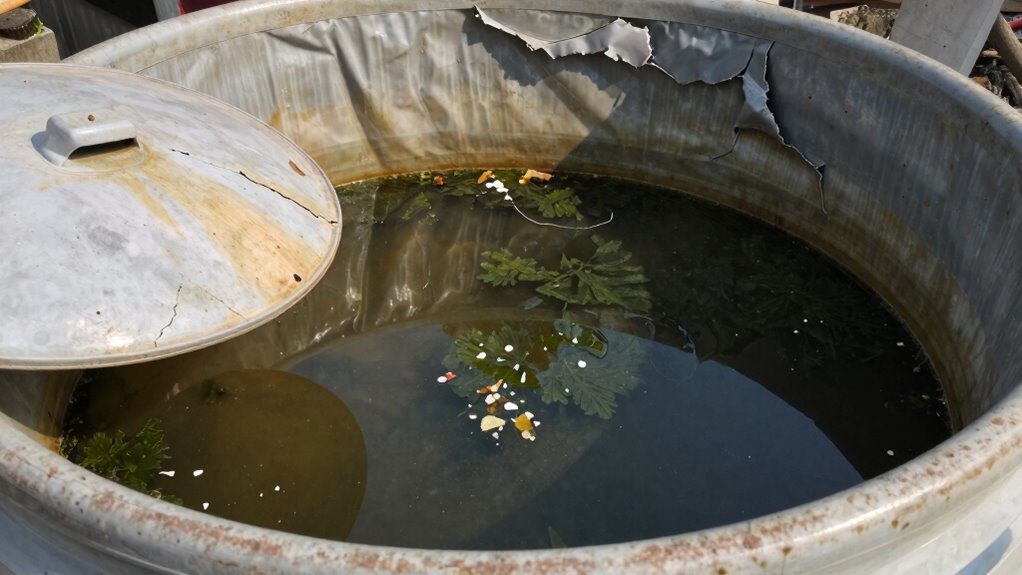
Have you ever thought about how you store your household water? Many people overlook this step, but it’s essential for maintaining a reliable supply. If you’re relying on rainwater harvesting, understanding the right storage methods can make all the difference. Rainwater harvesting is an excellent way to supplement your water needs, especially if you want to reduce dependence on municipal systems or prepare for emergencies. But collecting rainwater is just the beginning. The real challenge lies in storing it properly and guaranteeing it stays safe to use.
If you don’t use proper water purification techniques, your stored rainwater could become a breeding ground for bacteria, algae, and other contaminants. Storing water in unsuitable containers or exposing it to sunlight can accelerate the growth of algae and make the water unsafe to drink. To prevent this, you should choose tanks made from food-grade materials and keep them covered tightly. A dark, sealed container minimizes algae growth and keeps out debris, insects, and animals that could contaminate your water supply.
Many people make the mistake of simply collecting rainwater and assuming it’s clean enough to use without treatment. This is a risky assumption. Rainwater can pick up pollutants from the atmosphere, roof surfaces, and gutters. That’s why water purification techniques are vital. You can use simple methods like boiling, chlorine tablets, or UV sterilization to guarantee your water is safe. Regular testing of your stored water also helps catch any potential contamination early, so you can take corrective action before it becomes a health hazard.
Another common mistake is neglecting maintenance of your storage system. Over time, sediment can accumulate at the bottom of tanks, and algae can form on surfaces if the water isn’t properly treated or stored in the right environment. Proper tank maintenance can prevent these issues and extend the lifespan of your storage system. Additionally, using appropriate water storage techniques, like installing covers and ensuring proper ventilation, can significantly reduce contamination risks. Cleaning and inspecting your tanks periodically keeps your water fresh and safe. Furthermore, ensuring your rainwater harvesting system is correctly installed—like using filters on gutters and downspouts—reduces the chances of debris entering your storage tanks. Awareness of the importance of proper water quality management can prevent costly mistakes that compromise your supply.
Ultimately, avoiding these storage pitfalls means you’ll have a more dependable, cleaner water supply. Properly collecting, storing, and treating rainwater requires some effort, but it’s worth it. When you implement effective water purification techniques and use suitable storage containers, you prevent costly mistakes that can ruin your entire water supply. This way, you can enjoy peace of mind, knowing your household has access to safe, reliable water—even during shortages or emergencies.
As an affiliate, we earn on qualifying purchases.
Frequently Asked Questions
How Often Should I Clean My Water Storage Containers?
You should clean your water storage containers every 3 to 6 months to maintain good water quality. Regular cleaning prevents bacteria, algae, and sediment buildup, which can compromise your supply. The cleaning frequency depends on your storage conditions and water source. Use mild soap and a scrub brush, then rinse thoroughly. Keeping your containers clean guarantees safe, fresh water and helps avoid contamination issues in the long run.
What Are the Best Materials for Water Storage Tanks?
You should choose water storage tanks made from durable, corrosion-resistant materials like polyethylene or fiberglass. These materials offer excellent tank durability and resist material corrosion over time, ensuring your water stays clean and safe. Avoid tanks made from cheap metals, as they corrode quickly, compromising water quality. Investing in high-quality, corrosion-resistant materials helps maintain a reliable water supply, reducing maintenance and replacement costs in the long run.
Can Household Chemicals Contaminate Stored Water?
Yes, household chemicals can contaminate your stored water through chemical leaching, especially if you use improper containers or store chemicals nearby. Many contamination sources, like cleaning products or pesticides, can seep into water over time, making it unsafe. To avoid this, always store chemicals away from your water supply and use food-grade containers. Proper storage helps prevent contamination sources from compromising your water, ensuring it stays clean and safe to use.
How Do I Detect Contamination in Stored Water?
You can detect contamination in stored water by observing signs of microbial growth, like a foul odor, cloudiness, or slimy film. Chemical leaching might cause discoloration or an unusual taste. Regularly inspect your water storage, and if you notice any of these signs, it’s best to test the water with a water testing kit or replace it entirely to guarantee safety. Staying vigilant helps prevent health risks from contaminated water.
What Are Signs of Water Stagnation in Storage Tanks?
You notice a dull, stagnant sheen on your water’s surface, indicating stagnation. Water flow slows, and sediment buildup appears at the bottom, creating cloudy patches. These signs show your storage tank isn’t circulating properly, risking contamination. When water remains still, bacteria thrive. Regularly check for foul odors or slimy layers, and guarantee your tank’s water flow remains steady to prevent stagnation and keep your supply safe.
Conclusion
If you neglect proper water storage, you risk your entire supply turning stagnant and spoiled, like a neglected pond turning murky and lifeless. Imagine the clear, crisp water you once trusted now tainted, ready to cause more harm than good. Don’t let this mistake drown your preparedness; instead, take action now. With vigilant maintenance and thoughtful storage, you’ll safeguard your water, keeping it fresh and pure, ready to quench your needs when you need it most.
Fall yard work Picks
leaf blowers
As an affiliate, we earn on qualifying purchases.