To choose the right battery backup for your freezer, you need to calculate its energy use and the backup’s capacity. Measure your freezer’s wattage and multiply by the hours you want it to run during an outage. This helps you avoid overspending or risking spoilage. Incorporating solar or smart batteries can extend runtimes and save costs. Keep in mind, understanding your freezer’s needs can drastically change your backup plan—discover how to make smarter choices further on.
Key Takeaways
- Calculating freezer energy use (watt-hours) ensures the backup capacity matches the required runtime.
- Understanding battery capacity and efficiency helps prevent food spoilage during outages.
- Solar integration can extend backup runtime and reduce reliance on grid power.
- Longer outages demand larger or more efficient batteries for reliable freezer preservation.
- Accurate energy calculations optimize system size, cost, and overall backup reliability.
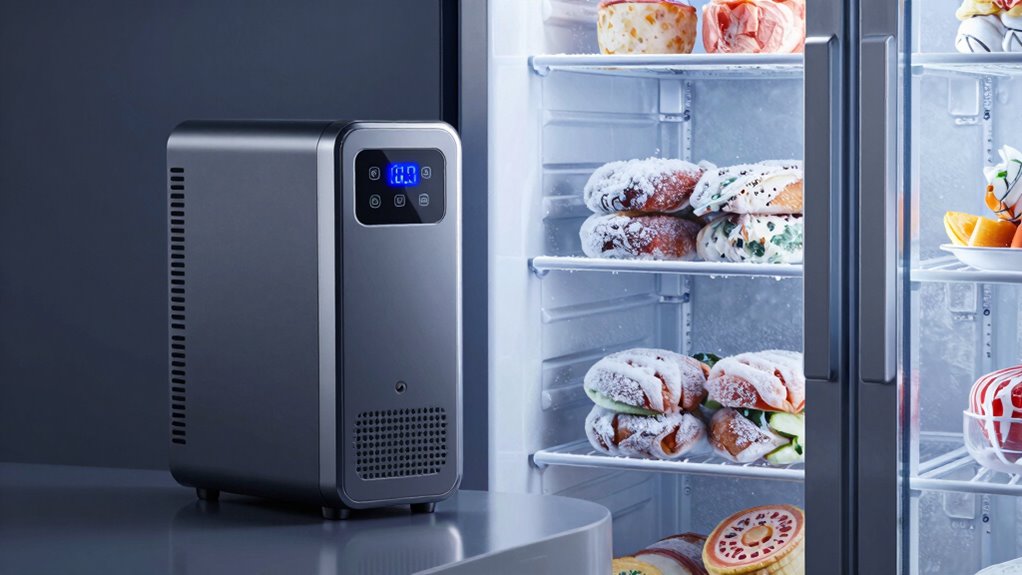
During power outages, your freezer’s contents are at risk of spoilage, which can lead to considerable financial loss and food waste. To prevent this, many people are turning to battery backups for freezers. But understanding the runtime math involved can truly change how you approach your purchase. When selecting a backup, you need to contemplate how long it can keep your freezer running during an outage. This isn’t just about battery capacity; it involves calculating the energy your freezer consumes and matching it with the battery’s output. Knowing the freezer’s wattage and how much energy it uses per hour helps you determine the necessary battery size. For example, if your freezer runs at 100 watts and you want it to operate for at least four hours, you’ll need a battery capable of providing 400 watt-hours of energy. Energy efficiency plays a major role here. Modern freezers are designed to use less power, which means you can select a smaller or less expensive battery backup. Plus, integrating solar energy systems can further enhance your backup solution. Solar integration allows you to harness renewable energy during the day, recharging your batteries and reducing reliance on grid power. When properly set up, this combination maximizes energy efficiency and ensures your freezer stays cold longer during outages. It also means you’re less dependent on traditional power sources and can save money in the long run. Understanding the energy consumption of your freezer helps you make more informed decisions about backup capacity and cost-effectiveness. Considering battery capacity and the efficiency of your system can also help you optimize the overall setup. Additionally, knowing how to perform these calculations can help you better plan for outages and avoid unexpected expenses. Developing a clear understanding of your energy needs can further improve your preparedness and system longevity. Accurate power management is crucial in ensuring your backup system remains reliable and efficient over time. The runtime math becomes even more critical when you think about the size of your battery backup. If you want to keep your freezer running for an extended period—say, 24 hours—you’ll need a considerably larger capacity, especially if your freezer consumes more energy or if you experience frequent outages. By calculating the precise energy needs, you avoid overspending on an unnecessarily large battery or risking spoilage with an undersized one. It’s also worth noting that some battery systems have smart features that monitor energy consumption and optimize runtime, making your backup more reliable.
battery backup for freezer
As an affiliate, we earn on qualifying purchases.
As an affiliate, we earn on qualifying purchases.
Frequently Asked Questions
How Long Can a Battery Backup Keep a Standard Freezer Running?
A battery backup can keep a standard freezer running for about 8 to 12 hours, depending on its battery capacity and the freezer’s power efficiency. If your freezer is more energy-efficient, it consumes less power, extending backup runtime. To maximize runtime, choose a battery with higher capacity and make sure your freezer is well-maintained. Always consider your specific model’s power needs to get an accurate estimate.
What Is the Most Cost-Effective Battery Backup Option for Freezers?
You should choose a battery backup with a high capacity, like a deep-cycle or gel battery, for cost-effective freezer support. These batteries offer better longevity and consistent power, making them a smart investment. Conduct a cost comparison based on battery capacity and lifespan, ensuring you get the best value. While upfront costs matter, prioritize durability and runtime to save money long-term, especially during outages.
Can Battery Backups Handle Power Surges or Outages Simultaneously?
Yes, some battery backups offer both power surge protection and backup power during outages. These units help prevent damage from sudden surges while maintaining your freezer’s operation during a power failure. Keep in mind, their battery lifespan can influence how long they provide backup, so choose a model with reliable batteries. This dual protection ensures your freezer stays safe and functional, even in unpredictable power conditions.
How Often Should I Test My Battery Backup System?
You should test your battery backup system at least once every three to six months. Regular testing guarantees your maintenance schedule stays on track and helps identify any issues before a power outage occurs. Keep in mind that battery lifespan varies, so monitoring performance is essential. Frequent testing helps confirm your backup’s reliability, giving you peace of mind that it will work when needed and extend the overall lifespan of the battery.
Are There Specific Battery Types Best Suited for Freezer Backup?
Did you know that lithium-ion batteries last 2-3 times longer than lead-acid ones? For freezer backup, lithium-ion batteries are the best choice because of their superior battery chemistry and longer shelf life. They’re lightweight, reliable, and maintain their charge longer, making them ideal for emergency power. Opt for lithium-ion if you want a durable, low-maintenance backup that keeps your freezer running during outages.
solar compatible battery backup
As an affiliate, we earn on qualifying purchases.
As an affiliate, we earn on qualifying purchases.
Conclusion
Remember, just like the legendary Icarus who soared too close to the sun, overestimating your freezer’s backup needs can lead to a fall. By understanding the math behind runtime, you’re armed with the wisdom of Daedalus—crafting a plan that keeps your frozen treasures safe during power outages. So, don’t fly blindly into uncertainty. Calculate, choose wisely, and guarantee your freezer’s flight remains steady, even when the grid falters.
backup power supply for freezer
As an affiliate, we earn on qualifying purchases.
As an affiliate, we earn on qualifying purchases.
deep cycle battery for freezer
As an affiliate, we earn on qualifying purchases.
As an affiliate, we earn on qualifying purchases.