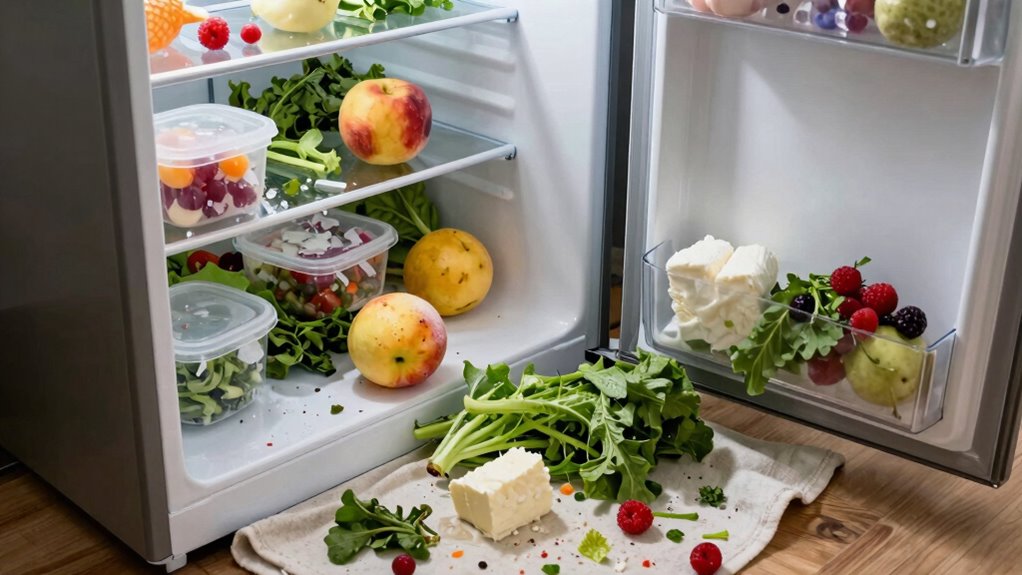

When your refrigerator fails, act quickly by transferring perishable foods to coolers or insulated containers, packed with ice or frozen gel packs. Keep the cooler in a shaded spot and limit door openings to maintain cold temperatures. Use damp towels for added insulation if needed. Regularly check food temperatures and discard anything above 40°F after two hours. To discover more ways to protect your food and reduce waste, keep exploring these tips.
Key Takeaways
- Transfer perishable items to a cooler with ice or frozen gel packs to maintain safe temperatures.
- Keep refrigerator and freezer doors closed to preserve cold air and prolong cooling period.
- Use damp towels or blankets around perishables for insulation during power outages.
- Regularly check food temperatures and discard items above 40°F after two hours.
- Consider sharing or donating food if refrigeration cannot be restored promptly.
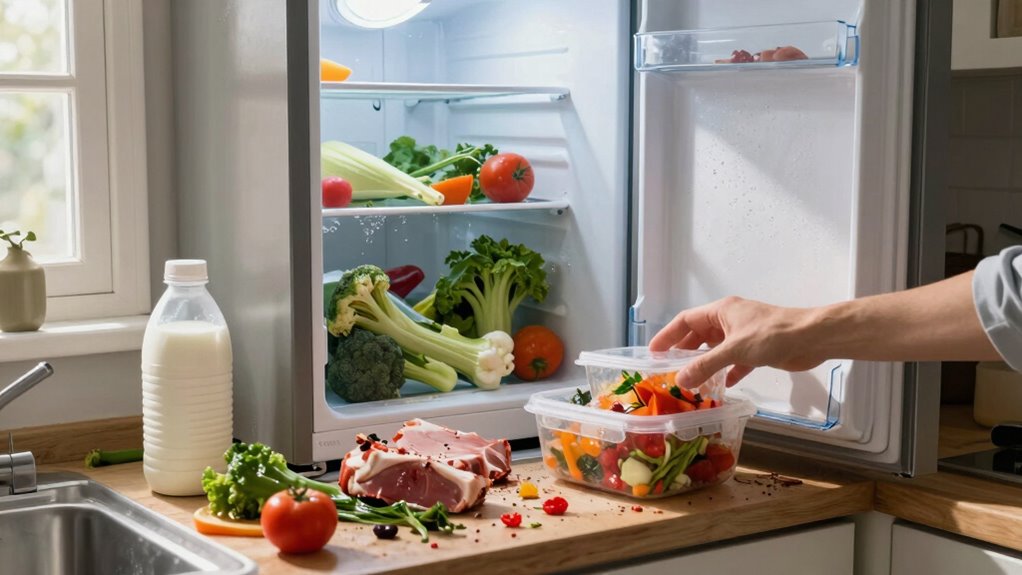
When your refrigerator suddenly stops working, it can be stressful to figure out what to do with your perishable food. The first priority is to prevent spoilage and minimize food waste, which can be challenging without a functioning appliance. To do this effectively, you need to act quickly and employ proper food preservation techniques, along with emergency cooling methods, to keep your food safe for as long as possible. Your immediate goal is to slow down bacterial growth and maintain the cold temperature of your perishables.
Start by gathering coolers, insulated boxes, or any containers that can help retain cold. If you have ice or frozen gel packs, pack your perishable items into these containers, filling any gaps to maximize cooling efficiency. If you don’t have enough ice, consider freezing bottles of water in advance or freezing other items that won’t be damaged by freezing. This helps to create a temporary cold environment around your food and slows spoilage. During this period, keep the cooler in a shaded, cool spot, away from direct sunlight, to prolong the cooling effect. Remember, the goal is to maintain a temperature below 40°F (4°C), which is essential for food safety.
Use coolers and ice packs to keep perishables below 40°F, placing them in shade to extend freshness during power outages.
In addition to using ice and coolers, you can employ emergency cooling methods like wrapping perishable items in damp towels or blankets to insulate them further. If available, use a portable battery-powered cooler or an ice chest with a reliable cold source. Avoid opening the refrigerator or freezer unnecessarily, as every door opened allows cold air to escape, reducing the overall cooling time. Keep perishable foods organized and prioritize consuming or using items most likely to spoil first, like dairy, meats, and cooked leftovers. It’s also helpful to know how to identify spoiled food to prevent health risks during this period. Additionally, monitoring food safety is crucial, and understanding how to identify spoiled items can help prevent health risks during this period.
Maintaining proper food storage techniques during this emergency can also help extend the safety of your perishable items and reduce waste. While waiting for your refrigerator to be repaired or replaced, monitor the temperature of stored foods regularly. If any items reach temperatures above 40°F for more than two hours, it’s safest to discard them to prevent foodborne illnesses. In the meantime, stay resourceful—reach out to neighbors or friends who might have extra ice or refrigeration space. If you’re in a situation with prolonged power outage or refrigerator failure, consider donating or sharing food with others to reduce waste. Additionally, proper storage techniques can help extend the safety of your food during this time.
portable cooler with ice packs
As an affiliate, we earn on qualifying purchases.
As an affiliate, we earn on qualifying purchases.
Frequently Asked Questions
How Long Can Food Stay Safe Without Refrigeration?
You can typically keep perishable food safe for about 2 hours without refrigeration, but this depends on storage temperature. Many food safety myths suggest food is safe indefinitely if left out, which isn’t true. To prevent foodborne illnesses, aim to keep your fridge at or below 40°F (4°C). After power outages, check food carefully—discard anything with an unusual smell, color, or texture to stay safe.
Can I Salvage Spoiled Food Safely?
You can’t safely salvage spoiled food, and ignoring spoilage indicators risks food safety. Look for signs like bad odor, sliminess, discoloration, or mold. If these indicators are present, discard the food immediately. Don’t taste or try to save questionable items, as bacteria can cause illness. Prioritize your health by trusting your senses, recognizing spoilage indicators, and safely disposing of any food that shows signs of spoilage.
What Emergency Cooling Methods Are Effective?
You can use emergency cooling methods like ice packs and cold water to keep your food safe. Place ice packs around perishable items or submerge them in cold water, changing it frequently to maintain low temperatures. These methods help slow bacterial growth and prevent spoilage. Make sure to monitor the temperature regularly, and transfer food to a cooler or insulated container if possible, to prolong freshness until your refrigerator is repaired.
How Do I Prevent Future Refrigerator Failures?
To prevent future refrigerator failures, follow regular maintenance tips like cleaning coils, checking door seals, and guaranteeing proper ventilation. Schedule professional inspections annually to catch issues early. Proper maintenance extends your appliance lifespan and reduces breakdown risks. Avoid overloading the fridge, keep it at the recommended temperature, and replace worn parts promptly. Taking these proactive steps helps ensure your refrigerator stays reliable, saving you from unexpected failures and food loss.
Are There Specific Foods More Vulnerable to Spoilage?
Some foods are more vulnerable to spoilage, especially perishable items like dairy, seafood, and fresh produce, which can spoil in just a few hours without proper refrigeration. You need to prioritize food safety by keeping these items at the right temperature and consuming them quickly. Berries, leafy greens, and cooked leftovers also spoil fast. Always check for signs of spoilage and store perishable items properly to prevent foodborne illnesses.

Hydrapeak 32oz Stainless Steel Vacuum Insulated Food Jar for Hot Food and Cold Food, Wide Mouth Leak-Proof Soup Jar for Adults, 10 Hours Hot and 16 Hours Cold (Black)
ALL DAY INSULATION; Hydrapeak's double wall vacuum insulation technology helps their insulated food container keep contents HOT for…
As an affiliate, we earn on qualifying purchases.
As an affiliate, we earn on qualifying purchases.
Conclusion
Remember, quick action is your best friend when your refrigerator fails. By promptly transferring perishable items to a cooler, using ice, and checking for alternative cooling options, you can save much of your food. Don’t wait until it’s too late—acting swiftly can make all the difference. Keep in mind, a stitch in time saves nine; addressing the issue immediately helps you avoid unnecessary waste and keeps your food safe until repairs are done.
battery-powered portable cooler
As an affiliate, we earn on qualifying purchases.
As an affiliate, we earn on qualifying purchases.
frozen gel packs for coolers
As an affiliate, we earn on qualifying purchases.
As an affiliate, we earn on qualifying purchases.