

Candling eggs is easier when you first look for key signs like visible blood vessels, which show active circulation, and a dark spot or embryo that grows over time. Keep an eye on the air cell size, as it indicates proper storage and incubation. Clear eggs with no vessels likely aren’t developing. Spotting irregularities early helps you identify problems quickly. If you want to master these tips and improve your chances, let’s explore more details together.
Key Takeaways
- Check for visible blood vessels indicating active and healthy embryo development.
- Observe the presence and growth of the dark embryo or chick’s eye over time.
- Monitor the size and appearance of the air cell for proper egg condition.
- Look for irregular shapes or cloudiness that may signal contamination or developmental issues.
- Ensure consistent embryo growth and vessel network to confirm proper incubation conditions.
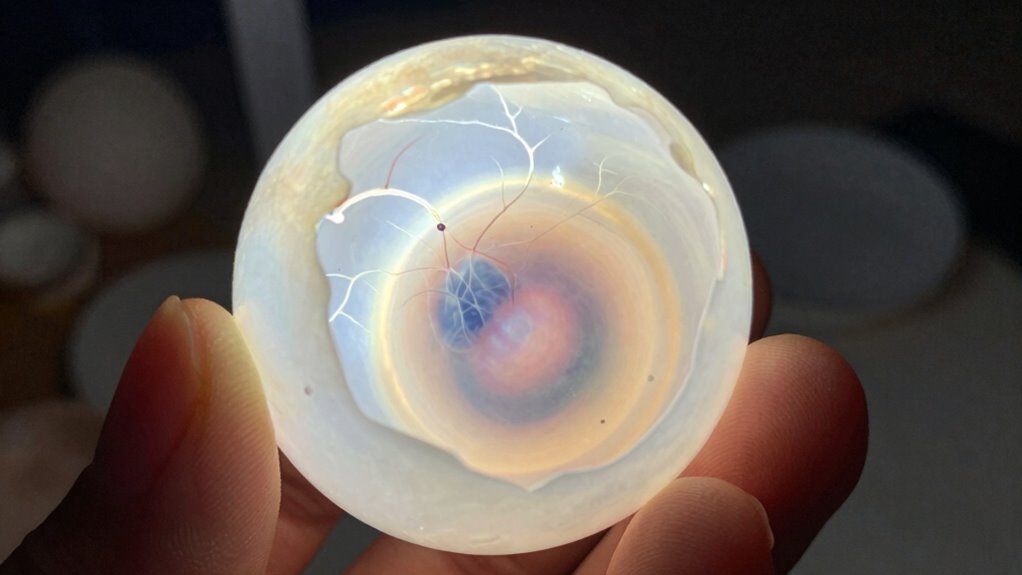
Have you ever wondered how to check if eggs are fertilized and developing properly? Candling eggs is a simple yet effective way to do this, especially if you want to monitor egg incubation and ensure poultry health. When you candle an egg, you hold it up to a bright light in a dark room and look for specific signs that indicate healthy development or potential issues. Recognizing these early changes makes the process easier and more reliable.
Candling eggs reveals signs of healthy development or potential issues, ensuring better hatch rates and poultry health.
The key to successful candling is knowing what to look for. First, check for a visible network of blood vessels spreading out from the embryo. These vessels appear as fine, web-like structures that signify active circulation and proper development. If you see this, you can be confident that the embryo is developing normally. On the other hand, if the egg appears clear with no sign of blood vessels, it’s likely unfertilized or the embryo has stopped developing. Identifying these signs early helps you make informed decisions about whether to keep or discard an egg, which ultimately supports healthier poultry populations.
Another important change to observe during candling is the presence of a dark spot, known as the embryo or the chick’s eye, which grows over time. In the early stages, this dark area is small but becomes larger and more defined as incubation progresses. If, after a few days, you notice the embryo isn’t growing or the dark spot remains small, it could mean the egg isn’t developing correctly. This might be due to poor egg quality, incubation issues, or health problems within your flock. By catching these signs early, you can prevent the spread of disease and maintain overall poultry health. Recognizing embryo development is crucial for successful hatching and flock management. Ensuring proper incubation conditions is also essential for optimal growth and development.
Additionally, pay attention to the egg’s air cell—the space at the larger end of the egg. During incubation, the air cell gradually enlarges as moisture escapes. If you notice an abnormally large or small air cell, it could indicate problems with egg storage or incubation conditions. A proper air cell size suggests good egg condition and stable egg incubation practices, both of which are critical for healthy hatchings. Proper egg storage is essential for maintaining egg quality prior to incubation, and monitoring the air cell helps ensure optimal conditions are maintained throughout incubation. Regularly monitoring humidity and temperature can also positively influence hatch success and help prevent issues related to improper storage. Monitoring the air cell is also important because proper storage can significantly influence hatch success.
Candling also helps you spot harmful issues like blood spots or embryo death, which appear as irregular shapes or cloudiness inside the egg. Removing these eggs prevents contamination and disease transmission, supporting healthier poultry. When you learn to spot these changes early, candling becomes a powerful tool to improve hatch rates and keep your flock healthy. It’s a simple practice that, with some attention to detail, can significantly enhance your poultry management.

Magicfly Bright Cool LED Light Egg Candler Tester, Powered Only by Power Supply
- Powered by External Power Supply: Not rechargeable, uses power supply
- Bright Cool LED Light: Fast, safe, high-lumen egg candler
- Long Durable Electric Cable: Includes American plug, easy on/off button
As an affiliate, we earn on qualifying purchases.
As an affiliate, we earn on qualifying purchases.
Frequently Asked Questions
What Tools Are Best for Candling Eggs?
The best tools for candling eggs are a bright flashlight or a specialized candling light, which help you see eggshell translucency clearly. You should also work in a dark room for better visibility. Use proper candling techniques, holding the egg steady and shining the light at the large end. These tools and methods make it easier to spot developing embryos or defects inside the egg.
How Often Should I Candle My Eggs?
You should candle your eggs every 3 to 7 days during incubation to monitor egg freshness and embryonic development. Some worry frequent candling might harm the eggs, but if you handle them gently, it’s safe. Regular checks help you catch early signs of infertility or embryo death, ensuring a higher hatch rate. Adjust the frequency based on the incubation duration and how active the embryo appears.
Can I Candle Eggs at Any Stage of Incubation?
Yes, you can candle eggs at any stage of incubation, but it’s best to do so during specific incubation stages for accurate assessment. Early on, candling helps check egg freshness and viability. During later stages, it reveals embryo development and health. Be gentle, avoid excessive handling, and remember that frequent candling can disturb incubation. Overall, monitoring at key points guarantees you track progress without harming the developing embryo.
What Signs Indicate a Healthy Embryo?
You’ll know the embryo is healthy when you see steady, uniform blood vessels spreading from the yolk toward the eggshell, indicating good embryo development. A viable egg shows a visible dark spot, the embryo, which enlarges over time. Clear, consistent growth and movement suggest the egg’s viability. If the blood vessels are faint or absent, it could mean the embryo isn’t developing properly, signaling potential issues with embryo development.
How Do I Prevent Egg Damage During Candling?
To prevent egg damage during candling, handle eggs gently and support their shells to avoid cracks. Use proper candlelight techniques by holding the light at a safe distance and avoiding excessive pressure, which can weaken eggshell strength. Make sure your hands are clean and dry to prevent slipping. By being cautious and employing gentle, controlled movements, you protect the eggs while effectively checking for embryo development.
Conclusion
Now that you know what to look for, candling eggs becomes a breeze. Spot the small blood vessels and the air cell first, and you’ll quickly see if your embryo is thriving—no need for a crystal ball! Think of it like a modern-day magic lantern, revealing secrets hidden inside. With this knowledge, you’ll be the egg whisperer, ensuring your hatchlings have the best start. Happy candling, and may your eggs hatch success!