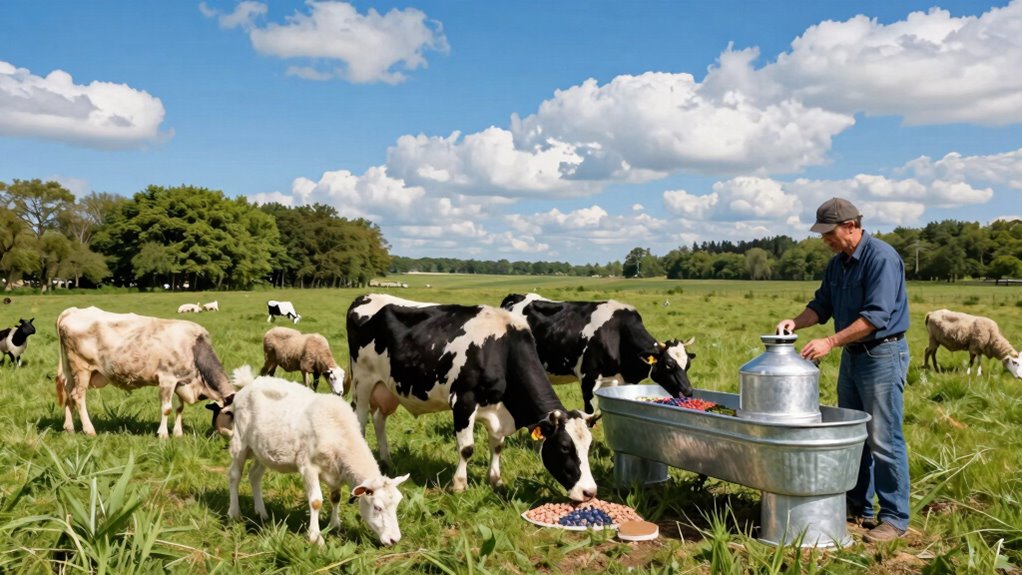

To develop a better mineral program for cattle, goats, and sheep, focus on providing bioavailable, easily digestible minerals tailored to your animals’ needs. Monitor factors like gut pH and mineral interactions to prevent deficiencies or antagonisms. Regular testing of soil, forage, and tissues helps guarantee proper balance. Adjust supplementation based on age, reproductive stage, and environmental conditions for ideal health and productivity. Keep exploring to learn how to fine-tune your mineral strategy even further.
Key Takeaways
- Use bioavailable minerals tailored to species-specific needs to enhance absorption and overall health.
- Regularly test soil, forage, and tissue to identify mineral deficiencies or excesses for precise supplementation.
- Manage mineral interactions and antagonisms to prevent nutrient competition and improve absorption efficiency.
- Adjust mineral programs according to age, reproductive stage, and environmental conditions for optimal results.
- Provide consistent supplementation through appropriate methods like free-choice mixes or boluses to maintain mineral balance.
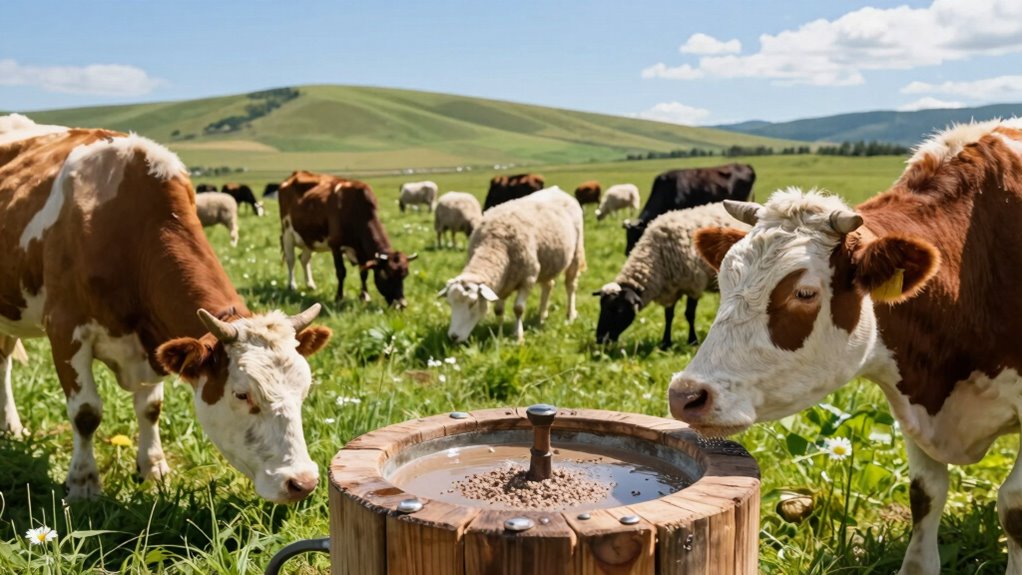
Implementing a better mineral program is fundamental for maintaining healthy cattle, goats, and sheep. When you focus on optimizing mineral absorption, you guarantee your animals get the nutrients they need from their feed and supplements. Proper mineral absorption isn’t just about offering the right minerals; it’s also about providing them in a form that your animals can easily digest and utilize. If minerals pass through their digestive system without being absorbed, your efforts go to waste, and your animals may develop deficiencies that affect their growth, reproduction, and immunity. To improve this, consider the mineral sources you provide—high-quality, bioavailable minerals can greatly enhance absorption rates. Additionally, factors like the pH of the rumen or gut and the presence of competing minerals influence how well minerals are absorbed, so it’s essential to monitor these conditions and adjust your supplementation accordingly. Ensuring bioavailability of minerals is crucial for effective absorption and overall animal health.
Maintaining a balanced trace mineral profile is essential for overall health and productivity. Trace minerals, though needed in small amounts, play a big role in enzyme function, hormone regulation, and immune response. An imbalance—whether excess or deficiency—can lead to serious health issues, reduced growth rates, and lower reproductive success. Your goal should be to establish a trace mineral balance tailored to your specific herd or flock, considering local soil and forage mineral content. Regular testing of soil, forage, and animal tissue can help you identify deficiencies or excesses, guiding you to fine-tune your mineral program. This approach prevents the common pitfalls of over-supplementation, which can cause toxicity, or under-supplementation, which leaves deficiencies unaddressed. Incorporating soil and forage testing into your management practices can help you make more informed supplementation decisions and optimize mineral intake. Moreover, understanding the interactions between minerals can help prevent antagonisms that hinder absorption and utilization. Properly managing mineral antagonisms is vital to ensure that nutrients do not interfere with each other’s absorption. Incorporating knowledge of mineral interactions can further enhance your program’s effectiveness by preventing nutrient competition and ensuring maximum absorption.
To achieve this, choose mineral supplements that are formulated to complement the natural mineral content of your animals’ diet. You should also pay attention to the timing and method of supplementation—whether through free-choice mineral mixes, boluses, or medicated feeds. Consistency is key; irregular supplementation can lead to fluctuations in trace mineral levels, disrupting the delicate mineral balance your animals need. Remember, animals’ mineral requirements can change with age, reproductive status, and environmental conditions, so staying proactive and adjusting your program is necessary. By focusing on maximizing mineral absorption and maintaining trace mineral balance, you set your animals up for sustained health, better growth, and improved productivity—all of which contribute to a more profitable and sustainable operation.

Jeffers Vita-Min Gel for Livestock & Horses – Multivitamin & Mineral Supplement with Selenium, Zinc, Potassium & Turmeric – Easy Oral Gel for Cattle, Goats, Sheep & Pig – 60 CC (2 OZ) Tube
- Type: Livestock & horse multivitamin gel
- Application: Easy oral gel with syringe
- Nutrient Content: Includes Vitamin E, B-12, Selenium, Zinc, Potassium, Turmeric
As an affiliate, we earn on qualifying purchases.
As an affiliate, we earn on qualifying purchases.
Frequently Asked Questions
How Often Should Mineral Supplements Be Provided to Livestock?
You should provide mineral supplements to your livestock consistently, usually every 4 to 6 weeks, to guarantee ideal mineral absorption. Regular supplement frequency helps prevent deficiencies and supports overall health and productivity. Observe your animals for signs of mineral deficiencies, and adjust the schedule if needed. Keep in mind that environmental factors and diet can influence mineral needs, so routine monitoring and timely supplementation are key for maintaining healthy cattle, goats, and sheep.
Are There Specific Minerals for Different Ages or Breeds?
Yes, you should consider breed-specific minerals and age-targeted supplementation for your livestock. Different breeds may have unique mineral needs, so providing breed-specific minerals helps meet those requirements efficiently. Additionally, young, pregnant, and aging animals have varying nutritional needs, making age-targeted supplementation crucial. Tailoring mineral programs this way ensures ideal health, growth, and productivity for your cattle, goats, and sheep throughout their different life stages.
Can Over-Supplementation Harm My Animals?
Yes, over-supplementation can harm your animals. Mineral toxicity occurs when they consume too many minerals, leading to health issues like toxicity symptoms or even death. Be cautious with supplementation risks by providing balanced amounts based on their specific needs. Regular testing and consultation with a veterinarian help prevent excess intake, ensuring your animals stay healthy without risking mineral toxicity from excessive supplementation.
What Signs Indicate Mineral Deficiencies in Cattle, Goats, or Sheep?
You might notice mineral deficiency symptoms like dull coats, poor growth, or decreased appetite in your animals, which are key livestock health indicators. Watch for signs such as lameness, teat or nose lesions, or abnormal behavior, as these also signal potential mineral issues. Don’t overlook subtle changes—early detection helps prevent serious health problems. Regular monitoring and proper mineral supplementation guarantee your livestock stay healthy and productive.
How Do I Balance Minerals With Other Nutritional Needs?
To balance minerals with other nutritional needs, you should focus on optimizing mineral absorption while considering nutritional interactions. Guarantee your animals get a balanced diet with proper forage, grains, and supplements tailored to their specific requirements. Avoid excesses or deficiencies that hinder mineral uptake. Regularly monitor animal health and consult a veterinarian or nutritionist to adjust mineral levels, preventing imbalances that could impair overall growth and productivity.
Conclusion
By implementing a better mineral program, you’re not just feeding your animals—they’re thriving. Some believe that proper mineral supplementation can truly transform herd health and productivity, and evidence supports this. When you give your cattle, goats, and sheep what they need, you’re investing in their future. Trust in the science, stay consistent, and watch your animals flourish. Your dedication to a smarter mineral program could be the key to stronger, healthier herds.