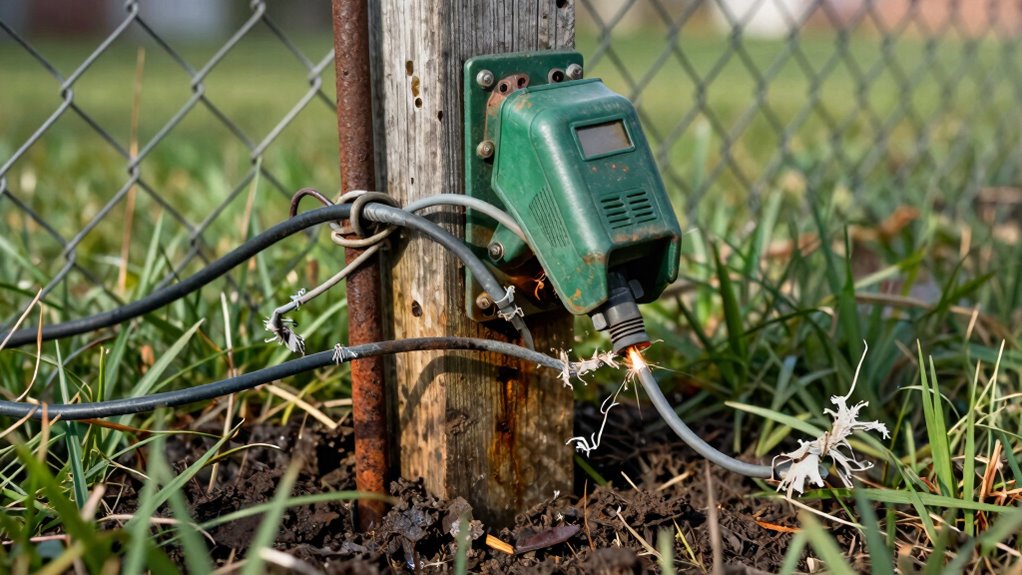

If your fence isn’t delivering strong or consistent shocks, the problem often starts with grounding, not the charger itself. Poor grounding causes voltage fluctuations and weak pulses, which can make animals hesitant or push through. Faulty ground rods or loose connections are common culprits. Regularly inspecting and maintaining your grounding system can fix many issues before replacing equipment. Stay with us to discover how to guarantee your fence system works safely and reliably.

Get garden gear delivered free with Prime
- Fast, free delivery on millions of items
- Prime Video, Amazon Music and more included
- Member-only deals all year
Key Takeaways
- Improper grounding causes inconsistent or weak pulses, leading to fence performance issues.
- Faulty or corroded ground rods disrupt electrical flow, mimicking charger malfunctions.
- Weak or loose ground connections increase voltage fluctuations, affecting animal safety.
- Regular maintenance ensures proper grounding, preventing problems before charger replacement is needed.
- Proper grounding stabilizes voltage and enhances overall fence system reliability.

Many fence charger issues stem from improper grounding, which is often overlooked but crucial for the system to work correctly. When your fence isn’t grounded properly, it can lead to inconsistent or weak pulses, making it difficult to contain or protect your animals effectively. One of the biggest concerns with faulty grounding is animal safety. If the charger isn’t delivering a steady, reliable shock, your animals might push through the fence or get hurt trying to escape. Proper grounding guarantees the shock is delivered efficiently, keeping your livestock safe and secure.
Proper grounding ensures consistent shocks, keeping animals safe and preventing fence malfunctions.
Voltage fluctuations are another common problem linked to poor grounding. When the ground connection isn’t solid, the voltage can fluctuate unpredictably, causing the charger to either underperform or deliver inconsistent shocks. These fluctuations can confuse your animals, making them hesitant or frightened, which defeats the purpose of your fence. You might also notice the charger’s indicator lights flickering or showing errors, which often points back to grounding issues. Ensuring a good ground connection stabilizes voltage levels, providing a consistent and effective barrier.
In many cases, people think their fence charger is malfunctioning when, in fact, the issue lies in the grounding system. It’s tempting to replace the charger or upgrade to a more powerful unit, but that rarely solves the core problem. Instead, you should check the ground rods and wiring connections first. Make sure the ground rods are driven deep into moist soil—at least 6 to 8 inches—and that they’re free from corrosion or rust. Using multiple ground rods spaced apart can also improve grounding effectiveness, especially in dry or rocky soil conditions. Proper grounding creates a low-resistance path for electrical current, which is essential for animal safety and the overall performance of your fencing system. Proper grounding techniques are essential for optimal fence charger performance and safety.
Additionally, routine maintenance of your grounding system can prevent many problems before they arise. Regularly inspect the ground connections, clean off any corrosion, and ensure the wires are securely attached. Remember, a well-grounded system not only protects your animals but also prolongs the life of your fence charger. Proper grounding practices can significantly reduce voltage fluctuations, leading to more reliable operation and a safer environment for your livestock. You’ll notice fewer voltage fluctuations, more reliable operation, and a safer environment for your livestock. Properly maintaining the grounding system can help identify issues early and avoid costly repairs. Ultimately, taking the time to verify and improve your grounding setup can save you from costly repairs and ensure your fencing system functions properly, keeping your animals safe and secure with minimal hassle. Proper grounding techniques are essential for optimal fence charger performance and safety.
A grounding system that is properly designed and maintained can also help prevent electrical shocks to humans and animals, further emphasizing its importance.
As an affiliate, we earn on qualifying purchases.
Frequently Asked Questions
How Do I Properly Test My Fence Charger’s Voltage?
To properly test your fence charger’s voltage, use a voltmeter designed for high voltage, and guarantee your charger is connected to a grounded, conductive fence. Check for voltage fluctuation along the fence line, which indicates proper operation. Regular charger maintenance helps maintain consistent voltage output. If readings are low or inconsistent, inspect grounding connections and clean contacts, as poor grounding often causes voltage issues more than the charger itself.
What Types of Grounding Rods Are Most Effective?
You should choose grounding rods made of copper or copper-bated steel because they’re highly conductive and durable. For grounding installation, drive rods deep into moist soil, ensuring a solid, corrosion-resistant connection. Use multiple rods if needed, spacing them apart to improve conductivity. Proper installation involves driving the rods straight into the ground without bending, then connecting your fence charger securely to establish a reliable electrical path that keeps your fence working effectively.
Can Weather Affect the Grounding System’s Performance?
Weather impact can considerably affect your grounding system’s performance. Heavy rain or moisture can improve grounding by reducing resistance, but extreme weather like snow or ice can cause corrosion or damage to grounding rods. Conversely, drought or dry conditions may increase resistance, weakening the system. Regularly inspecting your grounding rods for corrosion and ensuring they’re properly grounded helps maintain ideal fence charger function despite weather challenges.
How Often Should I Inspect My Grounding Connections?
You should inspect your grounding connections at least twice a year. Studies show that proper grounding markedly reduces fence charger issues. Regular inspection guarantees your grounding materials remain effective and corrosion-free. During each check, look for loose or damaged connections, and clean or replace components as needed. Consistent maintenance keeps your fence system reliable, especially after severe weather, preventing problems before they start and ensuring your charger functions at its best.
What Are Signs of a Faulty Fence Charger?
You’ll notice a faulty fence charger if it struggles to deliver a strong shock, shows inconsistent pulses, or the energizer light flickers. Poor electrical conductivity caused by corrosion or dirt buildup can weaken performance, so inspect and clean connections regularly. Faulty chargers may also overheat or make unusual noises. Regular corrosion prevention and proper grounding help maintain peak function, ensuring your fence remains effective and safe for your animals.
Conclusion
Remember, the root of fence charger problems often lies in grounding issues, not the charger itself. Don’t let a simple misconnection turn your secure fence into a fragile barrier. Think of grounding as the foundation of a sturdy house—without it, everything else can crumble. So, before you replace that charger, double-check your grounding. It’s the silent hero in your fencing system, quietly holding everything together—trust me, it’s worth the quick inspection.
Fall yard work Picks
leaf blowers
As an affiliate, we earn on qualifying purchases.