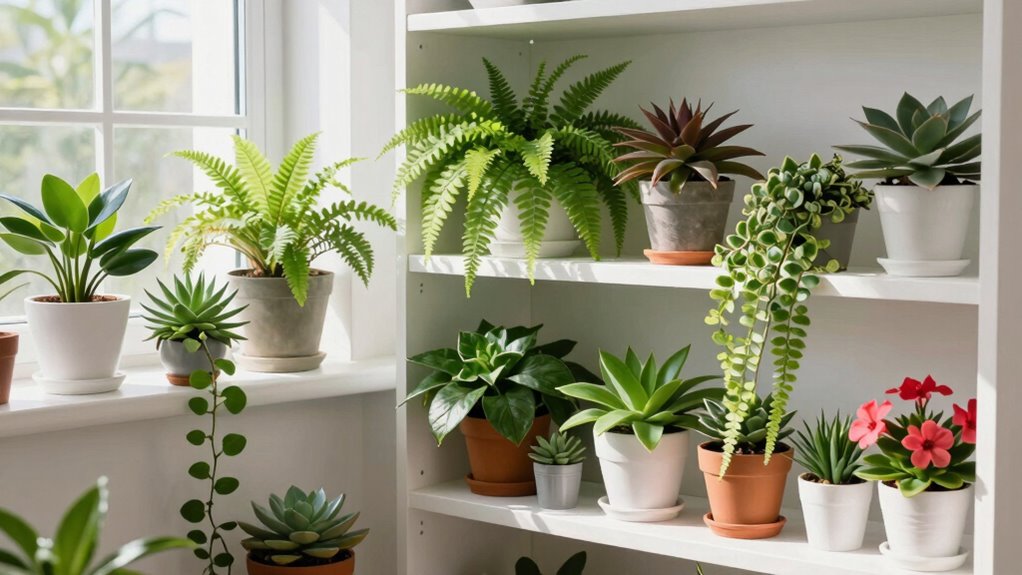

If you don’t plan regular plant movement, your nursery shelving will quickly become overcrowded. This makes it hard to access individual plants and can lead to neglected needs, inconsistent watering, and increased pest spread. Proper organization, spreading plants out, and adjusting positions based on growth habits help prevent issues. Keeping things tidy and organized also improves airflow and lighting. To learn how strategic reorganization can maintain a healthy nursery environment, keep exploring effective management tips.
Key Takeaways
- Proper planning of plant movement prevents overcrowding and maintains easy access for care and inspection.
- Regular reorganization ensures optimal spacing, airflow, and light, reducing pest risks and promoting healthy growth.
- Systematic movement helps identify early pest or health issues by keeping plants accessible.
- Overcrowding hinders pest detection and control, increasing the risk of infestations.
- Considering plant growth habits during reorganization maintains order and prevents future overcrowding.
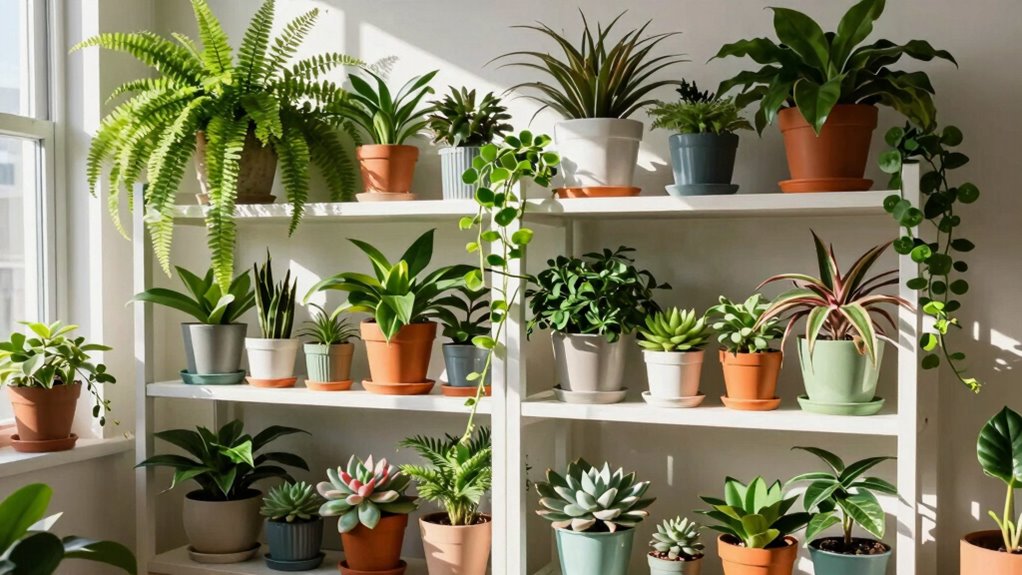
If you don’t plan plant movement carefully, nursery shelving can quickly become overcrowded, making it difficult to access and care for your plants. When shelves are packed without a clear organization system, it’s easy to overlook individual plants or forget their specific needs. This overcrowding can lead to neglect, especially with critical tasks like plant watering. If you can’t reach plants easily, you might miss watering schedules, which could cause some plants to wilt or become stressed. Overwatering or underwatering becomes a real risk when plants aren’t regularly checked, so maintaining a logical flow is essential for keeping them healthy. Additionally, thoughtful plant movement can help prevent pest spread, reducing the chance of infestations taking hold. Pest management also suffers in overcrowded conditions. When plants are crammed together, pests can spread rapidly from one plant to another. Without proper movement planning, you might miss early signs of infestation because it’s harder to inspect each plant thoroughly. Overcrowded shelves create blind spots, allowing pests like aphids, mites, or fungal issues to go unnoticed until they become severe problems. Proper plant movement ensures you can easily access each plant for regular inspections, applying pest control measures promptly and reducing the risk of widespread infestations. Incorporating systematic organization into your nursery setup can save time and prevent issues before they escalate. Planning your plant movement also helps optimize airflow and light, which are critical for healthy growth and pest prevention. When plants are spaced appropriately, it also promotes healthy root development, which is essential for overall plant vitality. Proper spacing reduces humidity and damp conditions that pests love, and it makes it easier to spot early signs of trouble. Regularly scheduled movement and reorganization can keep your nursery tidy and efficient, ensuring plants stay healthy and pest-free. Additionally, considering plant growth habits during movement planning can help maintain an organized and accessible nursery environment.

Shario Nursery Book Shelves, 4-Pack White Floating Shelves for Wall Kids, Scalloped Shelves, Wall Book Shelves for Bedroom Kids, Toddler Room, Baby Room, Nursery Decor
- Premium Hardwood Construction: Durable and long-lasting wood
- Easy to Install: Includes hardware and simple instructions
- Child-Safe Materials: Non-toxic and sustainable
As an affiliate, we earn on qualifying purchases.
As an affiliate, we earn on qualifying purchases.
Frequently Asked Questions
How Do I Choose the Best Shelving Material for Plants?
To choose the best shelving material, consider your plants’ watering and sunlight needs. Select for materials like metal or plastic, which resist moisture and are easy to clean, helping prevent mold or rot. If your plants need more sunlight, go for open or wire shelving to promote air circulation. Wood is stylish but may require more maintenance. Match your shelving choice to your plants’ specific watering habits and sunlight requirements for ideal growth.
What Are the Signs of Overcrowding in Nursery Shelves?
Think of your shelves like a busy highway; if too many cars (plants) pack in, congestion occurs. Signs of overcrowding include overcrowded plant spacing, leaves overlapping, and limited airflow. When plants compete for space, they can become stressed, leading to slower growth or disease. Always check your shelf capacity and guarantee adequate spacing to keep your nursery healthy and thriving. Regularly assess and adjust to prevent traffic jams of plants on your shelves.
How Often Should I Reorganize Plant Placement?
You should reorganize plant placement weekly to accommodate plant growth and maintain shelf aesthetics. As plants grow, they may need more space, so regularly adjusting their positions prevents overcrowding and guarantees proper airflow. Keep an eye on plant size and health, and move them as needed. Consistent reorganization helps keep your nursery organized, promotes healthy growth, and maintains a visually appealing display.
What Tools Help in Planning Efficient Plant Movement?
Think of your planning tools as your secret weapons, like a futuristic time machine. Automated scheduling and mobile planning apps help you efficiently map out plant movement, ensuring your nursery stays organized. These tools let you visualize space, set reminders, and adjust plans on the fly, saving you time and preventing overcrowding. With them, you can easily keep your nursery tidy, dynamic, and ready for any seasonal change or new arrivals.
How Can I Prevent Plant Damage During Rearrangement?
To prevent plant damage during rearrangement, you should handle plants gently and support their root systems. Check your watering schedule beforehand to make sure plants aren’t stressed from over or underwatering. Keep pest management in mind by inspecting plants for pests before moving them. Carefully plan your layout to minimize unnecessary movement, and always use clean tools to avoid spreading disease. These steps help keep your plants healthy and damage-free during reorganization.
Conclusion
To keep your nursery organized, plan your plant movement carefully. Without thoughtful space management, shelves can quickly become overcrowded, making it hard to access plants and maintain order. Did you know that overcrowded shelving can reduce plant growth by up to 30%? By proactively rotating and rearranging your plants, you not only maximize space but also promote healthier growth. Stay ahead with strategic movement, and your nursery will stay efficient and thriving.