TL;DR

Get garden gear delivered free with Prime
- Fast, free delivery on millions of items
- Prime Video, Amazon Music and more included
- Member-only deals all year
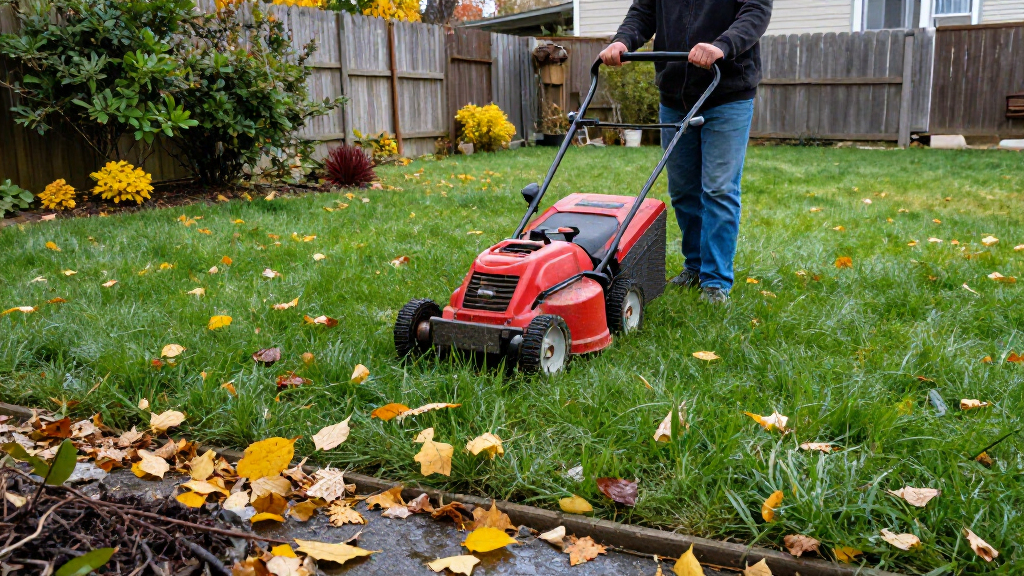
Grass should be mowed while it is still growing in late fall, but experts say a very short final cut is not necessary. Slightly lowering the cut may help in snowy areas; avoid mowing or walking on frosted or frozen turf because it can be damaged.
Homeowners do not need to scalp their lawns before winter, according to Jason Lanier, a turf-management extension specialist at UMass Amherst. His advice is to keep mowing at the recommended height while grass is growing, then stop when growth ends; the type of grass and local climate affect the best final height.
Lanier says grass can keep growing later into fall than many people expect. In some years, he has mowed his own lawn in Massachusetts into December. Rather than stopping at a set calendar date, homeowners can base their last mowing on whether the lawn is still growing. Continuing to mow at the recommended height supports lawn density and maintains the surface, he says.
A slightly lower final cut is widely accepted as a way to leave a tidier lawn and reduce the amount of leaf tissue that snow mold and other winter problems can affect, Lanier says. But that does not mean cutting as low as possible. The source report notes that Alabama extension guidance recommends a height of 1 to 2 inches for warm-season lawns and 3 to 4 inches for cool-season lawns. Those regional figures illustrate why grass type and climate matter; they are not a universal height prescription.
Lanier says most of the grass’s existing shoot tissue will die back over winter as plants enter dormancy, another reason a dramatic late-season cut is unnecessary. He identifies the more important winter rule as keeping off frosted or frozen turf: mowing or walking on it can injure the lawn, with damage lasting until spring growth returns, and severe injury may kill some plants.
Avoiding Winter Lawn Damage
The advice offers a practical way to avoid two common end-of-season mistakes: stopping mowing while the lawn is still growing, and cutting it excessively short in pursuit of a winter-ready appearance. A very low cut is not needed simply because cold weather is approaching, and the appropriate final height varies with the grass and local conditions.
What homeowners do after frost arrives may matter more than shaving off extra grass before winter. Lanier warns that pressure from a mower or foot traffic on frozen or frosted turf can cause visible injury that persists until growth resumes. Waiting for suitable conditions protects the lawn from avoidable damage.
As an affiliate, we earn on qualifying purchases.
Growth, Grass Type and Snow
The guidance is based on advice from Lanier, an extension specialist and group leader in turf management at UMass Amherst. The report presents his recommendations as seasonal lawn-care guidance, not as a fixed date or a single cutting height for every property.
Climate helps explain why advice differs. In snowy areas, a somewhat shorter final cut is commonly used to keep the lawn tidy and reduce leaf area exposed to snow-related problems. In warmer regions, warm-season grasses have different needs, and snow mold may be less of a concern. The Alabama extension heights cited in the report apply to that guidance and should not be treated as a nationwide standard.
“It’s surprising how late that the grass can keep growing.”
— Jason Lanier
The Right Height Varies Locally
The source guidance does not give one final mowing height for every lawn. The right height depends partly on the grass species and climate, and the Alabama extension figures cited in the report are specific regional recommendations. Homeowners whose grass type or local advice is unclear should check with their local extension service.
The report also does not set a universal date for the final mow. Growth can continue late into fall, and the Massachusetts example of mowing into December is an illustration from some years, not a prediction for other regions. Local conditions determine when growth has stopped and when frost makes the lawn unsafe to mow.
Let Growth Set the Last Mow
For the rest of fall, homeowners can continue mowing at the recommended height while the lawn is growing, then stop once growth ends. A slightly lower final cut may suit some snowy locations, but a close buzz cut is not required. The source does not provide a single date or height that applies everywhere.
Once frost or frozen ground is present, Lanier’s advice is to keep both mowers and foot traffic off the turf. The lawn can be assessed again when growth resumes in spring, when any winter injury will become easier to see.
Key Questions
Should I cut my grass very short before winter?
No. Lanier says a close cut is not necessary. Keep mowing at the recommended height while grass is growing; a modestly lower final cut may be appropriate in some conditions.
When should I stop mowing for the season?
Stop when the grass stops growing, rather than relying on a fixed calendar date. Lanier says growth can continue later into fall than many homeowners expect.
Does the best final height depend on grass type?
Yes. Grass type and climate affect the appropriate height. The report cites Alabama extension recommendations of 1 to 2 inches for warm-season lawns and 3 to 4 inches for cool-season lawns, but those are regional figures, not universal instructions.
Can I walk on my lawn after frost?
Lanier advises against walking on frosted or frozen turf as well as mowing it. Pressure can injure grass, and the damage may remain visible until spring growth returns.
Source: rss
Fall yard work Picks
leaf blowers
As an affiliate, we earn on qualifying purchases.