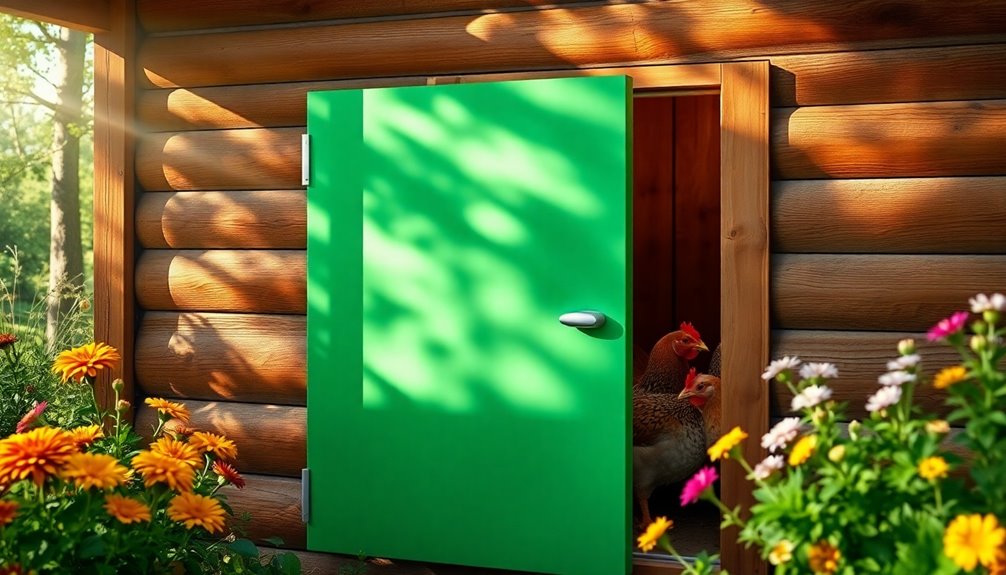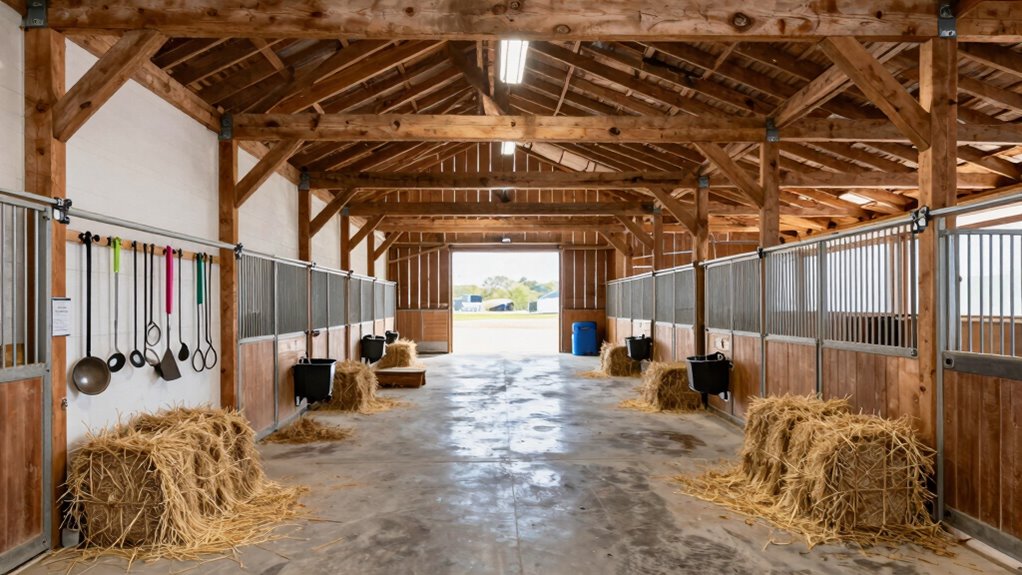

To improve daily chore flow, adjust your barn layout to prioritize livestock circulation and efficient storage. Position feeding areas near feed storage, and keep tools and supplies within easy reach. Create wide aisles for smooth movement and plan zones to prevent cross-contamination. Proper ventilation, lighting, and waste disposal spots also boost comfort and safety. Small layout tweaks can make chores smoother; keep exploring to find more ways to enhance your barn’s efficiency.

Get garden gear delivered free — and shop member deals
- Fast, free delivery on millions of items
- Access to Prime Big Deal Days deals on October 6–7
- Prime Video, Amazon Music and more included
Key Takeaways
- Optimize livestock circulation to reduce stress and prevent congestion during routine chores.
- Arrange storage zones for feed, tools, and supplies near their use areas to save time.
- Design a logical barn layout that minimizes backtracking and improves workflow.
- Incorporate wide aisles and accessible waste disposal areas for smoother movement.
- Implement sustainable features like proper ventilation and lighting to create a healthier environment.

Are you considering changing your barn layout to improve efficiency or accommodate new needs? If so, you’re already thinking about how to make daily chores smoother and more manageable. One of the most impactful adjustments you can make involves optimizing livestock circulation. When animals can move naturally and comfortably through designated pathways, it reduces stress for the animals and cuts down on time spent managing their movement. Clear, well-planned circulation routes prevent congestion, allowing you to access different areas of the barn quickly and safely. Proper livestock flow also minimizes accidental injuries and makes routine tasks like feeding, cleaning, and health checks more straightforward.
Optimizing livestock circulation reduces stress, prevents congestion, and streamlines daily chores for a safer, more efficient barn environment.
Alongside livestock circulation, focusing on storage optimization can notably enhance your barn’s functionality. Efficient storage solutions mean that feed, tools, and supplies are always within easy reach, eliminating unnecessary trips and clutter. Consider implementing designated storage zones tailored to your daily needs, such as feed storage near feeding areas or tool racks close to work zones. When storage is well-organized and strategically placed, you spend less time searching for items and more time performing essential chores. This arrangement also helps prevent wastage—by keeping feed and supplies properly stored, you reduce the chances of spillage or spoilage. Incorporating efficient space utilization can further maximize your barn’s capacity and streamline workflow. Additionally, paying attention to barn layout design can ensure that your space is both functional and adaptable as your needs evolve.
When planning your barn layout, think about how the spaces are connected. You want to create a logical flow that minimizes backtracking and streamlines your routine. For example, position the feed storage close to feeding areas, and keep the waste disposal zone separate but accessible for quick cleanup. Incorporate wide aisles that facilitate easy movement of both animals and equipment, reducing bottlenecks during busy times. If you have multiple livestock types, design specific zones tailored to each group, which helps prevent cross-contamination and makes chores more efficient. Additionally, integrating biodiversity-friendly features into your barn design can promote healthier ecosystems and support sustainable practices on your farm. Recognizing the importance of proper barn ventilation can significantly improve the overall health and comfort of your livestock, making routine chores less stressful and more manageable. Proper lighting and ventilation can also help prevent respiratory issues and ensure a healthier environment for everyone.
Ultimately, rethinking your barn’s layout with livestock circulation and storage optimization in mind transforms your daily chores from a hectic scramble into a smoother, more predictable process. By making these adjustments, you’ll find yourself saving time, reducing effort, and creating a more comfortable environment for your animals and yourself. Small changes in layout can lead to big improvements in efficiency, making every day’s chores feel a little less overwhelming.
As an affiliate, we earn on qualifying purchases.
Frequently Asked Questions
How Do I Prioritize Tasks When Redesigning My Barn Layout?
When redesigning your barn layout, prioritize tasks by focusing on workflow optimization and task delegation. Start by identifying the most time-consuming chores and space needs, then arrange areas for easy access and movement. Delegate tasks where possible to streamline chores. Keep the layout adaptable, allowing adjustments as your workload changes. This approach helps you stay efficient, reduce fatigue, and guarantee smooth daily operations in your barn.
What Materials Are Best for Durable Barn Modifications?
Choosing materials for durable barn modifications is like selecting the strongest building blocks. Opt for sustainable materials like reclaimed wood, bamboo, or recycled metal, which are eco-friendly and long-lasting. Weather-resistant choices such as treated lumber, metal panels, or concrete help withstand the elements. These options guarantee your barn remains sturdy and low-maintenance over time, saving you effort and money while supporting eco-conscious building practices.
How Can I Minimize Disruption During Barn Renovations?
You can minimize disruption during barn renovations by planning work during off-peak hours, like early mornings or late evenings. Keep essential farm equipment accessible and operational to avoid downtime. Prioritize animal comfort by creating temporary spaces or partitions, reducing stress. Communicate clearly with your team, and gradually phase in changes to maintain workflow. This approach helps protect your animals and keeps chores running smoothly throughout the renovation process.
Are There Specific Barn Layouts Recommended for Different Livestock Types?
Sure, because mixing goats with pigs and chickens is everyone’s dream! For livestock compatibility, choose layouts tailored to their needs—separate sections for cattle, horses, or poultry—and guarantee good ventilation strategies to prevent respiratory issues. Properly designed, specific layouts help keep animals comfortable and stress-free, boosting productivity. Remember, a barn built with their unique needs in mind isn’t just smart—it’s essential for a harmonious farm environment.
What Safety Considerations Should I Keep in Mind?
You should prioritize safety by minimizing fire hazards, such as keeping electrical wiring well-maintained and away from flammable materials. Guarantee proper ventilation to prevent poor air quality and reduce respiratory issues. Regularly inspect your barn for hazards like sharp objects or loose flooring. Clear pathways for easy movement, and install fire extinguishers accessible to everyone. Addressing these concerns helps create a safer environment for both livestock and workers.
Conclusion
By rearranging your barn layout, you’ll find chores becoming smoother—almost like a well-choreographed dance. I once watched a farmer reorganize her stalls, and suddenly, her daily routines felt effortless, almost like gliding across a polished floor. Small changes can turn a chaotic day into a well-oiled machine. So, don’t hesitate to tweak your space. With each adjustment, you’re choreographing your farm’s success, making every day a little easier and a lot more enjoyable.
Halloween Picks
halloween
As an affiliate, we earn on qualifying purchases.