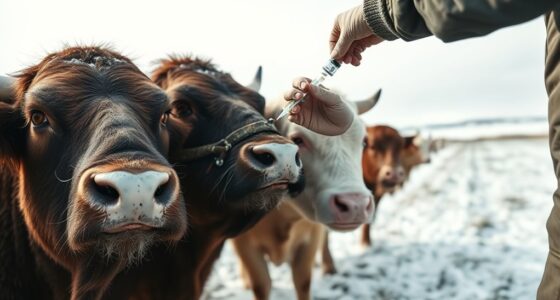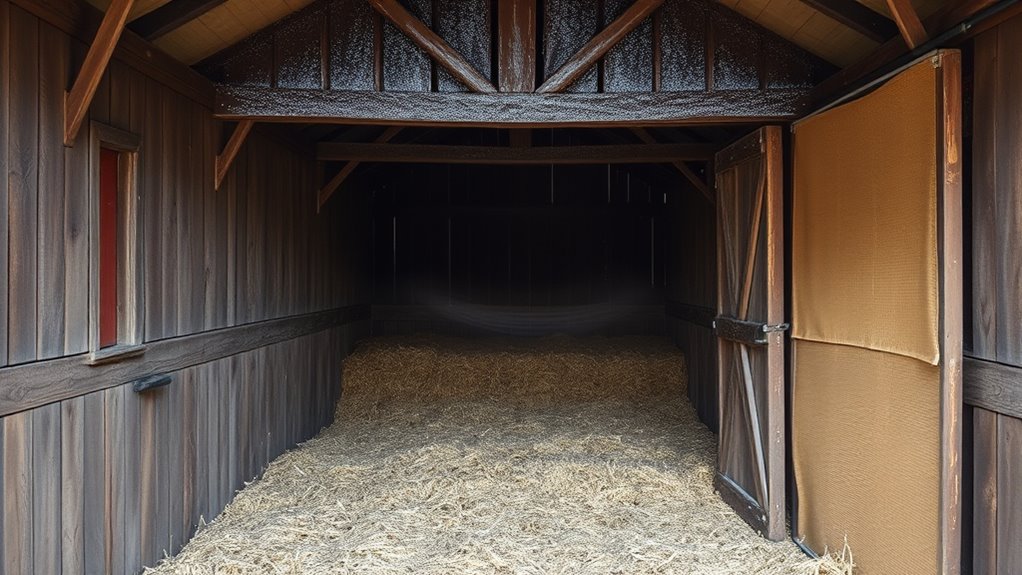

To prepare your barn for the first frost, start by inspecting and upgrading insulation around walls, ceilings, and vents to block drafts and retain heat. Choose thick, dry bedding like straw or shavings and add 4-6 inches to keep animals warm. Seal gaps around doors and windows, and consider internal windbreaks to reduce airflow. Proper ventilation and monitoring temperature guarantee comfort, and if you explore further, you’ll find effective ways to keep your barn cozy all winter.
Open a free Amazon Business account
Business pricing, bulk buying and tax-exempt orders.
As an affiliate, we earn on qualifying purchases.
Key Takeaways
- Assess and upgrade barn insulation by sealing gaps, adding weather stripping, and installing appropriate insulation materials to retain heat.
- Use thick, dry bedding such as straw or shavings to provide insulation and a cozy environment for livestock.
- Block drafts around resting areas with internal barriers, curtains, or hay bales to minimize cold airflow.
- Maintain proper ventilation to balance airflow, moisture control, and temperature, preventing drafts and condensation.
- Regularly monitor temperature and humidity levels, adjusting insulation, bedding, and ventilation as needed for optimal comfort.
As an affiliate, we earn on qualifying purchases.
Assessing Your Barn’s Current Insulation Needs

Before the first frost arrives, it’s essential to evaluate your barn’s existing insulation. Walk through your space and identify areas where cold air seeps in or drafts form. Check the condition of wall and ceiling insulation—are there gaps, tears, or compressed sections? Look for exposed gaps around windows, doors, and vents. Feel for cold spots on walls and floors, which indicate poor insulation. Inspect any insulation materials currently installed; if they’re old, damaged, or insufficient, it’s time to contemplate upgrades. Proper assessment helps you determine whether your barn can retain heat effectively or if additional insulation is necessary. Additionally, understanding insulation effectiveness can guide you in choosing the right upgrades to ensure your barn stays warmer, protecting your animals from harsh winter conditions.
Selecting the Right Bedding Materials for Cold Weather

Once you’ve assessed your barn’s insulation needs, choosing the right bedding materials becomes essential for keeping your animals warm during cold weather. The right bedding not only insulates but also provides comfort and absorbs moisture, preventing chills. Straw is popular for its insulation and affordability, while shavings offer excellent absorption and are less dusty. Soft bedding can boost your animals’ well-being, reducing stress and promoting better health. Consider these options:
| Bedding Material | Benefits |
|---|---|
| Straw | Insulates well, cheap, readily available |
| Shavings | Absorbs moisture, comfortable |
| Hemp | Eco-friendly, durable |
| Recycled Paper | Soft, high absorbency |
Choosing wisely creates a cozy, safe environment that supports your animals through the coldest days, especially when combined with proper barn insulation.
Proper Bedding Depth and Maintenance Practices

To guarantee your animals stay warm and dry, maintaining the proper bedding depth is essential. You should aim for about 4 to 6 inches of clean, dry bedding to provide insulation and absorb moisture effectively. Regularly check the bedding to prevent compaction and ensure it remains loose and fluffy. Here are four key maintenance practices:
- Add fresh bedding daily to replace soiled material and maintain depth.
- Turn and fluff the bedding regularly to keep it airy and prevent mold.
- Remove wet or manure-soiled bedding promptly to reduce bacteria and odors.
- Monitor moisture levels and adjust bedding thickness as temperatures drop.
- Incorporate goal setting to help establish consistent bedding routines and improve overall barn management.
Consistent maintenance keeps bedding effective, ensuring your animals stay comfortable and healthy throughout the frost.
Sealing Gaps and Drafts in the Barn Structure

To keep your barn warm during the first frost, you need to identify where drafts are entering. Check around doors, windows, and any cracks in the walls for gaps. Seal these openings with weatherproof materials to prevent cold air from sneaking in and reducing heat efficiency. Implementing effective insulation techniques can further enhance your barn’s thermal retention.
Identifying Draft Sources
Before winter sets in, it’s essential to identify where drafts are entering your barn. Start by inspecting common entry points where cold air sneaks in. Look for:
- Cracks around windows and doors, especially where hinges or frames meet the wall.
- Gaps along the barn’s foundation or baseboards that may let in chilly air.
- Openings around ventilation systems or exhaust fans that aren’t sealed properly.
- Holes or gaps near utility pipes and electrical outlets on exterior walls.
Use a flashlight at dusk or hold a piece of tissue near suspected areas—if the tissue flutter or light shines through, you’ve found your draft source. Pinpointing these spots helps you focus on sealing the most significant leaks. Ensuring proper insulation can further reduce heat loss and improve overall barn warmth during cold months.
Sealing With Weatherproof Materials
Sealing gaps and drafts in your barn is a crucial step to maintain warmth and protect livestock during the first frost. Start by inspecting all doors, windows, and vents for cracks or holes. Use weatherproof materials like caulk, weatherstripping, or expanding foam to seal small gaps. For larger openings, consider installing or repairing doors and panels to close gaps completely. Pay special attention to areas around the foundation and roofline, where drafts often sneak in. Insulation can also help, but sealing gaps prevents heat loss more effectively. Regularly check sealed areas to ensure they remain intact as weather changes. Incorporating proper insulation materials can enhance the effectiveness of your sealing efforts. Proper sealing not only keeps your barn warmer but also reduces heating costs and prevents cold drafts that can stress your animals.
Installing or Upgrading Insulation Solutions

Choosing the right insulation materials can make a big difference in keeping your barn warm. Proper installation techniques guarantee the insulation works effectively and lasts longer, saving you time and money. Regular maintenance and upgrades help maintain peak performance as your needs evolve. Incorporating automation technologies into your barn management can further optimize energy efficiency and temperature regulation.
Insulation Material Options
Selecting the right insulation material is essential for effectively preparing your barn for the first frost. Your choice impacts warmth retention and energy efficiency. Consider these options:
- fiberglass batts – lightweight, easy to install, and cost-effective, ideal for walls and ceilings.
- spray foam – provides excellent sealing and insulation in hard-to-reach areas, creating an airtight barrier.
- rigid foam boards – durable and moisture-resistant, perfect for insulating exterior walls or under floors.
- wool or mineral-based insulation – natural options that offer good thermal properties and are environmentally friendly.
Each material has unique benefits; choose based on your barn’s structure, climate, and budget. Proper selection guarantees your barn stays warm and protected during the first frost. Refrigeration cycle is fundamental to understanding heat transfer, which can help in choosing insulation materials that optimize energy efficiency.
Optimal Installation Techniques
To guarantee your insulation performs effectively, proper installation techniques are essential. First, ensure all surfaces are clean and dry before installation. Avoid gaps or compressed areas, as these reduce insulation efficiency. Use a staple gun or adhesive to secure batts or rolls tightly against walls and ceilings without stretching or compressing the material. Seal all edges and seams with weatherproof tape or foam sealant to prevent drafts. Focus on covering every corner fully, especially around outlets and vents. Additionally, understanding cookie consent management can help ensure your installation process aligns with best practices for site security and user privacy. Following these steps ensures your insulation maintains consistent R-values and keeps your barn warm through the frost.
Maintenance and Upgrades
Regular maintenance and timely upgrades keep your barn’s insulation performing at its best. You should regularly inspect for damaged or sagging insulation, ensuring it stays in place and effective. Upgrading old or compressed insulation can greatly improve heat retention. Consider adding weather stripping around doors and windows to prevent drafts. Additionally, sealing gaps in walls or vents stops cold air from seeping inside. Incorporating energy-efficient insulation types can further enhance your barn’s warmth and reduce heating costs. Staying proactive ensures your barn stays warm and energy-efficient throughout the cold season, protecting your animals and reducing heating costs.
Ensuring Adequate Ventilation Without Losing Heat

As the first frost approaches, it’s essential to strike a balance between providing your barns with fresh air and retaining warmth. Proper ventilation helps reduce moisture, ammonia buildup, and respiratory issues for your animals. To achieve this, open vents or windows just enough to allow air exchange without creating drafts. Use adjustable vents or fans that can be controlled based on outside conditions. Keep airflow steady but gentle, avoiding strong gusts that can chill your livestock. Regularly check that vents are functioning properly and are not blocked by bedding or debris. Remember, consistent, moderate airflow maintains a healthy environment, minimizes moisture, and prevents temperature fluctuations that could stress your animals during cold weather.
Creating Windbreaks and Shelter Within the Barn
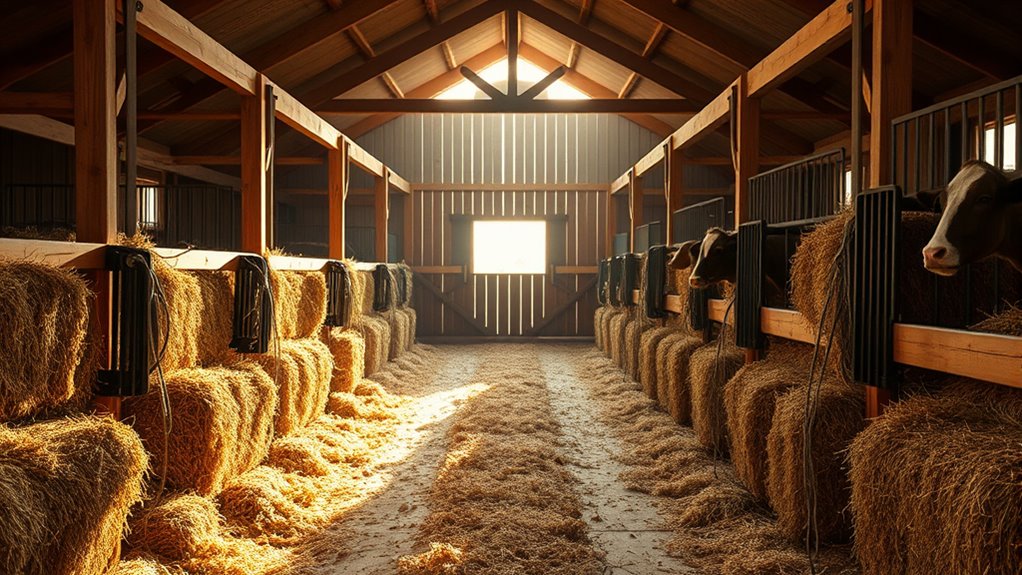
Since wind can substantially lower barn temperatures and stress your animals, creating effective windbreaks and shelters inside the barn is essential as frost approaches. You want to block drafts and direct airflow away from resting areas. Start by setting up partitions or heavy curtains to shield feed and bedding zones. Use bales of straw or panels to build internal barriers that reduce drafts near animals. Position these barriers strategically around high-traffic areas and entrances. Imagine a cozy nook in the corner, protected by thick hay bales, or a curtain that sways with the breeze, shielding animals from chilling gusts. These simple steps help maintain warmth and comfort, reducing stress and promoting healthier, more resilient livestock before the first frost arrives.
Monitoring Temperature and Humidity Levels

After setting up internal barriers to block drafts, keeping a close eye on temperature and humidity levels becomes your next priority. Use reliable thermometers and hygrometers to monitor conditions inside the barn regularly. Aim to maintain temperatures around 35-45°F, depending on your livestock, and keep humidity levels between 50-70%. Consistent tracking helps you identify any fluctuations that may stress animals or promote mold growth. If temperatures drop too low, consider supplemental heating or additional insulation. High humidity can lead to condensation and respiratory issues, so improve ventilation if needed. Record readings daily to spot trends and respond promptly. Staying vigilant ensures your barn stays a safe, comfortable environment, protecting your animals as the first frost approaches.
Preparing Emergency Supplies and Backup Plans

Preparing emergency supplies and backup plans is essential to guarantee your livestock’s safety during unexpected events like power outages or severe storms. You need to be ready for any situation that could threaten their well-being. First, stock up on non-perishable feed and clean water to last at least a few days. Second, keep a portable heater or heat lamps on hand to maintain warmth if the power goes out. Third, have a reliable flashlight and extra batteries ready for emergencies. Fourth, create a communication plan with neighbors or nearby farms to coordinate assistance if needed. These preparations assure your animals stay safe, warm, and healthy, even when unexpected disruptions occur. Planning ahead minimizes stress and helps you respond swiftly during crises.
Frequently Asked Questions
How Often Should Bedding Be Replaced During Winter?
You should replace bedding at least once a week during winter, or more often if it gets soiled or wet. Regularly check for dampness or waste buildup, as these can cause health issues for your animals. Keep bedding dry and clean to maintain a comfortable environment. By staying attentive and proactive, you help prevent cold stress and keep your animals healthy throughout the cold months.
What Are the Signs of Inadequate Insulation in a Barn?
You’ll notice inadequate insulation if your barn feels drafty or cold, especially during freezing nights. Animals may huddle together, shiver, or show signs of discomfort, and you might see condensation or frost buildup on walls and ceilings. Also, if your heating costs spike unexpectedly, it’s a clear sign insulation isn’t doing its job. Address these issues promptly to keep your barn warm and your animals comfortable throughout winter.
How Can I Prevent Mold Growth in Insulated Barns?
You can prevent mold growth in insulated barns by ensuring proper ventilation, controlling humidity levels, and keeping the barn dry. Regularly check for leaks or condensation, and use dehumidifiers if necessary. Clean and remove any moldy bedding or materials promptly. Maintaining good airflow reduces moisture buildup, which is essential for mold prevention. By staying proactive and attentive to moisture issues, you create a healthier environment for your animals and barn.
Are There Eco-Friendly Insulation Options Suitable for Barns?
Yes, you can choose eco-friendly insulation options for your barn. Consider using sheep’s wool, which is natural, renewable, and has excellent insulating properties. Cellulose made from recycled paper is another sustainable choice, offering good insulation and being environmentally friendly. Hemp and cork are also viable options—they’re renewable, biodegradable, and provide effective insulation. These eco-friendly materials help reduce your carbon footprint while keeping your barn warm and protected.
How Does Barn Design Affect Frost Protection?
Think of your barn as a fortress against the cold. Its design directly impacts frost protection by reducing drafts, promoting airflow, and maximizing insulation. You can improve its resilience by sealing gaps, adding windbreaks, and choosing strategic vent placements. These elements work like a warm shield, keeping your animals safe and comfortable through the first frost, ensuring your barn’s structure actively fights the chill instead of succumbing to it.
Conclusion
Now that you’ve taken these vital steps, your barn is set to withstand the first frost. But remember, weather can surprise you—stay vigilant and keep monitoring conditions. A sudden cold snap or unexpected draft could test your preparations. Are you ready to act quickly if the temperature drops even further? Keep an eye on those gauges, and be prepared to make last-minute adjustments. Your animals’ comfort depends on your vigilance—don’t let winter catch you off guard.
Fall Picks
fall essentials
As an affiliate, we earn on qualifying purchases.