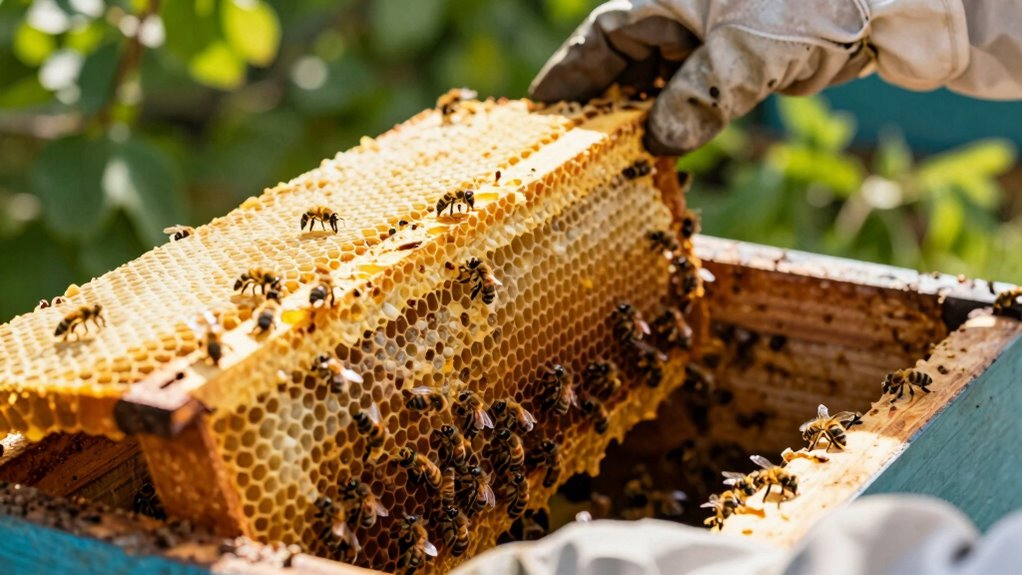

A beehive inspection schedule guides you to check your hive regularly throughout the year, focusing on seasonal needs. In spring, verify the queen is laying well, brood is healthy, and food stores are sufficient. During summer, watch for swarming signs, hive ventilation, and honey levels. Fall focuses on pest and disease prevention before winter, while winter inspections are minimal, mainly checking for moisture and food. Stay consistent and adapt your checks based on hive conditions to keep your colony thriving—keep exploring to learn more.

Get garden gear delivered free with Prime
- Fast, free delivery on millions of items
- Prime Video, Amazon Music and more included
- Member-only deals all year
Key Takeaways
- Conduct seasonal inspections focusing on pests, disease, brood health, and food stores during spring, summer, fall, and winter.
- Check hive ventilation, humidity, and temperature regularly to prevent moisture buildup and ensure proper hive climate.
- Monitor for signs of swarming, drone activity, and brood pattern changes to assess colony vitality and queen health.
- Prepare hives for winter by reducing drone activity, sealing gaps, and ensuring sufficient honey reserves.
- Maintain year-round hive health by removing debris, managing pests early, and adjusting inspection frequency based on environmental conditions.
As an affiliate, we earn on qualifying purchases.
Why Regular Beehive Inspections Are Vital for Colony Health
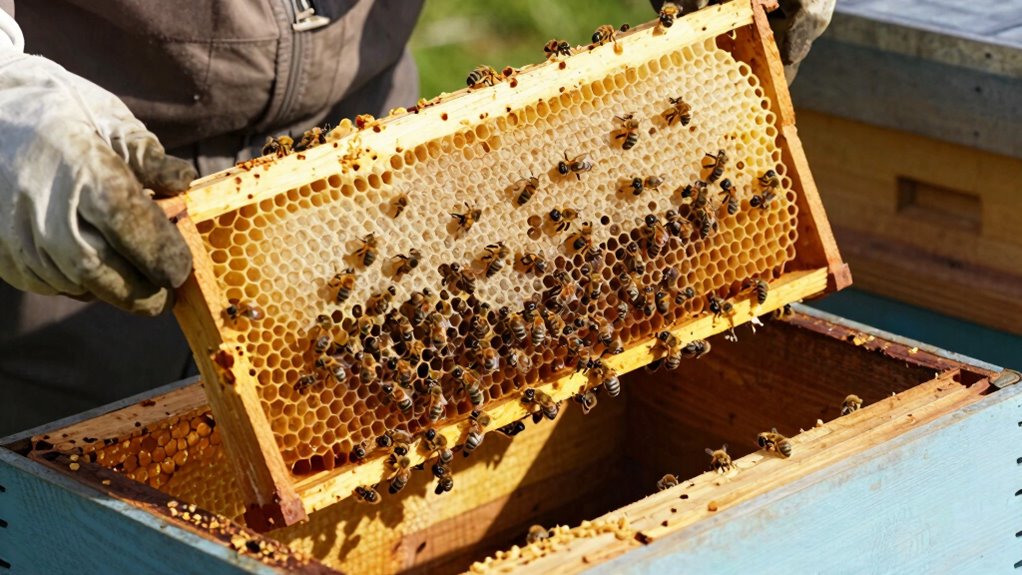
Regular beehive inspections are essential because they allow you to catch health issues before they become serious. During inspections, you can monitor the hive’s overall condition, detect signs of disease, and guarantee the colony’s vitality. If you notice the honey stores are plentiful, it’s the right time for honey extraction, which keeps the hive healthy and prevents overcrowding. Additionally, regular checks help you determine if the queen needs replacement; a healthy queen is crucial for colony productivity and stability. Spotting a failing queen early allows you to introduce a new one smoothly, avoiding declines in egg-laying and colony strength. Maintaining proper color accuracy during inspections can help you better identify subtle signs of disease or distress in the hive. Incorporating regular monitoring techniques can further enhance your ability to detect issues early and ensure optimal hive health. Staying attentive to beekeeping best practices ensures you address potential problems promptly, supporting your colony’s long-term success. Developing an understanding of colony dynamics can also guide your management decisions effectively for sustained hive vitality. Additionally, paying close attention to hive ventilation can prevent issues caused by excess moisture and improve overall colony well-being.
How to Plan Your Beekeeping Inspection Schedule Year-Round
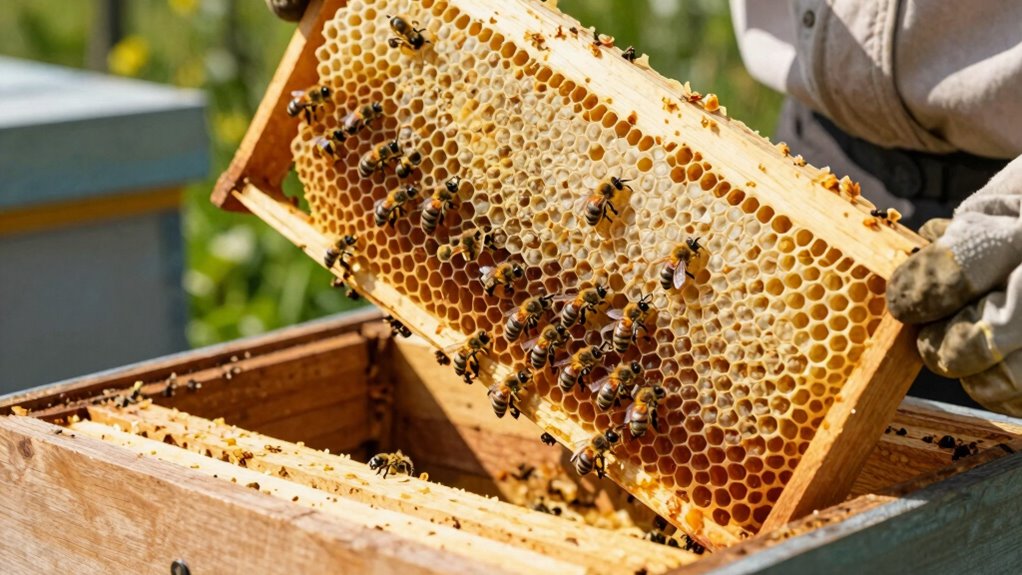
To keep your hive healthy throughout the year, you need a solid plan that accounts for seasonal changes. Regular inspections help you monitor hive health and catch issues early. By understanding the key tasks for each season, you can guarantee your bees stay strong year-round. For optimal management, consider monitoring environmental conditions to better anticipate your hive’s needs and adapt your inspection schedule accordingly. Additionally, staying aware of seasonal bee behavior can help you time your inspections more effectively. Recognizing behavioral changes during different times of the year can also alert you to potential problems before they become serious. Being familiar with the history of beekeeping practices can provide useful insights into managing your hive more effectively throughout the seasons. Incorporating sound therapy techniques for bees showing signs of stress might also improve hive resilience in challenging conditions.
Seasonal Inspection Tasks
Planning your beekeeping inspections throughout the year guarantees your hive stays healthy and productive. Seasonal tasks ensure you address key needs like pest management and queen performance at the right times. In spring, focus on checking for signs of pests and ensuring the queen is laying well. During summer, monitor hive expansion and honey stores, while fall inspections help prepare your hive for winter. Winter checks are minimal but important for insulation and ventilation. Incorporate creative storytelling techniques to communicate your hive’s health status effectively, making it easier to track progress and share insights with fellow beekeepers. Additionally, understanding the importance of seasonal inspection schedules helps you plan tasks more efficiently, preventing issues before they escalate. Consider these tasks: – Manage pests early, before populations spike – Evaluate queen performance for consistent egg-laying – Adjust hive space as needed for seasonal changes – Remove debris and dead bees to prevent disease – Prepare for winter by ensuring proper insulation and ventilation, and regularly review hive health indicators to catch potential problems early. Utilizing regular monitoring techniques can significantly enhance your ability to detect issues early and maintain a thriving hive year-round. Moreover, staying consistent with your inspection routines allows for better early detection of issues and promotes overall hive vitality.
Monitoring Hive Health
Monitoring hive health effectively requires you to develop a consistent inspection schedule that aligns with the seasons. During peak nectar flow, check for strong brood patterns and adequate food stores. Watch for increased drone activity, which signals healthy queen fertility. In late summer or fall, monitor for signs of disease or pests before winter. Regularly observe hive behavior and hive weight to catch issues early. Incorporating insights from the Gold IRA Markets, such as transparent practices and regular analysis, can help you establish a reliable inspection routine. Being aware of potential outages or disruptions, like major service interruptions, can also inform contingency planning for your beekeeping activities. Additionally, understanding the importance of establishing a sleep routine for new beekeepers can improve your consistency and effectiveness during inspections. Staying informed about battery reconditioning considerations can help in maintaining equipment used in hive management, ensuring longevity and performance. Maintaining a balanced approach to hive management ensures long-term hive vitality and productivity.
What to Check During Spring Hive Inspections to Support Growth
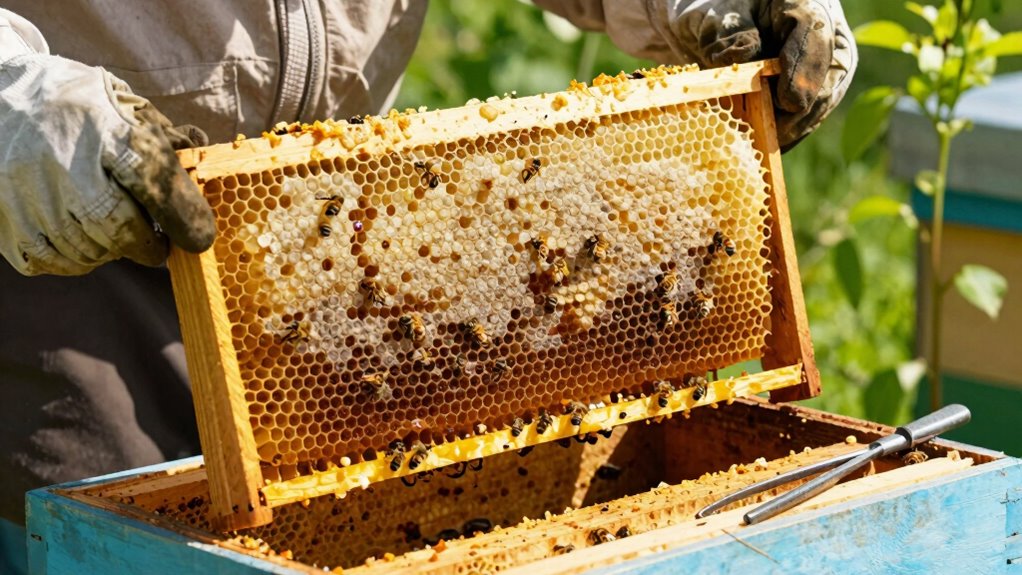
Have you ever wondered what essential checks can boost your hive’s growth during spring? During spring hive inspections, focus on key areas that support hive expansion and take advantage of spring blooms. First, check the brood pattern to ensure healthy, expanding brood nests. Observe the queen’s activity to confirm she’s laying steadily. Inspect for adequate food stores to sustain growth. Look for signs of pests or disease that could hinder development. Lastly, evaluate the overall hive conditions, making sure the bees have enough space for expansion. By staying attentive to these factors, you help your hive grow strong and healthy during this critical time. Additionally, monitoring for environmental factors and cultural beliefs can provide insights into optimal hive conditions. Recognizing the importance of stingless bees can also inspire diverse beekeeping practices to support pollination and honey production.
Signs to Watch for in Summer Hive Visits to Prevent Problems
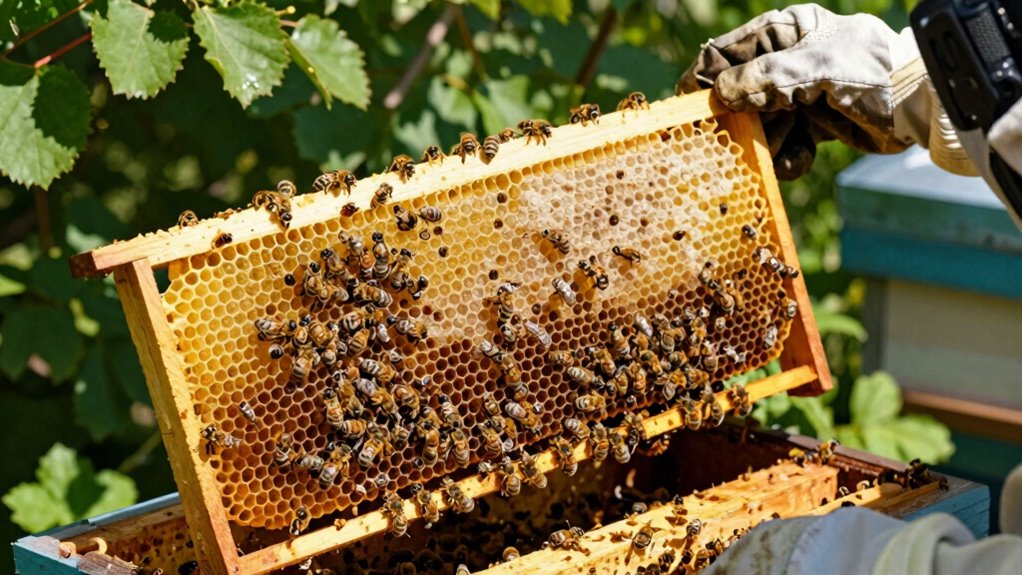
During summer hive visits, keep an eye out for signs of swarming, like increased hive activity or new queen cells, to prevent losing your bees. Make certain your hive has proper ventilation to avoid overheating and humidity issues that can cause problems. Also, check your food stores regularly to ensure your colony has enough honey and pollen to sustain itself through the season.
Check for Swarm Signs
Are you noticing increased activity or unusual patterns during your summer hive visits? Watch for signs that indicate a swarm might be forming. Changes in queen behavior, like her suddenly disappearing or becoming less active, can be a warning sign. An uptick in drone presence, especially outside the hive, suggests the colony is preparing to swarm. Look for these key indicators:
- Large numbers of bees clustering near the hive entrance
- Excessive drone comb or drone cells
- Swarm cells or queen cells at the hive edges
- Sudden decrease in brood or food stores
- Bees showing restless or agitated behavior
Staying alert to these signs helps you catch swarm tendencies early, giving you the chance to take action before losing a large portion of your colony.
Monitor Hive Ventilation
Ensuring proper hive ventilation is essential during summer visits, as poor airflow can lead to overheating and humidity buildup inside the hive. During periods of nectar flow, bees cluster less tightly, increasing airflow needs. Check for signs of inadequate hive aeration, such as excessive moisture, mold, or a strong, musty smell. If the hive feels hot or humid, consider adding or adjusting entrance openings to improve airflow. Avoid blocking vents or entrances, as this can trap heat and moisture. Proper ventilation helps regulate temperature and humidity, reducing stress on the bees and preventing issues like dysentery or mold growth. Regularly monitoring hive ventilation safeguards your colony’s health during the hottest months, ensuring they stay cool and dry even when nectar flow peaks. Using the correct ventilation techniques also supports airflow management and helps prevent potential health problems in the hive.
Inspect Food Stores
Inspecting your hive’s food stores regularly is essential in summer to prevent shortages or spoilage. Keep an eye on honey storage levels to ensure the bees have enough fuel for ongoing activity. Check pollen reserves to confirm the colony’s protein supply remains adequate for brood rearing. Look for signs of spoiled or fermented honey, which can indicate excess moisture or contamination. Ensure honey frames are properly sealed and filled, avoiding empty or overused combs. Monitor pollen stores for depletion or mold, which can weaken the colony. Regular inspections help you detect issues early, so you can take action before problems escalate.
- Confirm honey storage is sufficient and well-sealed
- Watch for signs of mold or fermentation in honey
- Check pollen reserves for depletion or contamination
- Identify empty or overused frames needing replacement
- Detect spoiled honey or moisture buildup
Fall Inspection Tips: Preparing Your Hive for Winter
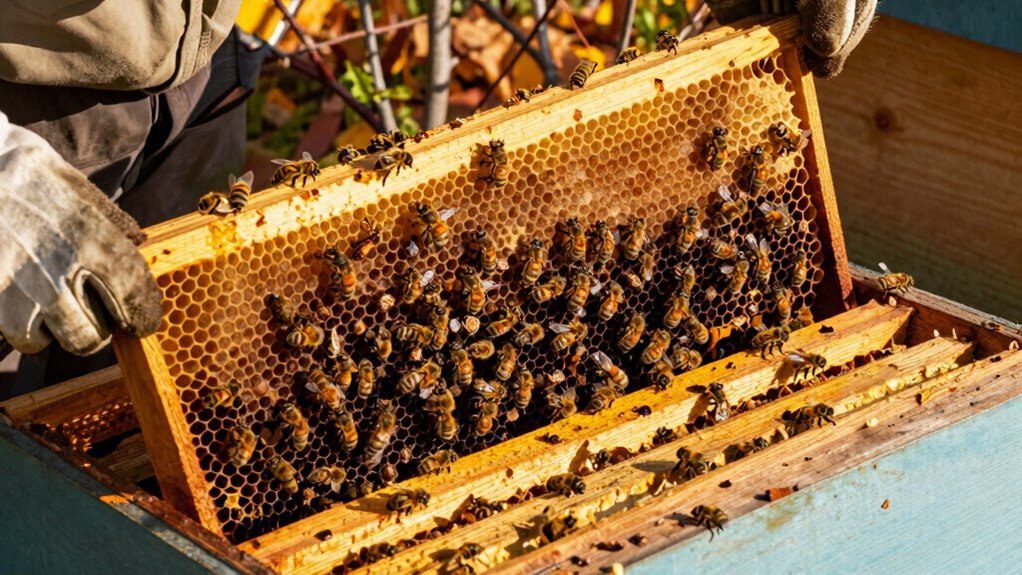
As the days grow shorter and temperatures drop, it’s essential to prepare your hive for winter. During fall, monitor the nectar flow; if flowers are scarce, verify your bees have enough stored honey to sustain them through winter. Reduce drone activity now, since drones consume resources without contributing to hive survival, and their presence can signal a healthy, reproductive colony. Check that the queen has laid enough winter stores and that the hive is well-ventilated to prevent moisture buildup. Remove any unnecessary frames or debris that could harbor pests or mold. Seal gaps and ensure the entrance is clear to prevent drafts. Properly preparing your hive now helps ensure your bees stay healthy and ready to withstand the cold months ahead.
Winter Hive Inspections: What to Look for in Cold Months
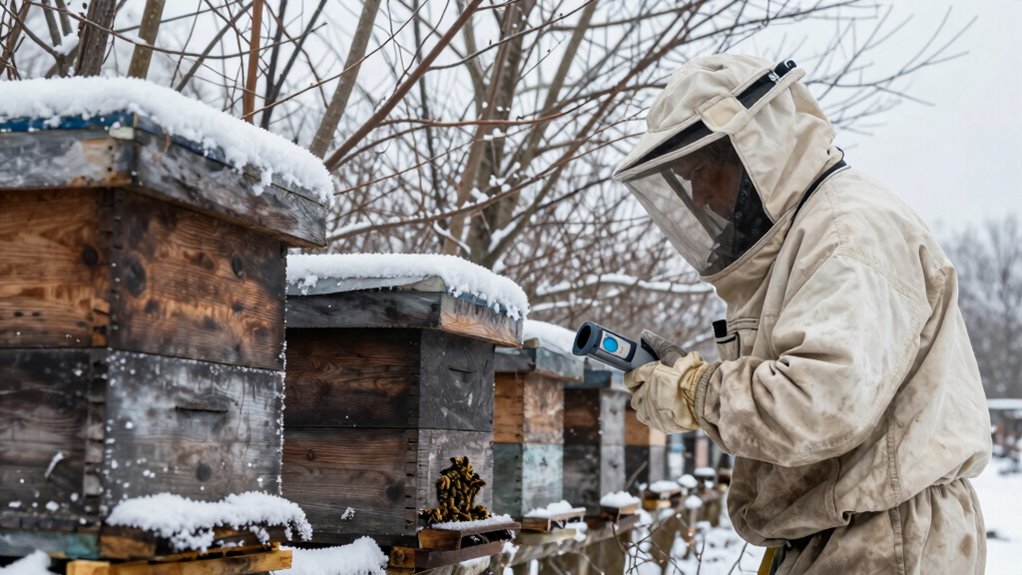
Once your hive is prepared for winter, regular inspections during the cold months help you catch problems early. Winter challenges like insufficient food, moisture buildup, or pests can threaten your colony’s survival in cold weather. During inspections, look for signs of starvation, such as empty frames or near-empty food stores. Check for condensation or excess moisture inside the hive, which can cause mold or chilling. Ensure the cluster remains intact and not too small, indicating the bees are healthy. Also, observe for pests like mice or wax moths that may seek shelter. Finally, verify that the hive entrance isn’t blocked by snow or debris to maintain proper ventilation. Staying vigilant helps your colony endure winter’s harsh conditions.
Common Problems to Detect During Routine Hive Checks
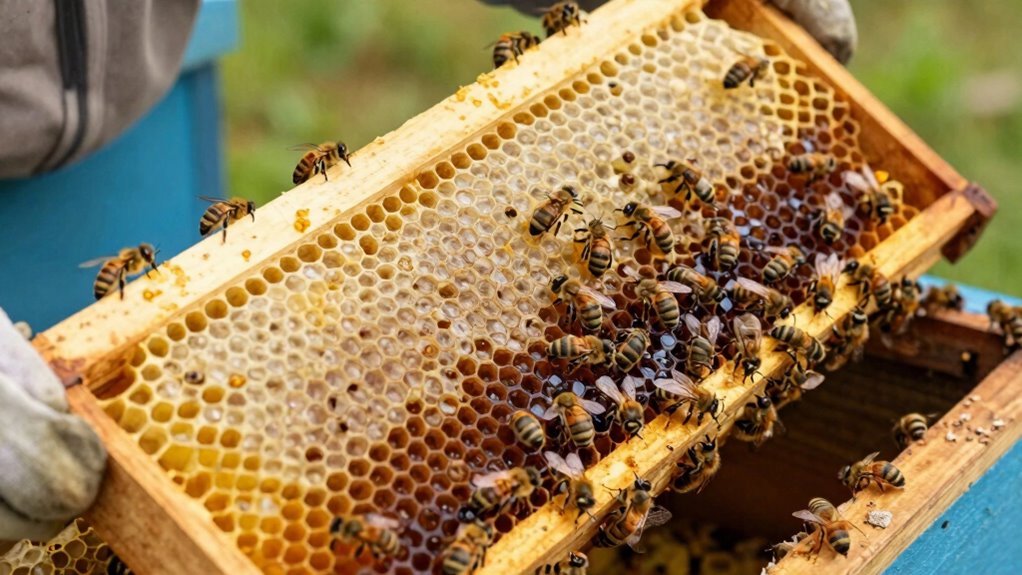
Regular hive checks are essential for catching common problems early, before they threaten your colony’s health. During inspections, watch for queen issues like absence, poor laying patterns, or a tangled queen. Detect pests such as Varroa mites, wax moths, or small hive beetles, which can compromise hive strength. Be alert for signs of disease, mold, or foul odors indicating contamination. Use this table to identify key problems:
| Issue | What to Look For |
|---|---|
| Queen problems | No eggs, irregular brood pattern, queen’s absence |
| Pest infestation | Chewed wax, pest bodies, mite debris |
| Disease signs | Chalkbrood, foul smell, discolored brood |
| Structural issues | Cracks, dead bees, debris in hive |
| Food stores decline | Reduced honey or pollen reserves |
Essential Tools and Record-Keeping Tips for Effective Inspections
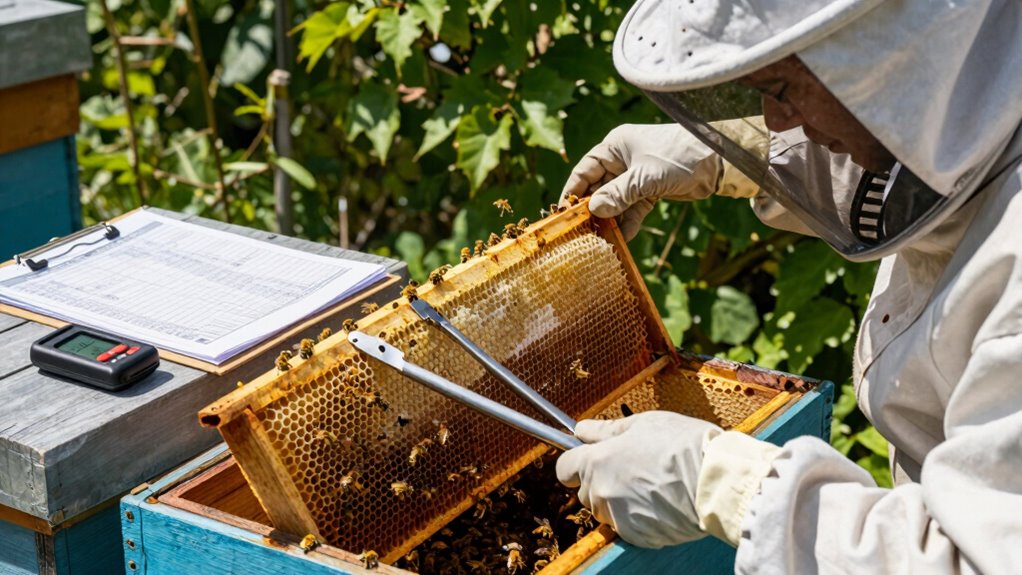
To conduct effective hive inspections, you need the right tools at your fingertips. A tools overview helps you gather essential equipment like a hive tool, smoker, bee brush, protective gear, and a notebook or digital device for record keeping. Using proper record keeping methods guarantees you track hive health, brood patterns, and honey stores accurately over time. Keeping detailed notes allows you to identify trends and spot problems early.
Having the right tools and record-keeping methods ensures healthy, productive hives.
- Hive tool for prying and inspecting frames
- Smoker to calm bees during checks
- Bee brush for gentle cleaning
- Protective gear for safety
- Notebook or digital app for record keeping
Employing the right tools and methods streamlines inspections and improves hive management, helping your bees stay healthy and productive.
How to Adjust Your Inspection Routine Based on Hive Conditions
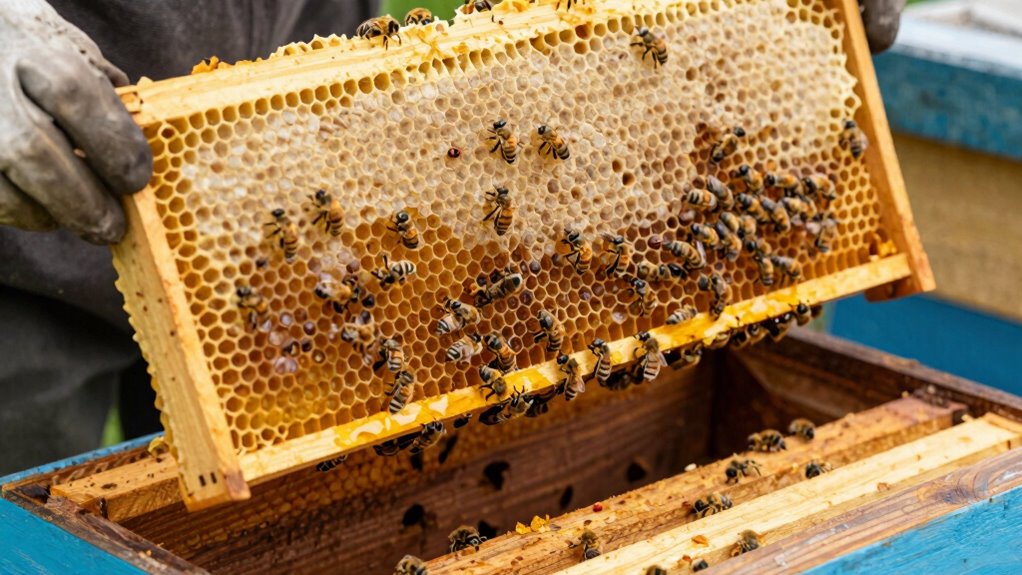
Adjusting your inspection routine based on hive conditions guarantees you respond promptly to the bees’ needs and prevent potential problems. If you notice signs of unstable hive conditions, like excessive drone comb or uneven brood patterns, increase inspections to monitor hive stability closely. When the queen’s presence is in question—such as missing or unmarked queens—you should examine more frequently to confirm her health and activity. Conversely, if the hive appears stable, with a healthy queen and consistent brood, you can extend intervals between inspections. Always tailor your routine to the hive’s behavior, ensuring you catch issues early and maintain a strong, healthy colony. Flexibility in your schedule helps you stay ahead of problems and supports ideal hive performance.
Frequently Asked Questions
How Often Should I Perform Hive Inspections for Optimal Bee Health?
You should perform hive inspections every 7 to 10 days during peak season to guarantee ideal bee health. Regular hive maintenance and seasonal checks help you monitor for signs of disease, pests, and queen health. In colder months, reduce inspections to every 2-4 weeks to prevent disturbing the cluster. Consistent inspections allow you to catch issues early, promoting a healthy, thriving hive year-round.
What Are the Key Indicators of a Healthy Versus Problematic Hive?
A healthy hive shows strong brood patterns, good hive ventilation, and active bees without signs of pests or disease. Look for consistent brood coverage, indicating a productive queen, and proper ventilation to prevent moisture buildup. Problematic hives often have irregular brood patterns, poor ventilation leading to mold, or signs of pests like mites. Regular inspections help you catch issues early and maintain a thriving, balanced hive.
How Can Weather Affect the Timing of Hive Inspections?
Weather patterns and seasonal changes directly influence when you should inspect your hive. During hot or rainy periods, avoid opening the hive to prevent stressing the colony and exposing it to the elements. Instead, plan inspections during calm, mild weather, typically in spring or fall. Keeping an eye on these conditions helps you schedule inspections at ideal times, ensuring your hive remains healthy and productive without unnecessary disturbances.
When Should I Consider Increasing or Decreasing Inspection Frequency?
Imagine your hive as a bustling city: during spring and summer, increase inspections to monitor colony strength and guarantee the queen’s health as activity ramps up. In late fall or winter, reduce inspections to prevent disturbing the cluster and conserve energy. Seasonal adjustments help you balance vigilance and disturbance, keeping your hive healthy. Pay attention to signs like dwindling numbers or swarm tendencies—they signal when to tweak your inspection frequency.
Are There Specific Signs of Disease or Pest Infestation to Identify Early?
You should look for signs of infestation, like mites on bees or larvae, and disease detection indicators such as discolored or decayed brood. Watch for abnormal bee behavior, excessive sticking to hive walls, or foul odors. Early detection of signs of infestation and disease helps prevent outbreaks. Regular inspections allow you to spot these issues promptly, ensuring your hive stays healthy and productive.
Conclusion
Regular hive inspections are vital—did you know that beekeepers who check their colonies more consistently see 30% healthier hives? By staying vigilant year-round, you catch issues early and support your bees’ well-being. Keep detailed records and adjust your routine as needed. With a proactive approach, you’ll not only improve hive health but also enjoy a bountiful honey harvest. Stay committed, and your bees will thrive through every season.
Fall yard work Picks
leaf blowers
As an affiliate, we earn on qualifying purchases.