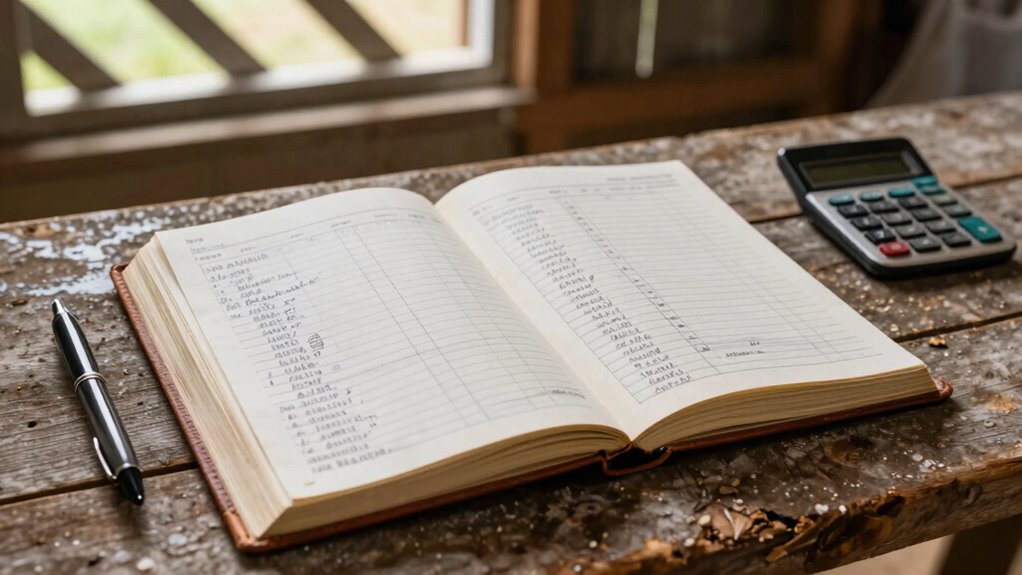
A good barn record book should track your horse’s health details, like vaccinations, vet visits, and signs of illness, to catch issues early. It needs to include equipment maintenance logs to prevent accidents and guarantee durability. Daily routines such as feeding, turnout, and exercise should be recorded for consistency. You also want to document financial transactions, breeding and foaling information, and any behavioral changes. Keeping detailed, organized records helps you manage your farm efficiently and keeps your horses healthy—stay tuned for more tips.

Get garden gear delivered free with Prime
- Fast, free delivery on millions of items
- Prime Video, Amazon Music and more included
- Member-only deals all year
Key Takeaways
- Comprehensive health records, including vaccinations, veterinary visits, and illness signs for early issue detection.
- Regular equipment maintenance logs to ensure safety and prolong tool lifespan.
- Daily management details like feeding, turnout, and exercise routines for consistency.
- Financial documentation of expenses, supplies, and repairs for budgeting and accountability.
- Breeding and foaling information to monitor reproductive health and success.

Keeping a barn record book is indispensable for managing your livestock and guaranteeing everything runs smoothly. When you stay organized, you can quickly access important information about your animals, equipment, and daily operations. One of the most critical aspects of your record book is tracking horse health. You should log details about vaccinations, deworming schedules, and veterinary visits. Record any signs of illness or discomfort, along with treatments administered, so you can monitor patterns and catch potential issues early. Keeping detailed health records helps you make informed decisions about your horses’ care, guaranteeing they stay healthy and comfortable.
Maintaining detailed health records ensures early detection and optimal care for your horses.
In addition to horse health, equipment maintenance should be a regular entry in your barn record book. Maintenance logs help you keep track of repairs, inspections, and routine check-ups for tack, feeding equipment, and barn tools. When you note the date of each maintenance activity, along with what was done, it prevents equipment from falling into disrepair and reduces the risk of accidents. For instance, if your watering systems or fencing need repairs, having a clear record allows you to prioritize tasks and schedule maintenance proactively. Well-maintained equipment minimizes downtime and keeps your barn running efficiently. Regular equipment maintenance also helps extend the lifespan of your tools and machinery, saving you money over time. Additionally, understanding proper maintenance practices supported by detailed records can improve overall barn safety and compliance with regulations. Moreover, keeping accurate records of safety standards can help demonstrate compliance during inspections and audits. Maintaining a comprehensive record-keeping system can also streamline your management process and reduce stress during unexpected situations. Proper record-keeping is also essential for ensuring regulatory compliance, especially if inspections or audits are required by local authorities.
Your record book should also include daily management notes. Record feeding times, types of feed, and any supplements given to your animals. Tracking this information helps you identify changes in appetite or behavior that could signal health problems. Additionally, noting turnout schedules, stall cleaning routines, and exercise sessions ensures consistency and helps improve overall management. If you notice a pattern of issues or behavioral changes, your records serve as a valuable reference for discussions with your veterinarian or trainer.
Financial documentation is another essential area to track. Keep receipts for supplies, medications, and vet visits, and record expenses related to equipment repairs or upgrades. These financial details help you stay within your budget and assess the ongoing costs of maintaining your barn and livestock. Over time, your record book becomes a thorough resource for evaluating what’s working well and where to improve.
Finally, don’t forget about breeding and foaling records if applicable. Track breeding dates, mare and stallion information, and foaling details. This ensures you’re prepared for each stage of pregnancy and can quickly access vital data during emergencies. By consistently updating your barn record book with all these details, you create a valuable tool that simplifies management, supports animal health, and extends the lifespan of your equipment. Proper record-keeping also plays a crucial role in compliance with safety standards, ensuring your barn remains a secure environment for everyone involved.
As an affiliate, we earn on qualifying purchases.
Frequently Asked Questions
How Often Should I Update My Barn Record Book?
You should update your barn record book daily to keep track of barn maintenance and animal health. Regular updates guarantee you catch issues early, like health changes or maintenance needs, preventing bigger problems. Record daily activities, health checks, and maintenance tasks, so you always have accurate, up-to-date information. This habit helps you stay organized, maintain a healthy environment, and provide the best care for your animals.
What Digital Tools Can I Use for Record Keeping?
You can use digital tools like FarmLogs, Herdwatch, or even simple spreadsheet apps like Google Sheets for record keeping. These platforms often feature user-friendly interfaces, making data entry easy and quick. Plus, they offer digital backups, so your records stay safe even if your device fails. These tools help you stay organized, track health, breeding, and feeding details efficiently, simplifying barn management and ensuring accurate records at your fingertips.
How Do I Handle Missing or Incomplete Records?
Think of missing or incomplete records as gaps in a puzzle. To fill these, focus on record accuracy and data consistency. You can cross-check with other sources like invoices, feed logs, or staff notes. When data is uncertain, mark it clearly and update once you find the correct info. Regularly reviewing and reconciling your records helps prevent future gaps, ensuring your barn’s story stays clear and complete.
Should I Include Financial Details in the Record Book?
Yes, you should include financial details in your barn record book. Financial tracking helps you monitor expenses, income, and overall profitability, which is essential for record accuracy. By keeping precise financial records, you can make informed decisions, identify cost-saving opportunities, and guarantee your operation remains sustainable. Including these details also simplifies tax preparation and provides a clear financial overview, making your barn management more efficient and transparent.
How Can I Ensure My Record Book Complies With Regulations?
To guarantee your record book complies with regulations, focus on maintaining record accuracy and staying updated on local rules. Regularly review and verify entries, correct errors promptly, and document all activities thoroughly. Keep detailed records of animal health, breeding, and maintenance. By staying organized and diligent, you’ll meet regulatory compliance effortlessly. This proactive approach helps avoid penalties and ensures your barn operations remain transparent and lawful.
Conclusion
Think of your barn record book as your own personal Pandora’s box—filled with the secrets to your herd’s success. By diligently tracking health, breeding, and daily events, you reveal a wealth of knowledge that guides your decisions and future growth. Just as the wise shepherd tends his flock with care, so too should you nurture your records. Keep it detailed, keep it honest, and watch your barn flourish like a well-tended garden in spring.
Halloween Picks
halloween
As an affiliate, we earn on qualifying purchases.