Milking machine pulsation is the rhythmic cycle that alternates vacuum and release to protect your cow’s teats. It mimics suckling, ensuring a gentle, steady rhythm that promotes comfortable milking and prevents injury. Proper pulsation keeps teats healthy by reducing stress, soreness, and infections, while supporting consistent milk flow. If you want to understand how to optimize this essential system and keep your cows comfortable, there’s more to learn below.

Get garden gear delivered free — and shop member deals
- Fast, free delivery on millions of items
- Access to Prime Big Deal Days deals on October 6–7
- Prime Video, Amazon Music and more included
Key Takeaways
- Proper pulsation maintains a gentle, consistent rhythm that prevents teat damage and promotes udder health.
- The pulsator alternates vacuum and atmospheric pressure, mimicking calf suckling to protect teats.
- Correct pulsation settings, like rate and ratio, reduce stress and injury to cow teats during milking.
- Regular maintenance of valves and hoses ensures steady pulsation, preventing irregular cycles that harm teats.
- Proper pulsation safeguards teat tissue, decreases soreness, and enhances overall cow comfort and milk flow.
dairy cow milking machine pulsator
As an affiliate, we earn on qualifying purchases.
As an affiliate, we earn on qualifying purchases.
What Is Milking Machine Pulsation and How Does It Work?
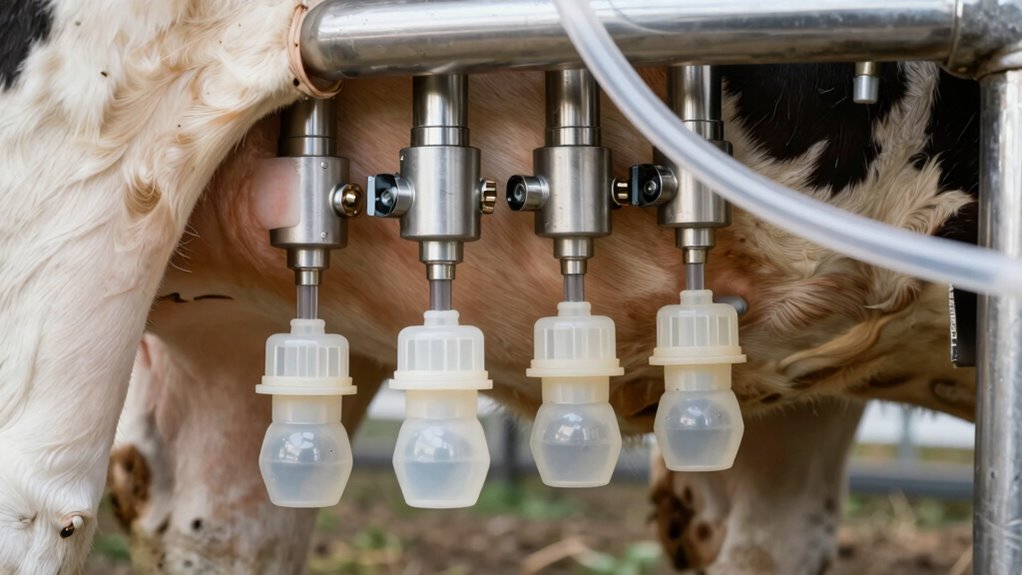
Milking machine pulsation is the rhythmic movement that alternates between applying vacuum and releasing it to simulate a calf’s sucking action. This cycle is essential because it directly affects pulsation efficiency, ensuring milk flows smoothly and consistently. Proper pulsation maintains steady vacuum levels, which helps prevent teat irritation and promotes healthy udder function. When pulsation works effectively, it enhances milking comfort by reducing discomfort and stress for the cow. You want a system that provides a gentle, consistent rhythm that mimics natural suckling, so the cow remains relaxed and milk flows efficiently. In short, good pulsation keeps the process smooth, protects the teat tissue, and supports overall milking performance. Additionally, pulsation rate plays a crucial role in maintaining optimal milking conditions by ensuring the cycle operates within the ideal frequency range.
What Are the Main Parts of Your Pulsation System?

The main parts of your pulsation system work together to control the rhythm of vacuum application and release. Key pulsation system components include the pulsator, which regulates the milking cycle phases by switching between vacuum and atmospheric pressure. The pulsator connects to the milk claw and controls the timing of the inflations’ expansion and relaxation. Inside, the diaphragm or piston moves to create pulsations that alternate vacuum and air, ensuring proper milk flow and teat health. The cycle phases—vacuum application and milk flow, followed by rest—are precisely timed to protect teats and maximize efficiency. Proper pulsation timing is essential for maintaining teat health and efficient milking. Ensuring consistent pulsation is vital for preventing disruptions and maintaining system performance. Additionally, pulsator maintenance is vital to prevent malfunctions that could disrupt the entire system. Regular inspection and cleaning of the pulsator components help preserve optimal pulsation rhythm and extend the equipment’s lifespan.
How Does Proper Pulsation Protect Cow Teats During Milking?
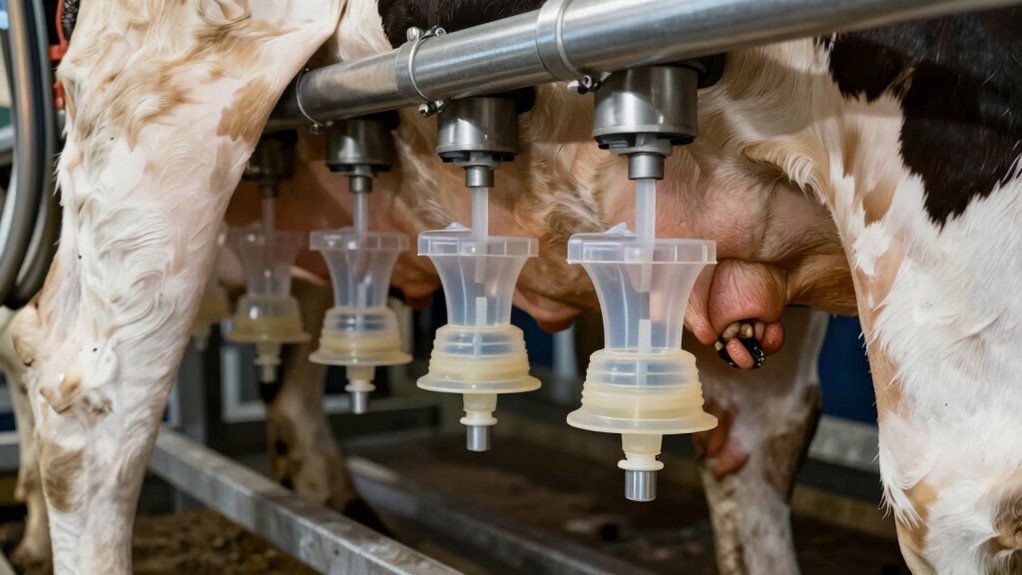
Proper pulsation plays a crucial role in protecting cow teats during milking by ensuring gentle and consistent stimulation. When pulsation is set correctly, it prevents excessive vacuum on the teat, reducing the risk of teat damage and maintaining good teat health. This gentle rhythm encourages better milk flow without causing discomfort or injury. Healthy teats lead to fewer issues like soreness or infections, which can compromise milk quality. Additionally, proper pulsation enhances milking efficiency by allowing quicker milk flow and reducing milking time. When your pulsation system works smoothly, it minimizes stress on the teats, keeps cows comfortable, and maintains ideal milk let-down. Overall, correct pulsation is essential for protecting teat health and maximizing milking productivity.
How to Adjust Pulsation Rate and Ratio for Cow Comfort and Milk Production

Adjusting the pulsation rate and ratio correctly is essential for guaranteeing cow comfort and maximizing milk production. The pulsation frequency, typically measured in cycles per minute, should match the cow’s needs—around 60 cycles per minute is common. The pulsation ratio, which controls the time spent on and off the vacuum, influences teat health. A ratio of about 60:40 or 65:35 ensures gentle milking without damaging teats. To optimize these settings, start by setting the pulsation frequency and then adjust the ratio gradually, observing cow response. Proper adjustment reduces teat stress, prevents injuries, and encourages consistent milk flow. Regularly reviewing and fine-tuning these parameters ensures your milking machine works efficiently while safeguarding teat health and promoting cow comfort. Sanitation practices also play a crucial role in maintaining teat health and overall milking efficiency. Additionally, understanding pulsation adjustment techniques helps in fine-tuning the system for optimal performance. Ensuring the correct pulsation settings are used can significantly impact the longevity of teat health and overall herd productivity. Monitoring machine performance regularly can further help identify issues early and optimize settings for each herd. Incorporating regular maintenance checks can help prevent malfunctioning parts that might affect pulsation accuracy and cow comfort.
Signs Your Pulsation System Isn’t Working Right?
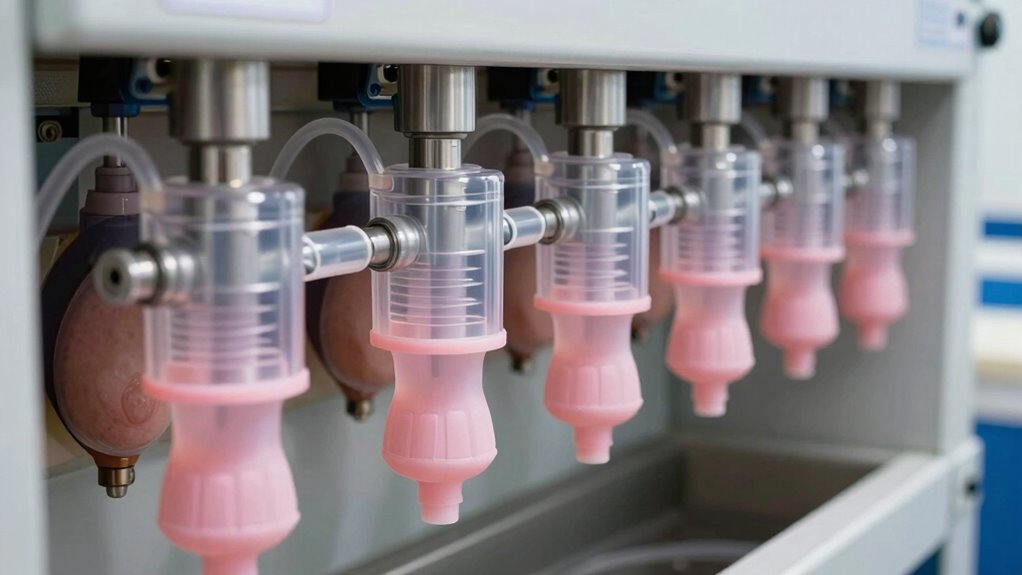
When your pulsation system isn’t functioning correctly, you’ll notice changes in how the teat cups behave and how the cows respond during milking. Irregular pulsation can cause inconsistent milking cycles, which may lead to discomfort or teat damage. Pay attention to signs like fluctuating milk flow, increased teat sensitivity, or swelling, as these indicate issues with teat health monitoring. Poor machine compatibility or worn-out components can disrupt the pulsation rhythm, risking damage to teats and affecting milk quality. If you observe cows kicking or trying to escape, it’s a clear sign something’s off. Regularly inspecting the pulsation system helps catch problems early, ensuring maximum performance and teat protection. Properly functioning pulsation is critical for maintaining cow comfort and efficient milking.
Troubleshooting Pulsation Problems: Causes and Fixes
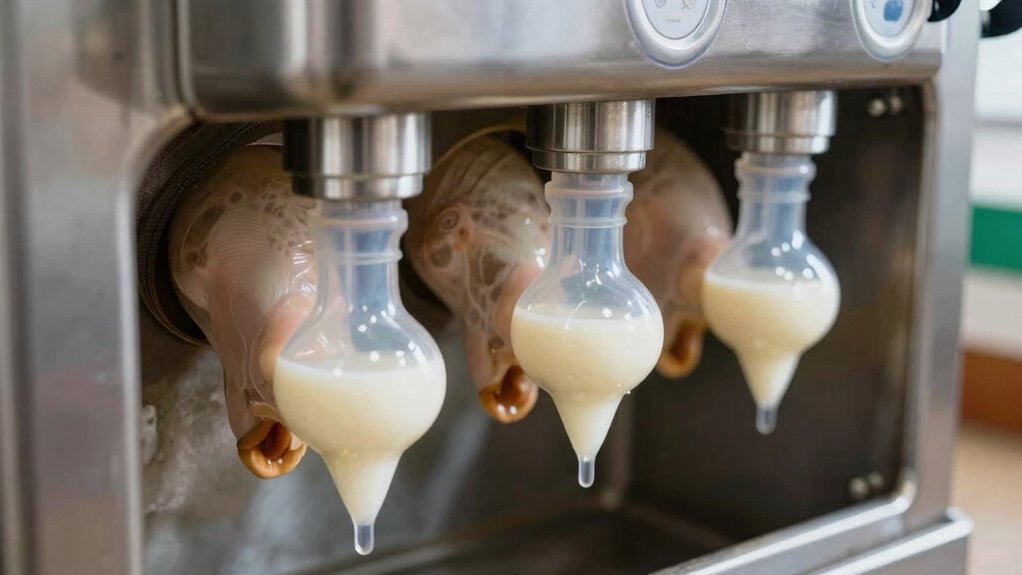
If your pulsation rate isn’t steady, it could be caused by blocked or leaking valves or an inconsistent pulsation system. These issues can disrupt milk flow and affect udder health. Let’s look at common causes and simple fixes to get your system running smoothly again. Regular maintenance and proper equipment handling can help prevent these problems from recurring.
Inconsistent Pulsation Rate
Inconsistent pulsation rates can disrupt milk flow and reduce overall efficiency, making it essential to identify the root cause quickly. Fluctuations in pulsation frequency can cause uneven milking, stressing teat health and risking damage. Check for worn or loose belts, which can throw off the pulsation rhythm. Ensure the pulsation chamber isn’t clogged or leaking, as this affects timing. Regularly monitor the pulsation rate to match the recommended frequency for your system. Recognizing proper maintenance practices can help prevent many pulsation issues before they occur. Additionally, understanding the technology behind pulsation systems can aid in diagnosing and addressing persistent problems effectively. Being aware of net worth and fame of individuals involved in the dairy industry, like Kate from Breaking Amish, can also provide context for industry trends and innovations. Maintaining a consistent pulsation rate is crucial for protecting teats and ensuring efficient milking, especially considering the role of wave and wind in optimizing dairy farm operations.
Blocked or Leaking Valves
Blocked or leaking valves are common culprits behind pulsation issues, as they disrupt the smooth flow of air and milk during the milking process. When valves aren’t properly maintained, they can become clogged or develop leaks, reducing the effectiveness of pulsation and affecting milk flow. Regular valve maintenance is essential to identify problems early—clean or replace faulty valves to restore proper function. Leaking valves allow air or milk to escape, causing inconsistent pulsation and potential teat irritation. Ensuring valves are airtight and functioning correctly helps maintain steady milk flow and protects teat health. If you notice irregular pulsation or decreased milk output, inspecting and fixing blocked or leaking valves should be your first step toward troubleshooting pulsation problems. Additionally, proper valve maintenance practices can help prevent these issues from recurring and ensure consistent milking performance.
Simple Maintenance Tips to Keep Your Pulsation System Running Smoothly
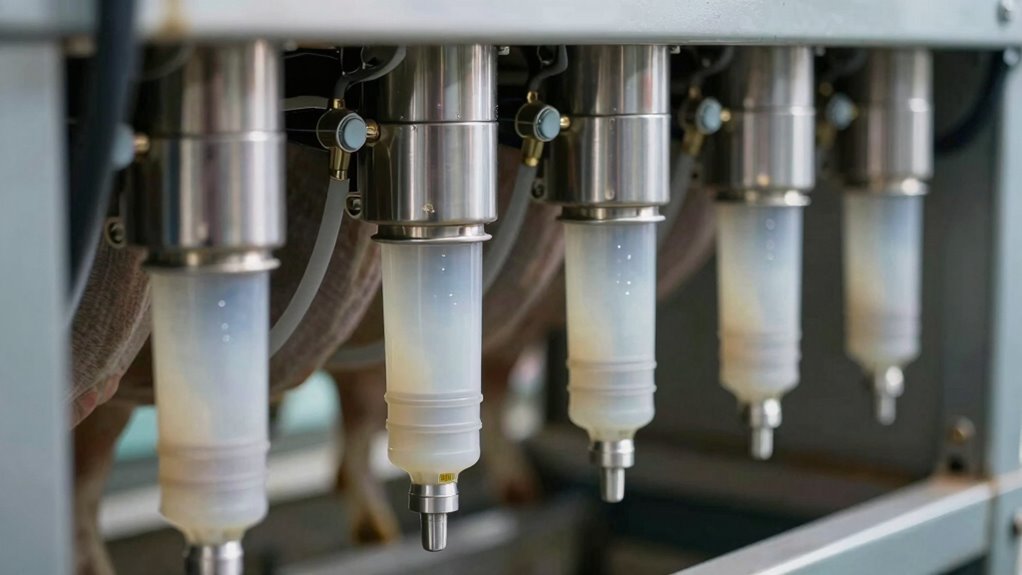
Regularly inspecting and cleaning your pulsation system is essential to keep it operating smoothly. Proper pulsation maintenance ensures consistent teat protection and prevents issues that can harm udder health. Start by checking for air leaks or worn-out hoses, which can disrupt pulsation. Clean filters and valves weekly to prevent blockages and maintain peak performance. Lubricate moving parts as needed to avoid stiffness. Replace damaged or cracked tubing promptly to prevent contamination. Keep the pulsation chamber free of debris and ensure all connections are tight. Regular maintenance reduces downtime and extends your equipment’s lifespan. Additionally, monitoring for air leaks and addressing them promptly can prevent pulsation irregularities. Proper pulsation settings ensure your system functions correctly and protects your teats effectively. Implementing a scheduled maintenance routine can help catch potential problems early before they escalate. Using appropriate cleaning techniques based on the brand of your pulsation system can also enhance durability and performance. Staying aware of pulsation irregularities and troubleshooting them quickly can save you time and money. Remember, a well-maintained pulsation system directly supports teat protection and overall udder health, keeping your dairy operation efficient and your cows comfortable.
What Are the Best Pulsation Settings for Different Cows and Conditions?
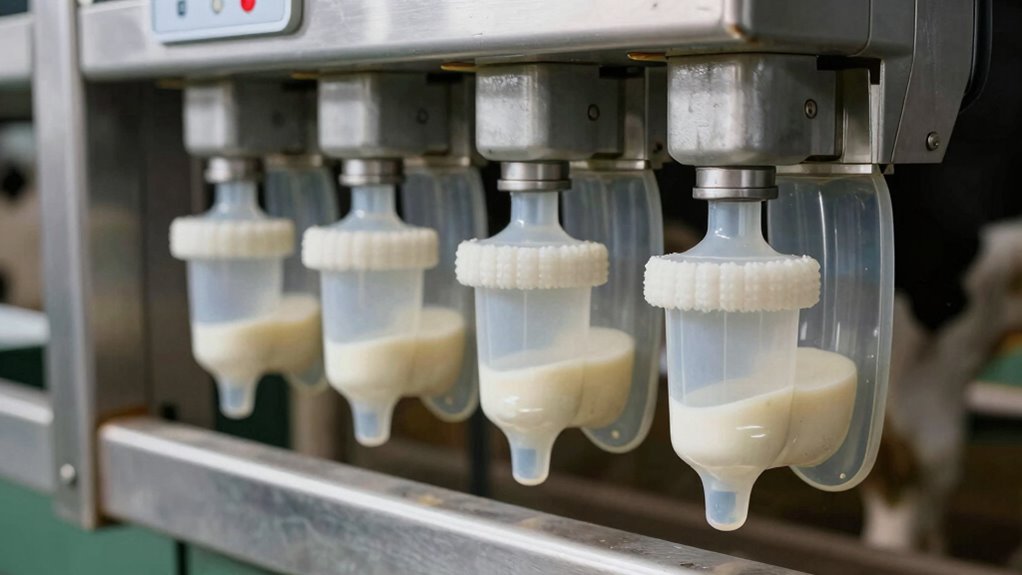
To find the best pulsation settings, you need to contemplate adjusting the rate based on cow comfort and milk flow. Pay attention to teat condition and behavior, as they can signal if your settings are effective or need changes. By tailoring these factors, you’ll optimize milking efficiency and cow health. Additionally, understanding modern kitchen technology principles can help in selecting equipment that offers precise control and automation for better results. Proper pulsation control is crucial in maintaining teat health and ensuring efficient milk extraction. Incorporating free floating techniques can also enhance the flexibility and adaptability of your milking system, allowing for more responsive adjustments to varying conditions.
Adjust Pulsation Rate
Adjusting the pulsation rate correctly is essential for optimizing milk flow and cow comfort. The right pulsation frequency helps maintain teat health and prevents damage. To find the best setting, consider these factors:
- Monitor cow behavior for signs of discomfort or milk flow issues
- Set a pulsation rate between 60 and 90 cycles per minute as a starting point
- Adjust based on milk flow rate and teat condition
- Keep the pulsation ratio balanced, usually around 60:40
- Regularly inspect teats for signs of trauma or irritation
Match Teat Condition
Matching pulsation settings to a cow’s teat condition is essential for ensuring comfort and preventing injury. When your milking machine’s pulsation matches teat needs, you enhance milking comfort and reduce teat damage. Softer, more sensitive teats benefit from slower, gentler pulsation, while tougher teats tolerate faster cycles. Visualize this:
| Teat Condition | Pulsation Rate | Milk Flow Style |
|---|---|---|
| Sensitive, sore | Low (60 ppm) | Gentle, steady |
| Thick, resilient | Higher (90 ppm) | Faster, more dynamic |
| Inflamed or injured | Very low (50 ppm) | Very gentle, cautious |
| Healthy, tough | Standard (70 ppm) | Balanced flow |
Adjust your pulsation accordingly to optimize milking comfort and protect teat health.
Consider Cow Behavior
Understanding cow behavior is key to selecting the best pulsation settings, as different cows respond uniquely based on their temperament, udder health, and milking history. Observing cow vocalizations can reveal discomfort or stress, guiding adjustments for comfort. Herd behavior also influences how cows respond; calmer herds may need different settings than more excitable groups. Consider these factors:
- Monitor vocalizations for signs of distress or agitation
- Adjust pulsation to calm nervous or vocal cows
- Use gentler settings for herd responses indicating sensitivity
- Recognize that some cows may require individualized settings
- Be attentive to changes in herd behavior that suggest discomfort
Frequently Asked Questions
How Does Pulsation Impact Milk Quality and Safety?
Pulsation directly impacts milk quality and safety by influencing pulsation consistency, which helps prevent milk contamination. Consistent pulsation ensures gentle, effective milking that reduces teat tissue damage, lowering infection risks. When pulsation is irregular, bacteria can enter, increasing contamination and compromising safety. You should regularly check your pulsation system to maintain ideal performance, guaranteeing your milk remains safe, clean, and of high quality for consumers.
Can Pulsation Settings Vary Between Different Cow Breeds?
Yes, pulsation settings can vary between different cow breeds. You should use breed-specific settings to optimize milking comfort and efficiency. Pacing adjustments are essential because different breeds may have unique teat sizes and sensitivities. By customizing pulsation parameters, you guarantee better milk flow, reduce teat stress, and improve overall udder health. Always monitor your cows and adjust settings accordingly to achieve the best results for each breed.
What Are Common Signs of Pulsation System Wear and Tear?
Think of your pulsation system as the heartbeat of your milking setup. You’ll notice signs of wear and tear through irregular pulsation, inconsistent milking, or increased teat end swelling. Regular pulsation maintenance helps detect wear early. Keep an eye out for air leaks, unusual noises, or decreased vacuum performance, as these indicate wear detection issues that could compromise teat health and milking efficiency. Addressing these signs promptly keeps your system running smoothly.
How Does Pulsation Influence Cow Behavior During Milking?
You notice that pulsation directly impacts cow comfort and milking speed. When pulsation is smooth and consistent, your cows stay relaxed, which helps them milk more efficiently and comfortably. If pulsation is irregular, cows may become anxious, leading to slower milking and potential teat stress. Ensuring proper pulsation keeps cows comfortable, promotes faster milking, and reduces stress-related issues, making the process more effective for both you and your herd.
Are There Environmental Factors That Affect Pulsation Effectiveness?
Yes, environmental factors like temperature fluctuations and ambient humidity can affect pulsation effectiveness. When temperatures vary widely, the pulsation may slow down or speed up, impacting comfort and milk flow. High humidity can cause equipment to sweat or malfunction, reducing pulsation consistency. You should monitor these conditions regularly and adjust machine settings or environment to guarantee ideal pulsation, protecting teat health and maintaining efficient milking.
Conclusion
Think of your pulsation system as the heartbeat of your milking machine—it keeps everything running smoothly and safeguards your cows’ teats. When you understand how it works and how to maintain it, you’ll ensure comfortable milking sessions and healthy cows. Regular checks and adjustments are like tuning an instrument; they help you hit the perfect note every time. Keep your pulsation system in tune, and your dairy will run like a well-oiled machine.
Fall Picks
fall essentials
As an affiliate, we earn on qualifying purchases.