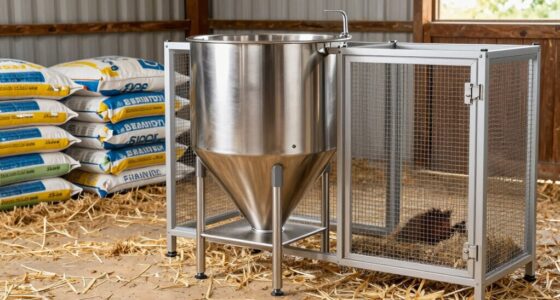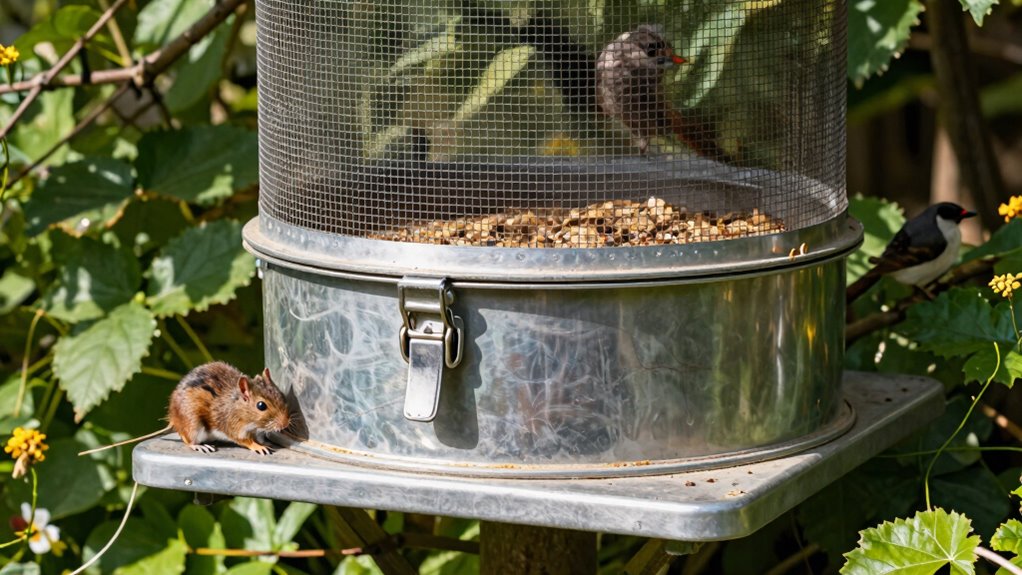

To prevent feed theft by wildlife and rodents, you should use visual and motion deterrents like reflective tape, decoy predators, or sprinklers to scare them away. Store feed in airtight, metal containers off the ground and in a cool, dry place to reduce attraction. Place feeders in open, visible areas and use sturdy poles with baffles to stop climbing. Maintaining cleanliness and combining these strategies will help keep pests at bay—there’s much more you can do to protect your feed effectively.

Get garden gear delivered free with Prime
- Fast, free delivery on millions of items
- Prime Video, Amazon Music and more included
- Member-only deals all year
Key Takeaways
- Use airtight, rodent-proof containers for storing pet food and bird seed to prevent pest access.
- Position feeders on sturdy poles with baffles and away from dense shrubbery to deter climbing and hiding.
- Install visual and motion-activated deterrents like reflective tape and sprinklers to frighten wildlife away.
- Keep feeding areas clean by regularly removing spilled seed and maintaining overall cleanliness.
- Incorporate physical barriers and choose pest-resistant materials in storage and feeder setups.
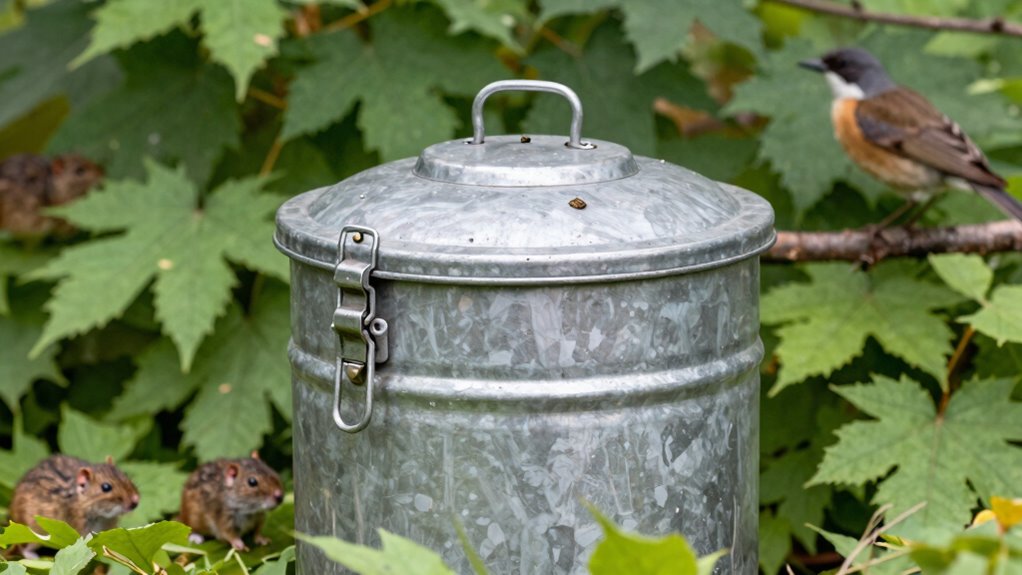
Wildlife and rodents can quickly turn your bird feeders and pet food supplies into their personal buffet, often leading to wasted feed and increased pest problems. To keep your feed safe, you need effective strategies to deter these unwanted guests. Bird deterrents are a great first step. You can use visual scare devices like reflective tape, plastic owls, or decoy predators to frighten away birds and small mammals. Motion-activated sprinklers are also highly effective at startling rodents and larger wildlife before they get close enough to access your feed. Additionally, hanging shiny objects or wind chimes near your feeders can create unpredictable movements and sounds, discouraging animals from lingering nearby.
Alongside deterrents, proper storage solutions are essential. Storing pet food and bird seed in airtight, rodent-proof containers prevents pests from smelling or smelling their way into your supplies. Metal bins with tight-fitting lids work best because rodents can’t chew through metal or plastic containers with secure seals. Keep these containers off the ground and away from walls to eliminate easy access points. If possible, store your feed in a cool, dry place, as moisture and warmth attract pests. Keeping the storage area clean and free of spilled feed also reduces the lure for wildlife. Proper storage solutions are crucial in creating an inhospitable environment for pests and wildlife. Using rodent-proof containers significantly minimizes the chances of pests accessing your supplies. Incorporating pest-resistant materials in your storage can further enhance protection against unwanted visitors. Selecting appropriate storage locations that are less accessible to pests is also key to maintaining a pest-free feeding area.
Another key to preventing theft is to position your feeders thoughtfully. Place bird feeders on sturdy poles with baffles or cages that prevent larger animals from climbing or reaching inside. Avoid placing feeders near dense shrubbery or trees where animals can hide and leap onto the feeders. Instead, put them in open areas with good visibility, so you can spot trouble early. Regularly cleaning up spilled seed beneath feeders minimizes attractive messes that draw animals in. You should also consider limiting the amount of seed you put out at one time—smaller, more frequent feedings mean less leftover and reduce the chance of attracting pests. Proper feeder placement can make a significant difference in deterring wildlife from accessing your feed.
Combining these tactics—using bird deterrents, upgrading your storage solutions, positioning feeders thoughtfully, and maintaining cleanliness—creates an all-encompassing barrier against wildlife and rodent theft. When you stay vigilant and proactive, you protect your feed, save money, and create a more enjoyable experience for your feathered visitors, free from unwanted pests. Keeping pests at bay takes effort, but the reward is a cleaner, more efficient feeding area where your wildlife friends can thrive without turning into pests themselves.
rodent-proof bird seed containers
As an affiliate, we earn on qualifying purchases.
As an affiliate, we earn on qualifying purchases.
Frequently Asked Questions
What Are the Most Common Wildlife Species Stealing Feed?
Squirrels, raccoons, and deer are the most common wildlife species stealing feed. They’re often drawn from nearby wildlife habitats, where they search for easy meals. Rodent behavior also leads them to your feed, especially mice and rats, which can squeeze through small openings. To protect your feed, you need to understand their habits and secure your storage, making it less accessible and less attractive to these clever creatures.
Can Certain Feed Types Attract More Rodents and Wildlife?
Certain feed types can definitely attract more rodents and wildlife. Feed storage that includes high-sugar, high-fat, or processed foods acts as strong wildlife attractants, drawing animals closer. Additionally, loose or spilled feed creates easy access and encourages foraging. To minimize this, choose wildlife-resistant containers, avoid leaving feed exposed, and opt for less tempting feed options. Keeping feed secure and clean reduces the likelihood of unwanted visitors and protects your supplies effectively.
Are There Natural Repellents Effective Against Wildlife?
Yes, natural deterrents can be effective against wildlife. You might try using coffee grounds, cayenne pepper, or garlic powder around your feed area, as these natural repellents often deter animals without harm. Wildlife repellent options like predator urine or specific plantings, such as mint or lavender, also help keep animals at bay. Regularly changing and applying these natural deterrents can reduce wildlife visits and protect your feed.
How Often Should Feed Storage Areas Be Checked?
To keep your feed safe, you should check your storage area regularly—at least once a week, especially during peak wildlife activity. Consistent feed container maintenance and vigilant storage area security help spot any little signs of intrusion early. By doing so, you prevent potential issues from escalating and guarantee your feed stays fresh and protected. Regular inspections also give you peace of mind, knowing your efforts keep unwanted visitors at bay.
Do Local Regulations Restrict Wildlife Control Methods?
Yes, local regulations can restrict wildlife control methods. You should check with your local authorities to understand legal restrictions before taking action. Many areas emphasize humane options, such as installing barriers or using repellents, rather than lethal methods. By following these rules, you guarantee you’re acting responsibly and legally. Always prioritize humane options, and seek professional advice if you’re unsure about the regulations in your area.
Conclusion
Think of your feed as a treasure chest guarded by a vigilant knight. By sealing gaps, using secure containers, and placing bait away from feeding areas, you become the knight protecting your riches. With these simple defenses, you turn away prowling wildlife and sneaky rodents, ensuring your investment stays safe. Soon, your garden becomes a peaceful kingdom, where only your intended guests—your birds and critters—can enjoy the bounty, leaving the thieves wandering empty-handed.
Fall Picks
fall essentials
As an affiliate, we earn on qualifying purchases.