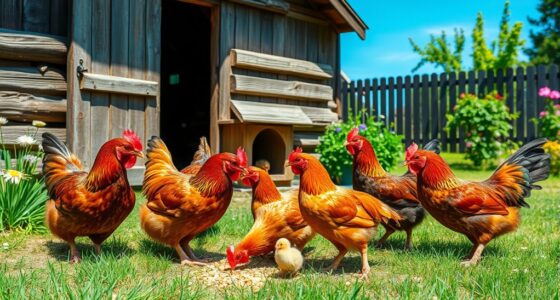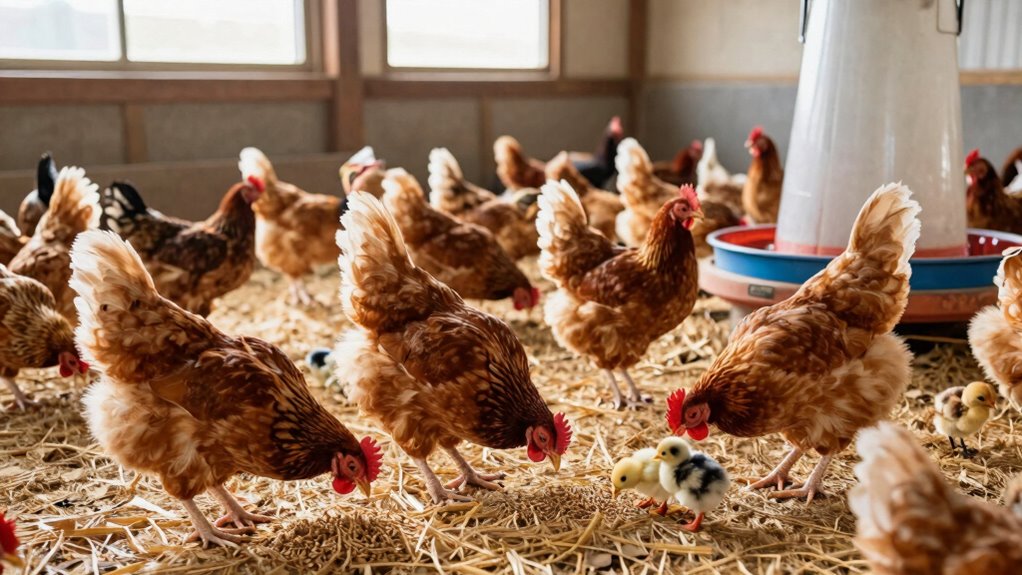

To reduce pecking in mixed-age poultry flocks, start by providing plenty of space, good ventilation, and engaging environmental enrichments like perches and toys, which help reduce stress and boredom. Monitor your flock for early signs of aggression and intervene quickly by separating troublemakers or introducing new birds gradually. Maintaining a consistent routine and minimizing sudden changes also help. If you want to explore more effective strategies, there’s much more to discover.
Key Takeaways
- Provide ample space and proper ventilation to reduce stress and overcrowding.
- Introduce new birds gradually to minimize territorial disputes and aggression.
- Use environmental enrichments like perches, pecking blocks, and scattered feed to channel natural behaviors.
- Monitor flock behavior closely and promptly separate aggressive birds when signs of pecking appear.
- Maintain consistent routines for feeding, watering, and handling to reduce anxiety and prevent triggers.
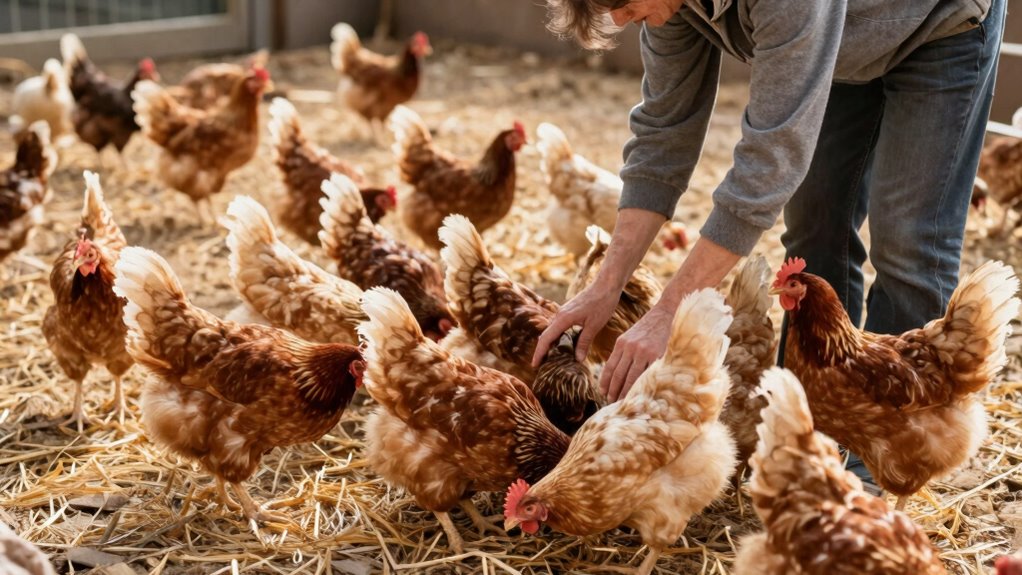
Pecking problems can quickly escalate in poultry flocks, leading to injuries, stress, and decreased productivity. When chickens peck at each other excessively, it not only harms their health but also causes significant behavioral issues that are hard to control once they become ingrained. To address this, you need to focus on effective behavior management and environmental enrichment. These strategies help reduce stress and redirect natural pecking instincts away from flock mates, creating a calmer, healthier environment.
Effective management and enrichment prevent pecking issues, promoting a healthier, calmer flock.
First, understanding the root causes of pecking is essential. In mixed-age flocks, differences in size, temperament, and activity levels can trigger aggressive behaviors. Younger birds might be more curious and playful, while older birds can become territorial or assertive. Managing this dynamic begins with providing ample space, so each bird has enough room to move freely without feeling crowded. Overcrowding increases stress and makes pecking more likely. Ensuring proper ventilation, suitable lighting, and comfortable bedding also reduce discomfort, which can contribute to aggressive behaviors. Additionally, providing appropriate space allocation is vital to prevent overcrowding and reduce stress-induced pecking.
Behavior management plays a critical role. Establish a consistent routine that includes regular feeding, watering, and handling to build trust and reduce anxiety. Keep an eye out for early signs of pecking, such as chasing or nipping, and intervene promptly. Separating aggressive individuals temporarily can prevent escalation, but long-term solutions involve understanding and modifying their environment and interactions. Avoid sudden changes in the flock, as these can cause stress and trigger pecking. Instead, introduce new birds gradually and monitor their interactions closely. Incorporating natural behaviors into the environment can also help satisfy the birds’ instincts and reduce pecking tendencies. Recognizing and addressing behavioral triggers early can prevent more serious conflicts from developing over time.
Environmental enrichment is another powerful tool to curtail pecking problems. Providing perches, dust baths, and scattered feed encourages natural foraging and exploration behaviors. When birds have engaging activities, they’re less likely to focus on pecking each other out of boredom or frustration. Additionally, hanging toys or pecking blocks can serve as distractions, giving birds outlets for their natural instincts without harming flock mates. Regularly changing or repositioning these enrichments keeps the environment stimulating and prevents boredom from settling in. Incorporating environmental enrichment strategies also supports overall well-being and reduces stress, which is crucial in mixed-age flocks. Creating a stimulating environment helps keep the birds occupied and reduces the likelihood of pecking behaviors developing or worsening.
Ultimately, reducing pecking in mixed-age flocks requires a proactive approach. By managing behavior through consistent routines, prompt intervention, and creating a stimulating environment, you help foster a peaceful flock. This not only minimizes injuries but also improves overall productivity. Remember, your goal is to meet the chickens’ behavioral needs while maintaining a calm and safe environment. When you combine good behavior management with environmental enrichment, you set the stage for a healthier, happier flock where pecking is no longer a problem but a thing of the past.

Cherry Stone Poultry Grit Pecking Block, 25 Pounds
- Digestive Aid: Supports feed breakdown and nutrient absorption
- Stress Reduction: Encourages natural pecking to reduce aggression
- Premium Natural Ingredients: Made from natural grit, size #2 / 3/16"
As an affiliate, we earn on qualifying purchases.
As an affiliate, we earn on qualifying purchases.
Frequently Asked Questions
How Does Lighting Affect Pecking Behavior in Poultry?
Lighting influences pecking behavior by affecting light intensity and color stimulation. Bright light can increase activity and aggression, leading to more pecking, while dimmer lighting reduces this behavior. Using softer, natural light or adjusting color stimulation with appropriate bulbs can calm birds and decrease pecking incidents. Proper lighting management helps create a calmer environment, reducing stress and promoting healthier, less aggressive interactions among your poultry.
Are There Specific Breeds More Prone to Pecking Issues?
You’ll notice that certain breeds, like Leghorns and Rhode Island Reds, tend to have higher pecking predispositions due to breed tendencies. Studies show these breeds are more active and inquisitive, which can increase pecking behaviors. Breed tendencies greatly influence pecking problems, so choosing calmer breeds like Silkies or Orpingtons may reduce issues. Understanding these predispositions helps you select birds that are less prone to aggression and pecking conflicts.
What Are Natural Deterrents for Pecking Among Chickens?
You can use natural remedies like adding ample perches, logs, or greenery to distract chickens from pecking. Behavioral modifications, such as providing diverse feed and reducing overcrowding, also help. Keep the environment stimulating and guarantee your flock has enough space to minimize stress. These approaches encourage natural behaviors, reduce boredom, and deter pecking, creating a calmer, healthier coop where chickens feel secure and less inclined to peck each other.
How Can Nutrition Influence Pecking Behavior?
Nutrition plays a essential role in reducing pecking behavior. You can incorporate dietary supplements rich in vitamins and minerals to support feather health and reduce stress-induced pecking. Proper feather management, like providing adequate protein, helps prevent feather pecking caused by poor feather condition. Ensuring balanced nutrition keeps your flock calmer and less likely to target each other, ultimately promoting harmony and healthier, more content chickens.
What Are Signs of Severe Pecking Injuries?
You’ll notice severe pecking injuries through significant feather loss and exposed, inflamed skin. Birds may also exhibit bleeding, swelling, or open wounds, which indicate aggressive pecking. Sometimes, injured birds become lethargic or isolate themselves. These signs show the pecking is intense, risking infection or further injury. Promptly identify and address these injuries to prevent escalation, ensuring the flock’s health and reducing ongoing damage.
Conclusion
By implementing these strategies, you can markedly reduce pecking issues in your mixed-age flock. Some might think it’s too complicated or time-consuming, but the benefits—healthier birds and fewer injuries—are worth it. Keep consistent with environmental enrichments, proper nutrition, and careful monitoring, and you’ll create a peaceful, productive flock. Remember, addressing pecking early prevents bigger problems later, so take action now and enjoy a happier, healthier poultry environment.