To keep egg production steady without overmanaging, focus on providing a balanced diet rich in calcium, protein, and essential nutrients while maintaining a consistent routine. Guarantee your coop has proper ventilation, lighting, and cleanliness to reduce stress and promote health. Protect your hens from predators, keep them secure, and offer a calm environment. Regular health checks help prevent issues early. If you’re curious how small adjustments can make a big difference, there’s more to discover ahead.
Key Takeaways
- Provide a balanced, nutrient-rich diet with targeted supplements to support consistent egg laying.
- Maintain stable environmental conditions with proper lighting, ventilation, and temperature control.
- Establish a predictable routine for feeding, lighting, and care to reduce stress.
- Ensure secure housing to protect hens from predators and minimize stress-related disruptions.
- Conduct regular health checks and keep the coop clean to prevent illness and maintain overall flock health.
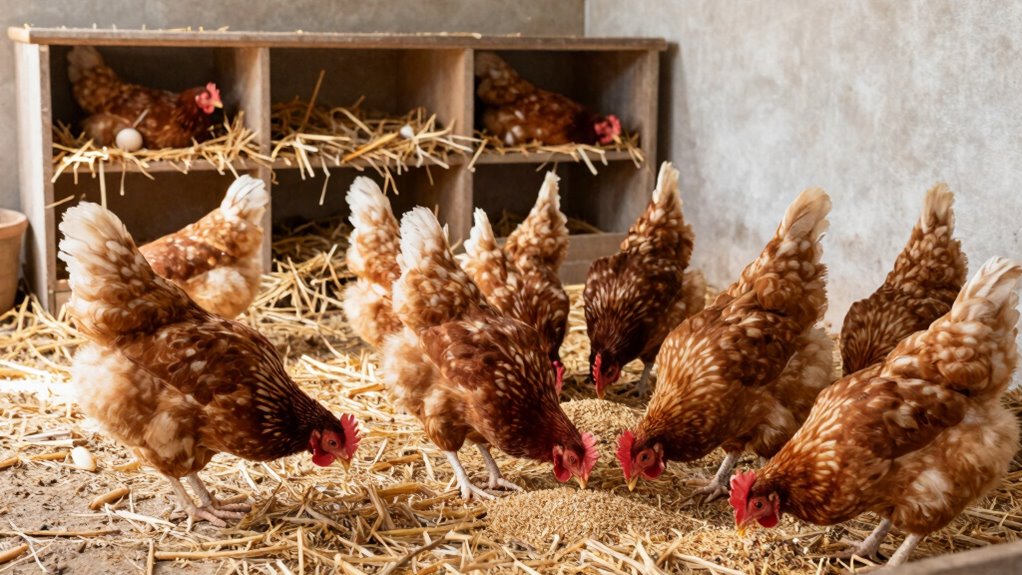
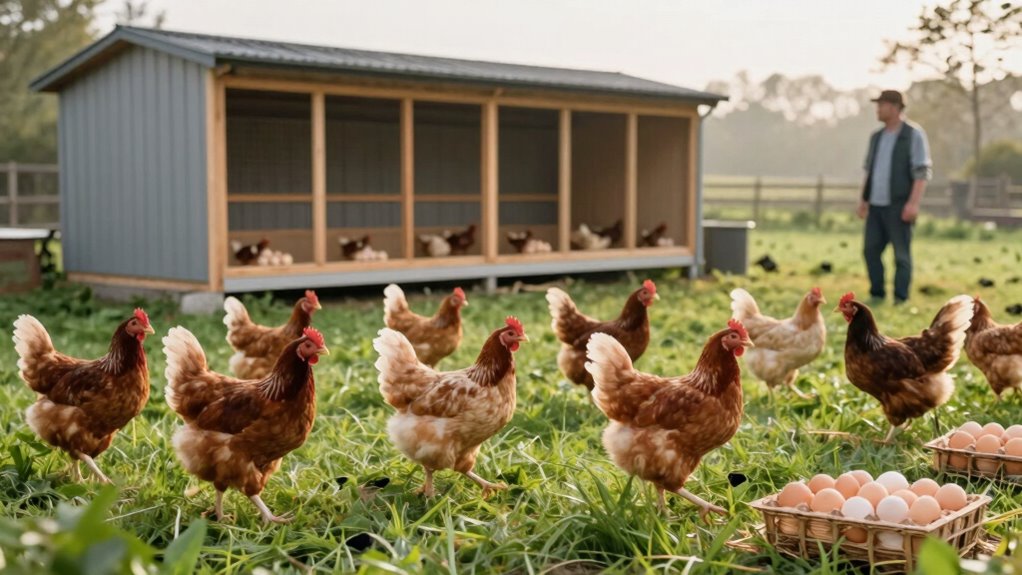
Are you struggling to maintain consistent egg production from your hens? It’s a common issue for poultry keepers, but the good news is that with some simple adjustments, you can keep your hens laying steadily without overmanaging them. One of the most effective ways is to focus on their overall health and environment. Providing the right nutritional supplements can make a big difference. Guarantee your hens receive a balanced diet rich in calcium, protein, and essential nutrients. Consider adding specific supplements designed for laying hens, especially during the winter months or after molting, when their productivity might dip. These supplements support their reproductive system, prevent deficiencies, and help keep their laying cycle on track. Remember, overfeeding isn’t the goal; targeted nutritional support is what counts. Ensuring proper environmental conditions can also significantly influence their laying habits and overall well-being. Proper ventilation and temperature regulation are crucial aspects of maintaining a comfortable coop environment. Maintaining a stable environment also involves monitoring lighting and temperature for optimal egg production. Another crucial factor is predator protection. If your hens feel safe and secure, they’re more likely to lay consistently. Predators can cause stress and disrupt their routine, leading to decreased egg production. Installing secure fencing, covering the coop with predator-proof netting, and ensuring there are no gaps where predators can sneak in are simple yet effective steps. Keep your coop well-lit and clean, as a tidy environment reduces stress and discourages pests that can threaten your flock. When hens feel protected from threats, they conserve energy and focus more on laying eggs rather than worrying about safety. Additionally, creating a stress-free environment can further promote consistent laying. Regularly monitoring their behavior and making adjustments as needed can also help prevent stress-related issues. Maintaining a consistent routine and providing a quiet, comfortable space for nesting can also contribute to steady egg production.
Boost egg production with balanced nutrition and targeted supplements during winter and molting periods.
Maintaining a stable environment also plays a critical role. Avoid drastic changes in lighting, temperature, or feed routines, as hens thrive on consistency. Natural light is especially important—aim for around 14 hours of light daily in the winter by supplementing with artificial light if necessary. This encourages regular laying cycles. Additionally, make sure your flock has access to clean water, fresh bedding, and comfortable nesting boxes. Happy hens will produce more eggs, and stress is a common cause of laying interruptions. Regular health checks and parasite management are essential to prevent illnesses that can reduce productivity. Implementing a preventive health plan can help catch issues early and keep your flock healthy. When your hens are healthy, well-fed, and secure, you set the stage for steady egg production. It’s all about creating an environment where they feel safe, supported, and properly nourished—then, laying consistently becomes a natural part of their routine.

Pecking Order Oyster Shell – Calcium Supplement to Support Laying Hens and Strong Egg Shell Development (5 LB) 8 (Packaging May Vary)
- Calcium Supplement for Eggshells: Supports strong, high-quality eggshells
- Promotes Hen Bone Health: Enhances skeletal strength and mobility
- Natural Oyster Shell Source: Pure, additive-free calcium supplement
As an affiliate, we earn on qualifying purchases.
As an affiliate, we earn on qualifying purchases.
Frequently Asked Questions
How Do I Identify Early Signs of Hen Health Issues?
You can spot early signs of hen health issues by observing their behavior and egg gathering patterns. If a hen becomes lethargic, isolates itself, or shows reduced egg production, these are red flags. Watch for abnormal behaviors like feather plucking or limping. Regularly checking your flock helps catch problems early, ensuring you can address health concerns promptly and keep your hens happy and productive.
What Are Natural Ways to Boost Egg Production?
To naturally boost egg production, focus on providing a balanced diet with natural supplements like flaxseed or oyster shells. Make sure your coop has proper ventilation to keep the environment healthy and reduce stress. Regularly offer fresh water, and consider adding herbs like oregano or thyme for their natural benefits. Keeping the coop well-ventilated and supplementing their diet with natural options supports consistent, healthy egg production without overmanaging your flock.
How Does Lighting Affect Hen Laying Cycles?
Lighting can be your secret weapon—think of it as the sun shining just right to keep your hens laying consistently. Proper lighting schedules influence hen behavior and stimulate egg production by mimicking natural daylight. When you provide about 14-16 hours of light daily, hens stay active and productive, avoiding long breaks. Proper lighting maintains your flock happy and ensures a steady egg supply without overmanaging, making your farm thrive effortlessly.
Can Diet Changes Improve Egg Quality?
Yes, diet changes can improve egg quality. You can add nutritional supplements like calcium and omega-3s to support shell strength and yolk richness. Be mindful of dietary restrictions that might limit certain ingredients, but guarantee your flock gets a balanced mix of grains, proteins, and vitamins. These adjustments help produce healthier, more nutritious eggs without overmanaging your hens, keeping their health and productivity steady.
What Are Common Predators That Threaten Laying Hens?
Predators can strike unexpectedly, threatening your flock’s safety. Common threats include raccoons, foxes, hawks, and rats, all keen to snatch eggs or hens. To guarantee predator prevention and flock security, you must reinforce coops, secure feed storage, and eliminate hiding spots. Regularly monitor your property, especially during dawn and dusk, when predators are most active. Staying vigilant keeps your hens safe and maintains steady egg production.
Conclusion
By maintaining a balanced approach and paying attention to your flock’s needs, you can keep egg production steady without overmanaging. Remember, a healthy, happy flock is like a well-tuned orchestra—each part working in harmony to create consistent results. Trust in your knowledge, give them space to thrive, and let nature do its work. In nurturing your hens wisely, you’ll find that steady production becomes not just a goal, but a natural rhythm of your farm.