
To keep your livestock safe, always follow the de-icer’s manufacturer instructions, ensuring proper placement in the tank’s center and avoiding water contact with cords. Use GFCI outlets and inspect wiring regularly for damage. Don’t overuse or modify the de-icer, and unplug it after use. Wear safety gear when installing or maintaining. Neglecting these steps can lead to electrical hazards or animal harm. Keep these do’s and don’ts in mind to protect everyone—more safety tips await you.
Key Takeaways
- Always use GFCI outlets and inspect cords regularly to prevent electrical shocks and fire hazards.
- Position de-icers centrally in the tank, fully submerging without touching sides or bottom for safe, even heating.
- Follow manufacturer instructions for installation, size, and placement to avoid overheating and equipment damage.
- Keep electrical connections dry, away from water and animals, and unplug after use to reduce shock risks.
- Conduct routine inspections and maintain safety gear to identify wear, prevent malfunctions, and ensure safe operation.
Why Safe Use of Stock Tank De-Icers Protects Your Livestock
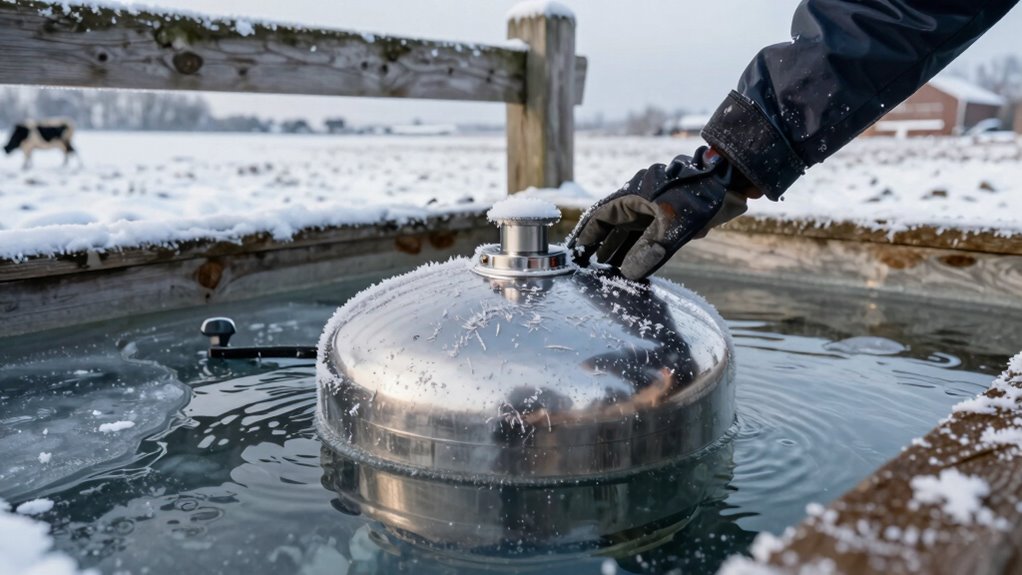
Using stock tank de-icers safely is crucial because improper use can pose serious risks to your livestock. When you prioritize safe operation, you help ensure your animals stay properly hydrated during cold months, which is essential for their health. Livestock hydration can quickly become a concern in winter if water sources freeze, leading to dehydration and illness. By following safety guidelines, you prevent accidents such as electrical hazards or tank damage that could endanger your animals. Proper use of de-icers supports winter preparedness, making sure your livestock always have access to unfrozen water. Additionally, electrical safety measures help protect both your animals and property from potential hazards. Using high-quality de-icer devices can further reduce risks and improve efficiency. Implementing safe installation practices is also vital for preventing electrical mishaps and ensuring long-term performance. Ensuring your de-icer maintenance is up to date can prevent malfunctions that might create dangerous situations. Ultimately, safe practices help you protect your herd’s well-being, reduce stress, and avoid costly mistakes during the colder months.
How Do I Use a Stock Tank De-Icer Safely?
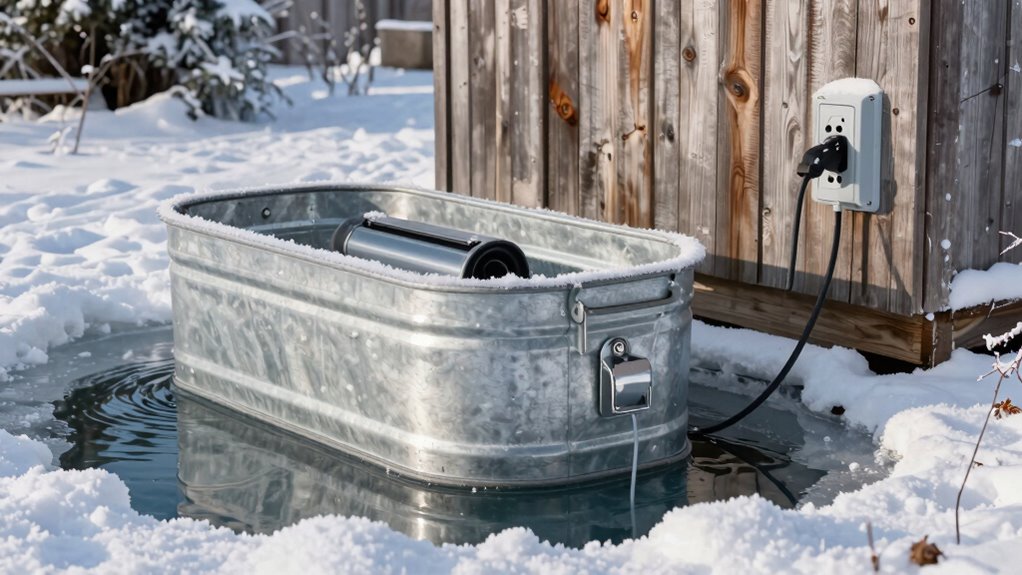
To use a stock tank de-icer safely, start by placing it correctly to prevent electrical hazards and guarantee even heating. Always follow electricity safety measures, like keeping cords away from water and inspecting for damage. Regular maintenance checks help catch issues early and keep the de-icer functioning safely throughout the season. Additionally, choosing a reliable precious metals IRA provider for your investment needs can ensure you receive trustworthy guidance and support. Proper piercing care and hygiene practices can also prevent potential complications if the de-icer is used around water sources that might come into contact with body piercings. Being aware of energy-efficient options can reduce overall power consumption and promote sustainable use of your de-icer. Incorporating landscaping ideas around your setup can also help improve safety by providing clear pathways and reducing tripping hazards near the de-icer.
Proper Placement Techniques
Proper placement of your stock tank de-icer is essential for safe and effective operation. Use proper placement techniques to guarantee the device functions correctly and avoids hazards. Position the de-icer in the center of the tank to distribute heat evenly, preventing ice buildup in corners or edges. Keep the cord and power source away from water and areas where animals may trample or chew. Make sure the de-icer is fully submerged but not touching the tank’s sides or bottom to prevent damage. Follow specific positioning strategies outlined by the manufacturer to avoid overheating or electrical issues. Regularly check the placement to ensure it remains secure and effective. proper placement not only prolongs the life of your de-icer but also keeps your animals safe. Additionally, understanding electrical safety practices when installing and maintaining the de-icer can prevent dangerous situations and ensure reliable operation. Always inspect your power cord regularly for signs of wear or damage to avoid potential hazards.
Electricity Safety Measures
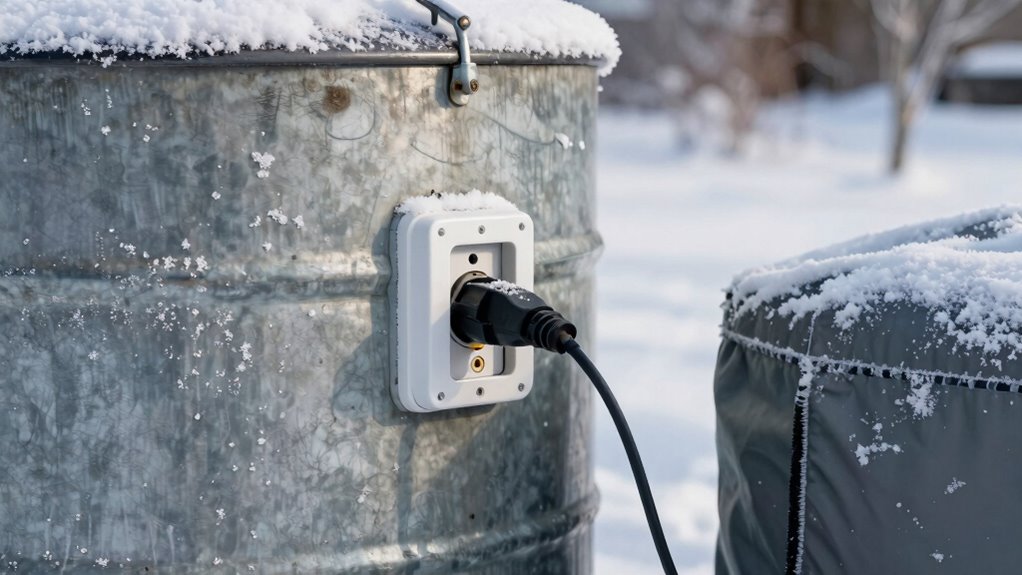
Since electricity can be dangerous if not handled properly, always prioritize safety when operating your stock tank de-icer. Make certain your electrical wiring is in good condition, with no frays or exposed wires. Use a grounded outlet and avoid extension cords whenever possible. Circuit protection is essential—install a GFCI outlet to prevent shocks. Check that your de-icer’s cord and plug are intact before use. Never operate the de-icer with wet hands or in wet conditions. Here’s a quick guide:
| Safety Tip | Why It Matters | Best Practice |
|---|---|---|
| Use GFCI outlets | Prevents electric shocks | Always plug into GFCI outlets |
| Inspect wiring | Avoid short circuits | Regularly check for damage |
| Keep cords dry | Electrocution risk | Keep away from water |
| Unplug when not in use | Avoid accidental shocks | Disconnect after use |
| Proper grounding | Guarantees circuit protection | Use grounded outlets |
Regular Maintenance Checks
Performing regular maintenance checks on your stock tank de-icer helps guarantee it operates safely and effectively throughout the winter. This guarantees your frost protection system stays reliable during harsh winter weather.
Here are four key checks to perform: 1. Inspect the power cord and plug for damage or wear. 2. Confirm the thermostat is functioning correctly to prevent overheating. 3. Clean any debris or ice buildup around the de-icer to avoid blockages. 4. Test the device periodically to ensure it’s heating properly. Regular maintenance helps prevent electrical issues, keeps the de-icer running efficiently, and reduces the risk of malfunction. Staying proactive with these checks ensures your livestock’s water remains unfrozen and safe all winter long. Additionally, understanding electric safety protocols can further protect you and your animals during operation.
Being aware of the proper grounding techniques can significantly reduce the risk of electrical shock and ensure safe operation of your de-icer.
Common Mistakes to Avoid When Using De-Icers and Their Hazards
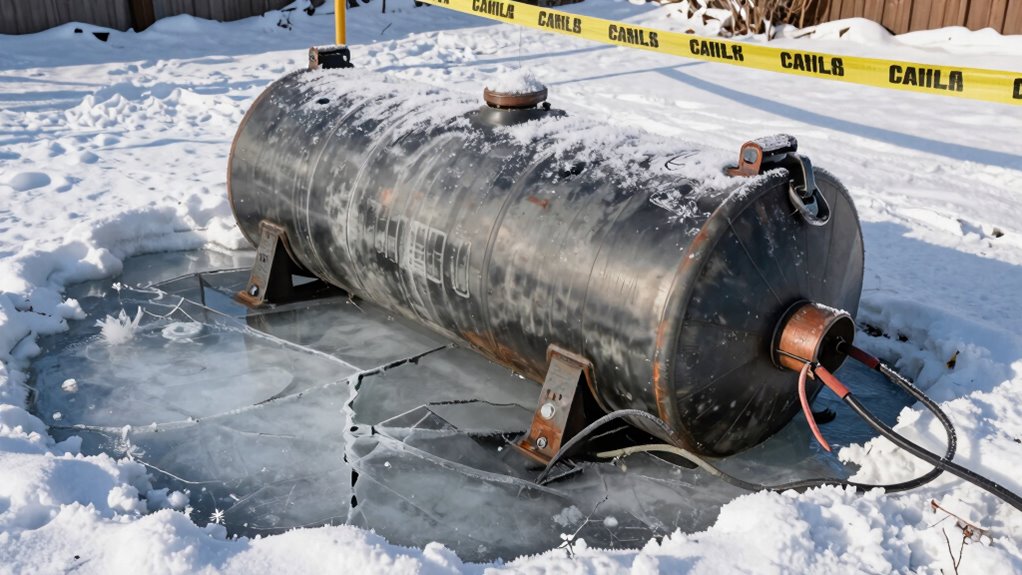
Many people make mistakes when using de-icers that can lead to hazards. Overusing the product, ignoring proper application, or skipping safety precautions can cause accidents or damage. Being aware of these pitfalls helps you stay safe and protect your stock tank. Additionally, ensuring proper product maintenance can prevent malfunctions and prolong the effectiveness of your de-icer.
Overusing De-Icer Risks
Using de-icers excessively can create serious hazards, both for your safety and your equipment. Overapplication can lead to chemical hazards, risking skin and eye irritation or poisoning. It can also harm the environment by contaminating water sources and soil. To avoid these risks, be mindful of the following:
- Applying too much increases chemical runoff, impacting local wildlife.
- Excess de-icer can corrode metal parts, damaging your stock tank and pump.
- Overuse may cause buildup, leading to clogs or malfunctions.
- Repeated application can lead to environmental contamination, affecting plants and aquatic life.
Stick to recommended amounts, and always follow manufacturer guidelines to prevent chemical hazards and minimize environmental impacts. Proper use guarantees safety and maintains your equipment’s longevity.
Ignoring Proper Application
Ignoring proper application techniques when using de-icers can lead to serious safety risks and equipment damage. If you rush de-icer installation or skip manufacturer instructions, the de-icer may not function effectively or safely. Improper placement can cause uneven ice melting, creating hazards for both you and livestock. Using too much or too little de-icer can also harm livestock health, as chemicals might contaminate water or fail to prevent freezing altogether. Always follow the recommended application guidelines to ensure even coverage and safe operation. Proper application not only protects your equipment but also safeguards your animals’ health by maintaining clean, ice-free water sources. Avoid shortcuts or guesswork—correct de-icer application is essential for safe, reliable use.
Neglecting Safety Precautions
Neglecting safety precautions when handling de-icers can lead to serious injuries and equipment failures. When you’re focused on weather preparedness and farm safety, it’s easy to overlook risks. Here are common mistakes to avoid:
- Skipping protective gear like gloves and goggles, risking chemical burns or eye injuries.
- Ignoring proper ventilation, which can cause harmful fumes to build up.
- Using de-icers near open flames or heat sources, risking fires or explosions.
- Forgetting to read labels or follow manufacturer instructions, leading to misuse or overuse.
- Failing to understand the importance of proper de-icer storage, which can prevent accidental spills or exposure. Additionally, understanding the hazardous chemicals involved can help you better assess risks and handle de-icers safely.
How to Choose the Right De-Icer Size and Type for Your Livestock Tank

Choosing the right de-icer size and type for your livestock tank is vital to make certain your animals have a reliable water source during cold weather. Start by evaluating your tank’s size and the typical winter temperatures in your area. A larger tank or colder climate may require a higher wattage de-icer to prevent freezing, while smaller tanks need less power. Proper de-icer installation is essential to ensure safety and effectiveness; position it in the center for even heat distribution. Consider automatic thermostats or thermostatic controls for livestock hydration, so the de-icer activates only when necessary. Keep in mind that an appropriately sized de-icer prevents overuse and electrical hazards, safeguarding both your animals and your property. Additionally, understanding the energy efficiency of different de-icer models can help you reduce operating costs and environmental impact. Selecting a de-icer with an energy-saving feature can further enhance efficiency and prolong device lifespan. For those interested in pilot gear, selecting a high-quality de-icer contributes to efficient operation and safety during winter months, especially when paired with proper maintenance practices.
How to Maintain and Inspect Your De-Icer for Safe Winter Use
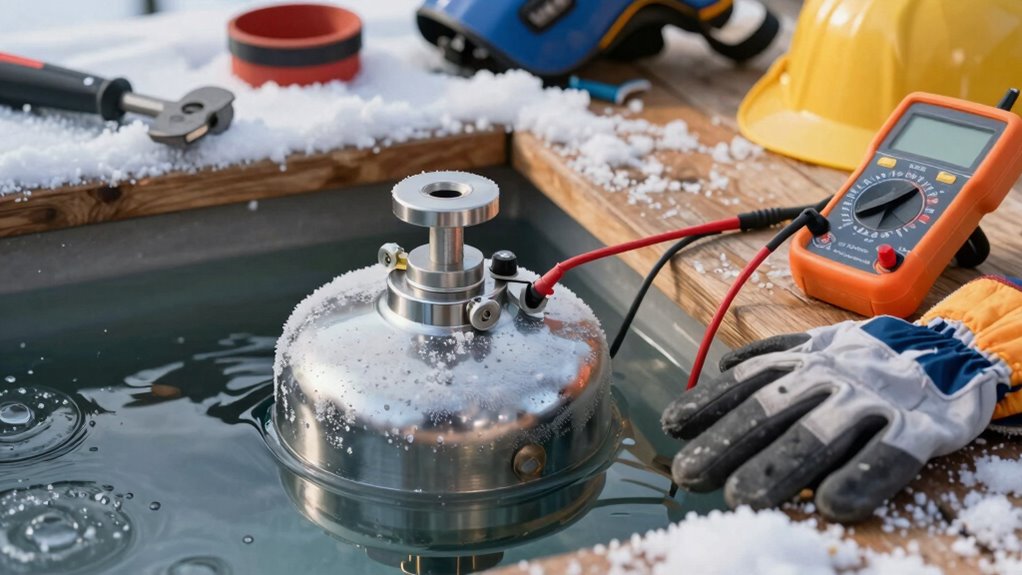
Regularly inspecting and maintaining your de-icer is essential to guarantee it operates safely and effectively throughout the winter. Start by checking the de-icer’s durability; look for any signs of corrosion or damage. Next, examine the electrical wiring for frays, cracks,, or loose connections that could pose safety risks. Ensure the power cord is properly insulated and free from cuts. Additionally, verify that the thermostat and heating elements are functioning correctly by testing the unit periodically. Proper inspection techniques can help detect issues before they become serious problems. Incorporating Routine inspections helps identify potential issues early and maintain optimal performance. Finally, clean any debris or ice buildup around the de-icer to prevent blockages. Proper maintenance reduces the risk of electrical hazards, prolongs the life of your de-icer, and guarantees it heats efficiently when needed most. Using preventive maintenance practices can extend the lifespan of your de-icer and ensure reliable operation.
Safety Gear and Precautions for Installing and Maintaining Your De-Icer
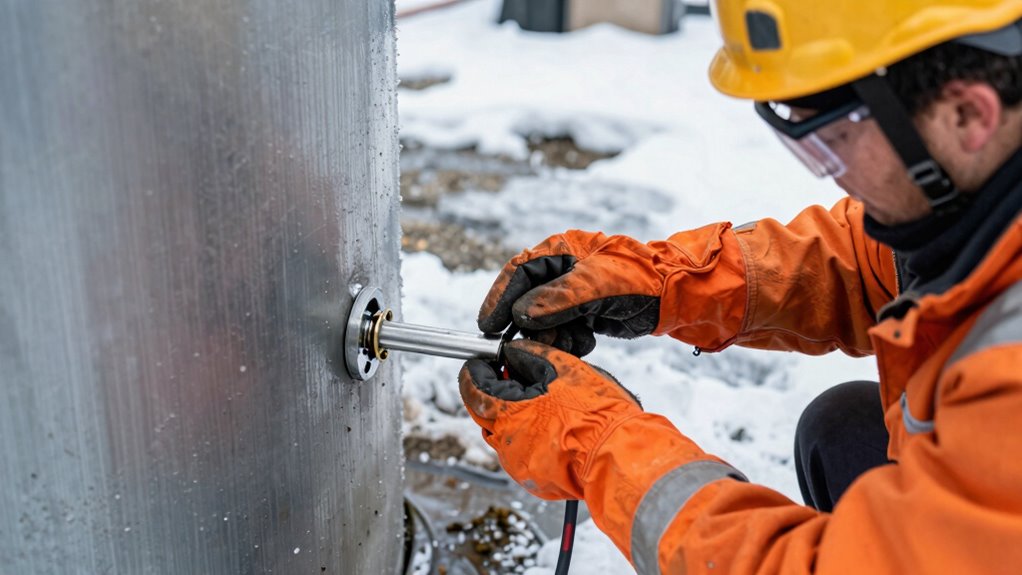
To safely install and maintain your de-icer, wearing the right personal protective equipment and following proper precautions is vital. Always gear up with gloves, safety goggles, and insulated clothing to prevent burns, electrical shocks, or injuries from sharp components. Before starting, familiarize yourself with emergency shutdown procedures, so you can quickly disconnect power if needed. Confirm the power source is turned off before handling wiring or components to avoid electrocution. Use insulated tools and avoid wearing loose clothing that could snag on equipment. Keep your work area dry and well-lit. Regularly inspect your protective gear for damage, replacing any worn or compromised equipment. Taking these precautions helps prevent accidents and keeps you safe during installation and maintenance. Additionally, understanding the juice extraction techniques involved in preparing cleaning solutions can help you maintain your equipment more effectively.
What to Do if There’s an Emergency With Your De-Icer?
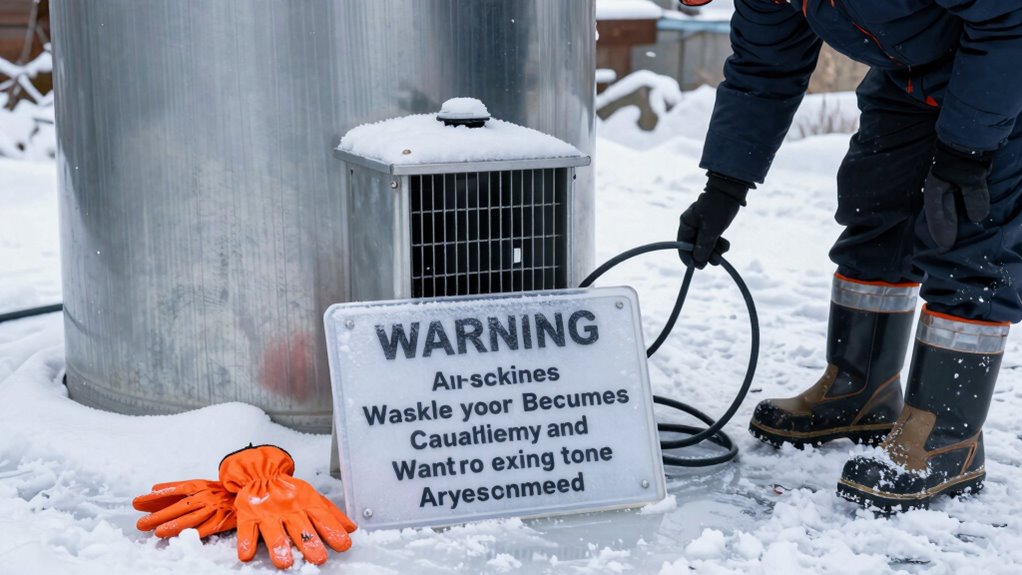
Despite taking all safety precautions during installation and maintenance, emergencies can still happen. If you encounter a de-icer-related incident, follow these emergency procedures quickly:
Even with precautions, de-icer emergencies can occur—know these quick safety steps.
- Shut off power immediately to prevent further injury or damage.
- Assess the situation for burns, shocks, or other injuries.
- Administer first aid responses: cool burns with water, apply dressings, or call emergency services if needed.
- Keep the victim calm and still until professional help arrives, avoiding moving them if there’s a risk of shock or injury.
Tips for Teaching Your Family and Farm Help Safe De-Icer Practices
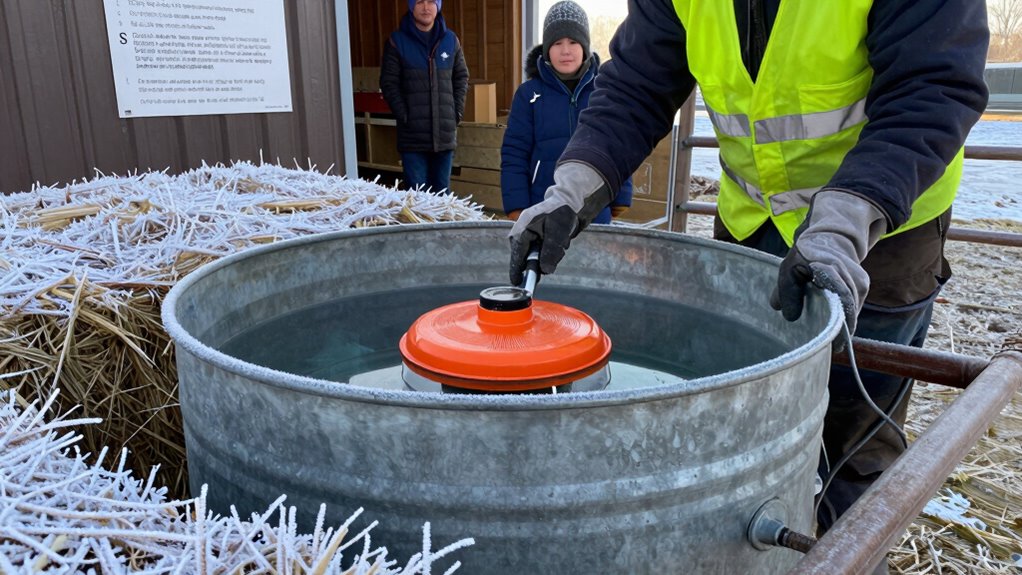
Teaching your family and farm help safe de-icer practices is essential to prevent accidents and guarantee everyone’s well-being. Start with proper winter preparedness by demonstrating how to operate de-icers safely and explaining the risks of improper use. Emphasize the importance of maintaining livestock hydration during cold weather, ensuring water sources stay functional and safe. Show them how to inspect de-icers regularly for damage or malfunction and stress the importance of keeping cords and electrical connections out of water and away from livestock. Encourage clear communication about safety procedures and establish responsibilities for operating and monitoring de-icers. By educating everyone on safe practices, you reduce the risk of accidents and help protect your animals, making winter farm chores safer and more effective.
Frequently Asked Questions
Can De-Icers Harm Aquatic Life in Nearby Water Sources?
De-icers can harm aquatic life if they contaminate nearby water sources. Their chemical runoff may cause water contamination, affecting fish and plants. To minimize environmental impact, you should use eco-friendly de-icers or limit runoff by preventing overflow or leaks. Always follow safety guidelines to protect aquatic ecosystems, ensuring your actions don’t unintentionally harm wildlife or pollute water sources.
Are There Eco-Friendly De-Icer Options Available?
Think of eco-friendly de-icer options like nature’s own remedies. You can choose biodegradable solutions and natural alternatives that work without harming aquatic life or the environment. These options, such as potassium acetate or calcium magnesium acetate, melt ice effectively while being safer. By opting for these environmentally conscious choices, you help protect nearby water sources and support sustainability, all while keeping your stock tank ice-free during cold months.
How Often Should I Replace or Upgrade My De-Icer?
You should replace or upgrade your de-icer based on its maintenance needs and the replacement schedule recommended by the manufacturer. Typically, check it at least once a season, especially before winter. If it shows signs of wear, damage, or isn’t functioning efficiently, replace it sooner. Regular de-icer maintenance prolongs its life and ensures safety. Following the manufacturer’s guidelines helps you avoid unnecessary risks and keeps your stock tank ice-free.
What Are Signs of a Malfunctioning De-Icer?
Imagine your de-icer is acting like a vintage radio—faint signals or strange noises mean trouble. Signs of malfunction include inconsistent heating, unusual noises, or if it stops working altogether. Regular de-icer maintenance helps prevent electrical issues and guarantees efficiency. If you notice these signs, unplug the unit and inspect for damaged cords or corrosion. Prompt action can save you from costly repairs and keep your stock tank ice-free.
Is It Safe to Leave a De-Icer Plugged in Overnight?
It’s generally safe to leave a de-icer plugged in overnight if you follow proper electrical safety and de-icer maintenance. Make sure the cord and plug are in good condition, and the unit isn’t damaged or overheating. Always unplug the de-icer when not in use or if you notice any malfunctions. Regularly inspect and maintain it to prevent hazards, ensuring safe operation during overnight use.
Conclusion
By following these safety tips, you’re building a sturdy shield around your livestock’s well-being. Think of your de-icer as a trusted lighthouse guiding your animals through icy waters—if you neglect its maintenance or usage, the fog of danger can obscure the path. Stay vigilant, keep safety gear on hand, and teach everyone involved. With careful attention, you’ll guarantee your farm stays a safe harbor amid winter’s chill, protecting both your animals and yourself.