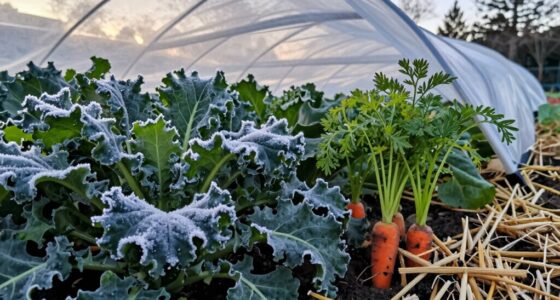
To optimize your cover cropping, select species based on your goals: use legumes like clover or vetch for nitrogen, grasses such as rye or oats for soil structure, and broadleaf plants like radishes for pest control. Mix species to boost resilience and benefits. Termination methods include mowing, roller-crimping, or incorporating residues to enrich soil and suppress weeds. Choosing the right approach guarantees healthy soil and crop success—your next steps can make a big difference.
Key Takeaways
- Select diverse species (legumes, grasses, broadleaf) based on specific soil health, nutrient, and pest management goals.
- Combine multiple species (polyculture) to enhance resilience and maximize cover crop benefits.
- Use mowing, roller-crimper, or incorporation methods for effective cover crop termination, ensuring soil protection and residue benefits.
- Timing of termination impacts subsequent crop success and soil microbial health; plan accordingly.
- Proper residue management post-termination prevents weed growth and pest issues while supporting soil vitality.

Have you ever considered how planting certain crops between your main harvests can improve your soil? Cover cropping is an effective strategy to enhance your land’s health, and choosing the right species can make all the difference. The benefits of cover crops include reducing soil erosion, enhancing nutrient cycling, suppressing weeds, and increasing organic matter. When you select diverse species, you maximize these cover crop benefits, creating a resilient and productive soil ecosystem. Species diversity ensures that different plants perform various functions, such as fixing nitrogen, breaking up compacted soil, or providing biomass for soil organic matter. This diversity also helps buffer against pests and diseases, which might target a single crop species. By mixing legumes, grasses, and broadleaf plants, you can tailor your cover crop mix to address specific soil needs and climatic conditions.
In choosing your cover crop species, consider your goals and the local environment. For example, if nitrogen enrichment is a priority, legumes like clover or vetch are excellent options because they fix atmospheric nitrogen. Want to improve soil structure and aeration? Grasses like rye or oats develop deep root systems that help break up compacted soil and increase water infiltration. Broadleaf plants such as radishes or mustards can scavenge nutrients and help manage pests. Integrating multiple species—sometimes called polyculture—can amplify these benefits, creating a more resilient cover crop system. You’ll want to balance species that grow at different times and have complementary functions, ensuring your cover crop remains active across seasons and provides continual soil protection. Incorporating cover crops also supports soil microbial health, which is essential for nutrient availability and overall soil vitality.
Termination methods are vital once your cover crop has fulfilled its role. You need to decide how to end the cover crop without damaging your subsequent crop. Mowing or roller-crimper techniques physically kill the plants, leaving residues that protect the soil surface and decompose gradually. This method keeps the soil covered, suppressing weeds and conserving moisture. Alternatively, you might choose to incorporate the cover crop into the soil by tilling it under, which adds organic matter and nutrients. Some growers prefer chemical termination, though it’s less sustainable and can impact soil health if not managed carefully. Your choice depends on your equipment, timing, and crop rotation plans. Proper termination ensures your main crop can establish successfully without competition or pest issues, while still benefiting from the soil improvements made during cover cropping.
cover crop seed mix
As an affiliate, we earn on qualifying purchases.
As an affiliate, we earn on qualifying purchases.
Frequently Asked Questions
How Do Cover Crops Affect Soil Microbial Diversity?
Cover crops boost soil microbial diversity by promoting soil microbial interactions. When you plant cover crops, they provide organic matter and root exudates that serve as food sources, encouraging beneficial microbes to thrive. This enhancement of microbial diversity improves soil health, nutrient cycling, and plant growth. You’ll notice more resilient soil ecosystems, leading to better crop yields and ecological balance through these microbial interactions fostered by cover cropping.
Can Cover Crops Be Used in Organic Farming Systems?
Yes, you can definitely use cover crops in organic farming systems. You select suitable cover crop varieties based on your goals and crop rotation plans, then plan planting schedules to maximize benefits like soil health and weed suppression. Cover crops improve soil fertility naturally, enhance microbial activity, and protect your land without synthetic inputs. Integrating them thoughtfully aligns with organic principles, supporting sustainable and productive farming practices.
What Are the Economic Benefits of Cover Cropping?
You can see the economic impact of cover cropping through increased crop yield enhancement and reduced input costs. Cover crops improve soil health, leading to better nutrient availability and less need for fertilizers. They also help control weeds and prevent erosion, which lowers labor and maintenance expenses. Over time, these benefits boost your farm’s profitability by increasing productivity and reducing costs, making cover cropping a smart investment for sustainable farming.
How Do Cover Crops Influence Weed Suppression?
Imagine a lush green blanket spreading across your field, actively reducing weed growth. Cover crops influence weed suppression by outcompeting weeds for resources, which affects the weed seed bank and alters competition dynamics. As they grow, they shade the soil and limit light, preventing weeds from germinating and establishing. This natural weed control method helps you reduce herbicide use and maintain a healthier, more productive crop environment.
Are There Specific Cover Crops Suited for Saline Soils?
Yes, for saline soil management, you should choose salt-tolerant species like sea barley, tall wheatgrass, and certain grasses such as cordgrass. These salt-tolerant species thrive in high salinity conditions, helping to improve soil structure and reduce salt buildup. Incorporate these cover crops into your rotation to enhance soil health, suppress weeds, and promote better water retention, making them ideal choices for managing saline soils effectively.
cover crop termination tools
As an affiliate, we earn on qualifying purchases.
As an affiliate, we earn on qualifying purchases.
Conclusion
So, after all this talk about choosing the right cover crop and how to end it, you might think it’s all straightforward. But here’s the irony: the very plants that protect your soil can also become weeds if not managed properly. Cover cropping isn’t a set-it-and-forget-it deal. It’s a balancing act—one where your careful choices and timely termination can turn your fields into a thriving, sustainable oasis. Ironically, sometimes the hardest part is simply knowing when to say goodbye.
cover crop roller crimper
As an affiliate, we earn on qualifying purchases.
As an affiliate, we earn on qualifying purchases.
organic cover crop residues
As an affiliate, we earn on qualifying purchases.
As an affiliate, we earn on qualifying purchases.