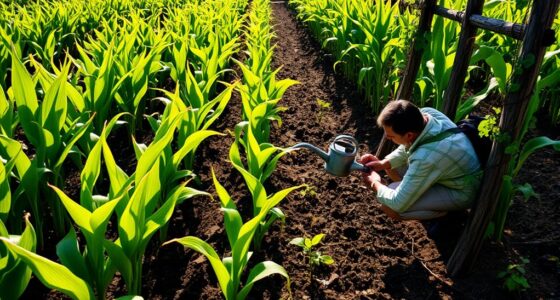
To improve soil fertility through crop rotation, diversify your planting schedule by rotating crops with different nutrient needs and pest susceptibilities, such as legumes that add nitrogen naturally. Incorporate cover crops to boost organic matter and protect your soil from erosion, while breaking pest and disease cycles. This sustainable approach enhances microbial activity and soil health over time. Keep exploring these strategies to *gain* even more benefits for your farm’s productivity.
Key Takeaways
- Rotate legumes with nitrogen-fixing abilities to naturally boost soil nitrogen levels.
- Alternate crops with different nutrient requirements to prevent nutrient depletion.
- Incorporate cover crops after main crops to add organic matter and improve soil structure.
- Avoid planting the same crop family consecutively to reduce pest and disease buildup.
- Use crop diversity to enhance microbial activity and overall soil fertility over time.

Implementing effective crop rotation strategies can substantially improve your farm’s soil health and boost crop yields. One of the most practical methods to achieve this is through cover cropping. Cover crops, such as clover, vetch, or rye, are planted during off-season periods or between main crops. They serve multiple purposes: they prevent soil erosion, improve soil structure, and enhance nutrient cycling. When you incorporate cover cropping into your rotation plan, you create a living mulch that protects your soil from the damaging effects of wind and water. Cover crops also add organic matter as they decompose, which boosts soil fertility and fosters a thriving microbial ecosystem. This organic matter acts as a natural fertilizer, reducing your reliance on chemical inputs and promoting sustainable farming practices. Additionally, cover cropping plays a crucial role in pest management. By diversifying the types of plants in your fields, you disrupt the lifecycle of pests and reduce their populations naturally. For example, certain cover crops can repel specific pests or attract beneficial insects that prey on harmful ones. This integrated approach helps keep pest pressures manageable without resorting to pesticides, which can harm beneficial insects and degrade soil health over time.
As you develop your crop rotation plan, think about how each crop interacts with the soil and pest populations. Rotating crops that differ in their nutrient requirements and pest susceptibilities prevents the buildup of pests and diseases specific to a single crop type. For instance, planting legumes after heavy-feeding crops like corn can naturally replenish nitrogen levels in the soil, reducing the need for synthetic fertilizers. This rotation also helps break pest and disease cycles, since many pests are crop-specific and will decline when their preferred host crop is absent. When you combine this with cover cropping, you create a resilient system that enhances soil health while managing pests more effectively. You’ll notice that pests become less of a problem over time, and your soil becomes more resilient. Maintaining a diverse crop rotation schedule that includes cover crops allows you to optimize the benefits of pest management and soil fertility simultaneously, leading to healthier plants and higher yields.
Frequently Asked Questions
How Often Should Crop Rotations Be Changed for Optimal Soil Health?
You should change crop rotations every 3 to 5 years for ideal soil health. By planning the frequency of your rotations carefully, you prevent soil exhaustion and build rotation diversity, which boosts fertility. Regularly adjusting your schedule ensures you’re not overusing specific nutrients or crops, maintaining a balanced ecosystem. Stay flexible and monitor soil conditions to decide when it’s time to switch crops, keeping your soil productive and healthy in the long run.
What Are the Most Beneficial Cover Crops to Include in Rotations?
You should select cover crops like clover, vetch, and rye for your rotations, as they excel in soil nutrient enhancement. These cover crop selections fix nitrogen, improve organic matter, and prevent erosion. Incorporating legumes boosts soil fertility naturally, reducing the need for chemical fertilizers. Mixing different cover crops can maximize benefits, ensuring your soil remains healthy and productive throughout your crop rotation cycle.
How Does Crop Rotation Affect Pest and Disease Cycles?
Crop rotation helps you break pest and disease cycles by interrupting their development. As you change crops each season, pests and pathogens that target specific plants struggle to survive or reproduce, leading to pest suppression. This natural method reduces the need for chemicals and promotes healthier plants. By rotating crops wisely, you create an environment unfavorable for pests and diseases, enhancing overall crop health and yield.
Can Crop Rotation Reduce the Need for Chemical Fertilizers?
In the days of yore, crop rotation can cut your dependence on chemical fertilizers. By diversifying your plant choices, you boost soil microbial diversity, which enhances natural nutrient cycling. This process replenishes essential nutrients, reducing the need for synthetic inputs. As you rotate crops, you improve soil health naturally, making your farm more sustainable and resilient against nutrient depletion. So, yes, crop rotation is a practical way to lessen reliance on chemical fertilizers.
What Are the Economic Benefits of Implementing Crop Rotation Strategies?
Implementing crop rotation strategies offers you significant economic benefits, including better economic incentives like reduced input costs and higher yields. By diversifying crops, you can minimize reliance on expensive chemical fertilizers and pesticides, which boosts your profit maximization. Additionally, healthier soil leads to sustainable production, ensuring long-term profitability. These strategies help you stay competitive, cut costs, and enhance farm resilience, making crop rotation a smart economic choice.
Conclusion
By adopting effective crop rotation strategies, you can unearth hidden potential in your soil and boost fertility naturally. But the real question is, are you ready to take your farming to the next level? The next season could be your most productive yet—if you choose to embrace these techniques now. Don’t wait too long; the future of your soil—and your harvest—depends on the choices you make today. Will you seize the opportunity?