To propagate herbs using cuttings, division, and seeds, start by preparing your soil with organic matter for healthy roots and good drainage. Select healthy stems for cuttings, dip in rooting hormone, and keep moist. For division, carefully dig up the herb and separate the clumps, replanting them immediately. Growing from seeds requires a seed-starting mix and consistent moisture. By following these steps, you’ll boost your herb garden—discover more tips to guarantee successful propagation.
Key Takeaways
- Choose healthy stems for cuttings, dip in rooting hormone, and keep moist to encourage root development.
- Carefully divide mature herbs with a sharp spade, ensuring each section has roots and foliage for quick growth.
- Use well-prepared seed-starting mix, maintain consistent moisture, and provide ample light for successful germination.
- Prepare soil by enriching it with organic matter and ensuring proper drainage to support herb propagation.
- Inspect and manage pests during all stages to protect young plants, whether from cuttings, divisions, or seeds.

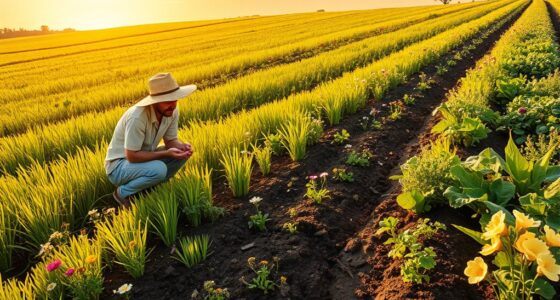
Have you ever wondered how herbs multiply and flourish in your garden? The key lies in understanding the propagation methods—cuttings, division, and seeds—and how proper care can boost their growth. To start, you need to prepare the soil correctly. Good soil preparation involves loosening the earth and enriching it with organic matter like compost or well-rotted manure. This creates an ideal environment that promotes healthy root development and provides essential nutrients. A well-prepared soil also improves drainage, which is essential because waterlogged soil can lead to root rot, especially when propagating herbs through cuttings or division.
Preparing the soil properly ensures healthy herb growth and successful propagation.
When you’re propagating herbs, pest management becomes equally important. Pests like aphids, spider mites, and whiteflies can quickly attack tender new roots or shoots, stunting growth or even killing your plants. Before planting, inspect your garden area and remove any weeds or debris that could harbor pests. You can also introduce beneficial insects or use organic pest control methods, such as neem oil or insecticidal soap, to keep pests at bay. Keeping your herbs healthy from the start guarantees they’re strong enough to resist pests naturally.
If you’re taking cuttings, ensure you select healthy, disease-free stems. Dip the cut end in rooting hormone to encourage root development, then plant it in moist, well-draining soil. During root formation, maintaining consistent moisture levels is essential. Covering the cuttings with a plastic bag creates a mini greenhouse, helping retain humidity and speed up rooting. As roots develop, gradually expose your new plants to the open air to prevent shock.
Division is an effective way to propagate herbs like mint, chives, and oregano. Carefully dig around the plant to avoid damaging the roots, then gently separate clumps with a sharp spade or knife. Replant the divisions immediately into prepared soil, ensuring each has enough roots and foliage to establish itself. Proper soil preparation before replanting ensures the divisions settle quickly and thrive.
Growing herbs from seeds involves starting in a well-prepared seed-starting mix rather than garden soil. Keep the soil moist but not soggy, and provide plenty of light for germination. Since seeds are often more vulnerable to pests and disease, maintaining good pest management practices is essential during this stage. Regularly check seedlings for signs of pests or disease and act promptly to protect your new plants.
In all propagation methods, your attention to soil preparation and pest management will give your herbs a strong foundation to grow, multiply, and flourish in your garden.
Frequently Asked Questions
Which Herbs Are Best Propagated Through Leaf Cuttings?
You should try leaf cutting techniques with herbs like succulents, via leaf cuttings, and African violets. These herbs respond well to leaf propagation, making it easy to cultivate new plants. For successful herb propagation tips, guarantee you use healthy leaves and proper soil or medium. Keep the cuttings in bright, indirect light and maintain consistent moisture. This method is simple and effective for many leafy herbs.
How Long Does It Take for Herb Seeds to Germinate?
Herb seeds typically germinate within 7 to 21 days, depending on the type. To improve germination, consider seed dormancy, which might require scarification or stratification. Make certain you maintain the correct germination temperature—usually between 65-75°F (18-24°C)—as temperature fluctuations can delay sprouting. Keep the soil moist but not waterlogged, and provide adequate light to help your herbs grow successfully from seed.
Can Herbs Be Propagated Successfully Indoors?
Did you know that many herbs thrive indoors? You can absolutely propagate herbs successfully inside your home through indoor gardening. With proper herb care—like adequate light, watering, and well-draining soil—you’ll see your herbs grow lush and healthy. It’s a rewarding process that lets you enjoy fresh herbs year-round, even if you don’t have outdoor space. So, go ahead and start your indoor herb garden today!
What Are Common Mistakes to Avoid During Herb Division?
You should avoid rushing herb division; wait until the plant shows strong growth to guarantee healthy roots. Use a rooting hormone to boost success, and handle roots gently to prevent damage. Timing considerations are vital; divide when the plant is actively growing, typically in early spring or fall. Also, don’t neglect proper watering afterward, as moisture helps roots establish quickly. These steps help ensure your divided herbs thrive.
How Do I Preserve Herb Seeds for Future Planting?
Ever wondered how to keep herb seeds viable? To preserve them, store seeds in a cool, dry, and dark place, ensuring proper seed storage. After harvesting, dry herbs thoroughly before collecting seeds, preventing mold and spoilage. Use airtight containers like glass jars or paper envelopes to protect seeds from moisture and pests. Properly dried and stored seeds can last for months or even years, giving you a reliable supply for future planting.
Conclusion
So, after all this talk about cuttings, division, and seeds, you’d think growing herbs is complicated, right? Turns out, it’s pretty simple—just get your hands dirty and try a few methods. Who knew that the secret to a thriving herb garden was just a little patience and some basic techniques? So, go ahead, ignore the fuss, and enjoy the surprisingly easy journey to fresh herbs—your future self will thank you for the effort you almost didn’t make.