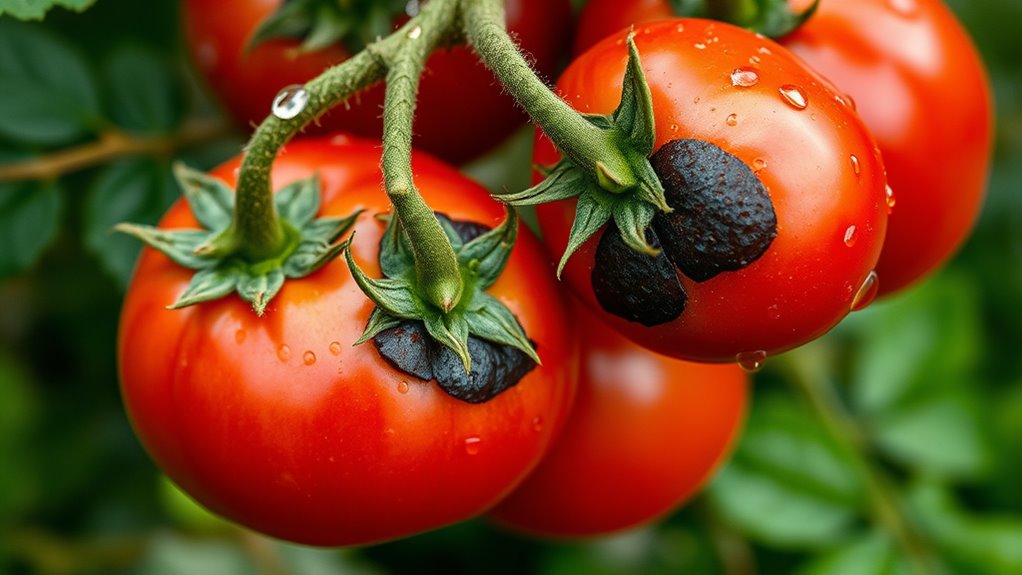

To diagnose blossom-end rot in your tomatoes, look for dark, sunken, leathery spots at the fruit’s end, which expand rapidly. Check if affected fruits are soft or rubbery, and verify the damage isn’t caused by pests or other diseases. Assess environmental factors like irregular watering, high nitrogen, or soil pH issues affecting calcium uptake. Conduct soil and tissue tests to confirm a calcium deficiency—continuing with this info helps you manage the problem early.

Get garden gear delivered free — and shop member deals
- Fast, free delivery on millions of items
- Access to Prime Big Deal Days deals on October 6–7
- Prime Video, Amazon Music and more included
Key Takeaways
- Look for dark, sunken, leathery lesions at the tomato’s blossom end for early detection.
- Differentiate blossom-end rot from diseases with concentric rings or speckles.
- Check soil pH and calcium levels through testing to identify deficiencies.
- Examine multiple fruits’ firmness and appearance to distinguish from pests or other issues.
- Use tissue and soil tests to confirm calcium deficiency as the primary cause.
tomato blossom end rot fertilizer
As an affiliate, we earn on qualifying purchases.
As an affiliate, we earn on qualifying purchases.
Recognizing the Visual Indicators of Blossom‑End Rot
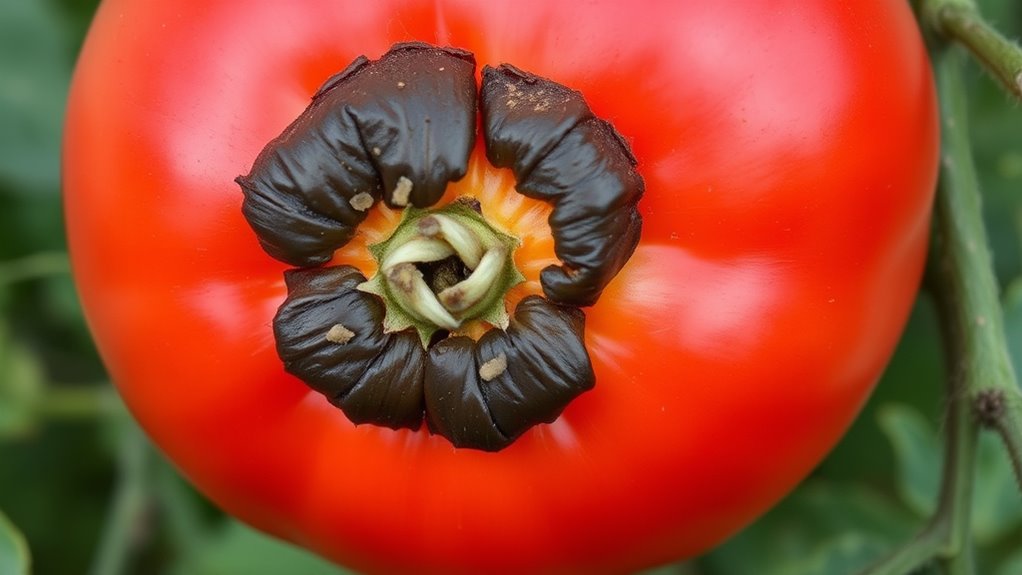
Recognizing blossom-end rot begins with understanding its most obvious sign: a dark, sunken area at the bottom of the fruit. This spot often starts small but quickly enlarges, causing the tomato to look damaged and unappealing. To spot it early, regularly inspect your tomatoes for these signs. Proper water management is essential; inconsistent watering can cause fluctuations that contribute to the problem. Maintaining consistent soil moisture helps prevent stress and nutrient deficiencies. Additionally, soil pH plays a critical role; tomatoes prefer a slightly acidic pH around 6.0 to 6.8. If the soil is too acidic or alkaline, calcium uptake becomes compromised, increasing the risk of blossom-end rot. Keeping these factors in check helps you catch the signs early and take steps to minimize damage. Understanding the importance of calcium absorption can further help prevent this issue, especially since nutrient deficiencies are a common cause. Regular soil testing can help monitor soil pH and nutrient levels to ensure optimal conditions for tomato growth. Being aware of environmental stressors like inconsistent watering and temperature fluctuations can also help you maintain healthier plants. Additionally, using calcium fertilizers can support nutrient uptake and reduce the likelihood of blossom-end rot developing.
Differentiating Blossom‑End Rot From Similar Tomato Diseases
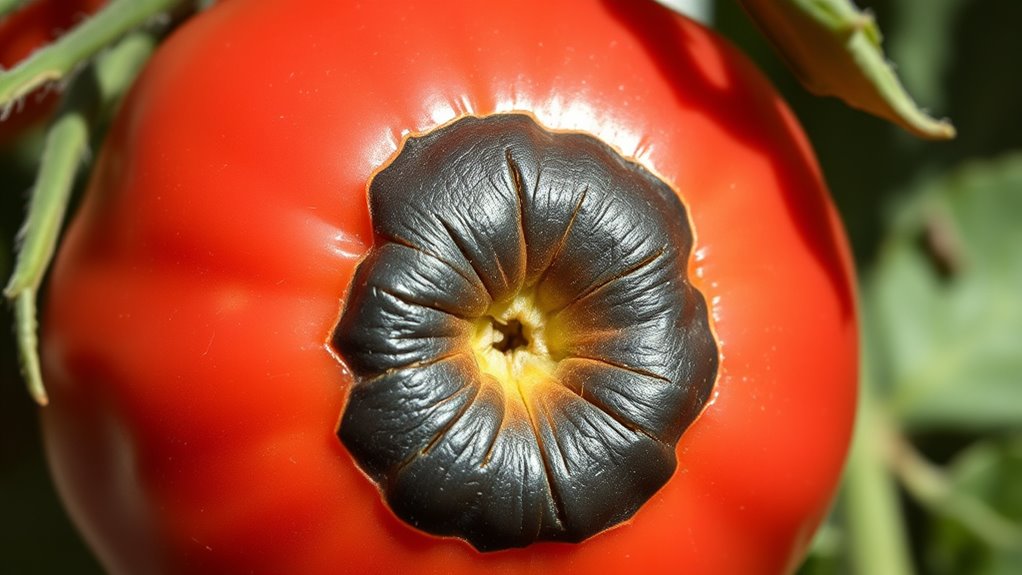
Since several tomato diseases can cause symptoms similar to blossom-end rot, it’s important to distinguish between them to apply the correct treatment. Blossom-end rot typically presents as dark, sunken spots at the fruit’s blossom end, caused by calcium deficiency linked to uneven soil pH or water uptake. In contrast, diseases like early blight or bacterial spot usually show lesions with concentric rings or speckled patterns, not just sunken areas. Nutrient deficiencies other than calcium, such as potassium or magnesium, can cause similar blemishes but often affect broader plant parts. Checking soil pH helps identify calcium uptake issues, while observing the pattern and progression of symptoms clarifies whether it’s rot or another disease. Accurate diagnosis ensures you target the right remedy for healthy tomato growth.
Assessing Environmental and Growing Conditions
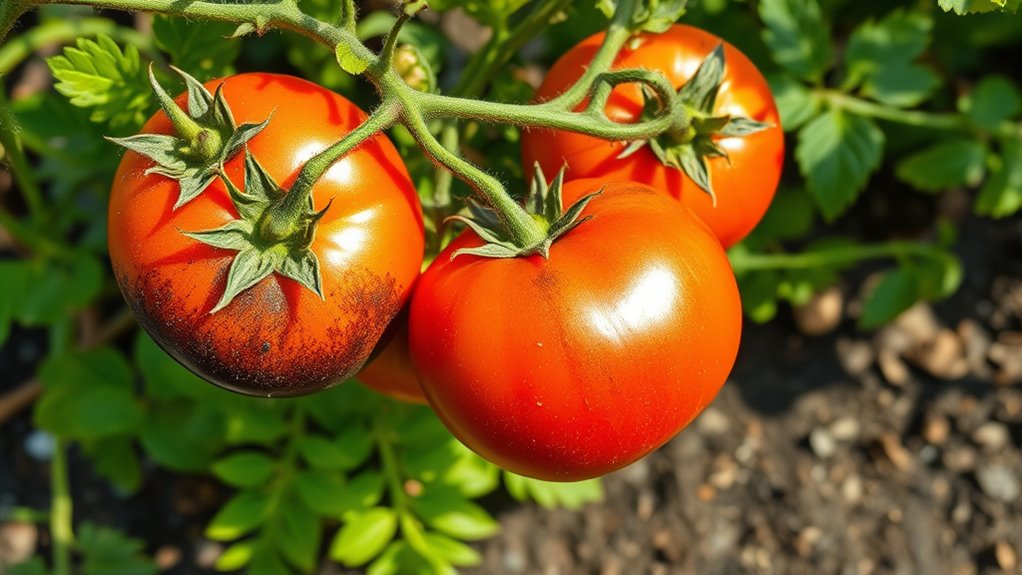
Environmental and growing conditions play a critical role in the development of blossom-end rot. You should check your soil pH, as overly acidic or alkaline soil can impair calcium uptake, increasing the risk. Aim for a soil pH between 6.2 and 6.8 for ideal nutrient absorption. Additionally, evaluate your fertilizer balance; too much nitrogen promotes lush foliage but can hinder calcium movement, while insufficient calcium exacerbates the problem. Consistent watering helps maintain steady soil moisture, reducing stress on plants. Avoid irregular watering that causes fluctuations in soil moisture, which can worsen blossom-end rot. Proper soil management in soil management tools is increasingly used to optimize growing conditions. Using soil testers regularly can help you monitor and adjust these conditions effectively. Maintaining proper calcium levels through soil amendments can further reduce the risk of blossom-end rot. By managing these environmental factors—monitoring soil pH, adjusting fertilizer use, and ensuring consistent watering—you can markedly reduce the likelihood of this disorder developing in your tomato crops. Incorporating electric tools such as soil testers can help you accurately monitor and adjust these conditions for healthier plants.
Conducting a Physical Examination of Affected Fruits
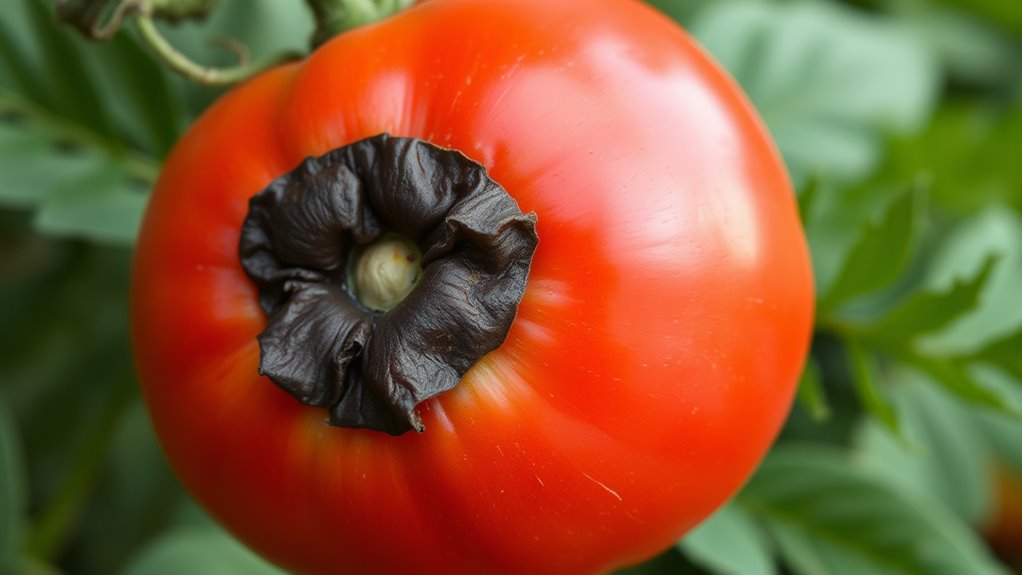
To accurately diagnose blossom-end rot, start by carefully examining the affected fruits’ physical signs. Look for dark, sunken, leathery lesions at the blossom end of the tomato. Check the firmness of the fruit through firmness testing; fruits with blossom-end rot often become soft or rubbery around the affected area. Conduct a soil nutrient analysis to assess calcium levels, as calcium deficiency is a common cause. Note that uneven ripening or irregular growth may also accompany the symptoms. Examine multiple fruits to identify patterns and ensure the damage isn’t due to other issues like pests or diseases. This physical examination helps you gather clues about the underlying cause before moving on to more specific diagnostic tests. Paying attention to plant health indicators can also provide insights into possible nutrient deficiencies or environmental stressors that contribute to blossom-end rot.
Implementing Diagnostic Tests to Confirm the Cause

Implementing diagnostic tests is essential to confirm whether calcium deficiency is causing blossom-end rot. You should start with soil nutrient testing to assess calcium levels and overall soil health. This helps determine if the soil supplies enough calcium for your tomatoes. Additionally, fruit tissue analysis provides direct insight into calcium content within the affected fruits. By comparing tissue calcium levels from healthy and affected fruits, you can verify if a deficiency exists. These tests eliminate guesswork and pinpoint the root cause of the problem. If tests show low calcium levels, you can take targeted steps like adjusting soil amendments or irrigation practices. Regular monitoring of soil health can help prevent future deficiencies. Incorporating self watering plant pots into your gardening routine can also promote consistent moisture levels, which support calcium uptake. Understanding how plant nutrition influences crop health ensures you address blossom-end rot effectively, preventing future issues and promoting healthier tomato growth. Additionally, understanding the role of calcium in plant health can guide you in making informed fertilization decisions to maintain optimal nutrient balance. Conducting leaf tissue analysis can further provide real-time data on nutrient absorption and help fine-tune your fertilization strategy.
Frequently Asked Questions
Can Blossom-End Rot Occur in Other Vegetables Besides Tomatoes?
You might wonder if blossom-end rot happens in other vegetables besides tomatoes. It can, especially in crops like peppers, eggplants, and zucchini. The main causes are calcium deficiency and water stress, which disrupt calcium transport in plants. When plants don’t get enough calcium or experience irregular watering, they develop similar symptoms. Keeping consistent watering and ensuring adequate calcium helps prevent blossom-end rot across various vegetables.
How Quickly Does Blossom-End Rot Develop After Initial Symptoms Appear?
You notice the initial symptoms, and suddenly, time seems to freeze. Blossom-end rot can progress rapidly, sometimes within just a few days, especially during fruit ripening when calcium transfer from the soil is disrupted. If your plant’s soil lacks calcium or moisture fluctuates, the rot can worsen quickly, leaving you helpless as your tomatoes’ ends darken. Acting swiftly to stabilize soil calcium levels can slow or halt this destructive process.
Are There Specific Tomato Varieties More Resistant to Blossom-End Rot?
Some tomato varieties are more resistant to blossom-end rot because of their genetic traits. You’ll find that certain varieties, like ‘Celebrity’ or ‘Resister’, have better variety resistance due to their genetic traits, making them less susceptible. When choosing seeds, look for those labeled as resistant or tolerant. This helps reduce the chances of blossom-end rot developing, especially if you face inconsistent watering or calcium deficiency issues.
What Organic Methods Effectively Prevent Blossom-End Rot?
Think of preventing blossom-end rot like keeping a delicate balance on a tightrope. You should use organic calcium sources like crushed eggshells or bone meal, which help strengthen tomato cells. Additionally, manage soil moisture carefully—consistent watering prevents stress that causes rot. By maintaining even moisture and adding organic calcium, you create a sturdy foundation for healthy tomatoes and reduce the risk of blossom-end rot naturally.
Is Blossom-End Rot Ever Contagious Between Plants?
Blossom-end rot isn’t contagious like some plant diseases, but you should know it’s not spread through plant-to-plant transmission or disease spread mechanisms. Instead, it results from calcium deficiency, often caused by uneven watering or soil issues. While it doesn’t jump from one plant to another, maintaining consistent watering and soil health helps prevent it across your garden. Proper care minimizes the risk, but it’s not a contagious disease.
Conclusion
By paying close attention to the visual clues and environmental whispers of your tomato plants, you become their detective, uncovering the mystery of blossom-end rot. Think of your garden as a delicate symphony—each note, from soil to sun, matters. With careful examination and sharp instincts, you’ll spot the culprit early and restore harmony. Your vigilant eye keeps your harvest thriving, turning a troubled blossom into a bountiful bounty, like turning stormy skies into clear blue.
Fall Picks
fall essentials
As an affiliate, we earn on qualifying purchases.