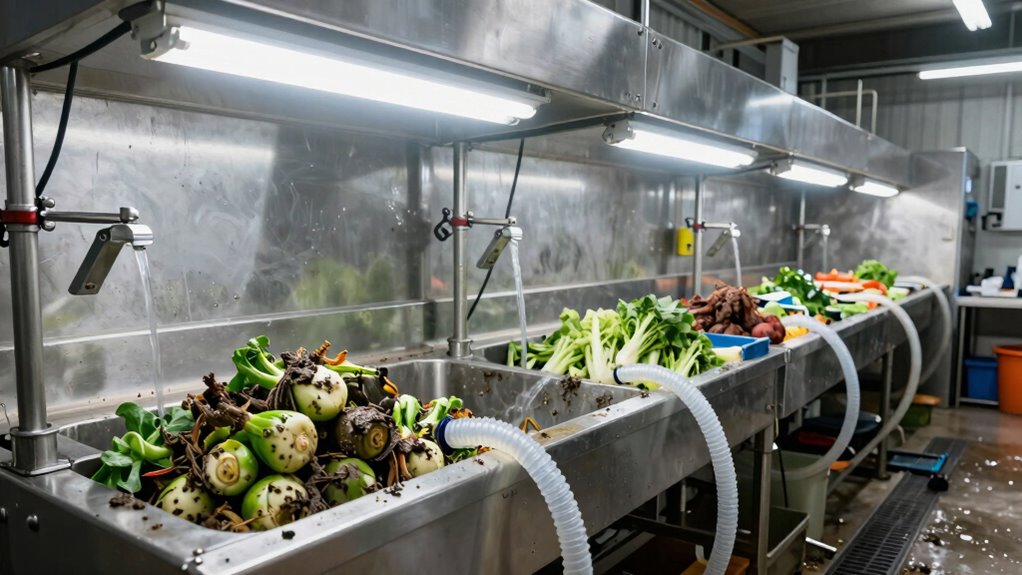

You need a better dirty-to-clean flow design at your produce wash station to reduce contamination risks and improve efficiency. Ensuring a clear separation between dirty and clean zones helps prevent cross-contamination, especially when water flows away from the clean area. Proper layout, water temperature, and equipment sanitation are essential for controlling bacteria and dirt. Technology and staff training also play key roles in maintaining hygiene standards. Keep exploring to discover how to optimize your wash station for safer, higher-quality produce.

Get garden gear delivered free with Prime
- Fast, free delivery on millions of items
- Prime Video, Amazon Music and more included
- Member-only deals all year
Key Takeaways
- Clear separation of dirty and clean zones prevents cross-contamination and enhances sanitation.
- Proper water flow direction ensures dirty water moves away from clean produce areas.
- Consistent water temperature control optimizes dirt removal and inhibits bacterial growth.
- Well-designed layout and drainage systems prevent water pooling and bacterial buildup.
- Staff training on hygiene protocols and equipment sanitation maintains effective flow and safety standards.
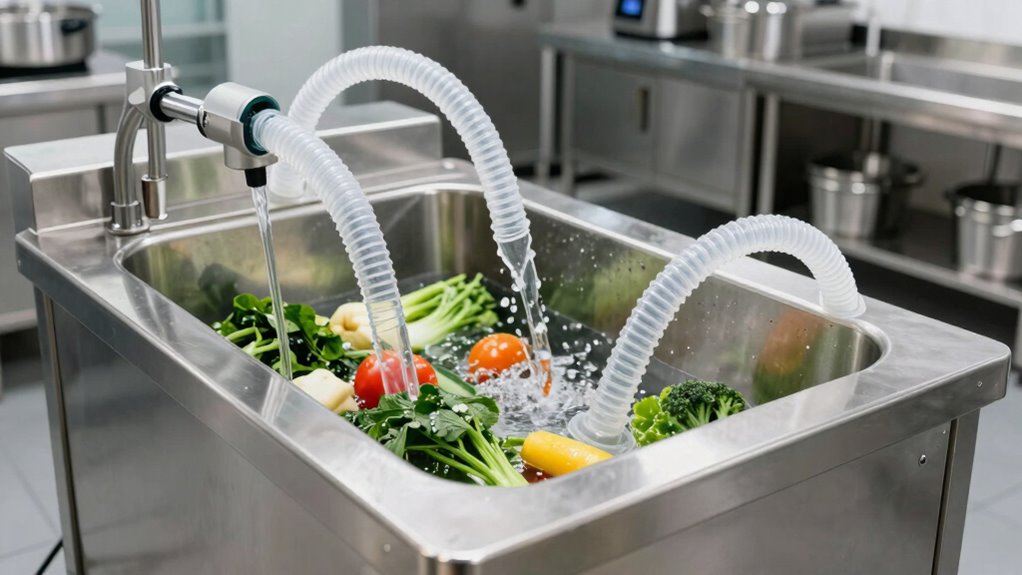
Effective produce wash stations are essential for food safety and efficiency, yet many currently struggle with poor dirty-to-clean flow design. When the flow isn’t optimized, contamination risks increase, and productivity drops. A key aspect of this flow involves managing water temperature and equipment sanitation, which directly impact how effectively you remove dirt, bacteria, and residues from produce. Proper water temperature control ensures that contaminants are loosened and washed away efficiently, reducing the risk of cross-contamination between dirty and clean zones. Additionally, implementing hygienic design principles in the layout can significantly improve flow and sanitation practices. Equipment sanitation is equally important in maintaining a proper dirty-to-clean flow. If your wash station equipment isn’t properly sanitized after each batch, you risk transferring bacteria and dirt back onto produce. This means that even if your water temperature is ideal, contaminated equipment can undermine the entire process. Regular cleaning of sinks, brushes, baskets, and conveyor belts with appropriate sanitizers keeps the environment hygienic. You should establish a routine that clearly separates dirty and clean areas, preventing cross-over contamination. Implementing color-coded tools or designated zones can help staff quickly identify which equipment is sanitized and ready for use. Furthermore, the layout of your wash station should facilitate a logical progression from dirty to clean. Dirty water should flow away from the clean zone, and used equipment should be immediately sanitized before reuse. Proper drainage systems are necessary to prevent water pooling, which can harbor bacteria. Also, paying attention to water temperature maintenance can improve the removal of stubborn residues and reduce bacterial growth during the process. Incorporating automation technologies can further streamline the flow and reduce human error in sanitation procedures. Staff training is also essential; everyone needs to understand the importance of maintaining a strict dirty-to-clean flow and adhering to sanitation protocols. When staff follow these procedures, it becomes easier to uphold high standards of produce safety. Additionally, proper water management plays a vital role in preventing cross-contamination and maintaining hygiene standards. In some cases, integrating monitoring systems can help ensure consistent water quality and temperature throughout the process. Ultimately, enhancing your produce wash station isn’t just about adding new equipment or increasing water temperature; it’s about designing a system that promotes a seamless, hygienic flow. By carefully controlling water temperature and ensuring full equipment sanitation, you minimize cross-contamination risks and boost overall efficiency. When your dirty-to-clean flow is refined, you’ll see improvements in the safety, quality, and shelf life of your produce, making your operation more reliable and trustworthy for customers.
produce wash station sanitation equipment
As an affiliate, we earn on qualifying purchases.
As an affiliate, we earn on qualifying purchases.
Frequently Asked Questions
What Materials Are Best for Constructing Wash Stations?
You should choose materials with high durability and corrosion resistance for constructing wash stations. Stainless steel is ideal because it resists rust and withstands frequent cleaning, ensuring longevity. HDPE (high-density polyethylene) is another excellent choice due to its toughness and resistance to chemicals. These materials help maintain a hygienic environment, resist wear and tear, and support a smooth dirty-to-clean flow, ultimately enhancing the efficiency and lifespan of your wash stations.
How Often Should Wash Stations Be Sanitized?
You should sanitize your wash stations at least daily, or more frequently if needed, depending on the level of produce contamination. Follow strict disinfection protocols, especially after each batch of produce or if any contamination occurs. Regular sanitization helps prevent cross-contamination and guarantees produce safety. Keep a schedule, use approved sanitizers, and monitor the process consistently to maintain a clean, safe environment for your produce handling.
What Safety Measures Are Essential for Wash Station Operation?
Think of your wash station as the heartbeat of your produce operation—keeping it safe requires strict safety measures. You must implement pest control to prevent contamination and guarantee all staff wear protective gear. Regularly monitor water recycling systems to avoid cross-contamination. Keep floors clean, sanitize equipment often, and train staff on proper procedures. These measures help maintain a safe, hygienic environment, safeguarding both your produce and reputation.
How Do Flow Design Improvements Impact Produce Shelf Life?
Flow design improvements, like optimizing flow rate and contamination control, directly extend produce shelf life. When you enhance flow rate, produce moves efficiently through the wash station, reducing exposure to contaminants and spoilage. Better contamination control prevents bacteria spread, preserving freshness. As a result, your produce stays fresher longer, reducing waste and increasing customer satisfaction. Proper flow design guarantees a safer, more effective cleaning process, ultimately boosting produce quality and longevity.
Are There Industry Standards for Dirty-To-Clean Flow in Produce Washing?
Yes, industry standards emphasize contamination prevention and flow optimization in produce washing. You should follow guidelines from organizations like the USDA and FDA, which specify proper dirty-to-clean flow to reduce cross-contamination. Implementing these standards helps guarantee efficient, sanitary operations. You’ll want to design your wash stations to facilitate smooth, unidirectional flow, minimizing contamination risks and maintaining produce quality throughout the washing process.
Conclusion
By optimizing the dirty-to-clean flow in produce wash stations, you’re not just improving efficiency—you’re creating a fortress of food safety. Think of the flow as a river, where every bend and current must guide contaminants away, not let them stagnate. If you ignore this essential design, risks multiply, and the health of your consumers hangs in the balance. Remember, a well-designed flow isn’t just a process; it’s the silent guardian of quality in every bite.
Fall yard work Picks
leaf blowers
As an affiliate, we earn on qualifying purchases.