To reduce garden washout during heavy rain, focus on improving drainage by grading beds to slope away from plants and adding features like swales or rain gardens to control runoff. Enhance soil stability by incorporating organic matter like compost and mulch, which help absorb water and prevent erosion. Plant cover crops or ground covers with strong roots to hold soil in place and slow water flow. Keep exploring to discover more ways to protect your garden from heavy rainfall.

Get garden gear delivered free with Prime
- Fast, free delivery on millions of items
- Prime Video, Amazon Music and more included
- Member-only deals all year
Key Takeaways
- Grade garden beds to slope gently away from plants for effective water runoff management.
- Incorporate organic matter like compost and mulch to improve soil structure and water absorption.
- Plant cover crops and ground covers to stabilize soil and reduce surface erosion.
- Install rain gardens or detention basins to temporarily hold runoff and slow water flow.
- Use proper drainage features, such as swales or shallow ditches, to direct and control water movement.
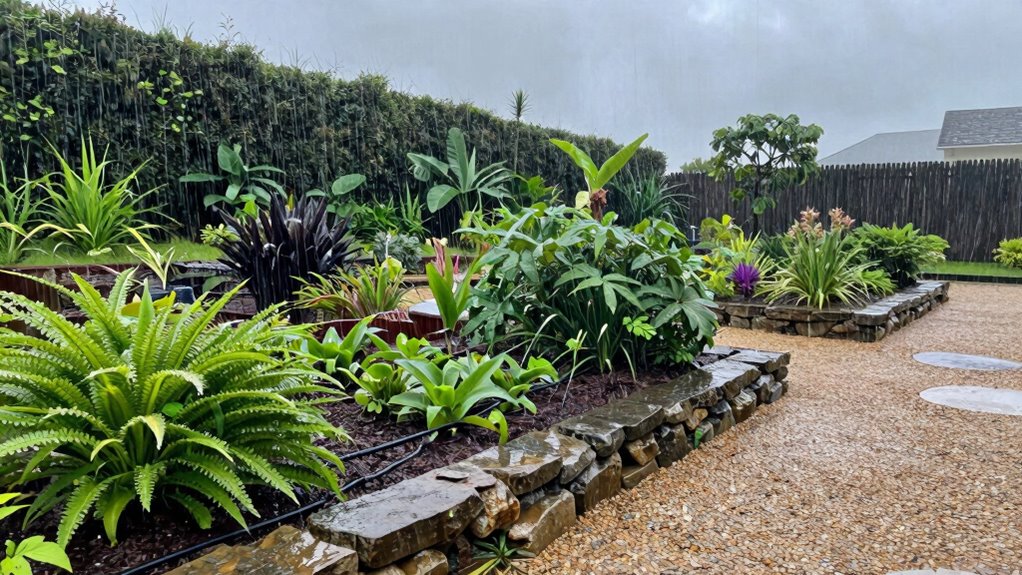
Heavy rain can quickly wash away valuable soil and damage your garden, but you can prevent this by implementing effective strategies. Soil erosion is a common problem during heavy downpours, stripping away nutrients and leaving your plants vulnerable. To combat this, focus on improving your garden’s drainage solutions, which help control water flow and reduce the risk of washout. Proper drainage not only minimizes soil loss but also prevents water from pooling around plant roots, which can lead to rot and disease.
Heavy rain can erode soil and harm plants; improve drainage to protect your garden.
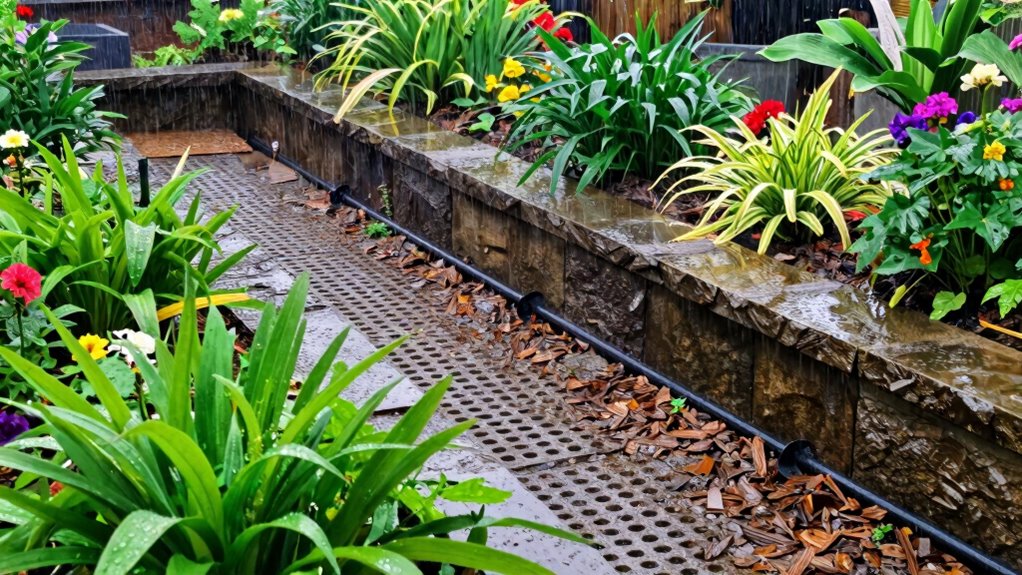
One of the simplest ways to manage drainage is to grade your garden beds so that they slope gently away from your plants. This encourages excess water to flow away from roots and reduces the likelihood of standing water, which accelerates soil erosion. Installing swales or shallow ditches can further direct water runoff to safer areas, preventing it from eroding the soil in vulnerable spots. These features are especially effective in sloped gardens, where water tends to rush downhill and cause significant damage.
In addition to grading and directing water flow, consider incorporating organic matter into your soil. Compost, mulch, and other organic amendments improve soil structure, making it more resistant to erosion. Healthy, well-aggregated soil absorbs water better, slowing its movement and keeping the surface intact. Mulch is particularly beneficial because it acts as a protective layer, shielding the soil from the force of heavy rain and reducing surface runoff. Organic mulches also help retain moisture, decreasing the volume of water that needs to drain away quickly. Using organic matter enhances the soil’s erosion resistance and overall stability during heavy rains. Additionally, maintaining good soil health can improve its water retention, helping your garden withstand heavy rainfall more effectively. Incorporating soil stabilization techniques can further reinforce the soil against erosion during intense storms.
Planting cover crops or ground covers can also play a crucial role in reducing soil erosion during heavy rains. Their roots hold soil in place, preventing it from being washed away. Dense vegetation creates a natural barrier that slows water movement, giving it more time to infiltrate the soil rather than rushing over the surface. This not only stabilizes the soil but also boosts water retention, which benefits your garden during periods of heavy rainfall. Moreover, selecting plants with strong root systems can significantly enhance soil stability and protect your garden from erosion.
Finally, installing rain gardens or detention basins can serve as a long-term solution to manage excess water. These features are designed to temporarily hold and slowly release runoff, reducing the impact of heavy rain on your garden. By integrating drainage solutions like these, you’re creating a more resilient landscape that can better withstand heavy rainfall, protect your soil from erosion, and keep your garden healthy and thriving. Incorporating proper drainage techniques is essential for maintaining a stable and healthy garden environment during heavy storms.
Popular right now

Dyson Ball Animal Total Clean Upright Vacuum

iRobot Roomba Max 715 Pet Robot Vacuum with AutoEmpty Dock

Breville Barista Pro Espresso Machine with Grinder, Brushed Stainless Steel
As an affiliate, we earn on qualifying purchases.
Frequently Asked Questions
How Can I Prevent Soil Erosion During Heavy Storms?
To prevent soil erosion during heavy storms, you should focus on soil stabilization by adding organic matter like compost or mulch, which helps hold soil in place. Installing erosion barriers such as silt fences or straw wattles can also divert water flow and protect your garden. Regularly maintaining these barriers and stabilizing the soil creates a strong defense against washout, ensuring your garden stays intact during intense rainfall.
What Plants Are Most Resistant to Washout?
You should plant native grasses and deep-rooted perennials, as they’re most resistant to washout. Native grasses, like switchgrass or bluestem, have extensive root systems that stabilize soil during heavy rain. Deep-rooted perennials, such as coneflowers or black-eyed Susans, anchor the soil effectively. These plants not only resist erosion but also improve your garden’s resilience, helping to keep your soil in place even during intense storms.
How Often Should I Inspect My Garden After Heavy Rain?
You should inspect your garden soil and look for rain damage as soon as the heavy rain stops, ideally within the first 24 hours. Check for signs of erosion, displaced plants, or exposed roots. Regular inspections after each rain help you catch issues early, allowing you to address washout problems promptly. This ongoing vigilance guarantees your garden remains healthy and resilient despite heavy rain.
Are There Specific Drainage Solutions for Small Gardens?
Yes, for small gardens, consider installing a garden pond to help manage excess water. Raised beds are also effective, as they elevate plants above potential flood levels and improve drainage. You might also create small, contouring channels to direct water away from your garden. These solutions work together to reduce washout, protect your plants, and maintain a healthy garden despite heavy rains.
Can Compost or Mulch Help Reduce Washout?
Compost and mulch act like a sponge, soaking up rain and preventing soil from washing away. They also help retain moisture and protect organic fertilizers from being washed out. Incorporate mulch around plants and use compost to improve soil structure. Additionally, rainwater harvesting systems can divert excess water, reducing washout risk. Together, these methods create a sturdy shield, keeping your garden resilient during heavy rains.
Conclusion
So, if you want your garden to survive the monstrous downpour without turning into a muddy disaster, you’ve got to act fast! Implementing proper drainage, planting cover crops, and building barriers can turn your garden into a fortress against the heaviest rains. Don’t let the rain wipe out all your hard work—become the hero your garden deserves! With these simple tricks, you’ll keep your yard lush, vibrant, and rainproof, no matter how fierce the storm.