
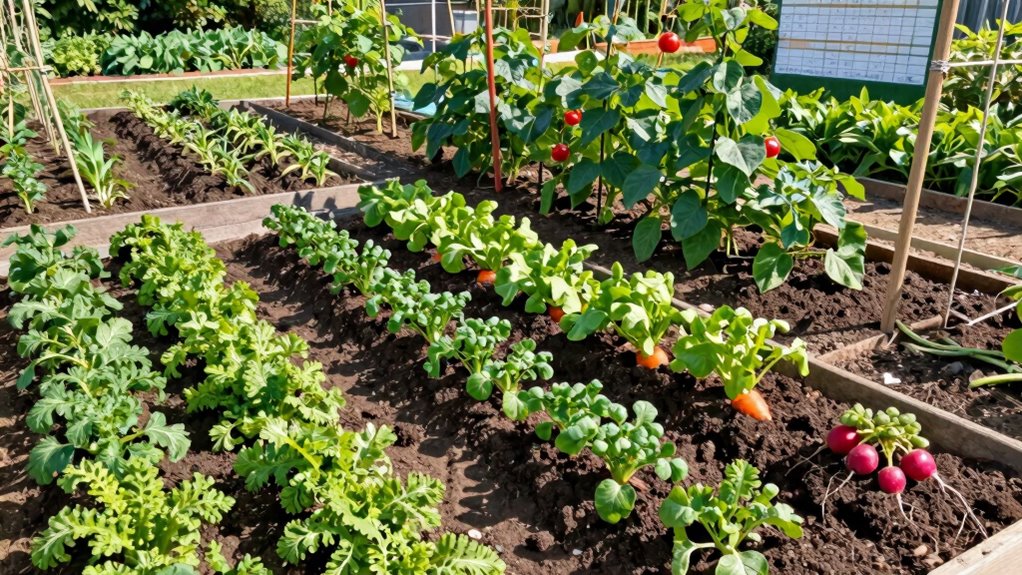

To plan succession planting for continuous harvests, start by understanding your climate and growing season to set realistic planting schedules. Map out crop maturity dates and stagger plantings so new crops go in as older ones are harvested. Utilize companion planting to enhance growth and keep soil healthy through crop rotation and organic amendments. Keep an eye on soil conditions and adapt your plan to maximize space and yield. If you want to master this process, you’ll discover useful strategies as you explore further.

Get garden gear delivered free with Prime
- Fast, free delivery on millions of items
- Prime Video, Amazon Music and more included
- Member-only deals all year
Key Takeaways
- Map out crop maturity dates and stagger planting times to ensure continuous harvests throughout the season.
- Use a detailed garden calendar to schedule successive plantings based on crop growth cycles.
- Rotate crops annually and adjust planting schedules based on soil health and previous harvests.
- Plant quick-maturing crops alongside slower-growing ones to maximize space and harvest frequency.
- Incorporate companion planting to optimize growth, reduce pests, and maintain a steady supply of produce.
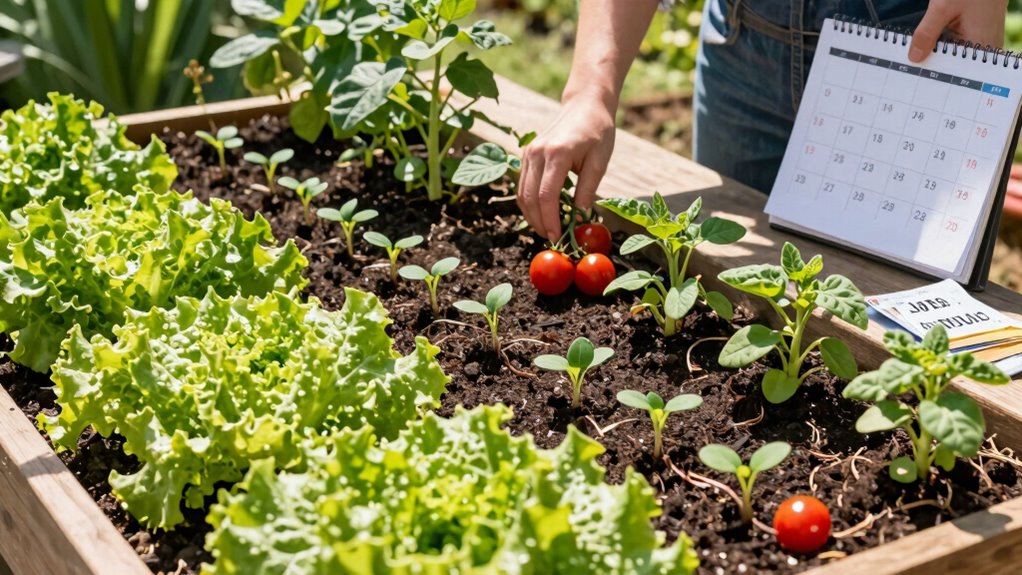
To enjoy a steady supply of fresh produce throughout the growing season, you need to master succession planting. This technique involves planting crops in a carefully planned sequence so you can harvest continuously, rather than all at once. To do this effectively, you should start by understanding your climate and the growing season length. Map out your garden calendar, noting when each crop reaches maturity, and plan multiple plantings accordingly. This planning helps optimize your growing season length and productivity. This way, as one batch is nearing harvest, you can sow the next, ensuring there’s no gap in your fresh produce supply.
Incorporate companion gardening into your succession planting plan to maximize space and promote healthy growth. Certain plants benefit from being grown side by side—they can enhance each other’s growth, repel pests, or improve soil health. For example, planting beans near corn can fix nitrogen into the soil, helping all your crops thrive. On the other hand, avoid placing incompatible plants together, as this can hinder growth or attract pests. By pairing your crops thoughtfully, you create a more resilient and productive garden that supports continuous harvesting.
Soil health plays a crucial role in successful succession planting. As you plant and replant throughout the season, it’s vital to maintain and improve your soil’s fertility and structure. Rotate crops each year to prevent nutrient depletion and reduce pest buildup. Incorporate organic matter like compost to replenish nutrients and improve soil texture. Regularly testing soil nutrient levels can help you make informed amendments to sustain soil vitality. Healthy soil promotes vigorous plant growth, which means higher yields and better resilience against pests and diseases. Additionally, soil testing provides insight into specific deficiencies, enabling targeted nutrient management. Maintaining proper soil pH levels is essential for nutrient availability and overall plant health. Keep an eye on soil moisture and pH levels, and consider implementing soil amendments to create an optimal environment for your crops.
succession planting garden planner
As an affiliate, we earn on qualifying purchases.
As an affiliate, we earn on qualifying purchases.
Frequently Asked Questions
How Do I Determine the Optimal Planting Intervals?
You determine ideal planting intervals by considering crop rotation and soil fertility. Start by understanding each crop’s growth cycle and how often you can replant it without depleting nutrients. Rotate crops to prevent soil exhaustion, planting quick-maturing varieties frequently and longer-season crops less often. Monitor soil health regularly, adding amendments as needed, to maintain fertility and guarantee continuous harvests. Adjust intervals based on your specific climate and soil conditions.
What Crops Are Best Suited for Succession Planting?
You should choose crops like lettuce, radishes, and carrots for succession planting, as they grow quickly and can be replanted often. To guarantee success, practice crop rotation to prevent soil depletion and disease. Proper soil preparation is essential; amend your soil with compost before planting to provide nutrients. These steps help you maximize your harvest and keep your garden productive throughout the season.
How Do Weather Patterns Affect Succession Planting Schedules?
Did you know that unpredictable weather patterns can delay planting by up to 30%? Climate variability directly impacts your succession planting schedule, forcing you to adapt quickly. Sudden temperature drops or unexpected rain can hamper crop growth, making pest management more challenging. To stay on track, monitor weather forecasts closely, adjust planting dates accordingly, and implement flexible plans to guarantee continuous harvests despite weather fluctuations.
Can Succession Planting Extend My Harvest Season Significantly?
Yes, succession planting can greatly extend your harvest season by allowing you to harvest crops continuously. By practicing crop rotation and maintaining soil fertility, you guarantee healthy growth and reduce pests and diseases. Stagger planting times for different crops, so as one matures, another takes its place. This strategy maximizes your land use, keeps your harvest ongoing, and improves soil health for future plantings.
What Tools or Apps Assist With Planning Succession Planting?
Think of planning succession planting as building a well-organized garden map. Tools like Garden Planner apps or planting calendars help you visualize your crop schedule, ensuring continuous harvests. They assist in soil preparation tips, pest management strategies, and timing. These apps streamline your planning, prevent overlaps, and optimize space, making your garden thrive. With the right tools, you turn chaos into a symphony of ongoing productivity.
Conclusion
By planning your succession planting carefully, you can enjoy fresh vegetables all season long. Remember, staggering your plantings guarantees a steady harvest, so you’re not overwhelmed at once. Did you know that a well-executed succession plan can double your garden’s productivity? With just a little foresight, you’ll be reaping a continuous bounty, turning your garden into a dependable source of fresh, homegrown produce. Start planning today and watch your harvest grow!
Halloween Picks
halloween
As an affiliate, we earn on qualifying purchases.