
To use shade smartly in your hot-weather garden, strategically position structures like pergolas or shade sails to protect plants from intense sunlight and reduce heat stress. Incorporate shade-tolerant plants like ferns and hostas, and use mulches to keep roots cool and conserve moisture. Water carefully with drip irrigation, and consider planting ground covers for added coverage. These techniques not only create a cooler, more resilient garden but also help you save water and effort—discover how to optimize every shaded corner.

Get garden gear delivered free — and shop member deals
- Fast, free delivery on millions of items
- Access to Prime Big Deal Days deals on October 6–7
- Prime Video, Amazon Music and more included
Key Takeaways
- Incorporate structural shade elements like pergolas and shade sails to protect plants and create comfortable outdoor spaces.
- Select shade-tolerant plants such as ferns and hostas that thrive with less sunlight and water.
- Use mulching to retain soil moisture, keep roots cool, and improve soil health.
- Implement targeted watering techniques like drip irrigation to prevent overwatering and conserve water.
- Maximize shaded zones through strategic placement of plants and structures to enhance resilience and sustainability.
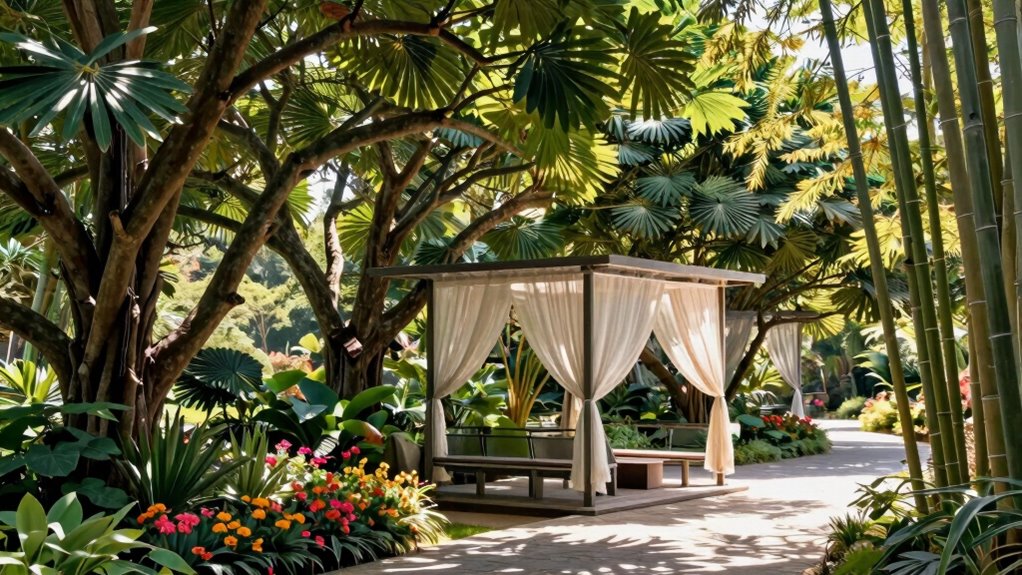
When the heat of summer hits, providing shade in your garden becomes essential for protecting plants and creating a comfortable outdoor space. Shade helps prevent heat stress, reduces water loss, and keeps your garden thriving despite the scorching temperatures. To make the most of shaded areas, you need to focus on smart plant selection and effective water management. Choosing the right plants is critical; opt for species that naturally tolerate or even prefer shade. Shade-tolerant plants like ferns, hostas, and certain flowering perennials will flourish without the need for constant watering or intense sunlight. These plants are adapted to lower light levels, so they won’t struggle or become stressed in shaded environments. Incorporating such plants allows you to create lush, vibrant sections of your garden that require less maintenance and are more resilient during hot weather.
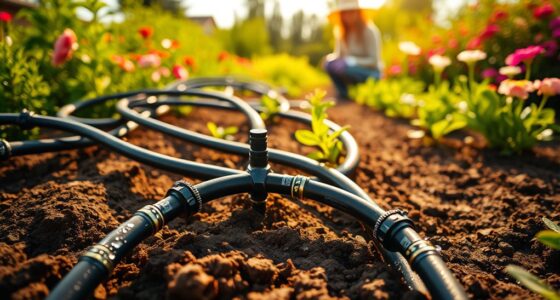
In addition to selecting the right plants, water management becomes essential in shaded parts of your garden. While shade reduces evaporation, it doesn’t eliminate the need for consistent watering. You need to monitor soil moisture levels closely and adjust your watering schedule accordingly. Overwatering can lead to root rot and other issues, so use drip irrigation or soaker hoses to deliver water directly to the roots. This targeted approach conserves water and ensures your plants receive the hydration they need without excess runoff. Mulching around your plants also helps retain soil moisture, keeps roots cool, and reduces the frequency of watering. Organic mulches like bark or straw are excellent choices that improve soil health over time. Additionally, understanding the importance of biodiversity in your garden can support more resilient and sustainable plant choices, helping your garden adapt better to changing conditions. Incorporating companion planting strategies can also enhance plant health and maximize shaded space.
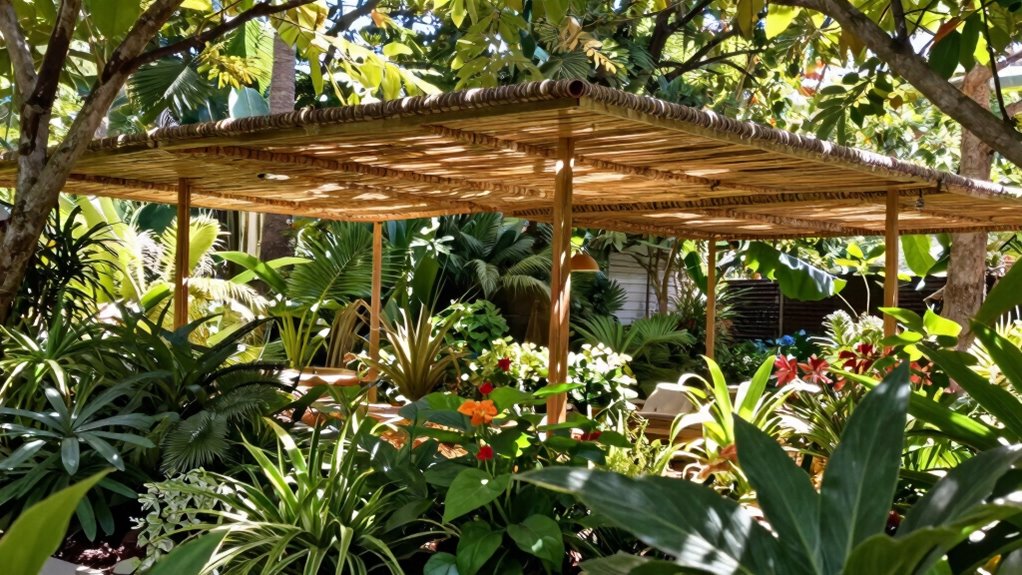
Creating shaded zones isn’t just about planting under trees or installing fabric covers; it’s about designing your garden with water efficiency and plant health in mind. Consider planting ground covers or low shrubs that can thrive in shaded, moist conditions, further reducing your watering demands. If you’re using structures like pergolas or shade sails, position them strategically to cast ideal shadows over areas with shade-tolerant plants. This way, you maximize the benefits of natural shade while minimizing water use. Regularly inspecting your plants for signs of stress, such as wilting or discoloration, helps you fine-tune your watering practices and guarantee your shade strategies work effectively. Remember, incorporating water-saving techniques into your gardening routine can significantly enhance your garden’s resilience during hot weather.
As an affiliate, we earn on qualifying purchases.
Frequently Asked Questions
How Does Shade Affect Soil Moisture Levels?
Shade helps keep soil cooler, reducing evaporation and aiding soil cooling, which is essential during hot weather. By providing shade, you boost moisture retention because less water escapes from the soil surface. This means your plants stay healthier longer, especially in intense heat. You should strategically place shade to maximize these benefits, ensuring your garden maintains ideal soil moisture and stays resilient against the harsh sun.
What Are the Best Plants for Shaded Hot Gardens?
You should choose shade-loving, drought-tolerant plants for your hot, shaded garden. Consider ferns, hostas, and shade-tolerant succulents—they thrive with limited sun and water. These plants adapt well to shade, keeping your garden vibrant without excessive watering. By selecting the right shade-loving, drought-tolerant plants, you’ll enjoy a lush, low-maintenance garden that stays healthy even during dry spells.
Can Shade Protect Plants From Wind Damage?
Shade can help protect your plants from wind damage by increasing wind resistance and providing a physical barrier. When you use shade structures like trees or fabric, they add shade durability, reducing the impact of strong gusts. This creates a calmer, more stable environment for your plants, preventing wind from causing breakage or stress. So, strategically placed shade not only cools your garden but also shields it from damaging winds.
How Do I Balance Shade and Sunlight for Vegetables?
You can balance shade and sunlight by observing your vegetables’ needs and adjusting accordingly. Shade plants that prefer cooler conditions, like leafy greens, during the hottest parts of the day, while allowing sun-loving crops, such as tomatoes, ample sunlight during morning and late afternoon hours. Sunlight management is key—use shade cloths or natural shade wisely to prevent scorching while ensuring your vegetables get enough light to thrive.
What Are Cost-Effective Shade Solutions for Large Gardens?
To find cost-effective shade solutions for large gardens, you can install DIY pergolas using inexpensive materials like bamboo or reclaimed wood, creating customizable shade structures. Additionally, hanging shade curtains from these pergolas offers flexible coverage and easy adjustments. These options are affordable, durable, and simple to implement, helping you protect your plants from excessive heat while staying within your budget.
Conclusion
By thoughtfully incorporating shade into your hot-weather garden, you create a cool oasis that’s just as inviting as a shady grove on a sunny day. Using umbrellas, pergolas, or planting trees, you can protect your plants and yourself from harsh rays. Remember, shade isn’t just a refuge—it’s the garden’s secret weapon against the heat, turning your outdoor space into a invigorating sanctuary that’s as soothing as a gentle breeze on a scorching afternoon.
Halloween Picks
halloween
As an affiliate, we earn on qualifying purchases.