
Blockchain improves food supply chains by providing a secure, transparent way for you to trace products from farm to table. It guarantees safety and verifies origins through an immutable record, using digital signatures and smart contracts to streamline transactions and prevent tampering. This technology boosts transparency, reduces fraud, and enhances trust among stakeholders. If you want to understand how these systems work together to improve food safety and accountability, there’s more worth exploring.
Key Takeaways
- Blockchain provides an immutable, transparent ledger for tracking food products from farm to table, ensuring origin and safety verification.
- Digital signatures authenticate data entries at each supply chain stage, maintaining data integrity and stakeholder accountability.
- Smart contracts automate transactions and quality checks, reducing delays and enhancing transaction security within the supply chain.
- Combining blockchain, digital signatures, and smart contracts increases transparency, reduces fraud, and supports compliance with safety standards.
- Enhanced traceability builds consumer trust and accountability among stakeholders, facilitating faster, secure responses to food safety issues.
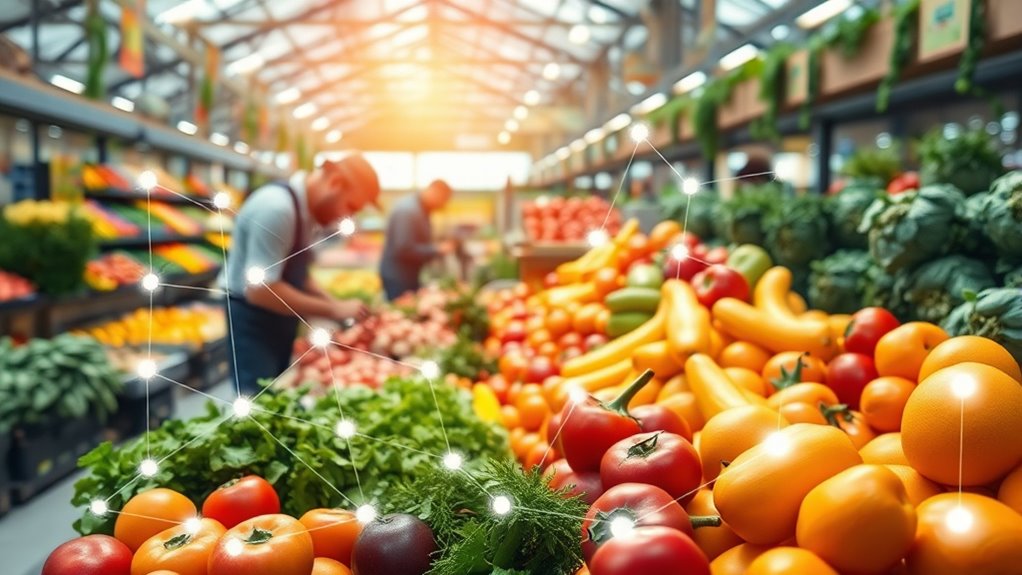
Blockchain technology is revolutionizing food supply chains by providing an immutable and transparent way to trace products from farm to table. This innovation guarantees that every step of the journey—harvesting, processing, packaging, and distribution—is securely recorded, giving you confidence in the origin and safety of your food. At the core of this system are digital signatures and smart contracts, which work together to enhance security and streamline transactions. Digital signatures verify the authenticity of data entries, guaranteeing that each record is genuine and unaltered, while smart contracts automate agreements and trigger actions when specific conditions are met. These features eliminate the need for intermediaries, reduce fraud, and increase efficiency.
Blockchain ensures transparent, tamper-proof food traceability with digital signatures and smart contracts that enhance security and efficiency.
When you look into how blockchain enhances traceability, you’ll find that digital signatures play a vital role. They guarantee that data added to the blockchain is signed by the authorized party, whether it’s a farmer, processor, or distributor. This cryptographic protection guarantees data integrity, so you can trust that the recorded information is accurate and hasn’t been tampered with. As a result, stakeholders across the supply chain are held accountable, which improves transparency and boosts consumer confidence. You no longer have to rely solely on paper records or isolated databases; blockchain provides a unified, tamper-proof ledger accessible to all authorized parties.
Smart contracts take this transparency further by automating key processes. These self-executing contracts are programmed to trigger specific actions when predefined conditions are met. For example, once a shipment arrives at a warehouse and passes quality checks, a smart contract can automatically release payment to the supplier. This reduces delays and minimizes disputes, making transactions smoother and more reliable. You benefit from faster, more secure exchanges, knowing that the rules are enforced automatically without manual intervention. Smart contracts also provide a clear audit trail, which is invaluable for tracing product history during recalls or investigations.
Together, digital signatures and smart contracts create a resilient framework that enhances traceability, reduces fraud, and fosters trust across the entire supply chain. They empower you to verify product origins with confidence and ensure compliance with safety standards. As blockchain continues to evolve, you’ll see an even greater integration of these tools, making food supply chains more transparent, efficient, and trustworthy. With these technological advancements, you gain peace of mind knowing that your food is traceable, authentic, and safe from farm to table. Additionally, AI security developments are being incorporated to strengthen the safety and reliability of blockchain systems in supply chains.
Frequently Asked Questions
How Does Blockchain Improve Food Safety Beyond Traceability?
Blockchain improves food safety beyond traceability by enhancing scalability and boosting consumer trust. Its decentralized nature allows for rapid sharing of safety data, enabling quicker responses to contamination or recalls. As a result, you can trust that the information is accurate and tamper-proof. This transparency reassures consumers, encourages accountability among suppliers, and ultimately creates a safer food supply chain for everyone.
What Are the Main Challenges in Implementing Blockchain in Supply Chains?
Implementing blockchain is like maneuvering a maze—you face many challenges. You must tackle data privacy concerns, ensuring sensitive information remains secure while sharing transparency. Technology adoption can be slow, especially when stakeholders resist change or lack resources. Additionally, integrating blockchain with existing systems demands significant effort and investment. These hurdles require careful planning and collaboration, but overcoming them opens up improved traceability and trust in your supply chain.
How Does Blockchain Affect Costs for Small-Scale Producers?
You’ll find that blockchain can increase costs for small-scale producers initially due to technology setup and training. However, it also promotes transaction transparency and can lead to cost reduction over time by streamlining processes and reducing fraud. While the upfront investment might seem high, embracing blockchain ultimately helps you improve traceability, build trust with buyers, and access new markets, making it a worthwhile investment for your business growth.
Can Blockchain Prevent Food Fraud Effectively?
Yes, blockchain can effectively prevent food fraud. You can rely on digital signatures to verify product authenticity and smart contracts to automate compliance checks. These tools make it difficult for bad actors to tamper with data or introduce fake products. Although blockchain isn’t foolproof, its transparent, tamper-resistant system considerably reduces fraud risks, giving you confidence in the integrity of your supply chain.
What Are the Future Trends in Blockchain Technology for Food Safety?
You’ll see future blockchain trends focusing on smart contracts to automate compliance and streamline processes, making food safety more reliable. Data interoperability will improve, allowing different systems to communicate seamlessly, enhancing traceability across supply chains. These innovations will help you quickly identify issues, reduce fraud, and ensure product authenticity, ultimately boosting consumer trust. Embracing these advancements will make your food safety measures more efficient, transparent, and resilient in an evolving industry.
Conclusion
By embracing blockchain, you open a transparent window into your food supply chain, turning it into a well-lit path rather than a tangled maze. This technology acts like a trustworthy lighthouse, guiding you through complex data and ensuring safety, quality, and accountability. As you navigate these digital waters, remember that blockchain’s traceability is your anchor, helping you build consumer trust and strengthen your supply chain’s integrity—making transparency not just a goal, but your guiding star.