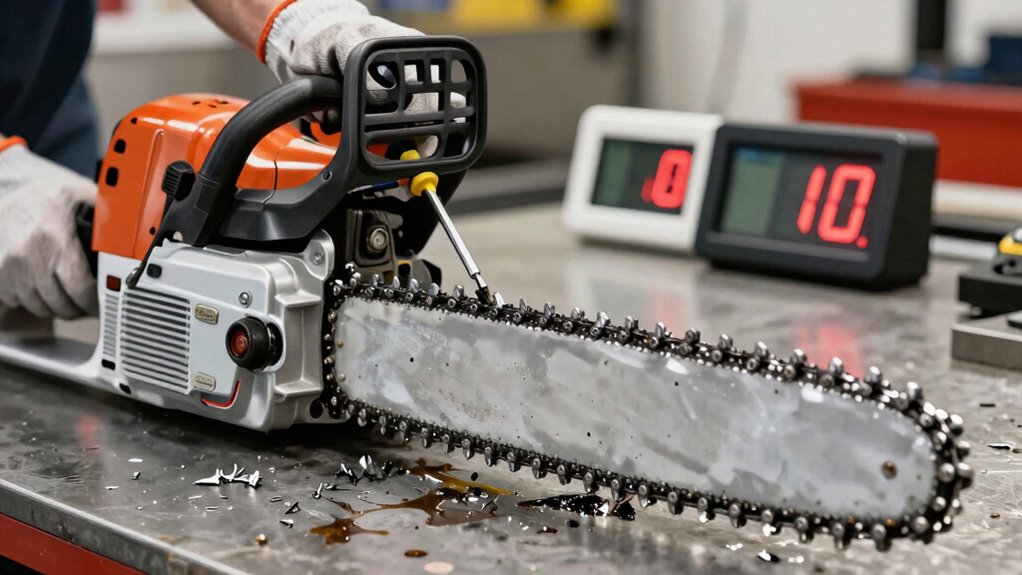
Performing a quick 10-minute chainsaw maintenance routine before each use helps you cut smoothly, operate safely, and extend the saw’s life. Start with a safety check, then inspect and clean the chain, bar, and sprocket. Sharpen the chain regularly and ensure proper tension. Tune the engine and verify safety features are working correctly. After use, store your chainsaw properly to prevent rust. Keep this routine in mind, and you’ll be ready for perfect cuts every time.

Get garden gear delivered free with Prime
- Fast, free delivery on millions of items
- Prime Video, Amazon Music and more included
- Member-only deals all year
Key Takeaways
- Perform a quick pre-use inspection of chain tension, lubrication, and safety features to ensure optimal performance and safety.
- Clean the chain, bar, and sprocket to remove sawdust, debris, and old oil for smoother cuts.
- Sharpen the chain regularly using proper files and check for dullness or damage.
- Check and adjust engine components like the carburetor and air filter for efficient operation.
- Store the chainsaw properly in a dry, clean environment after lubricating the chain and cleaning it thoroughly.
As an affiliate, we earn on qualifying purchases.
Why a Quick Chainsaw Maintenance Routine Saves You Time and Money
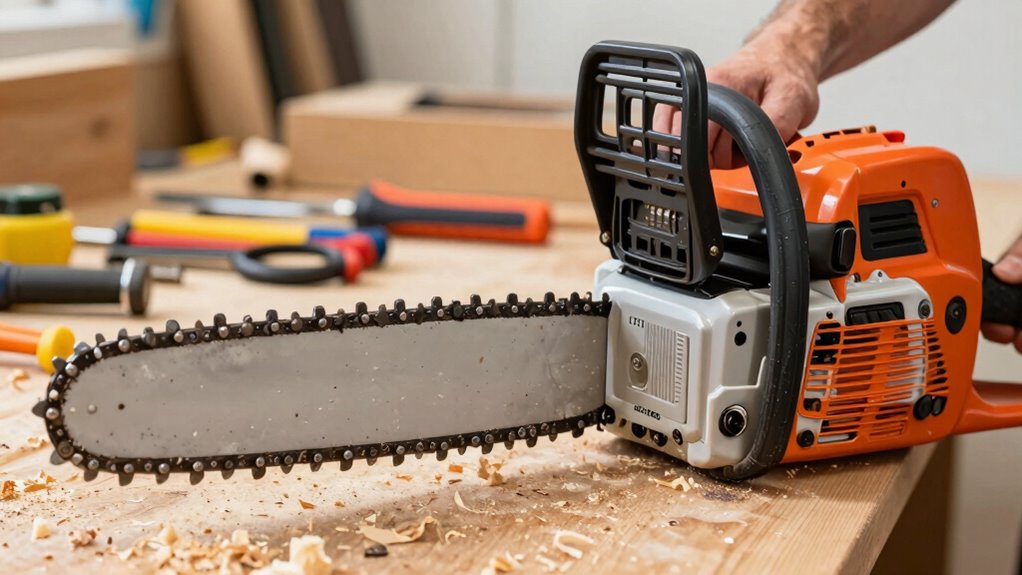
Performing a quick chainsaw maintenance routine might seem like an extra step, but it actually saves you time and money in the long run. Regularly lubricating the chain ensures smooth operation and reduces wear, preventing costly repairs or replacements. Proper chain lubrication also improves cutting efficiency, making your work faster and easier. Checking and maintaining the correct fuel mixture keeps the engine running efficiently, prevents overheating, and extends its lifespan. When you keep these basics in check, you’re less likely to experience breakdowns or performance issues during a project. Incorporating proper maintenance into your routine ensures your chainsaw operates at peak performance consistently. Investing just a few minutes to maintain your chainsaw now helps avoid bigger problems later, saving you time from repairs and money on unnecessary parts. A small routine pays off with reliable, consistent performance. Additionally, following manufacturer guidelines for maintenance tasks can help ensure safety and optimal operation over the lifespan of your chainsaw. Regular maintenance also supports equipment longevity, allowing you to get the most out of your investment. Moreover, understanding the importance of preventative care can help you identify potential issues before they become costly repairs.
Inspect and Clean Your Chainsaw Before Use
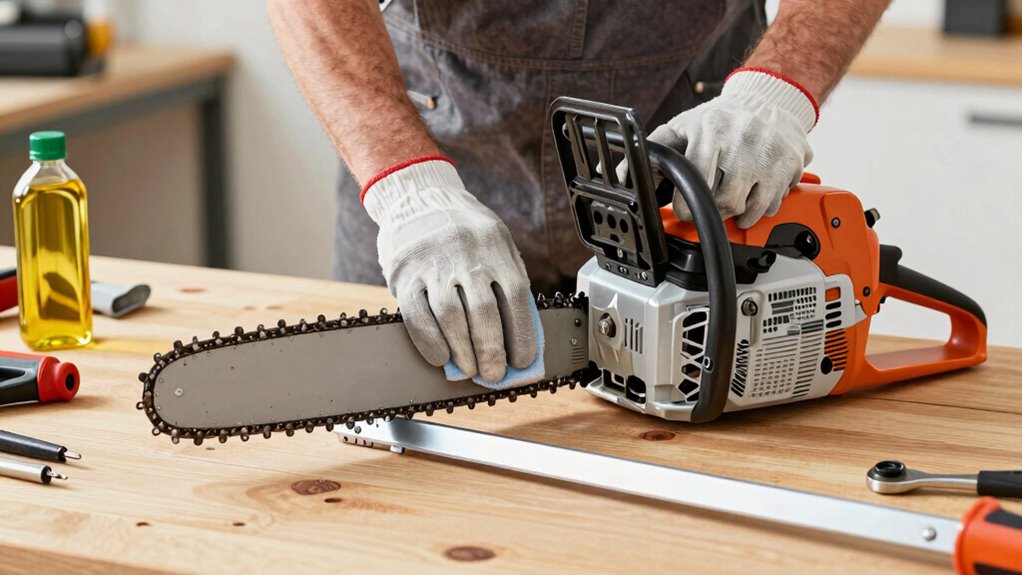
Before using your chainsaw, take a few minutes to inspect and clean it thoroughly. Check the chain tension, ensuring it’s tight but moves smoothly around the bar. Look for any signs of damage or wear. Next, examine the bar for proper alignment; it should sit straight and evenly against the chain. Clean off debris, sawdust, and old oil from the chain, bar, and sprocket area with a cloth or brush. Proper cleaning prevents overheating and ensures efficient cuts. Regular maintenance not only extends the life of your chainsaw but also maintains vehicle performance and power by keeping parts functioning optimally. Additionally, inspecting the lubrication system ensures that the chain receives adequate oil, reducing friction and wear during operation. This routine maintenance helps prevent unexpected breakdowns and improves safety during use. To further ensure safety, always verify that your chain brake is functioning properly before operation. Use the following checklist to guide your inspection:
| Inspection Step | What to Look For | Action Needed |
|---|---|---|
| Chain tension | Loose or tight, slack or tight | Adjust tension as needed |
| Bar alignment | Bent or misaligned bar | Realign or replace if necessary |
| Cleanliness | Sawdust and debris buildup | Wipe and clear debris |
| Chain condition | Dull or damaged chain | Clean or replace if needed |
This routine keeps your chainsaw ready and safe for each use.
Sharpen the Chain for Cleaner, Safer Cuts
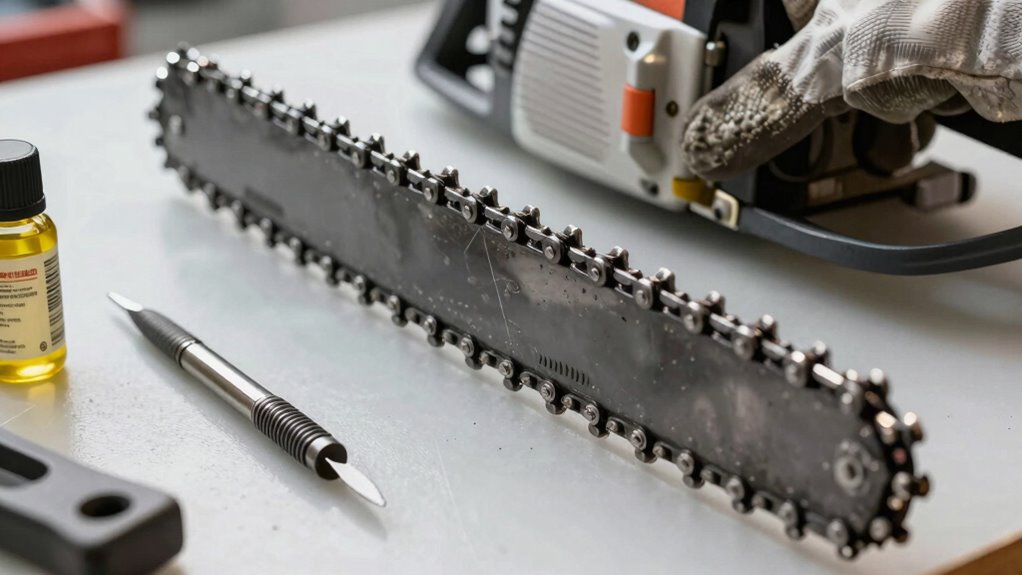
A sharp chain makes cutting easier, safer, and more efficient. To improve your cutting efficiency, follow these steps for chain sharpening:
- Inspect the chain for dull or chipped teeth.
- Secure the chainsaw and use a file guide for consistent angles.
- File each tooth evenly, maintaining the manufacturer’s recommended angle.
- Check the depth gauges and file them down if they’re too high, ensuring proper bite.
This routine keeps your chain in top shape, reducing strain and preventing accidents. Regular chain sharpening ensures your cuts are cleaner and more precise, saving you time and effort. Remember, a well-maintained chain not only accelerates work but also prolongs your chainsaw’s lifespan. Make sharpening a quick, daily habit for ideal performance.
Check the Bar and Replace Worn Parts

Regularly inspecting the chainsaw bar is essential because it directly affects cutting performance and safety. During a bar inspection, look for signs of wear, such as uneven edges, dents, or a curled or worn-down guide rail. If you notice any damage or excessive wear, it’s time for worn part replacement. Replace the bar if it’s warped, cracked, or excessively grooved, as these issues compromise stability and safety. Keep the bar clean and free of debris to ensure smooth operation. Proper chainsaw maintenance includes checking the bar regularly to prevent unexpected failures. Ensuring proper cutting accuracy is vital for efficient and safe operation. Using manufacturer-approved parts for replacement helps maintain the chainsaw’s optimal performance and safety standards. Regularly checking the bar and replacing worn parts prolongs your chainsaw’s lifespan, improves cutting efficiency, and reduces the risk of accidents. Making proper maintenance practices a quick, routine step in your maintenance helps keep your chainsaw in top shape. Incorporating visual inspections into your routine can help catch issues early before they lead to more serious problems.
Tune the Engine for Better Power and Efficiency
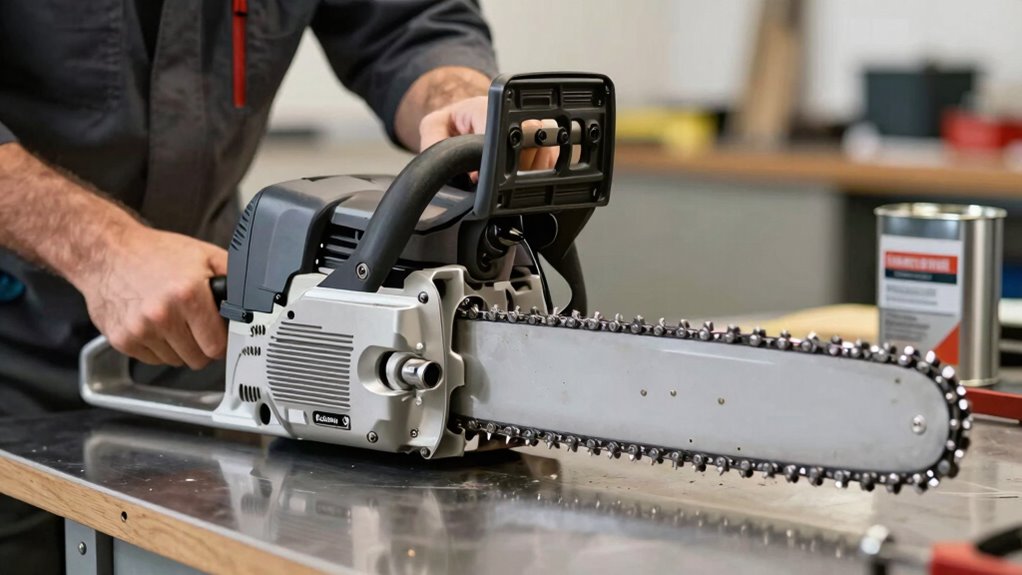
Ensuring your chainsaw’s engine runs smoothly is key to maximizing power and efficiency. To achieve this, focus on tuning the engine through simple adjustments. First, check your fuel mixture—use the correct ratio of oil to gas for ideal combustion. Second, inspect the carburetor; if the engine stalls or runs rough, it might need adjustment. Third, adjust the carburetor screws: turn the idle screw clockwise for smoother idling or counterclockwise to increase power. Fourth, make sure the air filter is clean, as a clogged filter hampers airflow. Properly tuning these components ensures your chainsaw operates at peak performance, providing better cuts with less fuel consumption. Regular tuning prevents engine problems and extends your chainsaw’s lifespan. Additionally, understanding fuel efficiency can help you optimize your maintenance routine and reduce overall operating costs. Remember to also consider chainsaw maintenance as part of your routine to keep the engine in top shape.
Ensure Safety Features Are Working Properly
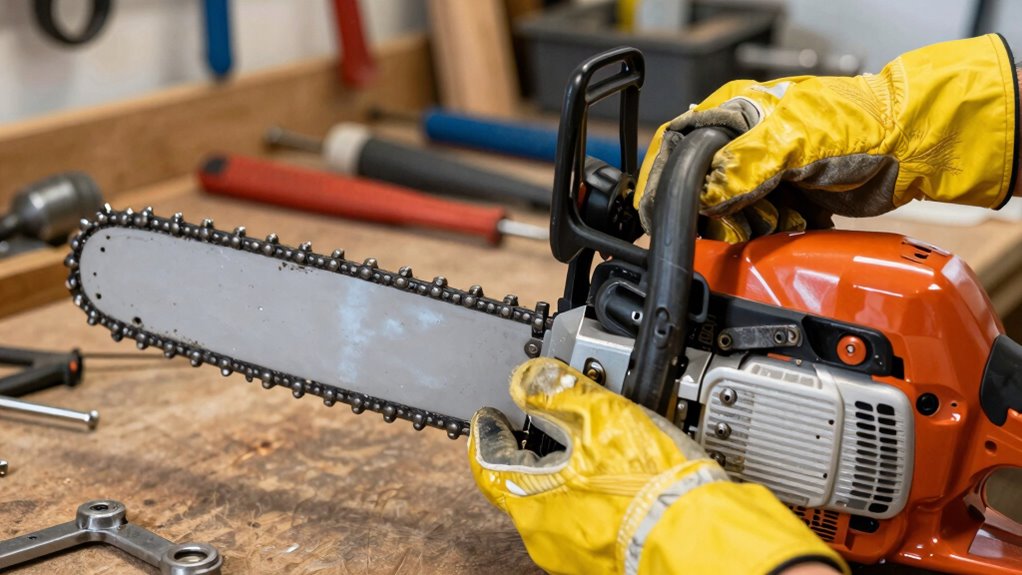
Before operating your chainsaw, verify that all safety features are functioning correctly to prevent accidents. Check that the chain brake engages smoothly, the throttle lock is secure, and the chain catcher is intact. Inspect your safety gear—helmet, goggles, gloves, and chaps—to ensure they’re in good condition. Familiarize yourself with emergency procedures, so you know how to react if something goes wrong. Regularly test safety features before each use to avoid surprises during cutting. Additionally, understanding quality assurance principles can help ensure your equipment remains in optimal condition over time. Performing routine maintenance checks enhances both safety and efficiency during operation. Recognizing common safety hazards associated with chainsaw use can further help prevent accidents. Staying informed about regulatory standards can also contribute to safer operation practices. Here’s a quick visual:
| Safety Feature | Functionality Check |
|---|---|
| Chain Brake | Engage and release smoothly |
| Throttle Lock | Secure and release without sticking |
| Chain Catcher | Intact and properly positioned |
| Safety Gear | No damage, fits correctly |
| Emergency Procedures | Clear steps memorized |
Maintaining safety is key for safe, efficient cuts.
Store Your Chainsaw Properly After Use
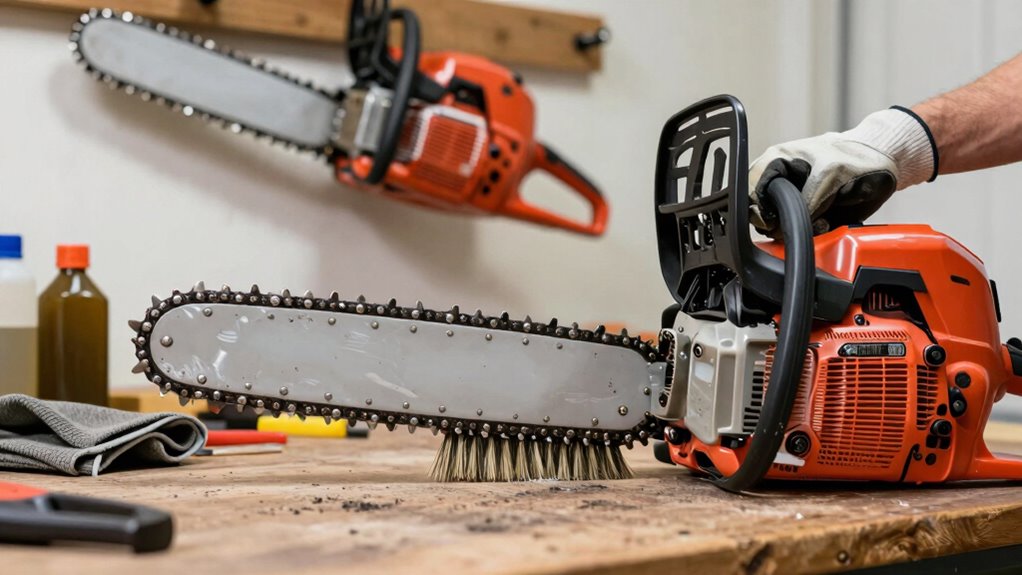
After finishing your work, make sure to clean your chainsaw thoroughly before storing it. You should also keep it in a dry, sheltered place to prevent rust and damage. Proper storage helps extend the life and performance of your chainsaw. Regular maintenance, such as checking the blade sharpness, ensures efficient cutting and reduces wear over time. Additionally, inspecting and cleaning the air filter helps maintain optimal engine performance and prevents dirt buildup. To further protect your equipment, consider using storage solutions designed specifically for power tools to prevent moisture and dust accumulation. Incorporating connected equipment like smart storage containers can also monitor environmental conditions and alert you to potential issues. Being aware of cultural insights into proper tool care can also enhance your maintenance routine and prolong equipment lifespan.
Clean Chainsaw Before Storage
Cleaning your chainsaw thoroughly before storage is essential to keep it in good working condition and prevent rust or corrosion. Proper maintenance ensures your tool stays reliable season after season. Here’s what you should do:
- Remove any sawdust and debris from the bar and chain using a brush or compressed air.
- Wipe down the entire chainsaw with a clean cloth to eliminate oil and grime.
- Check and clean the air filter to prevent dirt buildup.
- Lubricate the chain and bar to protect against rust and ensure smooth operation.
Store in Dry Place
Storing your chainsaw in a dry, sheltered location is essential to prevent rust and corrosion. Use proper storage tips by keeping it in a dry environment where moisture can’t cause damage. After cleaning your chainsaw, make sure it’s completely dry before storing. Store it in a secure, upright position to avoid accidental bumps or falls. Consider using a protective cover or case to shield it from dust and humidity. Avoid storing the chainsaw in damp basements, sheds, or outdoor areas exposed to weather. A well-ventilated garage or dedicated tool storage area works best. Regularly check your storage setup to confirm it remains dry and free from moisture. Proper storage prolongs your chainsaw’s lifespan, ensuring it stays sharp, functional, and ready for your next task.
Troubleshoot Common Chainsaw Problems Quickly
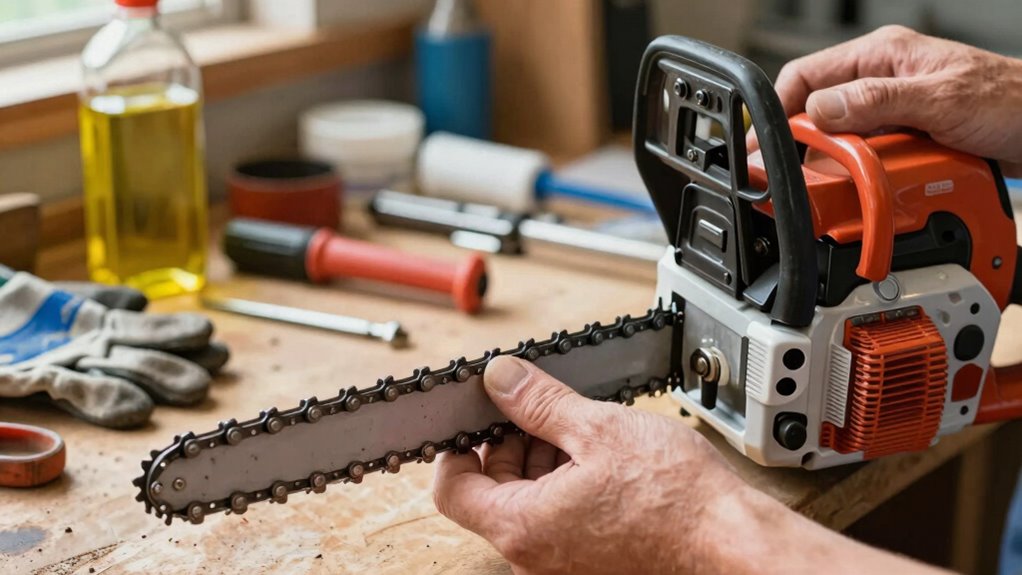
When your chainsaw isn’t starting or runs poorly, quick troubleshooting can save you time and frustration. First, check the chain’s tension and lubrication—poor ergonomics can cause uneven cuts. Next, inspect the spark plug for dirt or damage, ensuring good ignition. Then, examine the air filter; a clogged filter restricts airflow, affecting performance. Finally, verify the chain brake isn’t engaged and that your safety gear is properly worn. Always follow user safety tips during troubleshooting, like disconnecting the spark plug before handling internal parts. By addressing these common issues swiftly, you keep your chainsaw operating smoothly and maintain safe chainsaw ergonomics, preventing injury and ensuring perfect cuts every time.
Frequently Asked Questions
How Often Should I Perform My Chainsaw’s Maintenance Routine?
You should perform your chainsaw’s maintenance routine after every use, including checking chain lubrication and adjusting chain tension. Regularly lubricate the chain to prevent wear and ensure smooth cuts. Also, check and tighten the chain tension to avoid accidents and improve efficiency. Doing this consistently keeps your chainsaw in top shape, extends its lifespan, and guarantees perfect cuts each time you use it.
What Type of Oil Is Best for Lubricating the Chain?
You should use a high-quality bar and chain oil with the right oil viscosity for ideal lubrication. Look for oils specifically designed for chainsaws, as they reduce friction and prevent wear. The viscosity should be suitable for your climate—thinner oils work better in cold weather, while thicker oils are suitable for hot conditions. Regularly check and refill your oil reservoir to keep the chain running smoothly.
Can I Use Household Tools to Sharpen the Chainsaw Chain?
Think of sharpening your chainsaw chain like tuning a musical instrument—you need the right tools and techniques. You can use household tools, like a flat file or a small grinding stone, but it’s important to follow proper sharpening techniques. Be gentle and precise to avoid dulling or damaging the chain. While household tools work in a pinch, investing in a dedicated chainsaw file or guide gives you cleaner, safer results every time.
How Do I Identify if My Chainsaw’s Chain Is Too Worn?
You can tell if your chainsaw’s chain is too worn by checking for chain stretch and cutter dullness. If the chain feels loose or you notice increased vibrations, it’s likely stretched and needs adjusting or replacing. Also, dull cutters won’t cut efficiently, requiring more effort. Regularly inspect the chain for visible wear or damage, and replace it if the cutters are chipped or excessively dull to keep your cuts smooth and safe.
What Safety Gear Should I Wear During Maintenance?
Did you know nearly 50% of chainsaw injuries happen because safety gear wasn’t used? When maintaining your chainsaw, you should wear protective gear like gloves, safety goggles, ear protection, and a helmet. Always use safety equipment to prevent accidents and injuries. Putting on the right protective gear keeps you safe from flying debris, loud noise, and potential cuts, ensuring your maintenance routine stays both effective and accident-free.
Conclusion
So, next time you skip that quick maintenance, remember—your chainsaw might just decide to take a break when you need it most. Irony at its finest, right? Spending ten minutes now could save you hours of frustration later. But hey, who needs perfect cuts or safe operation when you can enjoy the thrill of unexpected repairs? Keep up with your routine, and your chainsaw will keep working for you—no surprises, just smooth cuts.
Fall yard work Picks
leaf blowers
As an affiliate, we earn on qualifying purchases.