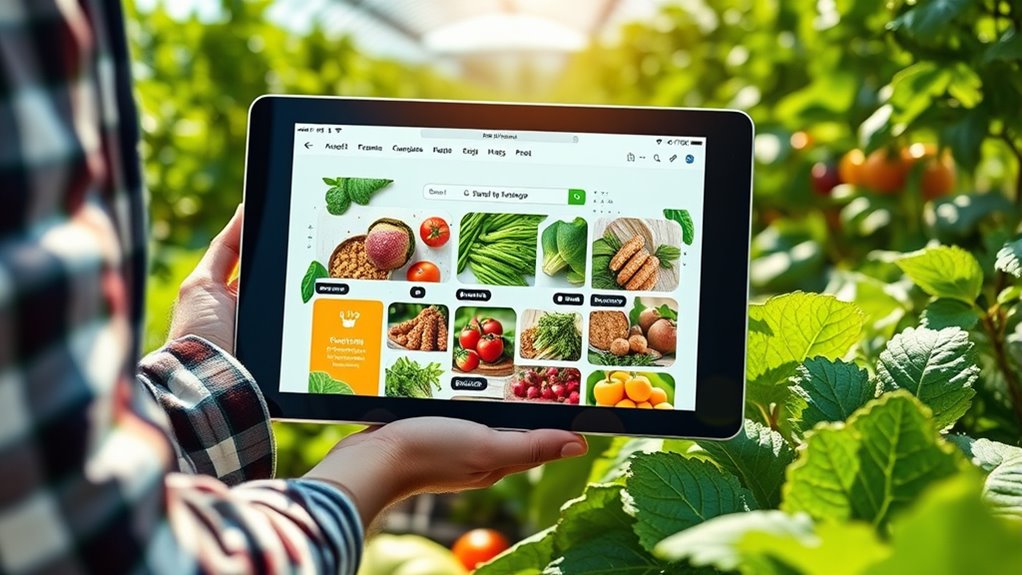

Digital marketplaces connect you directly with your customers, giving you more control, transparency, and the chance to build strong relationships. They help you showcase your farm’s story, reduce costs by bypassing middlemen, and expand your market reach through targeted marketing. With real-time data, you can optimize inventory and respond swiftly to demand changes. These tools also open opportunities for niche products and strengthen your industry position—exploring this further reveals even more benefits.
Key Takeaways
- Digital marketplaces enable direct farmer-to-consumer sales, increasing control, transparency, and customer loyalty.
- They streamline supply chains, reducing costs and enhancing operational efficiency through real-time data and inventory management.
- Farmers can engage with customers directly, building relationships, gathering feedback, and promoting niche or specialty products.
- Digital platforms facilitate market expansion by allowing farmers to reach new audiences and showcase their unique farm stories.
- Integration with digital marketplaces modernizes farming operations, improves responsiveness, and positions farms as innovative industry leaders.
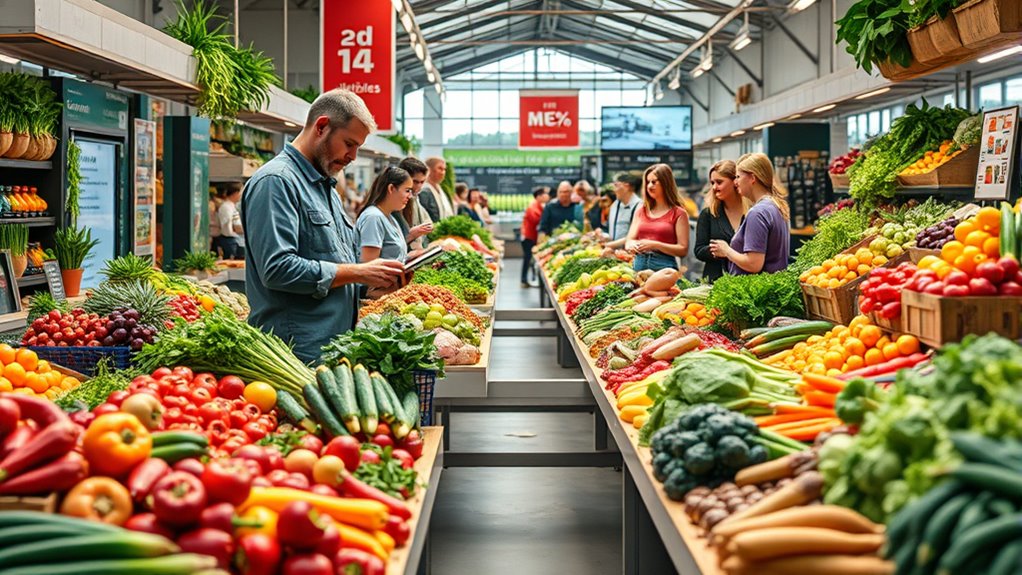
Digital marketplaces are transforming how farmers connect directly with consumers, bypassing traditional distribution channels. This shift empowers you to reach your customers more efficiently while maintaining greater control over your products and pricing. By leveraging these online platforms, you can introduce supply chain innovation that streamlines the process from farm to table. Instead of relying on middlemen or wholesale distributors, you can manage your sales directly, reducing costs and increasing profit margins. Digital marketplaces also enable you to showcase your farm’s unique story, building trust and loyalty among your buyers. This direct engagement fosters a stronger relationship with consumers, who appreciate knowing where their food comes from and how it’s produced.
Digital marketplaces enable farmers to connect directly with consumers, boosting control, trust, and supply chain efficiency.
With supply chain innovation at the core of these platforms, you can optimize inventory management, reduce waste, and respond quickly to demand fluctuations. Real-time data and analytics allow you to track sales trends and customer preferences, making it easier to adjust production accordingly. As a result, your farm becomes more adaptable, capable of scaling up or down efficiently, and better aligned with market needs. Consumer engagement is also enhanced through these digital channels. You can communicate directly with your customers via messaging, reviews, and social media integrations, creating a sense of community around your farm. This interaction not only builds trust but also encourages repeat purchases and word-of-mouth recommendations, essential for growing your customer base.
Furthermore, digital marketplaces often provide tools for personalized marketing, helping you target specific audiences based on their preferences and purchasing habits. This targeted approach increases your chances of converting visitors into loyal buyers. You can also gather valuable feedback from consumers, gaining insights into their expectations and improving your offerings accordingly. The convenience of online ordering and home delivery options appeals to busy consumers seeking fresh, local produce without leaving their homes. Your ability to provide a seamless shopping experience enhances customer satisfaction and keeps them coming back.
In addition, these marketplaces open up new opportunities for niche products or specialty items that might not find a place in traditional retail settings. By directly engaging with consumers, you can educate them about your farm practices, sustainability efforts, or unique varieties, differentiating yourself from larger, conventional suppliers. Implementing motivational strategies can help you stay committed to continuous improvement despite challenges. Overall, digital marketplaces serve as a powerful tool for farm owners aiming to modernize their operations, foster stronger consumer engagement, and introduce innovative supply chain practices. Embracing this technology positions you at the forefront of the evolving food industry, ready to meet the demands of today’s conscious, connected consumers.
Frequently Asked Questions
How Do Digital Marketplaces Ensure Product Quality and Authenticity?
Digital marketplaces guarantee product quality and authenticity through strict product certification and quality assurance processes. You can trust that sellers must provide verified certifications to prove their items meet safety and authenticity standards. Marketplaces often conduct regular inspections and reviews, and customer feedback helps flag any issues. This combination of certifications, ongoing quality checks, and user reviews keeps you confident in the products’ authenticity and quality.
What Are the Main Challenges for Farmers Using Direct-To-Consumer Platforms?
You face challenges like limited farmer education, which can hinder effective platform use and marketing. Logistics and delivery also pose hurdles, as coordinating timely and cost-effective shipping is complex. Additionally, maintaining product freshness and managing customer expectations require effort. To succeed, you need to stay informed about platform features, invest in reliable logistics, and continually learn best practices for direct-to-consumer sales.
How Do Digital Marketplaces Impact Traditional Local Markets?
Digital marketplaces can reshape traditional local markets by encouraging farmer collaboration and expanding customer reach. You might find that these platforms increase competition, potentially lowering prices and shifting buying habits away from local vendors. While they boost the local economy by connecting farmers directly with consumers, they can also challenge existing relationships and reduce foot traffic at traditional markets. Overall, digital marketplaces create both opportunities and challenges for local economies and farmer collaborations.
What Cybersecurity Measures Protect Farmers and Consumers Online?
You might find it surprising, but your online safety depends on cybersecurity best practices like strong passwords, two-factor authentication, and regular software updates. These measures help prevent online fraud and protect both farmers and consumers from cyber threats. Staying vigilant and practicing secure habits guarantees your personal data remains safe, letting you focus on what truly matters—building trust and thriving in the digital marketplace.
How Can Small-Scale Farmers Access Global Digital Marketplace Opportunities?
You can access global digital marketplace opportunities by engaging in farmer collaboration networks that connect you with buyers worldwide. Focus on developing market expansion strategies, such as creating an online storefront and leveraging social media. Partner with local cooperatives or agricultural organizations to gain resources and visibility. These efforts help you reach more customers, increase sales, and grow your farm’s reach beyond local markets efficiently and effectively.
Conclusion
By embracing digital marketplaces and direct-to-consumer farming, you can build stronger connections with your customers and offer fresher, more local produce. It’s a win-win: you gain more control over your sales, and consumers enjoy better quality food. So, why not take advantage of these innovative tools to grow your farm’s success? The future of farming is digital—are you ready to be part of it?