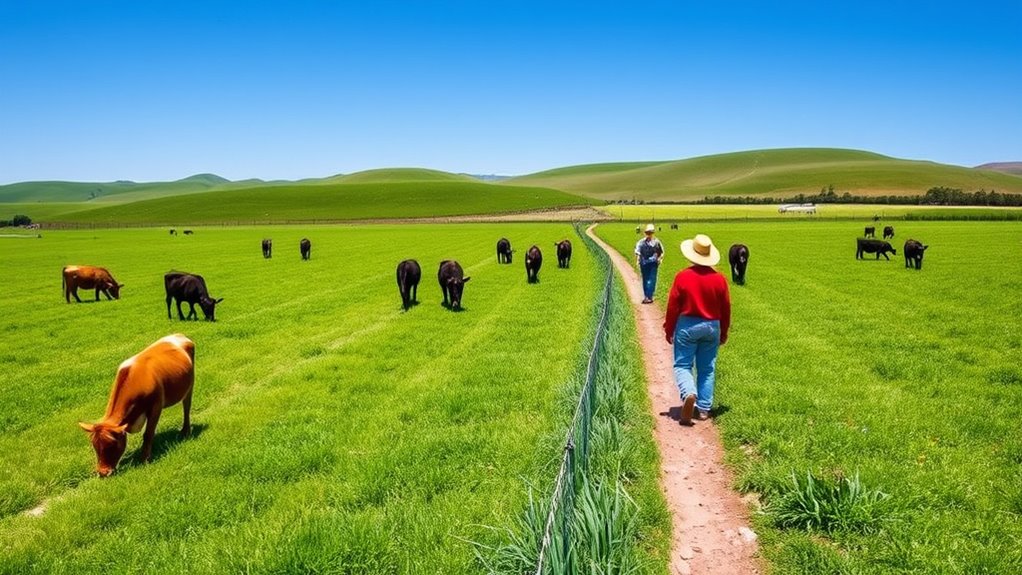
Implementing rotational grazing helps you better manage your pastures by systematically moving livestock between paddocks. This practice allows grass to recover, prevents overgrazing, and improves soil health through increased organic matter and microbial activity. It encourages even grazing, supporting plant diversity and livestock nutrition. Rotational grazing also reduces soil compaction, enhances water infiltration, and boosts long-term productivity. Keep exploring to discover how to optimize your grazing system for healthier pastures and animals.

Get garden gear delivered free with Prime
- Fast, free delivery on millions of items
- Prime Video, Amazon Music and more included
- Member-only deals all year
Key Takeaways
- Rotational grazing prevents overgrazing, allowing pasture recovery and promoting healthier, more resilient forage growth.
- It improves soil health by reducing compaction, increasing organic matter, and supporting microbial activity.
- Moving livestock regularly ensures even grazing, enhances plant diversity, and reduces parasite buildup.
- Regular monitoring and soil testing help optimize pasture conditions and address issues promptly.
- Over time, rotational grazing increases forage yield, improves soil resilience, and boosts overall pasture productivity.
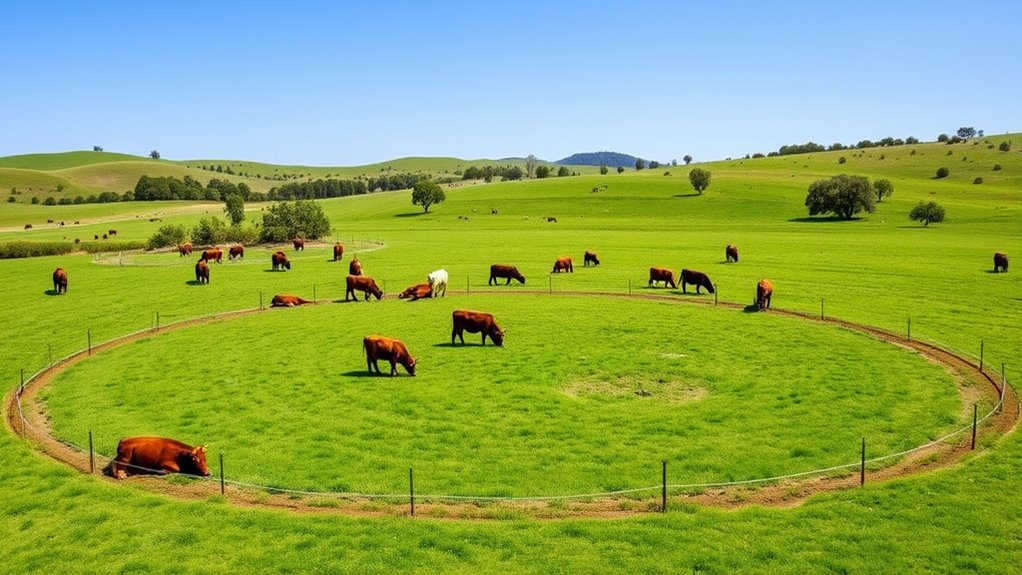
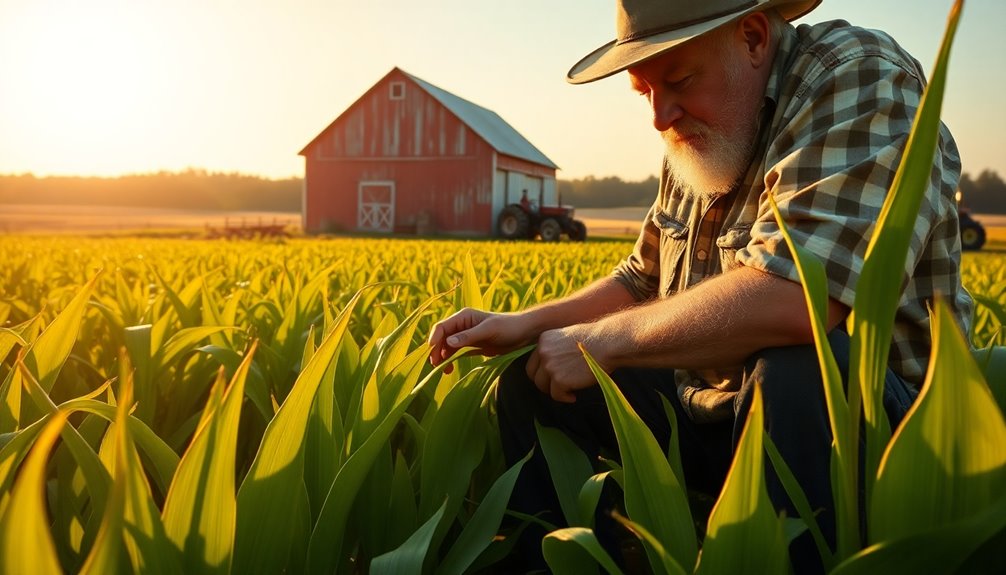
Have you ever wondered how farmers keep their pastures healthy and productive? It all comes down to effective pasture management techniques like rotational grazing. By rotating your livestock from one paddock to another, you give each section of your pasture time to recover, which is essential for maintaining soil health. Healthy soil is the foundation of lush, nutritious forage, and it directly impacts livestock health. When pasture gets overgrazed, the soil becomes compacted and less capable of retaining nutrients and water. Over time, this degradation can lead to poorer forage quality and reduced productivity. But when you implement rotational grazing, you prevent overgrazing, allowing plants to regrow fully and roots to deepen. This process replenishes soil organic matter and promotes microbial activity, critical for soil vitality. As a result, the soil remains rich in nutrients, which benefits the entire pasture ecosystem.
Effective rotational grazing restores soil health, boosts forage quality, and supports sustainable pasture productivity.
Rotational grazing also creates a more balanced environment for your livestock. When animals are confined to smaller areas temporarily, they tend to graze more evenly, avoiding the overconsumption of certain plant species. This not only preserves plant diversity but also ensures your livestock get a more varied and nutritious diet. Additionally, moving animals frequently reduces the buildup of manure in one spot, which minimizes the risk of parasitic infections and disease spread. The fresh pasture stimulates grazing behavior, making your livestock healthier and more content. A healthier animal is less prone to illness, which means fewer treatments and better overall productivity. Implementing soil health practices such as rotational grazing can further enhance the benefits by promoting better nutrient cycling and microbial activity in the soil. This approach also reduces soil compaction, which improves water infiltration and root growth. Furthermore, rotational grazing allows you to monitor your pasture and livestock more closely. You can identify issues such as bare patches, weed encroachment, or signs of nutrient deficiency early on, then take corrective actions. This proactive approach helps sustain soil health and prevents long-term damage. Regular soil testing can help you tailor your management strategies to maintain optimal soil conditions. Incorporating proper grazing techniques can optimize pasture utilization and improve soil stability over time. It also encourages better land stewardship, as you’re actively managing your pasture’s growth cycle rather than letting it deteriorate. A new benefit of rotational grazing is increased resilience to drought and extreme weather events, as healthy soil retains more water and provides a buffer against environmental stresses. Over time, the cumulative benefits of rotational grazing become evident in increased forage yield, improved soil quality, and healthier livestock.
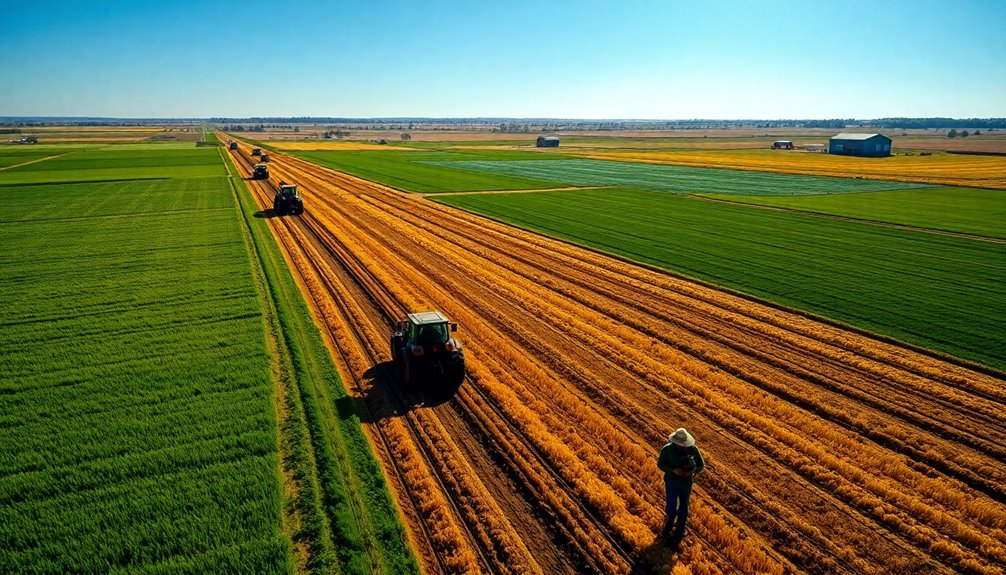
In essence, rotational grazing isn’t just about moving animals around; it’s about creating a sustainable system that works in harmony with nature. By prioritizing soil health, you lay the groundwork for healthier livestock and a more productive pasture. Proper management ensures your land remains resilient, productive, and capable of supporting your livestock for years to come. It’s a simple concept with powerful benefits—one that transforms your pasture into a thriving, sustainable environment.
rotational grazing paddock fencing
As an affiliate, we earn on qualifying purchases.
As an affiliate, we earn on qualifying purchases.
Frequently Asked Questions
How Does Rotational Grazing Impact Soil Health?
Rotational grazing improves soil health by encouraging soil microbes, which help break down organic matter and enhance nutrient cycling. When you rotate livestock, plant diversity increases, leading to a variety of root structures that support different microbes. This diversity creates a balanced ecosystem beneath the surface, boosting soil fertility and structure. As a result, your pasture becomes more resilient, productive, and better able to sustain healthy plants and animals over time.
What Are the Costs Associated With Implementing Rotational Grazing?
When you consider implementing rotational grazing, you should do a thorough cost analysis to understand the investment costs involved. These costs include purchasing or upgrading fencing, water systems, and grazing infrastructure. While initial expenses might seem high, they often lead to long-term savings through improved pasture productivity and health. Keep in mind that your upfront investment can pay off over time with better pasture management and increased livestock gains.
Can Rotational Grazing Be Adapted for Small-Scale Farms?
Imagine your small farm as a chessboard, where each move counts. Yes, you can adapt rotational grazing, but it’s like planning a careful dance around small farm challenges. You’ll need to contemplate grazing rotation planning to prevent overgrazing and conserve resources. With thoughtful scheduling, even a small farm can benefit from this strategy—improving pasture health, reducing costs, and creating a balanced, thriving landscape.
How Do Weather Conditions Affect Rotational Grazing Schedules?
Weather conditions greatly influence your rotational grazing schedule. Climate variability and drought resilience are key factors you need to take into account, as droughts can reduce pasture growth and force you to adjust grazing periods or move animals more frequently. Rainfall patterns, temperature fluctuations, and drought risks require you to stay flexible, monitor pasture conditions closely, and adapt your schedule to maintain healthy pastures and ensure your livestock’s well-being.
What Equipment Is Essential for Effective Rotational Grazing?
To manage rotational grazing effectively, you need essential equipment like reliable fencing options and water infrastructure. Fencing options such as electric or woven wire keep livestock contained and encourage movement, preventing overgrazing. Water infrastructure, including troughs or portable watering systems, guarantees animals stay hydrated in different paddocks. With these tools, you can easily rotate pastures, improve pasture health, and support your livestock’s needs efficiently.
Conclusion
By practicing rotational grazing, you turn your pasture into a well-choreographed dance, each section playing its part in harmony. You’re the conductor, guiding your land’s importance to flourish, ensuring lush growth and healthy soil. With each move, you’re painting a vibrant picture of sustainability and abundance. Embrace this rhythm, and watch your pasture thrive like a symphony, where every grazing cycle sings the promise of a greener, more resilient future under your careful stewardship.
Halloween Picks
halloween
As an affiliate, we earn on qualifying purchases.