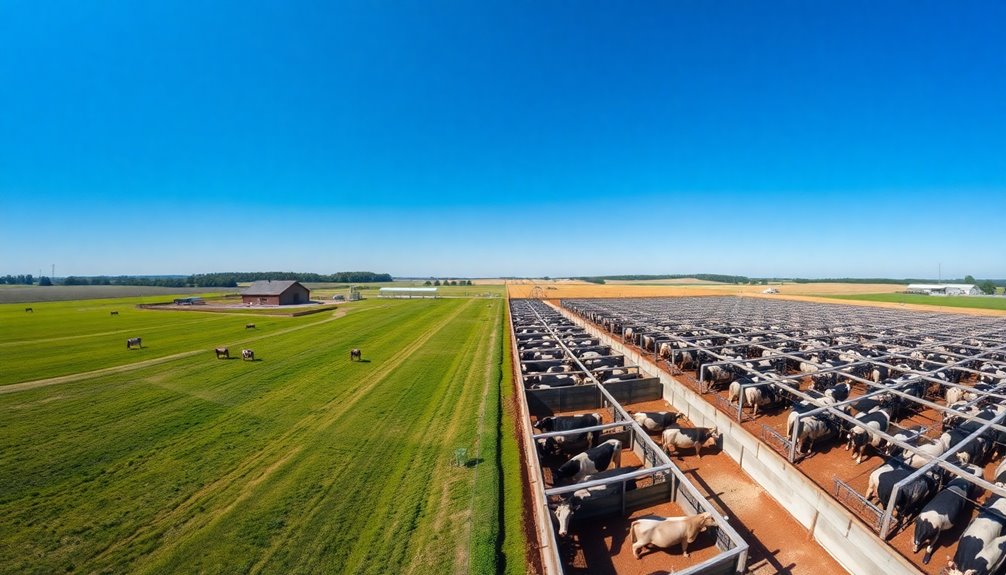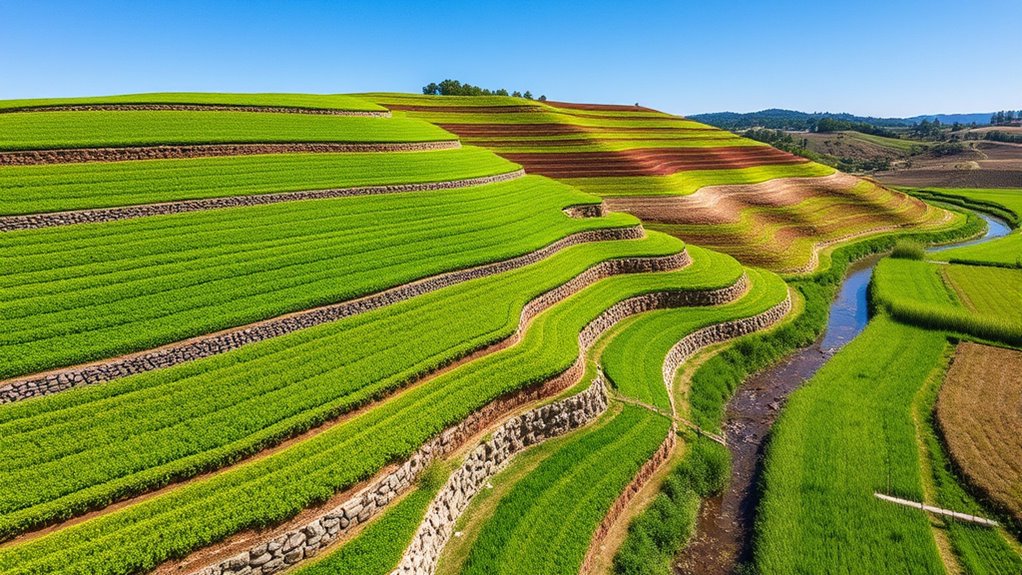

To control soil erosion on croplands, you should consider cover cropping to protect soil from rain and wind damage, while planting along land contours to slow water runoff and prevent gullies. Using these methods helps maintain soil fertility and structure, ensuring sustainable productivity. Combining cover crops with contour farming offers an effective way to reduce erosion risks. To discover more about these techniques and how they work together, explore further strategies for land conservation.
Key Takeaways
- Implement cover cropping with legumes or grasses to shield soil and improve fertility.
- Use contour farming to align planting along land contours, reducing runoff and erosion.
- Maintain vegetation cover year-round to protect soil against heavy rains and wind.
- Establish physical barriers like terraces or check dams on steep slopes to slow water flow.
- Regularly monitor and reseed disturbed areas to ensure continuous soil protection.
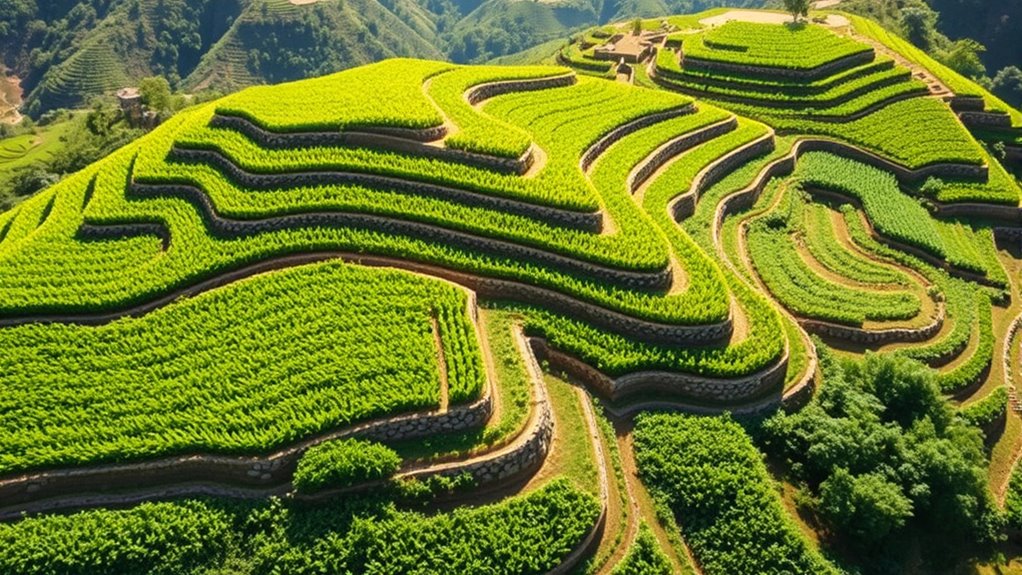
Have you ever wondered how to safeguard your land from the damaging effects of soil erosion? It’s a common concern for farmers and landowners alike, especially when heavy rains and wind threaten to wash away essential topsoil. Fortunately, there are effective soil erosion control methods you can adopt to protect your croplands and maintain healthy, productive soil. Two of the most proven techniques are cover cropping and contour farming. These methods work together to stabilize soil, reduce runoff, and improve land resilience.
Cover cropping involves planting specific plants, such as legumes, grasses, or other cover crops, during off-season periods or between main crops. These plants act as a natural shield, protecting the soil surface from the impact of raindrops and wind. Cover crops also help hold the soil in place with their roots, preventing it from being washed or blown away. Additionally, they improve soil fertility by fixing nitrogen, increasing organic matter, and promoting beneficial microbial activity. This creates a healthier soil structure that’s less susceptible to erosion. When you use cover cropping, you’re not just preventing erosion—you’re also enriching your land for future crops.
Plant cover crops to protect soil and boost fertility, preventing erosion and enriching your land for future harvests.
Contour farming complements cover cropping by aligning planting and tillage practices along natural land contours. Instead of planting straight up and down the slope, you follow the natural curves of the land. This technique reduces water runoff speed and encourages water to infiltrate the soil rather than flowing downhill rapidly. As a result, contour farming minimizes the creation of gullies and reduces soil loss during heavy rains. It also helps distribute water more evenly across your fields, improving crop consistency and reducing erosion hotspots. When combined, cover cropping and contour farming form a powerful duo that stabilizes the soil, conserves water, and boosts crop yields.
Implementing these methods doesn’t require complex equipment or extensive labor, but it does demand planning and consistency. For cover cropping, choose species suited to your climate and soil needs, and plant at the right time to maximize ground cover. With contour farming, map out your land’s natural contours and adjust your planting patterns accordingly. Regular maintenance, such as reseeding cover crops and maintaining contour lines, ensures the long-term effectiveness of erosion control efforts. Incorporating innovative tools like electric bikes for farm management can make the process more sustainable and efficient. Over time, these practices will help you build a more resilient land base, reduce soil loss, and increase your overall farm productivity.
Incorporating cover cropping and contour farming into your land management strategies offers a sustainable, cost-effective way to combat soil erosion. You’ll protect your soil, enhance its fertility, and ensure your land remains productive for years to come.
Frequently Asked Questions
How Does Climate Change Influence Soil Erosion Rates?
Climate change accelerates soil erosion by intensifying climate feedbacks like heavier rainfall and stronger storms, which you might notice causing more runoff and soil loss. As temperatures rise, vegetation cover can diminish, further exposing soil to erosion. These changes create an erosion acceleration cycle, making it harder for croplands to stay productive. To protect your land, you need to adapt erosion control methods that account for these climate-driven impacts.
What Are the Economic Costs of Implementing Erosion Control Methods?
You’ll find that implementing erosion control methods requires a significant upfront investment, but a thorough cost-benefit analysis often shows long-term savings. While funding challenges can make it seem like a tall order, the reduction in soil loss and increased productivity justify the costs. Remember, a penny saved is a penny earned, so investing now can prevent costly repairs later, making it a wise move in the long run.
Can Traditional Farming Practices Effectively Prevent Soil Erosion?
Traditional farming practices can effectively prevent soil erosion when you incorporate methods like maintaining crop residue and practicing contour farming. These practices help reduce runoff and protect the soil surface. By leaving crop residue on the field, you create a natural barrier against erosion. Combining traditional practices with modern techniques enhances soil stability, ensuring you maintain soil fertility and prevent long-term land degradation.
How Do Soil Erosion Control Methods Vary Across Different Crop Types?
You might notice that soil erosion control methods differ dramatically across crop types. With crop-specific strategies, you adapt your approach, tailoring practices like cover cropping or mulching to each plant’s needs. Tillage adjustments become essential, preventing soil loss while optimizing growth. When you switch crops, your erosion control tactics must shift too, ensuring your land stays productive and protected—no matter what you’re growing. The right method can make all the difference.
What Are the Long-Term Environmental Impacts of Erosion Control Techniques?
You might find that long-term erosion control techniques, like contour farming or cover cropping, help preserve soil nutrients and boost biodiversity. However, if not managed properly, they can lead to soil nutrient depletion, reducing crop yields over time. Additionally, some methods may unintentionally harm local ecosystems, causing biodiversity loss. So, it’s essential to choose sustainable practices that balance erosion control with environmental health for lasting benefits.
Conclusion
So, next time you ignore those little erosion barriers or skip planting cover crops, remember—you’re just letting the soil run away faster than your excuses. Who needs healthy croplands anyway? After all, nothing says “progress” like watching your fertile land turn to dust and regret. So go ahead, ignore erosion control—it’s only your future harvest, your wallet, and the planet’s health on the line. But hey, what’s a little soil loss among friends?