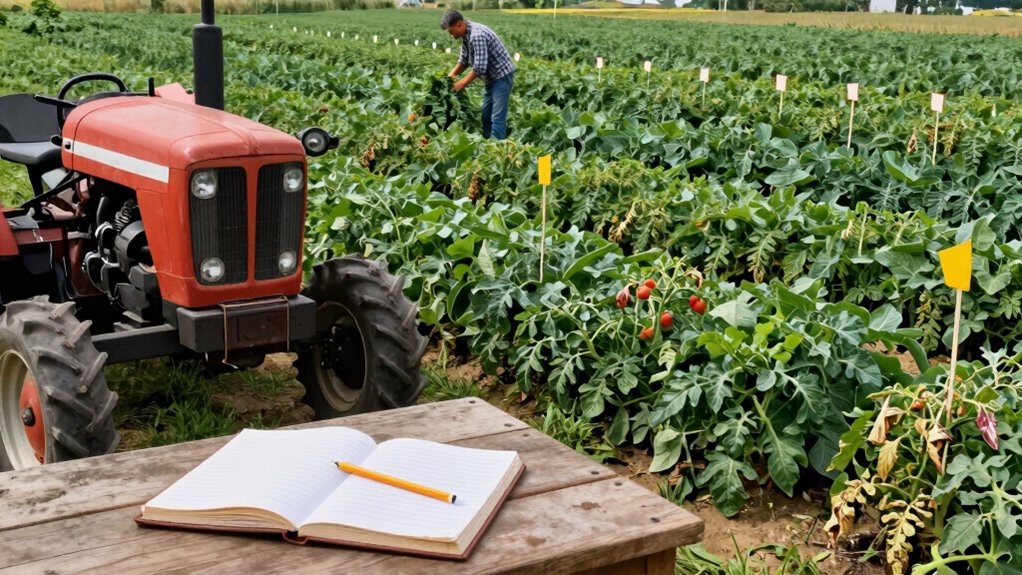

To spot recurring problems in your weekly farm routine, start by keeping detailed records of crop health, pest activity, and equipment performance. Look for consistent patterns or timing of issues that repeat across fields or weeks. Monitoring these trends helps you identify underlying problems early, like pests returning at specific times or machinery breaking down regularly. If you stay attentive, you’ll find areas needing adjustments — and there’s more you can do to improve your farm’s resilience.

Get garden gear delivered free — and shop member deals
- Fast, free delivery on millions of items
- Access to Prime Big Deal Days deals on October 6–7
- Prime Video, Amazon Music and more included
Key Takeaways
- Keep detailed records of crop health, pest activity, and equipment issues to identify recurring patterns over time.
- Regularly review and compare weekly data to spot consistent problems or trends.
- Monitor specific fields or equipment closely during critical periods when issues tend to reoccur.
- Implement routine inspections and maintenance logs to detect recurring machinery or infrastructure problems.
- Use pattern recognition to adjust management practices proactively, preventing escalation of persistent issues.
Identifying recurring issues in your weekly farm routine can save you time and prevent small problems from escalating. When you notice patterns—whether in crop health, pest activity, or equipment performance—you gain valuable insights that help you make better decisions. For example, if certain crops consistently underperform or pests seem to appear at the same time each season, those are clear signals that something in your routine needs adjusting. Recognizing these patterns early allows you to implement targeted solutions, avoiding wasted effort and potential crop loss.
One of the most effective ways to address recurring problems is by evaluating your crop rotation schedule. If you see that the same pests or diseases keep cropping up in specific fields, it’s a sign you might need to diversify your planting plan. Crop rotation isn’t just about changing what you plant; it’s about disrupting pest and disease cycles. By rotating crops properly, you reduce the chances of pests establishing a foothold, which means less reliance on chemical controls and healthier soil over time. When you notice a pattern of pest outbreaks in particular areas, it’s a cue to revisit your rotation plan, possibly introducing crops that are less susceptible or that can break pest life cycles. Incorporating soil health practices can further enhance the effectiveness of crop rotation by promoting resilience in your soil. Additionally, using monitoring tools can help you track changes and improve decision-making.
Pest management is another critical area where spotting patterns can make a big difference. If you find yourself repeatedly battling the same pests in the same spots, it’s time to reassess your approach. Are you applying pesticides too late or too early? Are you neglecting natural pest control methods like encouraging beneficial insects? Regular monitoring and keeping detailed records of pest activity help you identify trends. Once you see a pattern, you can implement preventative measures, such as introducing beneficial insects or adjusting planting times, to curb infestations before they become serious. Recognizing these recurring issues also helps you tailor your pest management strategies more precisely, reducing chemical use and promoting sustainable practices. Incorporating integrated pest management techniques can further enhance your effectiveness and sustainability.
Additionally, pay attention to your equipment and infrastructure maintenance routines. If breakdowns or issues happen repeatedly, it’s a sign that your maintenance schedule may need tightening. Regular checks can prevent small problems from turning into costly repairs or delays. Keep a detailed log of issues and their causes to help you identify patterns in machinery performance. This proactive approach ensures your weekly farm routine runs smoothly, saving you time and resources in the long run. Incorporating technology tools can further enhance your ability to detect these patterns early and respond effectively, ultimately leading to a more resilient and productive farm. Overall, being observant and attentive to recurring problems across crop rotation, pest management, and maintenance enables you to adapt and improve your farm’s resilience, productivity, and sustainability.
Frequently Asked Questions
What Tools Help Identify Recurring Farm Issues?
You can use tools like crop rotation schedules and pest monitoring logs to identify recurring farm issues. Crop rotation helps prevent soil depletion and disease buildup, revealing patterns over time. Pest monitoring tools, such as traps or digital apps, track pest activity, highlighting persistent problems. Regularly analyzing these records allows you to spot trends, address issues early, and implement more effective, preventative strategies for your farm’s health and productivity.
How Often Should I Review My Farm Routines?
You should review your farm routines weekly to catch recurring issues early. Regularly evaluating farm maintenance tasks helps prevent problems from escalating, while reviewing crop rotation schedules ensures soil health and productivity. By staying consistent with these reviews, you can identify patterns or inefficiencies, adjust practices promptly, and maintain a smooth, sustainable farming operation. This proactive approach keeps your farm running efficiently and reduces the chances of recurring problems.
Can Weather Changes Cause Repetitive Problems?
Yes, weather changes can cause repetitive problems. For example, if you experience consistent shifts in soil moisture due to rainfall patterns, it can lead to recurring pest cycles and plant stress. These weather-driven issues often repeat because they alter your farm’s environment regularly. Monitoring soil moisture levels and adjusting watering or drainage can help you break these cycles, preventing similar problems from happening week after week.
What Signs Indicate a Problem Is Recurring?
You’ll notice recurring problems if you see the same pests or crop diseases returning despite your efforts. Signs include persistent pest infestations, crop damage, or poor yields in the same areas. You might also observe that planting the same crops without adjusting your crop rotation or pest management strategies leads to these issues. Recognizing these signs helps you adapt your approach, breaking the cycle and improving your farm’s overall health.
How Do I Prioritize Problems to Fix First?
Imagine your farm’s like a chaotic circus, with problems juggling for attention. Prioritize those causing the biggest crop rotation issues or pest management chaos. Address pests that threaten your harvest first, then fix crop rotation flaws to prevent future headaches. Tackle problems that repeatedly drain your energy and resources, creating a clear order. This way, you tame the chaos, turning the circus into a well-orchestrated show rather than a disaster waiting to happen.
Conclusion
By paying close attention to recurring issues, you can troubleshoot and refine your farm routine more effectively. Don’t dismiss these patterns as mere quirks—they’re your farm’s version of the “canary in the coal mine.” Staying vigilant now means fewer surprises later, allowing your farm to run smoother than a well-oiled machine. Remember, even in this digital age, a keen eye and a bit of old-fashioned grit are your best tools for keeping problems at bay.
Fall yard work Picks
leaf blowers
As an affiliate, we earn on qualifying purchases.