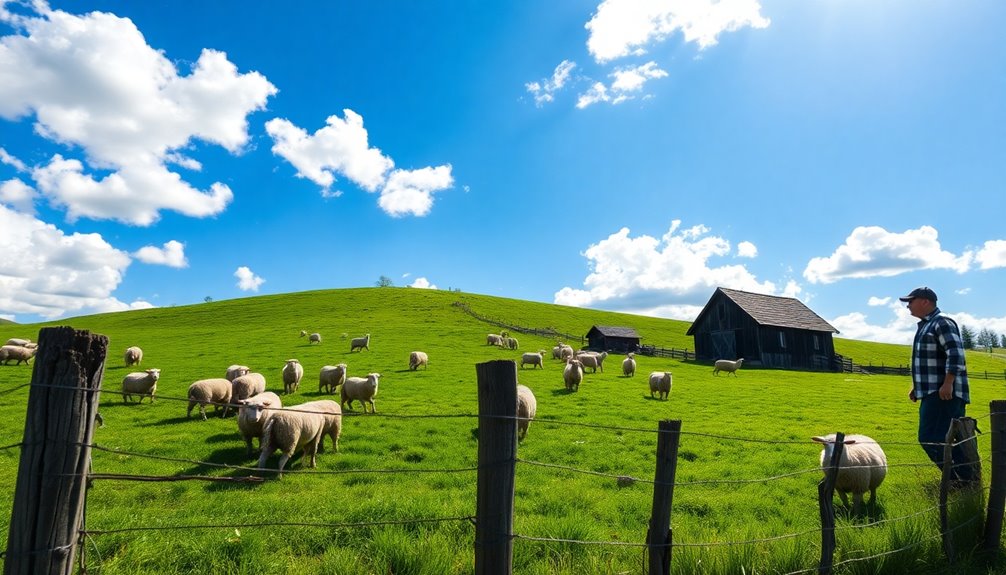
To train family members effectively on farm tasks, start by clearly delegating responsibilities and emphasizing safety from the beginning. Tailor your approach to each person’s experience, demonstrating tasks step-by-step and encouraging questions. Use visual aids and reinforce safety protocols regularly. Gradually give more responsibility as confidence grows, while consistently reviewing procedures and modeling good safety habits. By focusing on clear communication, ongoing education, and safety, you create a confident, responsible team—more details on this approach await you.

Get garden gear delivered free with Prime
- Fast, free delivery on millions of items
- Prime Video, Amazon Music and more included
- Member-only deals all year
Key Takeaways
- Assess each family member’s skills and tailor training accordingly for effective learning.
- Demonstrate tasks step-by-step, explaining their importance to ensure clear understanding.
- Use visual aids, checklists, and hands-on practice to reinforce safety and task procedures.
- Set realistic expectations and gradually increase responsibilities to build confidence and competence.
- Regularly review safety protocols and model responsible behavior to foster a safety-focused culture.
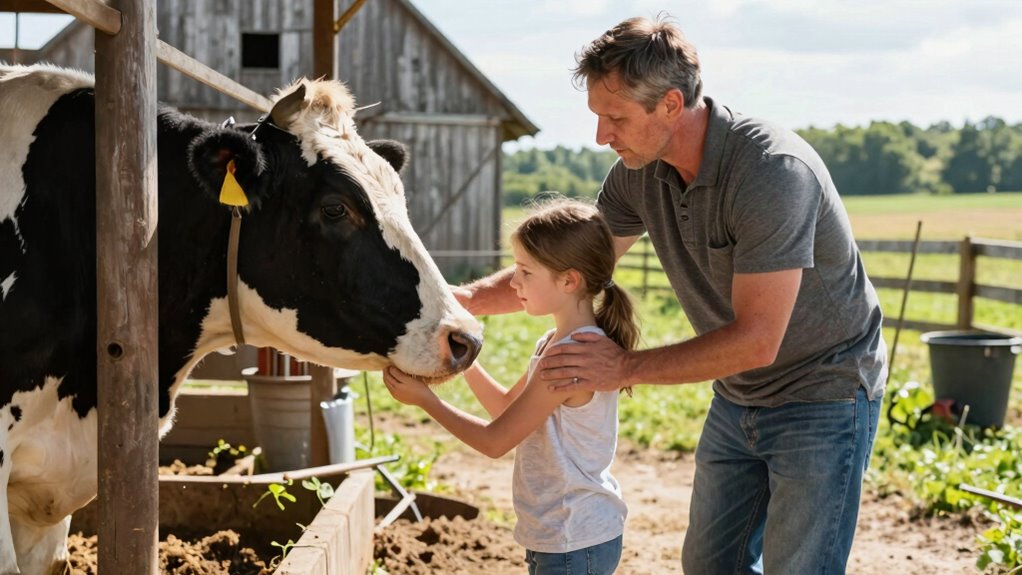
Have you ever wondered how to effectively train family members for farm tasks? It’s a common concern for farm owners who want to guarantee safety, productivity, and smooth operations. The key lies in proper task delegation combined with a strong focus on farm safety. When you delegate tasks, you’re not just assigning chores; you’re also teaching essential skills and establishing clear expectations. This approach helps prevent accidents and confusion, keeping everyone safe and efficient.
Start by evaluating each family member’s experience and comfort level with specific tasks. Some may be familiar with certain equipment or routines, while others might need more guidance. Tailor your training to match their skill levels, and always emphasize the importance of farm safety. Make safety rules clear from the beginning—cover proper use of tools, protective equipment, and emergency procedures. Reinforce these safety practices consistently to build good habits.
When you introduce a new task, demonstrate it step-by-step, explaining why each step matters and what potential hazards to watch out for. Encourage questions and active participation to ensure they understand. Remember, hands-on practice is crucial, but supervision should be ongoing until you’re confident they can perform the task safely and independently. Providing written checklists or visual aids can reinforce safety protocols and task procedures, especially for complex or infrequent chores. Additionally, understanding the importance of safety training can help foster a proactive safety culture on the farm. Recognizing ongoing education as part of farm management can further enhance safety awareness and skill development. Incorporating training programs regularly boosts confidence and competence among family members. It’s also beneficial to incorporate regular feedback to address any concerns or mistakes early on.
Effective task delegation also involves setting realistic expectations and identifying roles that suit each person’s abilities. Don’t overburden family members with too many responsibilities at once; instead, gradually increase their responsibilities as they gain confidence. This incremental approach reduces the risk of mistakes and accidents and helps them develop competence. Keep communication open and positive—praise their efforts and correct mistakes constructively.
Regularly review safety procedures and offer refresher training sessions. Farm environments are dynamic, and new hazards can arise, so staying vigilant is essential. Encourage a safety-first mindset by modeling responsible behavior yourself. When family members see that safety is a priority, they’re more likely to adopt good practices. Additionally, understanding the importance of biodiversity can create a more resilient and sustainable farm environment, which benefits everyone involved.
farm safety equipment for family members
As an affiliate, we earn on qualifying purchases.
As an affiliate, we earn on qualifying purchases.
Frequently Asked Questions
How Do I Handle Family Disagreements Over Farm Responsibilities?
To handle family disagreements over farm responsibilities, you should prioritize open family communication and address issues promptly. Encourage everyone to share their perspectives calmly and listen actively. Use conflict resolution techniques like finding common ground and compromising when necessary. Keep discussions focused on the farm’s success, and avoid personal attacks. By fostering a respectful environment, you’ll resolve disagreements more effectively and maintain harmony on your farm.
What Safety Precautions Should Be Emphasized During Training?
You should emphasize the importance of proper protective gear, like gloves, goggles, and sturdy footwear, to prevent injuries during training. Make sure everyone knows emergency procedures, including how to shut down equipment quickly and contact emergency services. Reinforce safety rules consistently, and never overlook the importance of supervision until family members are confident. Clear communication about hazards and safety measures helps create a secure environment for everyone on the farm.
How Can I Motivate Reluctant Family Members to Participate?
To motivate reluctant family members, try using playful engagement techniques like friendly competitions or small rewards—think of it as turning chores into a farm-themed game. Incorporate motivational strategies that appeal to their interests, maybe even giving them a “special role” to boost ownership. Show enthusiasm and patience, and you’ll find that even the most hesitant will start to see farm work as a fun, rewarding challenge rather than a burden.
What Age Is Appropriate to Start Farm Task Training?
You can start farm task training around age five or six, considering age considerations and their ability to follow instructions. Early involvement promotes skill development and builds confidence. Keep tasks simple and safe at first, gradually increasing complexity as they grow older and more capable. By tailoring activities to their age and skill level, you encourage enthusiasm and guarantee safe, productive learning experiences that foster a genuine interest in farm work.
How Do I Assess Each Family Member’s Skill Level Effectively?
Think of skill assessment as your farm’s compass, guiding your training. To do this effectively, observe each family member during tasks, noting strengths and areas needing improvement. Engage them in conversations about their comfort levels and previous experience. Use these insights for training customization, tailoring tasks to their abilities. This way, you build confidence while ensuring everyone’s growth aligns with their skills, creating a harmonious farm team.
Conclusion
By involving family members in farm tasks, you create a stronger, more resilient operation. Remember, studies show that farms with active family participation often see a 30% increase in productivity and sustainability. Keep training sessions engaging and patient, and you’ll build a capable team that shares your passion. Over time, you’ll not only pass down valuable skills but also foster a deeper connection to the land and each other, ensuring your farm’s legacy endures.
Halloween Picks
halloween
As an affiliate, we earn on qualifying purchases.