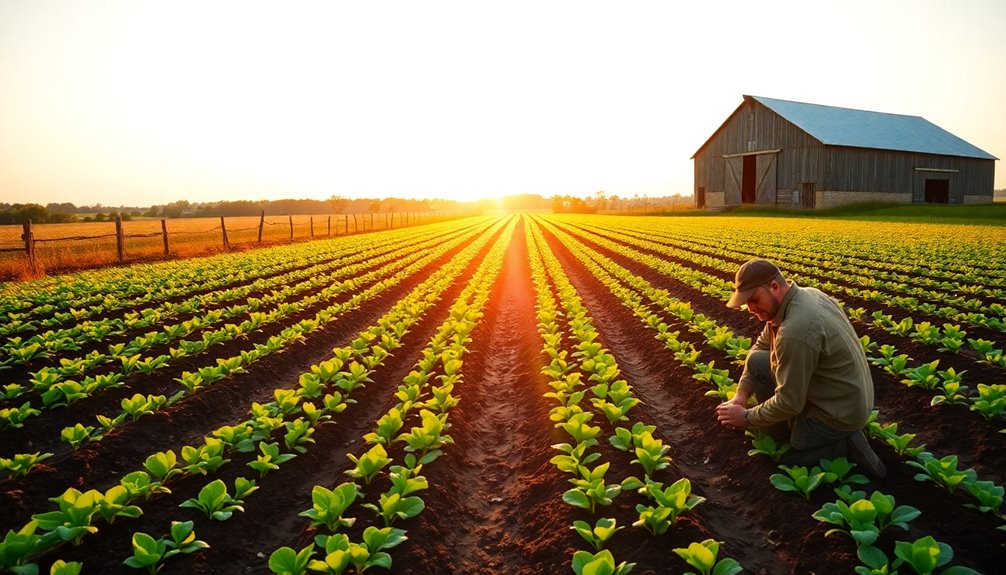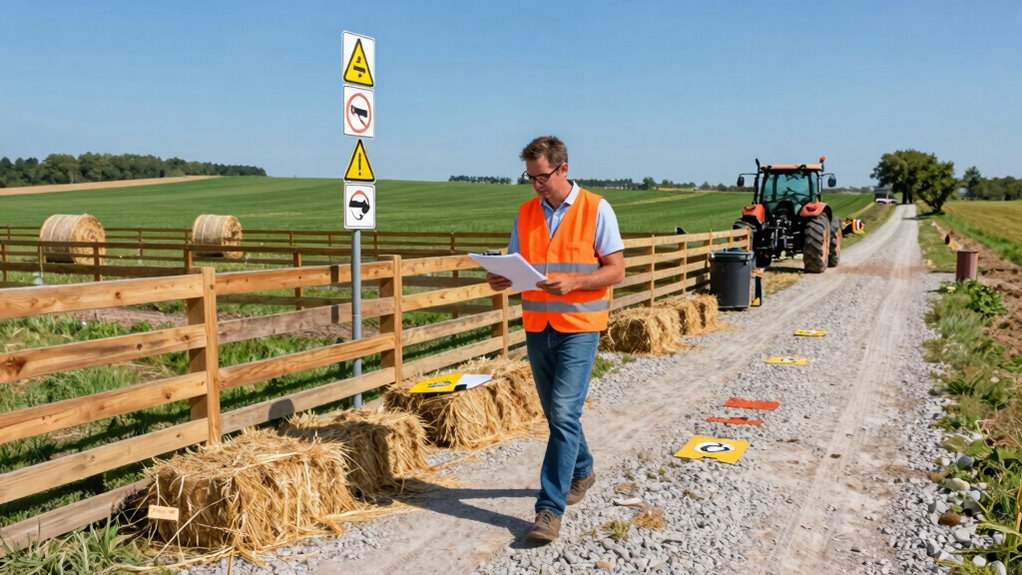
To create a simple farm safety walkthrough each month, develop a clear plan covering machinery, storage, pathways, and animal areas. Use a checklist to guarantee you cover all critical zones, inspect equipment for damage, and verify safety signs and fire extinguishers. Involve your team in safety checks, provide ongoing training, and address hazards promptly. Keep detailed records of issues and follow-ups. Continuing will reveal effective tips to keep your farm safe and well-maintained.

Get garden gear delivered free with Prime
- Fast, free delivery on millions of items
- Prime Video, Amazon Music and more included
- Member-only deals all year
Key Takeaways
- Develop a detailed checklist covering all critical areas like equipment, fences, storage, and pathways.
- Schedule consistent monthly walkthroughs at the same time to ensure routine inspections.
- Train staff on inspection roles and encourage their active participation and feedback.
- Document hazards, corrective actions, and follow-up dates for accountability and trend tracking.
- Conduct brief safety debriefings afterward to reinforce safety protocols and address immediate concerns.
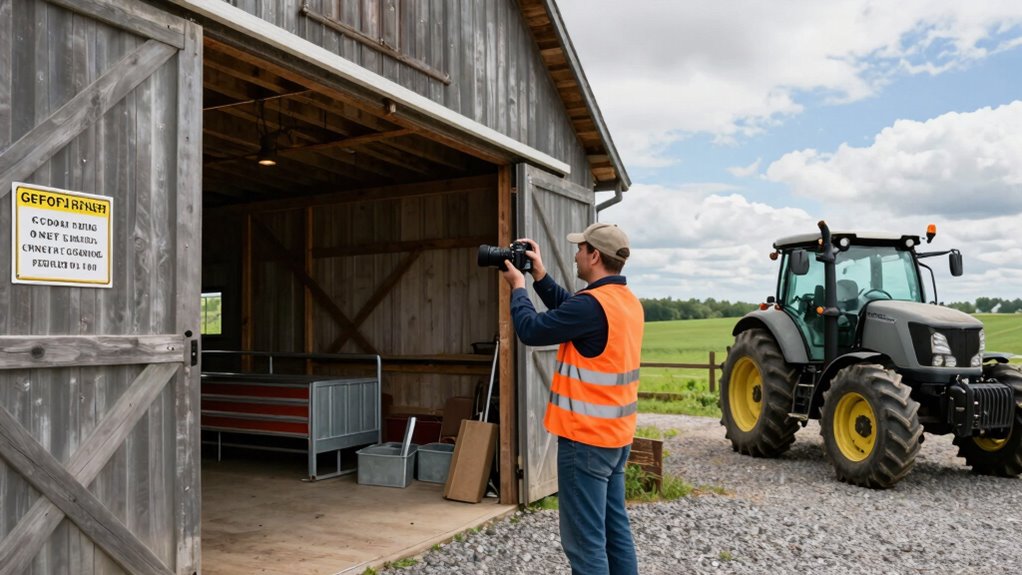
Regular farm safety walkthroughs are essential for identifying hazards before they cause accidents. When you make these inspections a regular habit, you stay proactive in preventing injuries and equipment failures that could disrupt your operation. To make your walkthrough effective, start with a clear plan that covers all critical areas, such as machinery, storage zones, pathways, and animal enclosures. As you move through each section, check for any signs of wear, damage, or potential hazards. Pay close attention to equipment maintenance; worn belts, loose bolts, or leaks can turn hazardous if left unaddressed. Addressing these issues promptly keeps your machinery running smoothly and reduces the risk of accidents caused by malfunctioning equipment. Incorporating safety protocols into your routine helps reinforce the importance of consistent safety practices. Training your employees is another essential component of a successful safety walkthrough. Before you begin, ensure everyone understands their role and knows what to look for during inspections. Well-trained employees recognize hazards more effectively and can alert you to issues you might overlook. Incorporate safety training into your routine, emphasizing the importance of reporting problems immediately. This proactive approach fosters a safety-conscious culture, where everyone feels responsible for maintaining a safe environment. During the walkthrough, involve your team by encouraging them to voice concerns and suggest improvements. Their insights often reveal hidden hazards or overlooked areas, making your inspections more thorough. Establishing a comprehensive safety plan helps ensure that all potential risks are systematically addressed and prioritized for correction. Creating a regular inspection schedule further solidifies this routine, making safety an integral part of your farm operations. Additionally, reviewing safety regulations periodically keeps your procedures aligned with current standards and best practices. Consistency is key to a successful safety program. Schedule your walkthrough at the same time each month so it becomes a routine for everyone. Use a checklist to ensure all areas are covered systematically. This checklist should include specific items like inspecting fences for damage, checking fire extinguishers, verifying that safety signs are visible, and ensuring proper storage of chemicals and tools. Document your findings meticulously, noting hazards, corrective actions, and dates for follow-up. Regular documentation not only keeps you organized but also helps track recurring problems and measure improvements over time.
In addition, involve your team in the process by encouraging open communication and feedback. After each walkthrough, hold brief meetings to discuss findings and reinforce safety protocols. This keeps safety at the forefront of everyone’s mind and helps you address issues promptly. Remember, a simple monthly walkthrough isn’t just about spotting hazards; it’s about fostering a safety-first mindset that permeates your entire farm. By focusing on equipment maintenance, emphasizing employee training, and maintaining consistent routines, you create a safer environment where everyone can work confidently and productively.
farm safety inspection checklist
As an affiliate, we earn on qualifying purchases.
As an affiliate, we earn on qualifying purchases.
Frequently Asked Questions
What Tools Are Needed for a Farm Safety Walkthrough?
You’ll need basic tools like a checklist, a camera or smartphone for photos, and a clipboard to hold your notes. Safety gear such as gloves, helmets, and boots is vital for personal protection. Don’t forget hazard signs to mark unsafe areas clearly. These tools help you conduct thorough inspections, identify risks quickly, and guarantee farm safety standards are met effectively during your walkthrough.
Who Should Lead the Safety Inspection Team?
You should lead the safety inspection team, guiding your crew through hazard identification and safety training. Think of yourself as the captain steering the ship through potential storms, ensuring everyone understands safety protocols. Your role is essential in fostering a culture of safety, spotting hazards early, and reinforcing best practices. By leading with confidence, you help your team stay vigilant and proactive, reducing risks and promoting a safer farm environment for all.
How Do I Document Safety Issues Effectively?
You should document safety issues clearly and promptly by using safety signage and hazard reporting forms. Take detailed notes on hazards you observe during your walkthrough, noting exact locations and potential risks. Use safety signage to highlight hazards and guarantee workers see them. Encourage everyone to report hazards immediately, and keep a written record of all reports. Regularly review and update your documentation to track progress and ensure ongoing safety improvements.
When Is the Best Time of Day for Inspections?
Think of your farm as a busy symphony, and the best time for inspections is during the morning routines when the first notes of activity start. This moment captures the farm at its quietest and most alert, making hazards easier to spot. Conduct inspections at peak activity, ideally in the early morning, so you catch issues before they escalate, ensuring everyone’s safety harmonizes with the day ahead.
How Can I Motivate Staff to Participate?
You can motivate staff to participate by boosting team engagement through clear communication and involving them in safety planning. Implement incentive programs that reward proactive safety behaviors and participation in walkthroughs. Recognize and celebrate their efforts publicly, which encourages ongoing involvement. Creating a positive safety culture makes staff feel valued and responsible, increasing their motivation to actively participate during safety inspections. This approach fosters teamwork and emphasizes safety as a shared priority.
Conclusion
By making your monthly farm safety walkthrough a routine, you’re planting seeds for a safer, more resilient operation. Think of it like tending a garden; regular attention prevents weeds of danger from taking root. I once saw a farmer catch a small hazard early, saving a potential accident. Consistent checks can be your shield, ensuring your farm remains a thriving, protected space for everyone. Stay vigilant—your future safety depends on it.
Halloween Picks
halloween
As an affiliate, we earn on qualifying purchases.