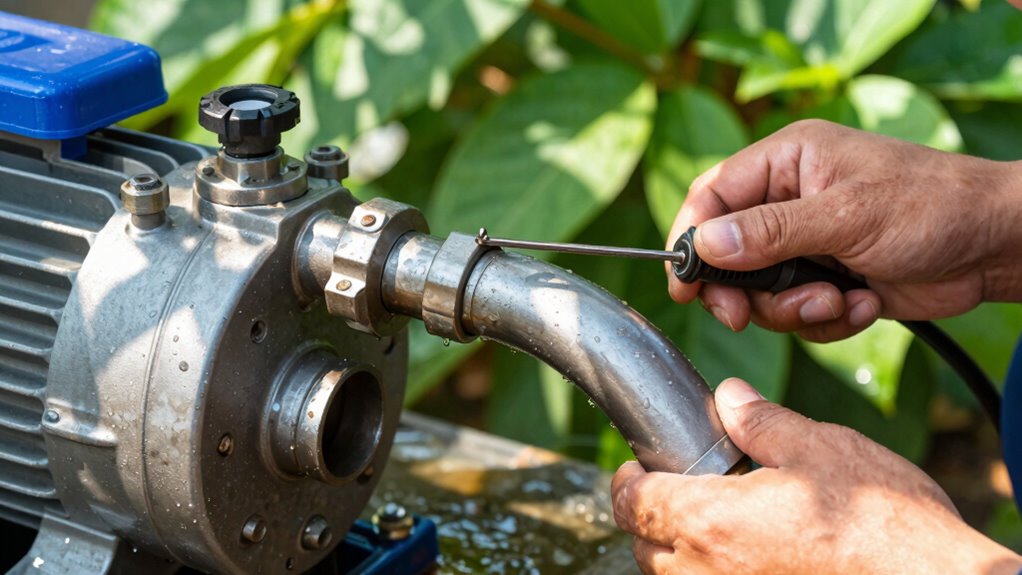
If your water pump won’t pull water, it probably needs priming. Turn off the pump, close valves, and fill the pump chamber completely with clean water. Check for air leaks around fittings and seals, then securely replace the cover. Turn the pump back on and ensure steady water flow. If issues persist, inspecting for leaks or blockages is key. Keep exploring for more detailed steps to get your pump working smoothly again.

Get garden gear delivered free with Prime
- Fast, free delivery on millions of items
- Prime Video, Amazon Music and more included
- Member-only deals all year
Key Takeaways
- Turn off the pump, close valves, and remove the cover to access the priming chamber.
- Fill the pump with clean water, ensuring no air pockets remain inside.
- Check all connections and seals for leaks or cracks before restarting.
- Gradually open valves and turn on the pump, observing for steady water flow.
- Inspect for air leaks or blockages if the pump still won’t pull water after priming.
As an affiliate, we earn on qualifying purchases.
Why Do Water Pumps Lose Their Prime and How Does It Affect Water Flow?
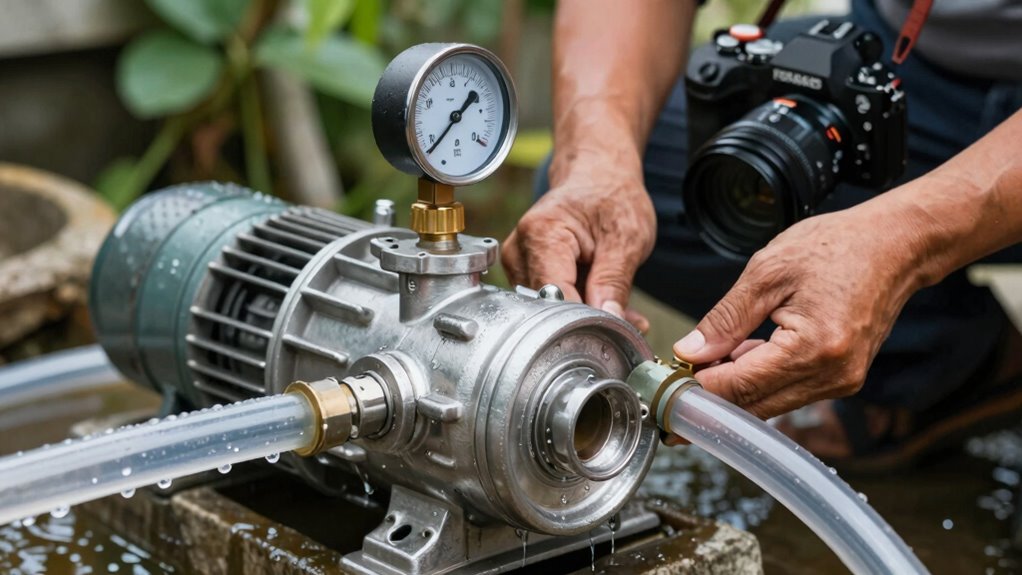
Water pumps can lose their prime when air enters the system or there’s a leak in the suction line, preventing the pump from fully filling with water. This loss of prime disrupts normal water flow, making it harder to supply water effectively. Regular pump maintenance helps prevent air leaks and keeps the system sealed, which is crucial for consistent performance. Poor water quality can also contribute to priming issues by causing blockages or buildup inside the pump, further impairing its ability to draw water. When a pump is unprimed, it struggles to create the necessary suction to lift water, leading to reduced flow or complete failure. Maintaining proper pump operation and ensuring good water quality are essential to avoiding priming problems and maintaining efficient operation. Additionally, understanding priming techniques can help troubleshoot and restore water flow quickly when issues arise. Knowing how to properly bleed air from the system can also be a helpful step in resolving priming issues efficiently, and being aware of air leaks can help prevent future priming failures. Regular inspections and using air leak detection methods can further help in maintaining a primed and efficient water pump system.
How to Recognize When Your Water Pump Needs Priming
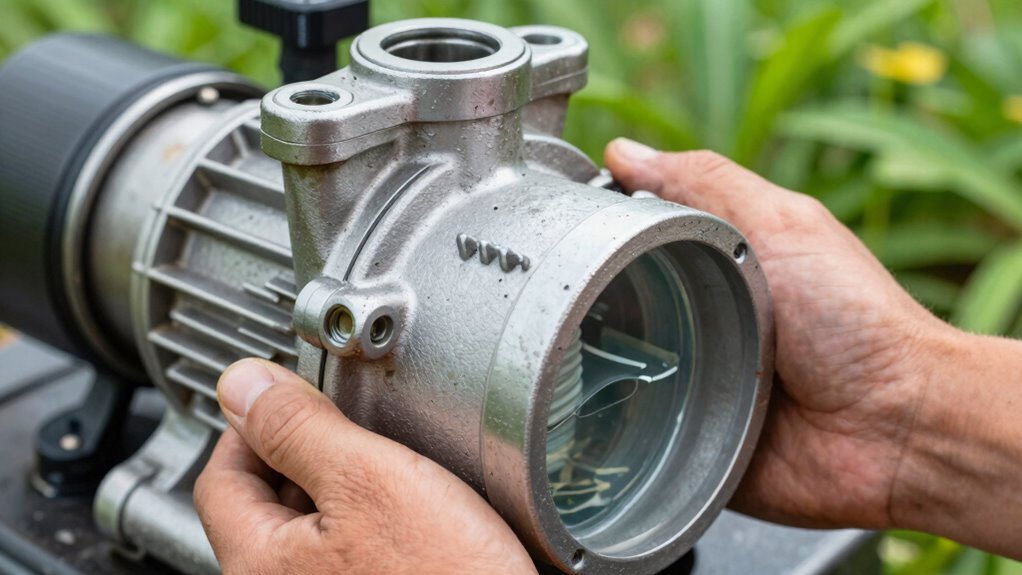
How can you tell if your water pump needs priming? You’ll notice a sudden drop in water pressure, making faucets barely drip. Additionally, the pump may produce unusual noises, like whining or rattling, indicating it’s struggling to pull water. Sometimes, you’ll see the pump’s pressure gauge drop to zero or near-zero. Here’s a quick comparison:
| Symptom | What It Means |
|---|---|
| Pump noise | Air trapped or dry running, needs priming |
| Low water pressure | Pump isn’t pulling water properly |
| No water flow | Pump isn’t primed or has air pockets |
| Pressure gauge at zero | Pump isn’t pulling water or is dry |
| Unusual vibrations | Air or debris causing imbalance |
Recognizing these signs helps you act quickly to restore proper water flow. Proper priming techniques ensure the pump operates efficiently and prevents damage. Being aware of common pump issues can save time and avoid costly repairs. Regular maintenance also plays a vital role in keeping your pump functioning correctly, especially in free floating systems that rely on proper water levels and flow. Moreover, understanding the priming process can help prevent unnecessary downtime and extend the lifespan of your pump.
Tools and Safety Tips for Priming Your Water Pump
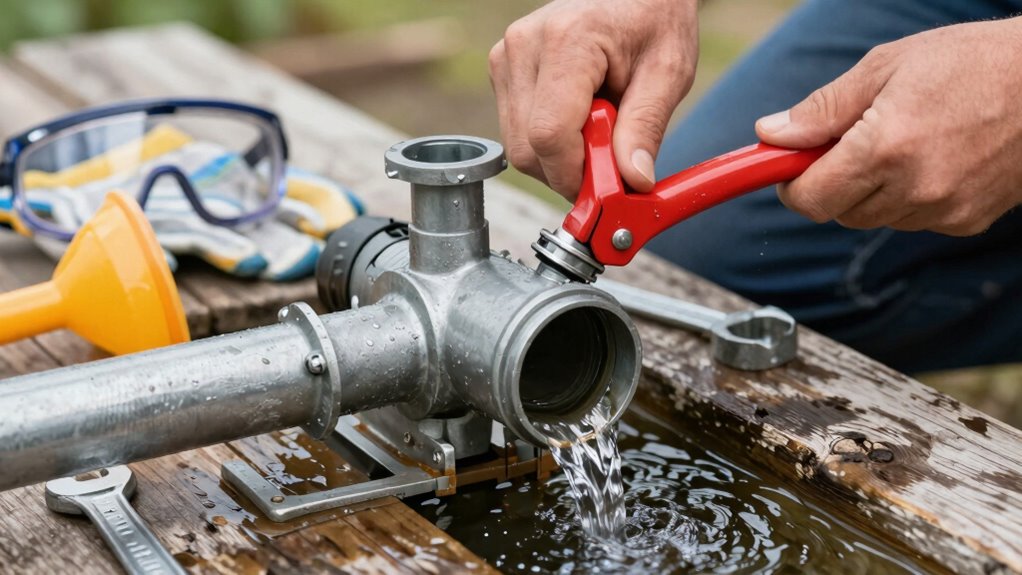
Before you start priming your water pump, gather the necessary tools and follow essential safety precautions. Wear appropriate safety gear, such as gloves and eye protection, to prevent injuries. Confirm your tools, like screwdrivers, wrenches, and a hose, are in good condition—regular tool maintenance helps prevent accidents and makes the process smoother. Check that your work area is clear of hazards and that the pump is turned off before beginning. Keep a fire extinguisher nearby if working near electrical components. Always follow manufacturer instructions for your specific pump model. Proper safety gear and well-maintained tools help you work efficiently and reduce the risk of injury, ensuring a safe and successful priming process. Additionally, understanding the Power of Imagination can help you visualize successful completion and troubleshoot any issues more effectively. Developing a proper troubleshooting mindset can make troubleshooting easier if unexpected problems arise, and being familiar with priming techniques can significantly improve your success rate.
Step-by-Step Guide to Priming Your Water Pump Correctly
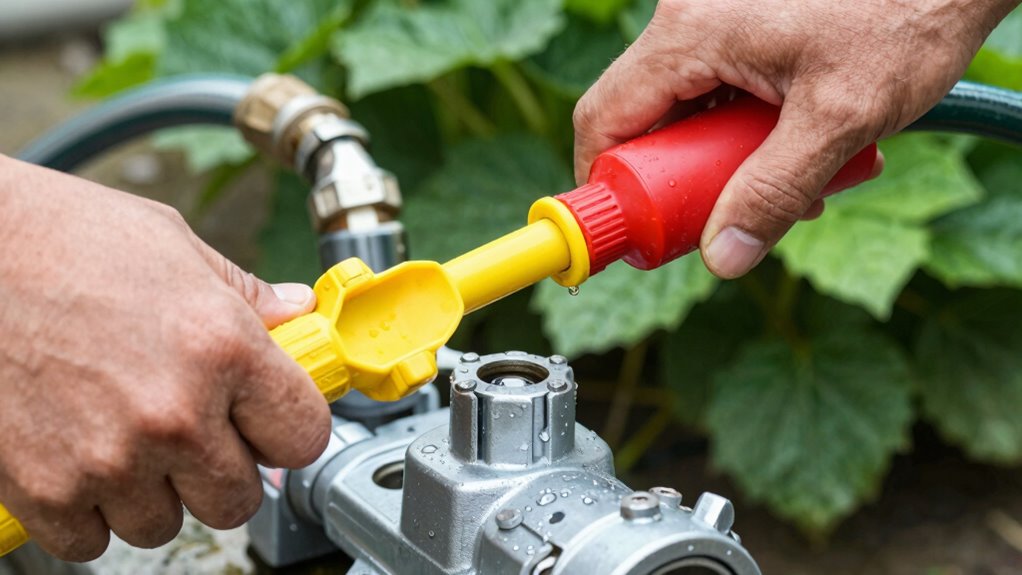
Priming your water pump correctly is essential to guarantee efficient operation and prevent damage. Start by turning off the pump and closing any valves. Remove the pump cover, then fill the pump chamber with clean water using a bucket or hose. Check for air leaks around seals and connections, as these can cause water flow issues. Once filled, replace the cover securely. Open the valves gradually to let water flow into the system, ensuring any trapped air escapes. Turn the pump on and observe the water flow; if it’s steady and strong, priming is successful. If not, repeat the process, ensuring no air remains trapped. Proper priming techniques help avoid water flow issues and keep your pump running smoothly. Additionally, understanding pump mechanics can help you troubleshoot more effectively if problems persist. Recognizing common causes of priming failure, such as air leaks or incorrect installation, is also vital for quick repairs. Ensuring that all connections are tight and sealed properly can prevent priming issues from recurring. Being familiar with priming procedures can save you time and reduce frustration when your pump won’t pull water. Regularly inspecting and maintaining the system can further prevent priming failures over time.
Common Mistakes to Avoid When Priming Your Water Pump
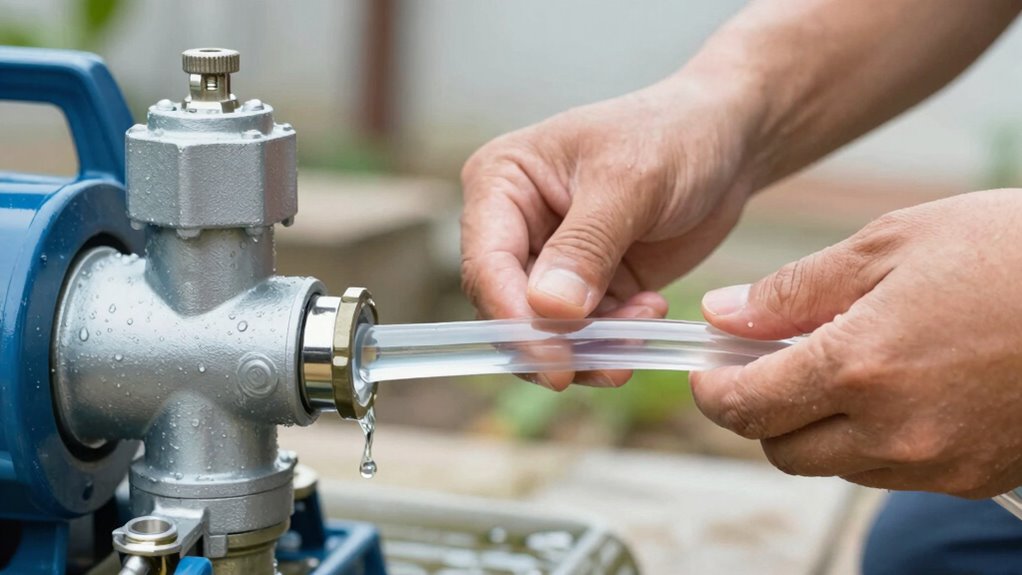
When priming your water pump, it’s easy to make mistakes that can cause problems later. You need to prevent air locks, use the correct priming method, and check for leaks. Paying attention to these points ensures your pump runs smoothly and efficiently. Additionally, understanding the proper maintenance practices can extend the lifespan of your pump and prevent future priming issues. Regularly inspecting and bleeding air from the system can help maintain optimal performance and avoid common startup problems. Implementing system troubleshooting techniques can further help identify and resolve issues quickly. Incorporating smart monitoring systems can also provide early alerts for potential issues, minimizing downtime and repairs. Avoiding incorrect flushing techniques can also prevent unnecessary wear on the pump components.
Avoid Air Locks
Air locks are a common obstacle that can prevent your water pump from functioning properly. When trapped air blocks water flow, it causes water cavitation, reducing efficiency or stopping the pump altogether. To avoid this, guarantee all air is expelled during priming. Visualize this process with the following:
| Air Lock Formation | Effects on Pump |
|---|---|
| Trapped air pockets | Water cavitation occurs |
| Disrupted water flow | Pump stalls or loses prime |
| Incomplete priming | Reduced water pressure |
| Air pockets in hoses | No water delivery |
| Improper venting | Persistent air lock |
Use Correct Priming Method
Proper priming techniques guarantee your water pump starts smoothly and operates efficiently. To make certain priming safety, always follow the manufacturer’s instructions and avoid shortcuts. Use the correct priming tools, such as a priming plug or a priming chamber, to help eliminate air pockets safely. Be cautious not to force the pump or use excessive pressure, which can damage seals or internal parts. When priming, fill the pump casing completely with water, ensuring no air remains. Check that hoses and fittings are secure before starting. Rushing the process or skipping steps can lead to air leaks or pump failure. Using the proper method and tools minimizes risks, speeds up priming, and keeps your pump functioning correctly.
Check for Leaks
Have you double-checked all connections for leaks after priming your water pump? Pipe inspection is essential to guarantee no cracks or loose fittings are causing water loss. Carefully examine each joint and fitting, looking for signs of dripping or moisture. Don’t forget to verify the seal integrity around the pump and hoses; compromised seals can prevent proper priming and reduce water flow. Tighten any loose fittings and replace damaged seals immediately. Leaks can cause air to enter the system, making it difficult for the pump to pull water effectively. Addressing these issues promptly keeps your pump primed and working efficiently. Remember, even small leaks can impact performance, so thorough inspection is key to avoiding future priming problems.
Troubleshooting Priming Problems That Won’t Go Away
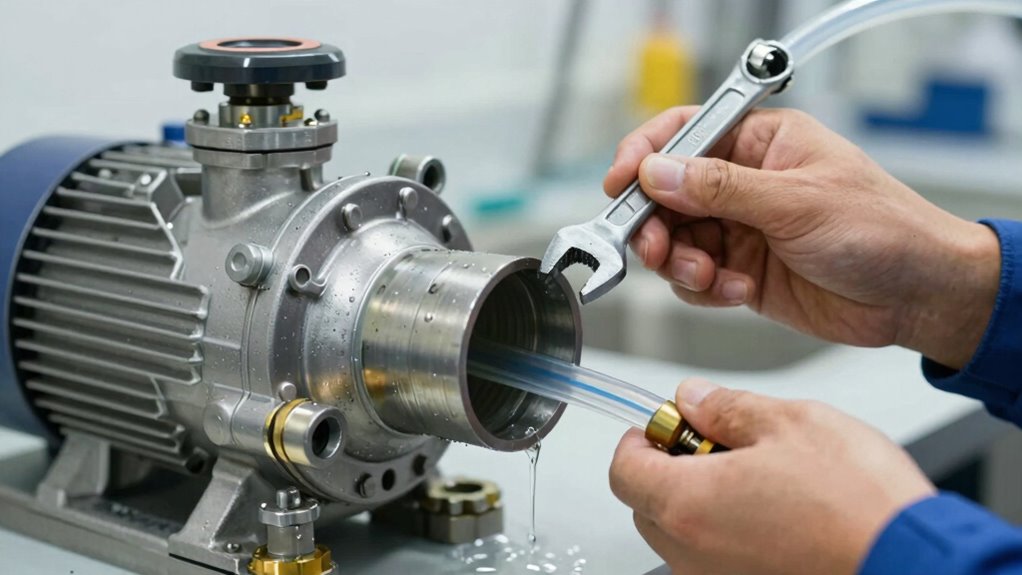
If your pump struggles to stay primed, air leaks or blockages are often the culprits. Double-check all connections and hoses for leaks, and clear any debris that could be obstructing flow. Also, guarantee you’re using the correct priming technique to avoid introducing air or missing steps.
Air Leaks and Blockages
Air leaks and blockages are common culprits when your water pump refuses to prime properly. Air leaks can occur in hoses, fittings, or seals, causing the pump to lose suction. When air enters the system, it prevents the pump from creating the necessary vacuum to pull water. Blockages, on the other hand, can be caused by debris, dirt, or sediment in the intake pipe or filter, obstructing water flow. To troubleshoot, inspect all connections for cracks or loose fittings and tighten or replace as needed. Check the intake line for obstructions and clear any debris. Ensuring an airtight seal and removing blockages can help restore proper priming, so your pump pulls water efficiently again.
Incorrect Priming Technique
Even after fixing leaks and clearing blockages, priming issues can persist if the pump wasn’t primed correctly in the first place. Priming mistakes often stem from incorrect techniques, which prevent the pump from creating the necessary vacuum. For example, not filling the pump chamber completely with water or positioning the pump improperly can cause it to struggle pulling water. Rushing the priming process or skipping steps also leads to ongoing problems. To avoid these issues, follow the manufacturer’s instructions carefully, ensuring the pump and suction line are filled with water before starting. Double-check that all connections are sealed tightly, and avoid tilting or misaligning the pump during priming. Correct techniques ensure the pump draws water efficiently and prevents recurring priming problems.
Tips to Prevent Future Priming Issues and Keep Your Pump Running Smoothly

To keep your water pump running smoothly and prevent future priming issues, regular maintenance is essential. Focus on routine procedures that address common problems before they occur.
- Schedule consistent maintenance routines to clean filters, check for leaks, and ensure proper fluid levels.
- Perform component inspection regularly, paying close attention to seals, gaskets, and valves for signs of wear or damage.
- Lubricate moving parts as recommended by the manufacturer to reduce friction and prevent overheating.
Frequently Asked Questions
Can I Prime My Water Pump With a Garden Hose?
Yes, you can prime your water pump with a garden hose. Connect the hose to a clean water source and the pump’s priming port. Use the priming method by filling the pump casing with water through the hose until it’s full. This helps create the necessary suction, ensuring the pump pulls water efficiently. Just make sure the hose is secure and free of leaks for the best results.
How Long Does Priming Typically Take?
Priming usually takes around 5 to 15 minutes, depending on your pump’s size and the extent of troubleshooting delays. You can speed up the priming duration by ensuring all air is removed from the system and checking for leaks. If you notice delays, double-check your connections and make sure the pump is properly filled with water. Patience is key, but proper troubleshooting can help you get your pump running faster.
Is Priming Safe for All Types of Water Pumps?
Priming is generally safe for most water pumps, but you should consider the pump material and follow priming safety guidelines. For example, some pumps with sensitive components or specific materials may require special procedures to avoid damage. Always check the manufacturer’s instructions, guarantee proper sealing, and avoid over-priming to prevent safety hazards. When done correctly, priming is a safe and effective way to get your pump working smoothly.
What Signs Indicate a Failed Priming Process?
You’ll notice signs like the pump struggling to start, inconsistent water flow, or strange noises indicating a failed priming process. Ignoring priming dangers can cause damage or burn out the motor. Make sure you adhere to proper priming techniques to avoid these issues. If your pump doesn’t prime correctly, don’t force it; instead, recheck the seals and ensure there’s no air in the system, preventing further damage.
Can Priming Be Done Without Turning off the Pump?
Yes, you can prime the pump without turning it off by using proper priming techniques, but pump safety is vital. Keep the pump running at a safe speed, and make sure you’re cautious to avoid injury or damage. Use a hand or foot valve to maintain water in the suction line, and carefully add water to the pump. Always follow safety guidelines to prevent accidents and guarantee effective priming.
Conclusion
Think of priming your water pump as giving it a gust of fresh air — a quick boost to get things flowing smoothly again. With the right tools, a steady hand, and a little patience, you can turn a stubborn pump into a well-oiled machine. Keep an eye on it, and treat priming like a regular tune-up. Before you know it, water will dance to your tune, flowing freely like a lively stream.
Halloween Picks
halloween
As an affiliate, we earn on qualifying purchases.