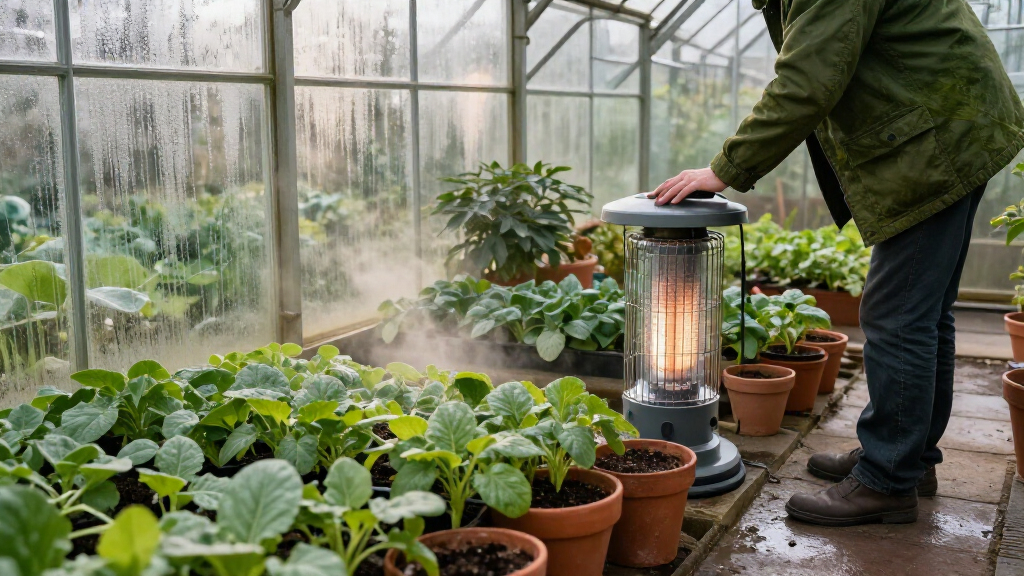
Choosing a greenhouse space heater is a decision about more than how quickly a unit warms the air. Electric heaters offer straightforward controls and no combustion exhaust in the growing space, but their output depends on the available electrical supply and electricity rates. Propane heaters can produce substantial heat where wiring is limited, yet require fuel handling, ventilation, and close attention to combustion safety. For a small hobby greenhouse with a suitable circuit, electric is usually the simpler fit. For a larger or off-grid structure that needs strong heat, propane may make more sense if it can be operated safely.

Get garden gear delivered free with Prime
- Fast, free delivery on millions of items
- Prime Video, Amazon Music and more included
- Member-only deals all year

SmterCon Greenhouse Heater with Digital Thermostat
- ✔ Heat output: 1500 watts
- ✔ Listed current: 15 A
- ✔ Controls: Digital thermostat; automatic on/off

VEVOR Greenhouse Heater, 1500W with Thermostat and 25° Adjustable Angle
- ✔ Power output: 1500 watts
- ✔ Voltage: 120 V
- ✔ Listed current: 12.5 A

VEVOR Greenhouse Heater, 1500W PTC with Fan
- ✔ Power output: 1500 watts
- ✔ Voltage: 120 V
- ✔ Listed current: 8.33 A
At a Glance
| Criteria | Electric greenhouse space heaters | Propane greenhouse space heaters | Winner |
|---|---|---|---|
| Heat source and output | Resistance or fan heaters turn electricity into heat; output is limited by the unit and circuit. | Combustion heaters can provide high heat output without a large electrical load. | Depends |
| Installation and power access | Needs a suitable electrical circuit and greenhouse-safe installation. | Needs a propane supply, correct placement, and ventilation; some models also need electricity for a fan. | A |
| Operating cost | Depends on electricity rates and heat demand; resistance heat can be costly for long cold periods. | Depends on propane price, heater efficiency, and the amount of ventilation required. | Depends |
| Indoor air and ventilation | No combustion exhaust at the heater, though dust and airflow still need attention. | Combustion adds exhaust and moisture; safe operation requires ventilation and model-specific precautions. | A |
| Controls and temperature stability | Thermostat control is common; fan-driven models distribute warm air. | Some models have thermostats, but temperature consistency depends on placement and air circulation. | A |
| Portability and fuel logistics | Easy to move when unplugged, but usefulness depends on outlet access. | Portable cylinder models work where outlets are scarce, with fuel storage and refills to manage. | B |
| Best-fit greenhouse | Small or medium structures with reliable power and modest heating needs. | Larger or remote structures where electrical capacity is limited and safe ventilation is possible. | Depends |
SmterCon Greenhouse Heater with Digital Thermostat
For growers who want a heater to respond as temperatures shift, the SmterCon’s digital thermostat and automatic on/off control make it the most decision-ready option in this group. Instead of relying only on a high or low heat mode, we can set a target temperature and let the unit cycle according to its thermostat. That can reduce the need for repeated manual adjustments, although it does not guarantee a stable temperature throughout a greenhouse: placement, insulation, drafts, and thermostat location all matter.The listing says this model can cover up to 120 square feet and offers adjustable temperature, fan speed, ventilation, and tilt. That gives it a broader control story than either VEVOR, whose provided descriptions emphasize fan and heat modes rather than automatic cycling. The claimed coverage is useful as a reference, but greenhouse heat loss varies widely, so we should not assume it will maintain a target in a large or poorly insulated structure. Its listed 15 A draw is also the highest figure here and deserves a careful outlet and circuit check. Compared with the lighter compact VEVOR, this is the stronger pick for control, but the least appealing one if electrical capacity is uncertain.
Pros:
- Digital thermostat with automatic on/off control
- Adjustable temperature, fan speed, ventilation, and tilt
- Listed coverage of up to 120 square feet
- Overheat protection and fire-proof housing are described
Cons:
- The listed 15 A draw calls for careful circuit and outlet verification
- The stated coverage may not translate to a cold or drafty greenhouse
- No weight or exact temperature range is supplied
Best for: Growers with a small, reasonably sheltered greenhouse who prioritize set-and-maintain temperature control and can confirm the circuit supports the unit.
Not ideal for: People with limited circuit capacity, large uninsulated greenhouses, or a need for documented greenhouse-specific certification and environmental ratings.
Bottom line: We rank the SmterCon first for its automatic thermostat control, provided its electrical requirements and real-world greenhouse capacity suit our setup.
“We rank the SmterCon first for its automatic thermostat control, provided its electrical requirements and real-world greenhouse capacity suit our setup.”
VEVOR Greenhouse Heater, 1500W with Thermostat and 25° Adjustable Angle
Where the SmterCon is built around automatic cycling, this VEVOR emphasizes aiming heat where it is needed. Its 25° adjustable angle gives us more directional flexibility than the compact VEVOR’s 15° adjustment, which can help when a bench, seedling tray, or localized area needs warmth. The listing also gives a defined thermostat range of 40°F to 108°F, offering clearer temperature boundaries than the SmterCon information supplied here.It combines high and fan modes, so the heater can move air when heat is not wanted. That makes it more adaptable across seasons than a heat-only device, though fan circulation is not a substitute for greenhouse ventilation. At 7.1 pounds, it is nearly twice the compact VEVOR’s listed weight, and its lack of a timer or remote means we need to make adjustments at the unit. Its 12.5 A listed current sits between the other two figures, but should still be checked against the heater label and available circuit. We’d choose this over the compact VEVOR when angle and stated temperature range matter more than easy frequent relocation.
Pros:
- Specified temperature range of 40°F to 108°F
- 25° angle adjustment for directing warmth
- Heating and fan modes support different seasonal needs
- Portable handle and stable base are included
Cons:
- At 7.1 pounds, it is the heaviest option listed
- No built-in timer or remote control
- The supplied details do not specify greenhouse coverage
Best for: Growers who want a defined thermostat range and the ability to direct heat toward a particular bench or growing zone.
Not ideal for: Buyers who need lightweight frequent repositioning, scheduled operation, remote control, or an especially compact footprint.
Bottom line: We recommend this VEVOR when adjustable direction and a clearly stated thermostat range outweigh its heavier body and manual controls.
“We recommend this VEVOR when adjustable direction and a clearly stated thermostat range outweigh its heavier body and manual controls.”
VEVOR Greenhouse Heater, 1500W PTC with Fan
The compact VEVOR is the easiest of these three to reposition: it weighs 3.7 pounds and measures 8.27 x 6.3 x 8.66 inches. For a small greenhouse or grow tent where we move warmth between nearby plants, that lighter build is a practical advantage over the 7.1-pound VEVOR. Its steel housing, handle, stable base, fan, and two heat settings keep the feature set straightforward.That simplicity also marks its limits. The supplied details specify only two speeds and a maximum temperature setting of 75°C, while the first VEVOR lists a more directly useful Fahrenheit thermostat range and a wider 25° aiming adjustment. The compact model’s angle changes by 15°, so it can direct warmth, but with less tilt flexibility. Its listed 8.33 A current is the lowest figure in the lineup, though because all three claim 1500 watts, we should verify the actual rating on the heater rather than infer compatibility from that number. This is the sensible choice when compact size and carrying ease matter most; growers seeking precise temperature maintenance should favor the SmterCon.
Pros:
- Lightest listed weight at 3.7 pounds
- Compact footprint for smaller growing spaces
- Two heat settings plus a fan-only mode
- Steel housing and overheat protection are described
Cons:
- Only two speed settings limit adjustment
- Fan noise may be noticeable in quiet spaces
- The supplied details do not specify coverage or a thermostat range
Best for: Growers with a compact greenhouse, grow tent, or flower room who expect to move the heater and prefer a small, light unit.
Not ideal for: People who need automatic thermostat cycling, fine-grained settings, quiet operation, or a published coverage claim.
Bottom line: We’d choose the compact VEVOR for easy repositioning in a small space, while accepting fewer control details than the other picks.
“We’d choose the compact VEVOR for easy repositioning in a small space, while accepting fewer control details than the other picks.”
As an Amazon Associate we earn from qualifying purchases.
Key Differences
The practical dividing line is the greenhouse’s power supply and the amount of heat it needs. An electric unit is easy to start and control, but a heater with enough output for a cold night may exceed what a small circuit can safely supply. Check the circuit rating and the heater’s requirements before choosing. Propane avoids that electrical bottleneck and can be useful in remote structures, but fuel delivery and safe exhaust management become part of everyday operation.
Cost is not settled by the fuel label alone. Electric resistance heat can run up a bill during long, cold periods, while propane expenses depend on local prices, heater efficiency, and how much warm air must be vented. Insulation, air leaks, greenhouse size, and the temperature plants require all affect consumption. For many small greenhouses with moderate heating needs, electric offers better value through convenience and simpler operation. Propane can justify its extra handling when high output or lack of electrical capacity is the deciding constraint.
Air quality and reliability also favor different setups. Electric heat produces no combustion exhaust at the point of use, which simplifies indoor air management. Propane combustion produces exhaust and water vapor, so ventilation and the specific heater’s instructions matter; a unit not rated for greenhouse use can create serious hazards. Whichever source you choose, use a thermostat, keep combustibles clear, protect equipment from moisture as directed, and monitor temperatures. A heater supports climate control, but it does not replace insulation, airflow, or backup planning for a cold-weather failure.
Detailed Comparison
Heat output (Propane greenhouse space heaters wins — major)
Propane usually wins where the greenhouse needs substantial heat but electrical service is limited. Electric heaters can warm small spaces effectively, but a resistance model’s output is constrained by circuit capacity. The gap is major in a large, poorly insulated structure or during severe cold; in a compact greenhouse, correctly sized electric heat may be enough. Estimate heat loss and check electrical limits before treating either unit’s advertised output as a guarantee.
Installation and power access (Electric greenhouse space heaters wins — moderate)
Electric is easier when a suitable outlet or circuit is already available: connect the unit as directed, position it safely, and set its controls. Propane can serve a greenhouse without a high-capacity circuit, but requires a compatible fuel supply, safe cylinder or tank placement, and ventilation. This is a moderate advantage for electric in a powered backyard greenhouse; propane wins when wiring is the limiting factor.
Operating cost (moderate difference)
Neither fuel source is automatically cheaper. Electric resistance heating converts electricity directly to heat, but extended operation can be expensive where rates are high. Propane costs vary with local fuel prices and the amount burned, while required ventilation can send heat outdoors. This is a moderate, location-dependent difference: compare expected consumption against local rates and reduce heat loss before paying more for a larger heater.
Air quality and ventilation (Electric greenhouse space heaters wins — major)
Electric wins clearly because it does not burn fuel or create combustion exhaust at the heater. Propane requires ventilation and careful adherence to the model’s instructions; combustion also adds moisture to the space. The difference is major for growers concerned about indoor air management or who cannot provide safe ventilation. Choose propane only when the heater is appropriate for the setting and exhaust risks can be managed.
Temperature control (Electric greenhouse space heaters wins — moderate)
Electric models commonly pair a thermostat with a fan, making them straightforward to set for a target temperature. Propane models vary: some offer thermostat control, while others need closer supervision, and uneven placement can create warm and cool zones. Electric has a moderate advantage for routine frost protection and stable conditions. Either source benefits from a separate thermometer near the plants and good air circulation.
Portability and fuel logistics (Propane greenhouse space heaters wins — moderate)
Propane cylinder heaters can operate far from outlets, giving them the edge in portability across remote structures. That convenience comes with refills, safe fuel storage, and checks on the supply. Electric units are simple to move, but only useful where an appropriate outlet reaches. The gap is moderate: propane suits changing or off-grid locations, while electric is less work when power is already available.
Overall fit and value (moderate difference)
Electric is the stronger default for a small, powered greenhouse because it combines easy operation with no combustion exhaust. Propane earns its cost and handling burden when the space is large, the heat demand is high, or electrical capacity is unavailable. This is a moderate but decisive fit difference: pay more in effort and fuel logistics for propane only when its output or independence from a large circuit solves a real constraint.
Electric greenhouse space heaters: Pros and Cons
Pros:
- No combustion exhaust at the point of use.
- Simple controls and thermostat options are common.
- No fuel cylinders to refill or store.
Cons:
- Output is limited by electrical circuit capacity.
- Long operating hours can make electricity costly.
- Requires a suitable, safely installed power connection.
Propane greenhouse space heaters: Pros and Cons
Pros:
- Can deliver substantial heat without a high-capacity electrical circuit.
- Cylinder models can serve remote or off-grid greenhouses.
- Useful where electric service cannot meet the heating load.
Cons:
- Requires ventilation and attention to combustion exhaust.
- Fuel storage and refills add work and expense.
- Temperature consistency and controls vary by model.
Who Should Choose What
Choose Electric greenhouse space heaters if:
- You have a suitable electrical circuit and want simple thermostat-based heating.
- Your greenhouse is small or medium-sized and needs moderate frost protection.
- You want to avoid combustion exhaust inside the growing space.
Choose Propane greenhouse space heaters if:
- Your greenhouse has limited electrical capacity but needs high heat output.
- The structure is remote or off-grid and propane supply is practical.
- You can provide safe ventilation and manage fuel storage responsibly.
Skip both if: Skip both until you address major heat loss, unsafe wiring, or inadequate ventilation; a better-insulated structure or professionally designed heating system may be the safer fit.
Value for Money
Electric is usually the better value for a small greenhouse that already has adequate power: it is easy to operate, avoids fuel runs, and does not add combustion exhaust at the heater. That value weakens if electricity is expensive or the circuit cannot support the required output. Propane is worth the added fuel handling and ventilation needs when it solves a real capacity problem, such as heating a larger remote greenhouse without a suitable electrical supply. Compare local energy prices and expected run time, then account for insulation and ventilation losses. Paying more for propane solely because it advertises higher output makes little sense if a modest electric heater can maintain the needed temperature.
Final Verdict
Choose electric for most small backyard greenhouses with a suitable circuit: it offers the clearest path to controlled heat and simpler indoor air management. Choose propane when electrical capacity or distance from the grid makes electric heat impractical, and when you can operate the heater with the ventilation and fuel precautions it requires. The biggest deciding factor is whether your electrical supply can safely meet the greenhouse’s heat demand. If it can, electric is the better default; if it cannot, propane is the practical choice only with a safe, properly ventilated setup.
Frequently Asked Questions
Are electric or propane heaters safer for a greenhouse?
Electric heaters avoid combustion exhaust at the point of use, which simplifies air management. They still require safe electrical installation, clearance from plants and materials, and protection appropriate to the damp environment. Propane requires ventilation and strict compliance with the heater’s instructions. Neither is safe when incorrectly installed or used outside its rated conditions.
Which greenhouse heater costs less to run?
It depends on local electricity and propane prices, heater efficiency, and how many hours the unit runs. Electric resistance heat can be costly during prolonged cold spells; propane cost rises with fuel use and ventilation losses. Compare expected energy use for your greenhouse rather than relying on a general claim that one fuel is cheaper.
Can a propane heater run in a closed greenhouse overnight?
Do not assume it can. Follow the exact model’s instructions for greenhouse use, ventilation, and unattended operation. Propane combustion creates exhaust and moisture, and insufficient ventilation can create dangerous conditions. If the unit is not rated for the setting or its instructions do not permit overnight use, choose another heating arrangement.
How do I know what size greenhouse heater I need?
Base the estimate on greenhouse dimensions, insulation, air leaks, local overnight temperatures, and the minimum temperature your plants need. Check the heater’s output and the capacity of the electrical circuit or fuel supply. A thermometer near plant level can show whether the installed setup maintains an even temperature.