TL;DR

Get garden gear delivered free with Prime
- Fast, free delivery on millions of items
- Prime Video, Amazon Music and more included
- Member-only deals all year
Search interest in whether pine needles make soil dangerously acidic has surged. Experts clarify that while pine needles are acidic, they do not typically harm soil pH levels if used properly. This article explains the facts and what gardeners should know.
Recent increases in online searches about the effects of pine needles on soil acidity have prompted experts to clarify a common gardening myth. While pine needles are naturally acidic, they do not typically make soil dangerously acidic if used correctly, according to horticultural specialists. This clarification is important for gardeners concerned about soil health and proper mulching techniques.
The surge in interest appears linked to widespread gardening forums and social media discussions questioning whether pine needles can significantly lower soil pH. Experts from the University of California Extension and other horticultural organizations confirm that pine needles are acidic, with a pH generally around 3.2 to 3.8, but that this acidity does not necessarily translate into harmful soil conditions. When used as mulch in moderate quantities, pine needles decompose slowly and tend to have a minimal impact on soil pH.
Gardening professionals emphasize that the misconception stems from the fact that pine needles are acidic, but their effect on soil depends on factors like the amount used, soil type, and existing pH levels. In most cases, applying pine needles as mulch does not cause soil to become dangerously acidic, especially when combined with regular soil testing and proper garden management. The key is moderation and understanding your soil’s current pH status, which can be easily tested with home kits or professional analysis.
Why Clarifying Pine Needles’ Effect Matters for Gardeners
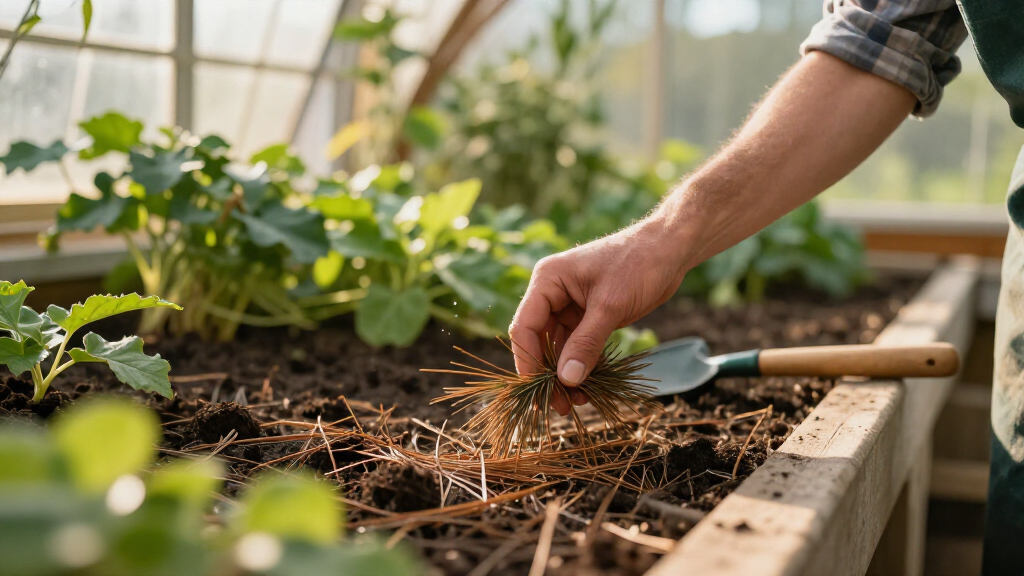
This clarification matters because many gardeners avoid using pine needles out of fear they will harm their soil, potentially missing out on a beneficial mulch. Pine needles are valued for their ability to suppress weeds, conserve moisture, and improve soil structure over time. Knowing that they do not pose a significant risk of acidifying soil excessively can encourage more sustainable and effective mulching practices. However, gardeners should still monitor soil pH if they use large quantities or have specific crop requirements sensitive to acidity.
As an affiliate, we earn on qualifying purchases.
Understanding the Myth: Pine Needles and Soil pH
The idea that pine needles dangerously acidify soil has persisted for years, partly because of their natural acidity and slow decomposition. Historically, some gardeners believed that using pine needles could lower soil pH enough to harm plants that prefer neutral or alkaline conditions. Recent online discussions and media coverage have amplified this concern, prompting experts to weigh in. While pine needles are indeed acidic, their decomposition process is slow, and their impact on soil pH is usually minimal unless used excessively or in already acidic soils.
Prior research indicates that pine needles decompose into organic matter that can slightly lower soil pH initially, but over time, the effect stabilizes. Soil type also influences how much acidity is retained; sandy soils tend to buffer acidity better than clay soils. The trend of increased interest seems driven by gardeners seeking natural mulching options and misinformation about their effects.
Remaining Questions About Pine Needles and Soil Health
While experts agree that pine needles do not typically cause dangerous soil acidity, the long-term effects in specific soil types or with large quantities remain less studied. It is also unclear how different pine species, decomposition rates, and local climate conditions influence soil pH changes over extended periods. Further research is needed to quantify these effects precisely, especially for gardeners with unique soil conditions or those using pine needles extensively.
Future Research and Practical Recommendations for Gardeners
Researchers plan to conduct more detailed studies on the long-term impact of pine needle mulching across various soil types. Meanwhile, gardening authorities recommend that gardeners test their soil pH regularly, especially if using large amounts of pine needles or growing plants sensitive to acidity. Gardeners are encouraged to use pine needles as part of a balanced mulching strategy, combining them with other organic materials and soil amendments to maintain healthy soil pH levels.
Key Questions
Can I use pine needles as mulch without worrying about soil acidity?
Yes, in most cases, using pine needles as mulch is safe when applied in moderation. Regular soil testing can help ensure pH levels remain suitable for your plants.
How much pine needle mulch is safe for my garden?
There is no strict limit, but applying a 2-3 inch layer and mixing it with other organic mulches is recommended. Avoid excessive use without soil testing.
Will pine needles harm plants that prefer alkaline soil?
Not necessarily. Proper testing and monitoring are advised. If your soil is already acidic, additional pine needles might lower the pH further, so adjustments may be needed.
How long does it take for pine needles to decompose?
Pine needles typically decompose over 1-3 years, depending on climate and soil conditions, gradually releasing nutrients and affecting soil chemistry.
Are all pine species equally acidic?
No, different pine species have varying acidity levels. However, most common pine needles tend to be similarly acidic, with minor differences.
Source: rss
Columbus Day / Indigenous Peoples' Day Picks
long weekend sales
As an affiliate, we earn on qualifying purchases.