TL;DR

Get garden gear delivered free with Prime
- Fast, free delivery on millions of items
- Prime Video, Amazon Music and more included
- Member-only deals all year
A Homes & Gardens report draws on advice from experienced dahlia growers to outline five storage risks: leaving on excess soil, storing tubers damp, using airtight containers, choosing unsuitable temperatures and neglecting them through winter. The growers’ recommendations are to remove large soil clumps, dry tubers thoroughly, pack them in breathable containers and check stored tubers periodically.
A Homes & Gardens report has outlined five common mistakes that can damage dahlia tubers while they are stored over winter, drawing on advice from experienced growers. The recommendations focus on removing excess soil, drying tubers, allowing airflow, choosing a suitable storage temperature and checking them during dormancy—steps that can help gardeners preserve plants for spring planting.
The guidance begins after tubers are lifted from the ground, typically after the first frosts in areas where dahlias cannot safely remain outdoors over winter. Growers advise removing large clods of soil, which can conceal damage or soft spots and may carry disease organisms. The report does not present washing every tuber completely clean as a universal requirement: one grower says a thin layer of soil may help keep tubers from drying out.
After cleaning, tubers need time to dry before they are packed away. Shelly Deaton, owner of EarthSpoke Farms, says damp tubers can create condensation in storage and encourage rot. The report recommends placing them in a cool, dry, well-ventilated location for at least 48 hours and up to a week. Tubers should feel dry and firm; soft ones can be removed to protect the rest of the collection.
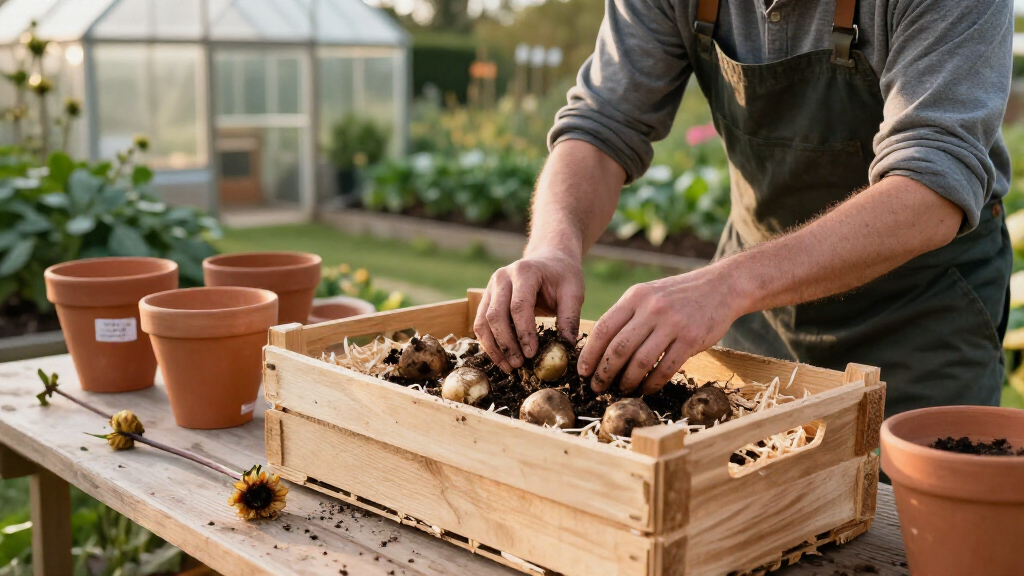
Growers also caution against sealed containers, which can trap humidity. Open crates or ventilated cardboard boxes provide airflow, while packing material can help moderate moisture. The sources mention vermiculite, dry wood shavings and coconut coir as options. For temperature, gardener Lindsey Chastain recommends a range of 40 to 50°F for most tubers. The report says excessive cold can freeze and damage tubers, while warmth can prompt premature sprouting.
Keeping Tubers Viable Until Spring
Stored dahlias are dormant, but they remain vulnerable to excess moisture, freezing and premature growth. Damage in storage can mean fewer viable plants to put back into the garden when spring arrives. A tuber that rots may also affect others packed alongside it, according to Chastain, making preparation and periodic checks relevant even for gardeners storing a modest number.
The practical value of the advice is that it addresses several points in the same process rather than recommending one product or a single method. Gardeners can adapt the packing material and storage location to what they have, while still following the shared principles: remove heavy soil, dry the tubers and avoid trapping moisture. The report does not guarantee more blooms; healthy overwintering is one part of growing dahlias successfully, and flowering also depends on later planting and care.
Popular right now

Shark HydroVac MessMaster Corded Wet/Dry Vacuum, Mop & Self-Clean (WD161)

Dyson Cyclone V10 Origin Cordless Vacuum

Breville Bambino Espresso Machine, Brushed Stainless Steel (BES450BSS)
As an affiliate, we earn on qualifying purchases.
From Autumn Lifting to Spring Planting
Dahlias are grown from tubers, which are lifted and stored in regions where winter frost threatens to damage them in the ground. The source report describes the process starting after the first frosts: gardeners cut down the stems and lift the tubers carefully, then prepare them for storage until conditions allow planting again.
Advice on how clean tubers should be is not identical among growers. Chastain recommends removing loose soil because it can hide problems or harbor disease. Deaton, who grows nearly 10,000 dahlia plants and more than 400 cultivars at EarthSpoke Farms, says a thin soil layer may protect tuber skins from drying. The report’s practical middle ground is to remove large clumps without assuming every tuber must be scrubbed or rinsed. Any tubers washed with water must dry fully before storage.
“If you have soil on your tubers before you store them, that can harbor disease organisms.”
— Lindsey Chastain, gardener and homesteader
Storage Conditions Vary by Garden
The supplied report does not establish one storage method that suits every cultivar, home or climate. Its temperature guidance is a range for most tubers, not a guarantee that every storage space will maintain suitable conditions. Deaton reports keeping her tubers at about 40–45°F and around 90% relative humidity, while other growers may use different materials and locations.
The report also does not quantify how much any one practice changes survival rates or flower production. Its recommendations come from grower experience, not a controlled comparison of storage methods. The article’s headline refers to returning with more blooms, but the material supports advice on reducing storage risks; it does not show that following the steps will increase bloom counts.
Check Tubers Through Winter
After packing the tubers, gardeners should keep them in a cool, dark place and check their condition periodically rather than treating storage as a set-and-forget task. If tubers become soft or show signs of rot, the report advises removing affected sections or tubers so problems do not spread through the collection. The supplied source does not specify a fixed inspection schedule.
In spring, stored tubers can be assessed before planting. Gardeners will need to follow local frost conditions and their usual planting practices; the source does not give a date for replanting or a region-specific calendar. The next practical milestone is the spring inspection, when growers can determine which tubers remain firm and suitable to plant.
Key Questions
How long should dahlia tubers dry before storage?
The report recommends drying them in a cool, dry, well-ventilated place for at least 48 hours and up to a week. They should feel dry and firm before packing.
Do dahlia tubers need to be washed completely clean?
Not necessarily. The report advises removing large clumps and loose soil, which can hide damage or carry disease. Some growers say a thin soil layer may help prevent drying. If you rinse tubers, dry them fully before storage.
What containers are suitable for storing dahlia tubers?
Growers recommend open crates or cardboard boxes with ventilation holes, rather than airtight containers that can trap moisture. Vermiculite, dry wood shavings and coconut coir are among the packing materials cited.
What temperature should dahlia tubers be stored at?
Chastain recommends 40 to 50°F for most tubers. The report says colder conditions can freeze and damage them, while warmer ones may prompt early sprouting.
Does proper storage guarantee more blooms next year?
No. The report provides advice intended to reduce storage damage, but it does not show that the steps guarantee more blooms or quantify their effect on flowering. Bloom production also depends on growing conditions and care after planting.
Source: homesandgardens.com