
TL;DR

Get garden gear delivered free with Prime
- Fast, free delivery on millions of items
- Prime Video, Amazon Music and more included
- Member-only deals all year
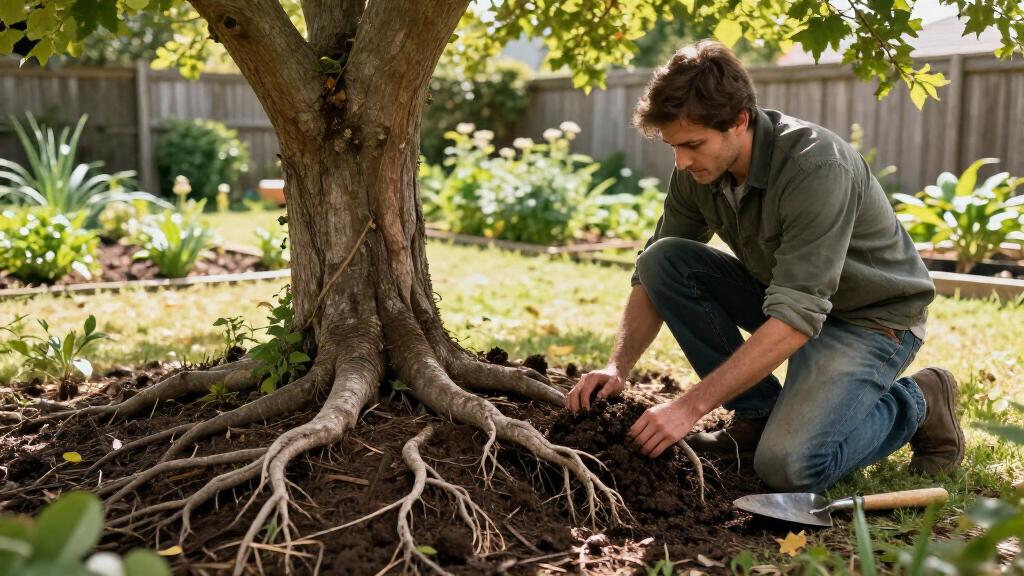
Exposed roots are common as trees mature and do not necessarily signal a problem. Arborists quoted by Country Living advise against cutting or repeatedly mowing over them; mulch or a shallow soil top-dressing can protect and disguise roots, while structural conflicts call for a certified arborist.
Exposed tree roots are common as large trees mature, and cutting them or covering them with a deep layer of soil can damage the tree, according to arborists and extension specialists cited in a Country Living report. Their advice is to protect roots with two to three inches of organic mulch or, in some cases, no more than two inches of suitable soil, and to get professional help if roots are lifting a sidewalk or causing another structural problem.
Surface roots can complicate mowing, create trip hazards and make a lawn look uneven. But their presence alone does not mean a tree is unhealthy. Barbara Fair, a certified arborist and North Carolina State University associate professor and extension specialist, told Country Living that roots grow where they can most easily reach oxygen, water and nutrients. The report says most tree roots grow no deeper than about three feet and typically spread outward from the trunk, often extending beyond the canopy’s drip line.
Arborists warn homeowners not to cut exposed roots or repeatedly run a mower over them. Mary Carol Sheffield, a certified arborist and University of Georgia extension agent, said root injury can affect a tree’s long-term health and leave it more open to disease and pests. The report also advises against expecting grass to thrive beneath a mature tree, where turf and tree roots compete for water and nutrients.
For a tidier appearance, the report recommends covering roots with two to three inches of organic mulch, such as wood chips or pine straw, extending toward the drip line. Keep the mulch several inches back from the trunk so the root flare—the junction between trunk and roots—remains visible. A light soil top-dressing is another option, but Fair advises using no more than two inches of sandy, loamy soil; more can suffocate roots. That approach may need to be repeated as roots continue growing.
Protecting Roots Without Harming Trees
How homeowners manage surface roots can affect the health and stability of a mature tree. Cutting roots may cause long-term decline, while deep soil cover can restrict the conditions roots need to survive. Repeated mower damage can also create wounds. Mulch offers a way to improve the appearance and protect roots without cutting them or burying them under a heavy layer.
There are practical limits to landscaping beneath a mature canopy. Fair told Country Living that grass—particularly warm-season turf such as Bermudagrass or zoysia—often struggles to compete with tree roots. Shade-tolerant groundcovers or perennials may be alternatives, but planting can itself injure roots if it requires digging large holes. The report suggests planting while a tree is young or choosing bare-root perennials that need smaller planting holes.
When roots are lifting pavement or creating a structural concern, the issue is no longer only cosmetic. Blake Watkins, a master arborist, said a certified arborist may be able to recommend a solution that does not compromise the tree’s health or stability. The report does not prescribe a single fix for every sidewalk or site; conditions differ from tree to tree.
Popular right now

Breville Bambino Espresso Machine, Brushed Stainless Steel (BES450BSS)

KitchenAid Artisan 5-Quart Tilt-Head Stand Mixer, Almond Cream

Roborock F25 Ultra Steam Wet Dry Vacuum Mop
As an affiliate, we earn on qualifying purchases.
Why Mature Roots Reach the Surface
Exposed roots often become apparent as a tree matures. The Country Living report says growing conditions can help explain why roots stay near the surface. Compacted soil, including compaction associated with construction, can make it harder for roots to grow deeper. Frequent, shallow lawn irrigation may also encourage roots to remain near the surface, Watkins told the publication.
Some tree species are also known for shallow roots. The report names redwoods, camphors, Southern magnolias, maples, sycamores, willows and some ash trees. Their surface roots do not automatically indicate a health problem. Watkins said root patterns may reflect the soil and growing site as much as the tree itself.
Watering during drought can help trees access moisture, but the article’s advice is not a substitute for site-specific care. Watkins recommended slow, extended watering rather than frequent shallow watering, and said irrigation systems can use bubbler-type emitters. The right schedule depends on local conditions and the tree; the supplied report does not set a universal watering plan.
“This affects the long-term health of the tree and could cause a decline.”
— Mary Carol Sheffield, certified arborist and University of Georgia extension agent
When Roots Need Individual Assessment
The report does not identify a single remedy suitable for every tree, lawn or sidewalk. Whether a root can be covered, whether planting is safe, and how to address a raised walkway depend on the tree’s condition and site. The supplied material gives no measurements or assessment of any specific tree, and it does not establish that exposed roots by themselves signal disease or instability.
It is also unclear how often a soil top-dressing would need to be renewed at a particular property; Fair says it is generally not a one-time fix because roots continue to grow. Homeowners facing root-related structural issues should seek an on-site assessment rather than cutting roots or relying on a general landscaping rule.
Steps for Homeowners to Take
For roots that are mainly a mowing or appearance concern, the report’s practical next step is to avoid damaging them and consider a two- to three-inch organic mulch layer, kept away from the trunk. Homeowners considering soil should limit the cover to two inches and use sandy, loamy material. Those who want plants beneath the tree should choose shade-tolerant options and avoid digging large holes through roots.
If roots are lifting a sidewalk or creating a safety or structural issue, contact a certified arborist for an assessment before taking action. The report does not announce a new rule or policy; it offers expert guidance for homeowners, and the appropriate response remains dependent on the individual tree and site.
Key Questions
Should I cut exposed tree roots?
No. Arborists cited by Country Living warn that cutting roots can affect a tree’s long-term health and may contribute to decline. Repeated mower damage should also be avoided.
Can I cover exposed roots with soil?
A light top-dressing may be used, but Fair advises adding no more than two inches of sandy, loamy soil. A deeper layer can suffocate roots, and the treatment may need to be repeated as roots grow.
What is a safer way to cover surface roots?
Use two to three inches of organic mulch, such as wood chips or pine straw, and keep it several inches away from the trunk so the root flare remains visible. The report advises against rocks as mulch.
Can grass grow well over tree roots?
It may struggle, particularly beneath mature trees. Tree roots and turf compete for water and nutrients, and the report says warm-season grasses such as Bermudagrass and zoysia may not grow as hoped in those conditions.
What if roots are lifting my sidewalk?
Consult a certified arborist before cutting roots or making changes. An arborist can assess the site and may suggest a solution that protects the tree’s health and stability.
Source: countryliving.com