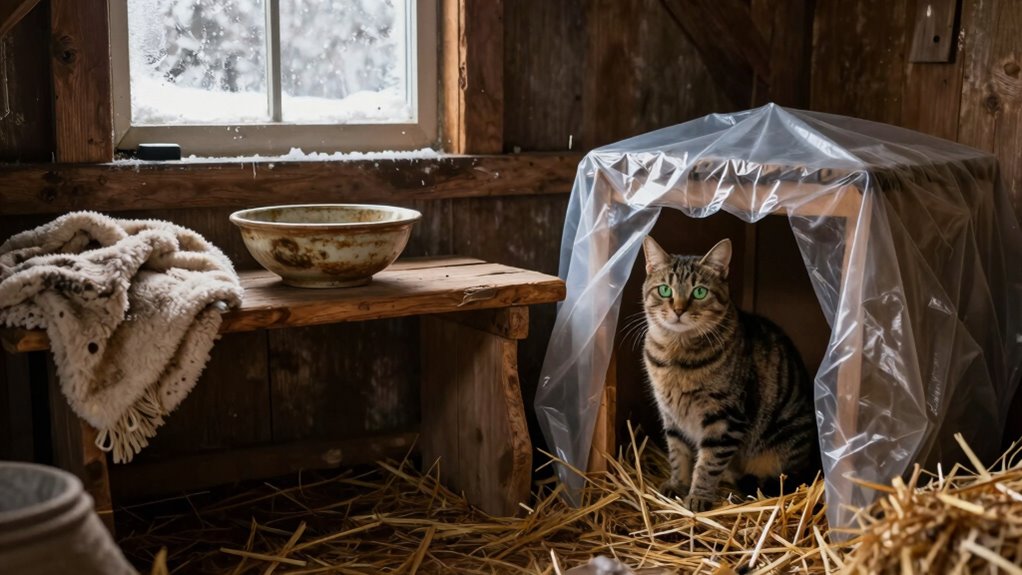

To fix your barn cat shelter for winter, guarantee it’s well insulated with straw, hay, or foam boards to trap heat and block drafts. Elevate it off the ground and seal all cracks around entryways to keep out cold air and moisture. Using a safe, automatic heat source like a heated pad can boost warmth during freezing nights. Maintaining dry bedding and regular repairs will keep your cats comfortable and safe all winter long—there’s more to improve your shelter’s warmth and safety.

Get garden gear delivered free with Prime
- Fast, free delivery on millions of items
- Prime Video, Amazon Music and more included
- Member-only deals all year
Key Takeaways
- Ensure the shelter is well-insulated with materials like straw or foam boards to retain heat and block drafts.
- Elevate the shelter off the ground to prevent cold air and moisture from seeping in.
- Seal all gaps and cracks around entryways to keep wind and moisture out.
- Use safe, outdoor-rated heating solutions like heated pads or lamps during extreme cold.
- Regularly inspect and maintain the shelter for leaks, dampness, and insulation integrity.
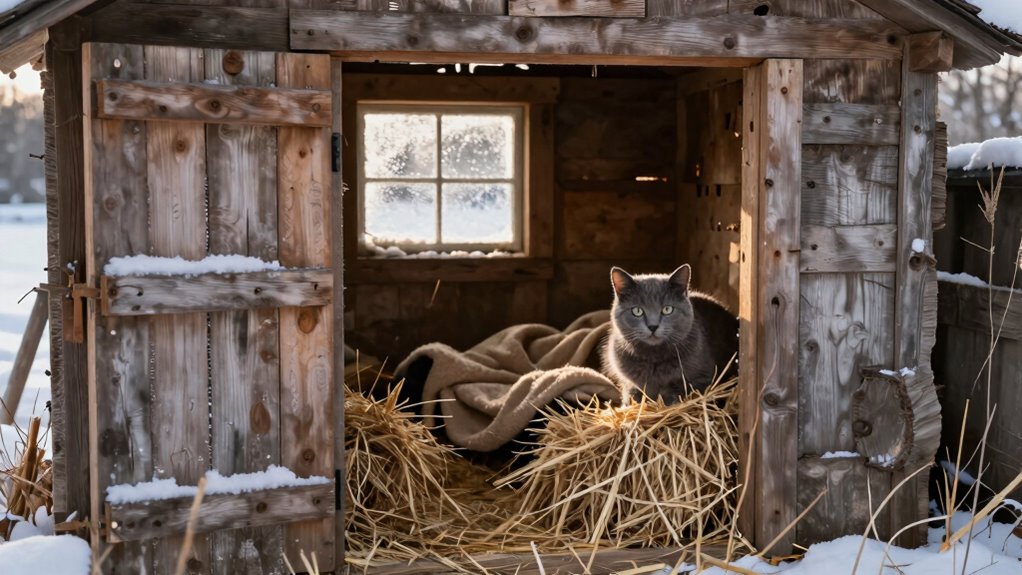
Are your barn cats struggling to stay warm during the winter months? If so, your current shelter might not be doing enough to protect them from the cold. Many barn owners overlook the importance of proper indoor heating and shelter insulation, which are crucial for keeping outdoor cats safe and comfortable during harsh weather. Without adequate warmth, cats can become vulnerable to hypothermia and frostbite, especially when temperatures plummet. It’s time to assess and improve your shelter to ensure your cats stay cozy and healthy all winter long.
Ensure your barn cats stay warm and safe this winter with proper shelter insulation and indoor heating.
Start by evaluating your shelter’s insulation. If the structure is flimsy, with thin walls or gaps that let in drafts, you’re losing precious heat and exposing your cats to cold air. Adding insulation to the walls, roof, and doorways can make a huge difference. Materials like straw, hay, or foam boards are effective for trapping heat and blocking drafts. Make sure the shelter is elevated off the ground to prevent cold from seeping in from below. Seal any gaps or cracks around the entryway to keep out wind and moisture, which can drastically reduce the temperature inside. Additionally, ensuring your shelter is moisture-resistant can help prevent dampness that accelerates heat loss and makes conditions unsafe for your cats.
In addition to shelter insulation, consider implementing some form of indoor heating. Portable heat lamps or heated pads designed specifically for outdoor animals work well, but you should always use them carefully. Keep the heat source off the ground and away from water to prevent electrical hazards. Make sure your heating devices are safe and have automatic shut-off features in case they overheat. Remember, the goal is to provide warmth without creating a fire risk or making the shelter uncomfortably hot. When used correctly, indoor heating can significantly improve a cat’s ability to stay warm during the coldest nights.
You also want to make sure your shelter is dry and draft-free, as moisture can make cold temperatures even more dangerous. Regularly check for leaks or damp spots, and replace or repair insulation as needed. A well-insulated, heated shelter not only keeps your cats warm but also encourages them to stay close, reducing their stress and risk of exposure. Keep bedding clean and dry, and consider adding extra layers of straw or hay to create a cozy nest.
As an affiliate, we earn on qualifying purchases.
Frequently Asked Questions
How Do I Introduce a New Shelter to My Barn Cats?
Coincidentally, introducing a new shelter to your barn cats is easier when you focus on outdoor safety and shelter placement. Start by placing the new shelter near their current hangout, so it feels familiar. Slowly let the cats explore it at their own pace, maybe with some treats inside. Keep the area quiet and safe, and make sure the shelter is weatherproof. Patience helps your cats feel secure and accept the new space.
Can I Use Recycled Materials for the Shelter?
Yes, you can use recycled materials for your barn cat shelter. Recycling materials like old pallets, plastic containers, or straw bales not only helps the environment but also creates a cozy, insulated space. Just guarantee the shelter’s durability by choosing sturdy items that won’t easily break or rot. Properly seal and insulate the shelter to keep your cats warm and dry during winter, making recycled materials a practical, eco-friendly choice.
What Temperature Is Safe for Barn Cats Overnight?
You need to keep barn cats safe overnight when temperatures drop below freezing, ideally above 32°F. If it gets colder, consider indoor alternatives or improve shelter placement—place it in a sheltered, windproof spot away from drafts and moisture. Make certain your shelter is insulated and dry, providing warmth and comfort. Monitoring temperatures and adjusting the shelter accordingly helps prevent hypothermia, keeping your barn cats warm, safe, and comfortable all winter long.
How Often Should I Check on the Winter Shelter?
You should check on the winter shelter at least once a day to guarantee proper shelter maintenance and cat comfort. During colder months, more frequent checks are helpful, especially after storms or heavy snowfall. Look for signs of drafts, moisture, or damage that could compromise warmth. Regular inspections help you address issues promptly, keeping your barn cats safe and comfortable throughout the winter.
Are There Any Signs My Cats Dislike the Shelter?
If your cats dislike the indoor shelter, you’ll notice signs like avoiding the entry, hiding nearby, or vocalizing more than usual. They might also refuse to settle inside or appear stressed. To improve cat comfort, make sure the shelter is warm, quiet, and cozy with soft bedding. Observe their behavior regularly, and if they seem uneasy, tweak the environment—adding blankets or adjusting the location—to make it more inviting and comfortable.
Conclusion
Now that you know the common pitfalls, your barn cat’s winter shelter can be a fortress of warmth instead of a chilly trap. Think of it as giving your feline friend a cozy castle to weather the storm. With just a few simple fixes, you transform a flimsy shelter into a sanctuary that keeps them safe and snug through the coldest nights. Your effort guarantees your barn cat won’t just survive the winter— they’ll thrive in it.
Fall yard work Picks
leaf blowers
As an affiliate, we earn on qualifying purchases.