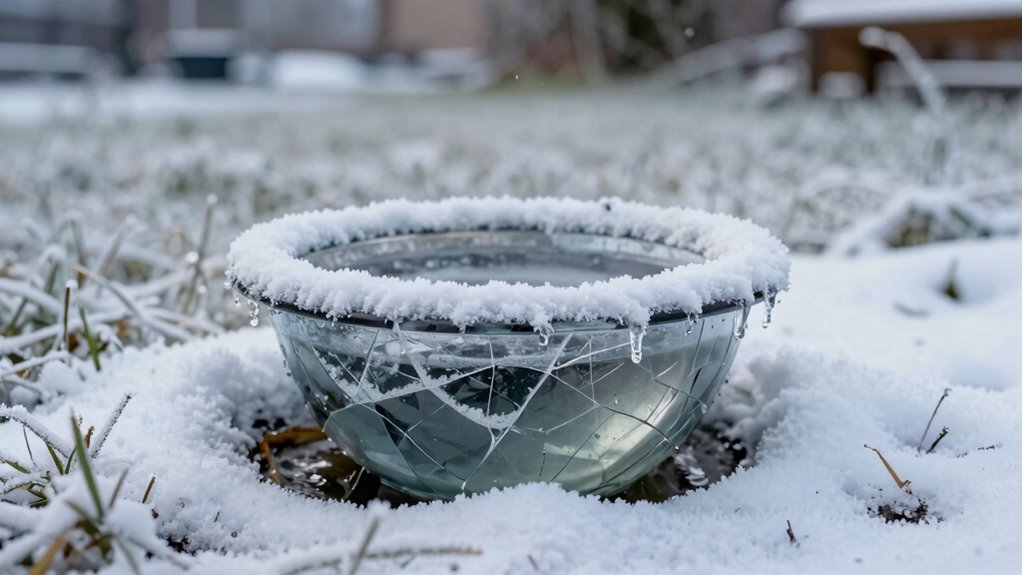

Leaving water bowls outside in winter can hide serious risks, like ice blocking access to hydration and increasing the chances of animals becoming dehydrated or stranded. Cold temperatures also cause water to freeze and thaw, which can introduce bacteria and pollutants, harming wildlife and pets. Plus, runoff from salted or chemically treated roads can contaminate the water further. If you want to protect animals and prevent environmental damage, it’s important to understand these hidden dangers and how to avoid them.

Get garden gear delivered free with Prime
- Fast, free delivery on millions of items
- Prime Video, Amazon Music and more included
- Member-only deals all year
Key Takeaways
- Water in bowls can freeze quickly, blocking animals from hydration during emergencies.
- Frozen water may trap animals, risking dehydration and potential injury.
- Melting ice can introduce bacteria, pollutants, and toxins harmful to wildlife and pets.
- Contaminated water sources attract pests and insects, increasing disease risks.
- Poor water management during winter elevates health hazards for animals and the environment.
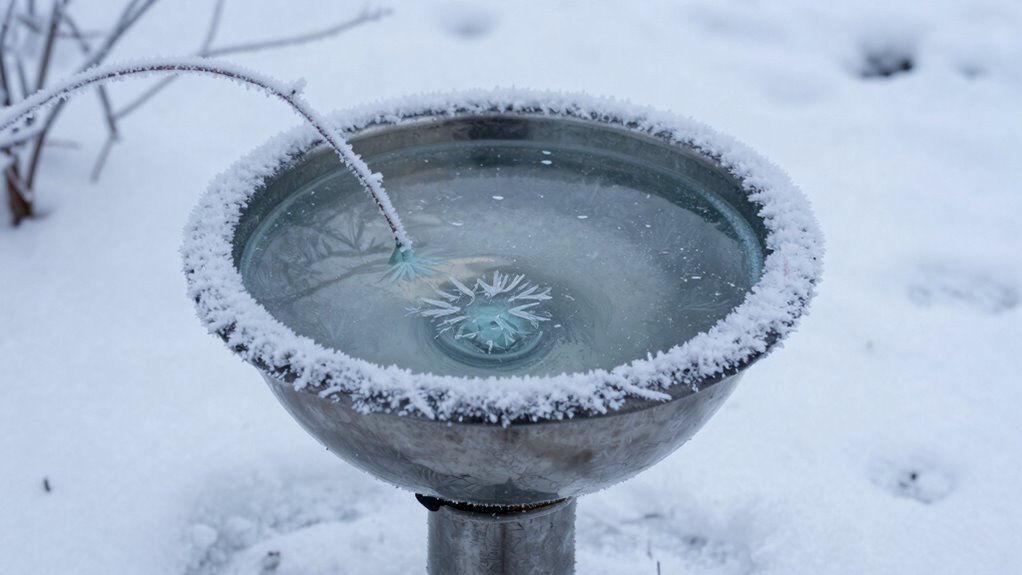
During winter emergencies, it might seem harmless to leave water bowls outside for your pets or wildlife, but doing so can hide serious risks. One of the biggest dangers is ice formation. As temperatures drop, water in the bowls quickly turns to ice, making it inaccessible for animals that need hydration. If animals can’t find open water, they risk dehydration, which can be especially dangerous during cold weather when their bodies are already working hard to stay warm. Additionally, the ice can be unexpectedly thick, preventing animals from breaking through easily, and they may become stranded or unable to hydrate properly.
Another hidden risk is water contamination. When water sits outside in cold temperatures, it’s exposed to dirt, bacteria, and other pollutants that can contaminate it over time. Even if the water looks clean when you fill the bowl, freezing and thawing cycles can introduce impurities or cause bacteria to grow. When the ice melts, animals that drink from the bowl could ingest harmful microorganisms or pollutants, putting their health at risk. Additionally, if the water isn’t changed regularly, it can become a breeding ground for bacteria, which thrive in stagnant, contaminated water. This creates a cycle where animals might unknowingly consume water that could cause illness or infection.
Leaving water bowls outside also invites the possibility of chemical contamination. If nearby roads are salted or chemicals are used to melt ice, runoff can seep into outdoor water sources, making the water unsafe for animals. Over time, these substances can leach into the water, exposing animals to toxins that could affect their organs or overall health. Furthermore, dirty or contaminated water may attract pests or insects, which can carry diseases that spread to nearby wildlife or your pets. It’s important to be aware that water contamination can also occur due to environmental factors, emphasizing the need for regular water maintenance and monitoring. Regularly checking and replacing outdoor water sources can reduce the risk of bacterial growth and ensure animals have access to safe hydration during winter months. The presence of pollutants in outdoor water sources can also have long-term effects on local ecosystems and wildlife populations. Properly managing outdoor water sources and being aware of environmental contamination risks can help protect your animals and local wildlife during winter months. Additionally, understanding the impact of pollutants on wildlife health underscores the importance of responsible water management in outdoor environments.
outdoor heated water bowls for pets
As an affiliate, we earn on qualifying purchases.
As an affiliate, we earn on qualifying purchases.
Frequently Asked Questions
Can Outdoor Water Bowls Attract Unwanted Wildlife During Winter?
Yes, outdoor water bowls can attract unwanted wildlife during winter, posing risks to your safety and local animals. Wildlife attraction increases as animals seek water sources in freezing temperatures. To guarantee winter safety, consider removing water bowls when not in use or using heated, animal-proof options. This helps prevent unwanted visits, keeps animals safe, and reduces potential hazards for you and your property during harsh weather.
How Often Should Water Bowls Be Checked for Freezing?
You should check your water bowls at least twice daily during winter to prevent freezing. Keep an eye on the water temperature, ensuring it stays above freezing. Using bowl insulation can help maintain water warmth longer, reducing the need for frequent checks. If you notice ice forming, refresh the water and adjust insulation or consider a heated water bowl to keep your pets’ water accessible and safe.
Are There Safer Alternatives to Water Bowls Outside in Winter?
You should consider safer alternatives like providing indoor hydration or using portable water bottles instead of outdoor water bowls in winter. Indoor hydration keeps your pets’ water unfrozen and accessible, while portable bottles are easy to refill and transport. Both options eliminate the risk of freezing, spills, and contamination, ensuring your pets stay hydrated comfortably and safely during winter. Prioritize these alternatives to protect your pets from cold-related dangers.
What Signs Indicate a Water Bowl Has Caused a Safety Hazard?
If your water bowl causes a safety hazard, you’ll notice water contamination, such as mold or foul smells, which can harm pets. Also, look out for ice buildup or a slippery surface around the bowl, creating slip hazards. These signs indicate the water may be unsafe or that icy patches increase accident risks. Regularly inspecting and cleaning your water source helps prevent these hazards and keeps your pets safe.
Can Leaving Water Outside Impact Local Water Sources?
Leaving water outside can impact local water sources by increasing the risk of water contamination, especially if animals or debris introduce bacteria or pollutants. Wildlife intrusion into water bowls can lead to contamination, which may spill over into nearby streams or groundwater. This not only harms ecosystems but also poses health risks to humans. Always monitor outdoor water sources and prevent animals from contaminating them to protect local water quality.
Conclusion
Leaving water bowls outside in winter is like opening a door to hidden ice traps—you might not see the dangers lurking beneath the surface. The freezing temperatures can turn a simple water source into a frozen hazard, risking your pets’ safety. Stay vigilant and keep their water indoors or in a protected spot. Think of it as armor for your furry friends—shielding them from the silent, icy dangers that winter can bring.
Halloween Picks
halloween
As an affiliate, we earn on qualifying purchases.