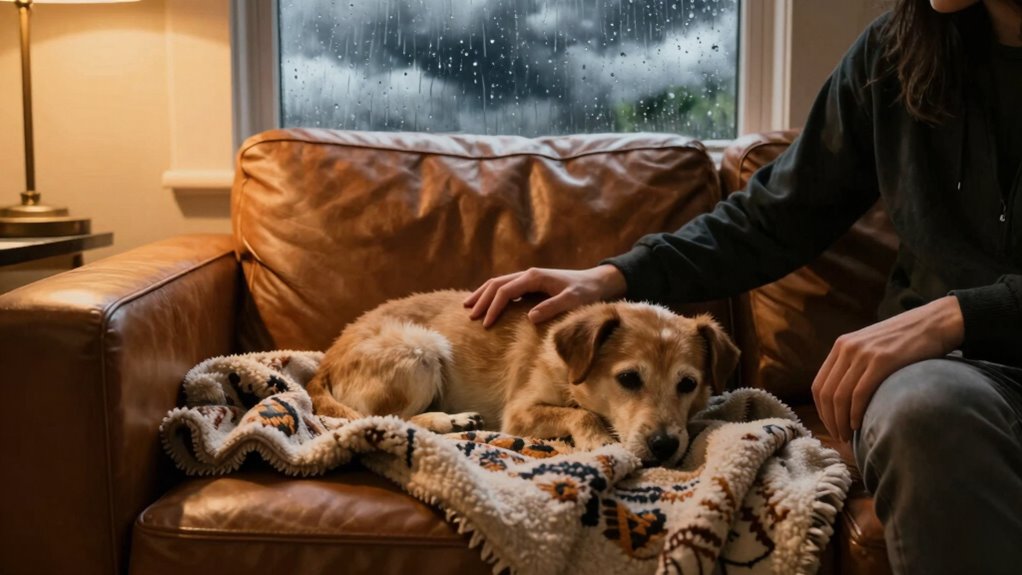

To help your pet calm down during storms, create a cozy, safe space with familiar blankets, calming sounds, and dim lighting. Use gentle massages and distraction toys to keep them occupied, and establish a consistent routine before storms hit. Applying calming wraps or diffusers can also ease anxiety. If your pet’s fears are severe, consult a vet for additional strategies. Keep these tips in mind, and you’ll discover effective ways to soothe your pet when thunderstorms strike.
Key Takeaways
- Create a designated, cozy storm refuge with familiar items to promote a sense of safety during anxiety episodes.
- Use calming sounds, such as gentle music or pheromone diffusers, to help soothe your pet and drown out storm noise.
- Apply anxiety wraps or Thundershirts early, ensuring a snug but comfortable fit before storm triggers escalate.
- Maintain a consistent routine with regular feeding, walks, and calming activities to reduce overall stress and build confidence.
- Incorporate gentle massage and distraction techniques, like treats or toys, to redirect focus and promote relaxation during storms.
Why Pets Fear Storms and How to Recognize Their Signs
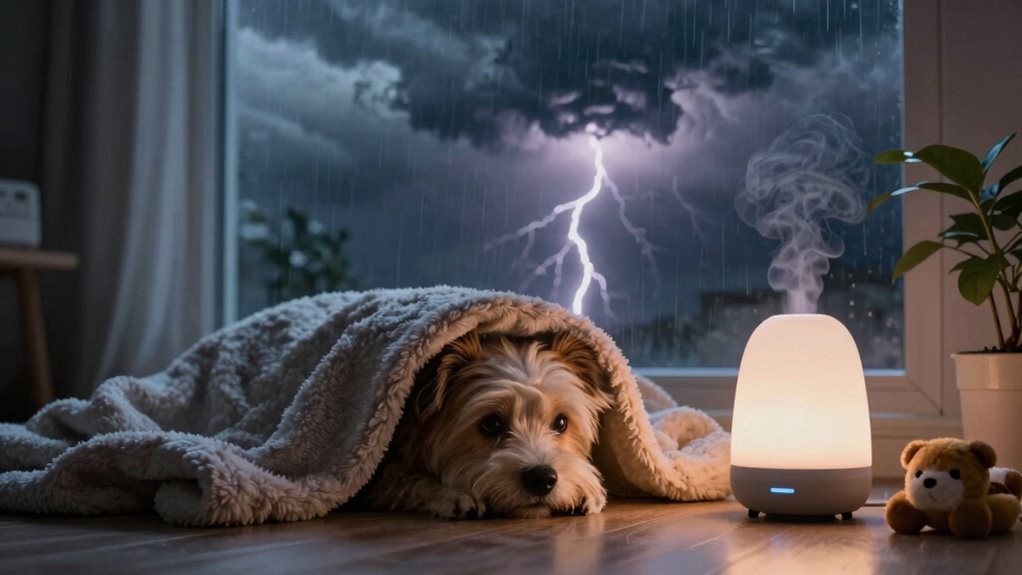
Pets often fear storms because they can sense changes in the environment before humans do, such as drops in barometric pressure and static electricity. Their animal senses are highly tuned, allowing them to detect subtle shifts in thunderstorm patterns long before the storm arrives. You might notice your pet becoming restless, clingy, or anxious as they pick up on distant rumbling or flickering static. These warning signs are your pet’s way of reacting to the early cues of an approaching storm. Because animals have more sensitive hearing and smell, they often perceive the storm’s onset earlier than you might expect. Recognizing these signs helps you understand why your pet reacts so strongly and can guide you to prepare accordingly.
Set Up a Safe, Cozy Space for Storms
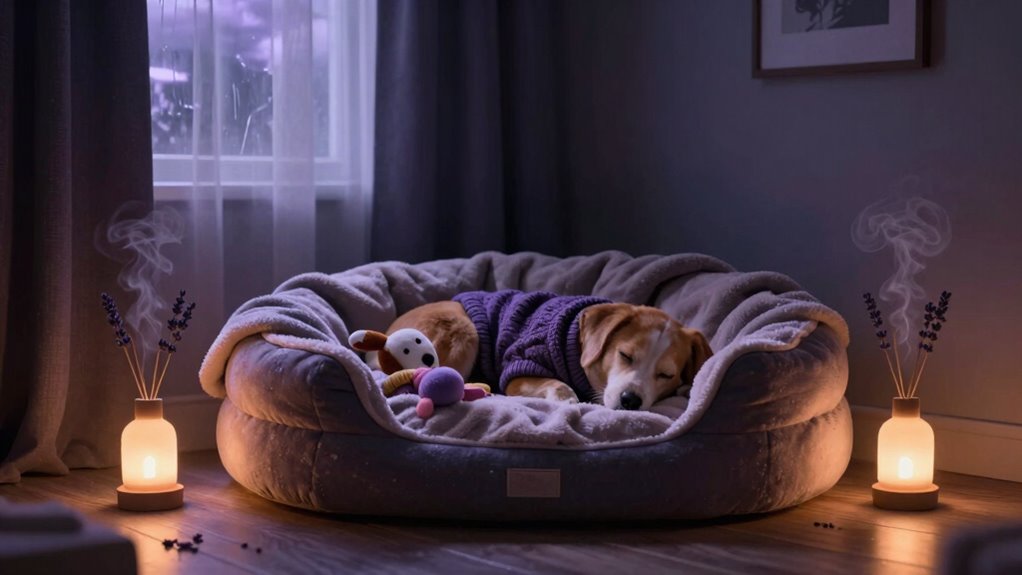
Create a quiet, dark space where your pet can feel secure during storms. Use soft bedding materials and include familiar comfort items to help them relax. This cozy spot can make a big difference in easing their anxiety. Incorporating calming techniques like gentle music or pheromone diffusers can further soothe your pet during stressful weather. Ensuring your pet’s safe environment is crucial for their comfort and peace of mind during storms. Additionally, having a designated storm refuge can provide consistent reassurance and reduce their stress levels. Establishing a consistent routine around storm times can also help your pet feel more secure and protected.
Choose Quiet, Dark Area
During storms, providing a quiet, dark area can help soothe your pet’s anxiety. This space reduces noise sensitivity and minimizes fear triggers that can escalate their distress. To create an effective safe zone, consider these tips:
- Choose a small, enclosed area like a closet or under a table to limit external sounds.
- Use heavy curtains or blankets to block out flashing lights and thunder.
- Keep the space away from windows to avoid sudden noise and light disruptions.
- Add familiar, comforting objects to make the space inviting and secure.
Use Soft Bedding Materials
Using soft bedding materials can make your pet’s safe space more inviting and comforting during storms. Soft bedding and calming fabrics help create a cozy environment that eases anxiety. Choose plush blankets or cushioned beds that provide a sense of security and warmth. These gentle textures can help your pet feel protected and relaxed amid loud noises and flashing lights. Incorporating safety measures such as secure enclosures and proper ventilation can further reduce stress during storms. Additionally, selecting bedding with appropriate materials can improve comfort and promote relaxation during stressful events. Ensuring that the bedding materials are hypoallergenic and breathable can also support your pet’s overall well-being and reduce irritation. Using certified eco-friendly bedding options can further contribute to a sustainable environment for your pet’s comfort.
Add Familiar Comfort Items
Adding familiar comfort items to your pet’s safe space can substantially ease storm anxiety. These emotional support objects offer reassurance and help your pet feel secure. To create an effective calming environment, include items like:
- A favorite blanket or towel with familiar scents
- A soft, cozy bed or nest
- A cherished toy or stuffed animal
- An item with your scent, such as an unwashed shirt
These familiar comfort items serve as emotional anchors, reducing stress during storms. Incorporating natural materials that blend seamlessly with your backyard landscape can enhance your pet’s connection to their environment. Using natural, calming textures can further promote relaxation. Choosing items made from soothing fabrics can also contribute to a more calming experience. Additionally, selecting items with calming properties can help reinforce a sense of safety. By giving your pet a dedicated space filled with known smells and textures, you help them feel protected and less overwhelmed. It’s also helpful to include calming visual elements, such as soothing colors or patterns, in their designated area. Incorporate these objects into their storm-safe zone to foster calmness and provide ongoing comfort when anxiety strikes.
How Calming Sounds and Music Can Help Your Pet
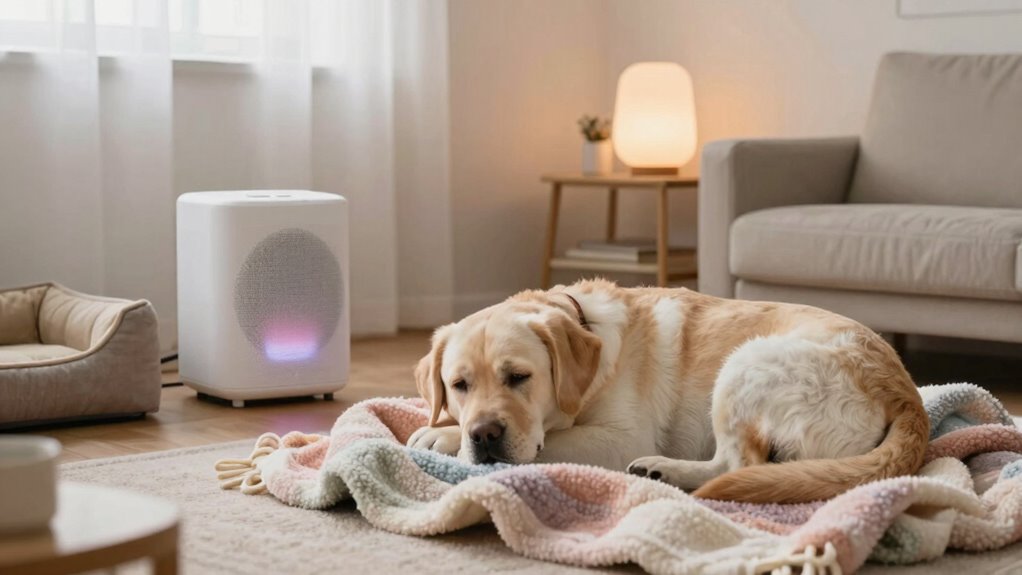
Calming sounds and gentle music can be powerful tools to soothe your pet during storms. These calming sounds create a safe, relaxing environment that helps drown out loud thunder and crashing rain. Music therapy specifically targets anxiety by reducing stress hormones and promoting a sense of calm. Soft, slow melodies or white noise can help your pet feel more secure and less overwhelmed. You can play calming sounds in the background, adjusting volume to guarantee it’s soothing rather than startling. Consistent use of calming sounds during storms can condition your pet to associate the music with safety, helping them remain calmer over time. Incorporating calming sounds into your storm routine provides a simple, effective way to ease your pet’s anxiety naturally. Proper home‑care techniques like creating a cozy hiding spot can further enhance your pet’s sense of security during stressful events. Additionally, using vintage audio equipment to play these calming sounds can add a nostalgic touch that enhances the comfort and familiarity your pet needs. Being mindful of environmental considerations helps ensure that your pet’s stress relief methods are also eco-friendly and sustainable. For example, selecting eco-friendly sound devices minimizes environmental impact while providing consistent comfort. Incorporating consistent routines can further reinforce feelings of safety and predictability during unpredictable storms.
Gentle Massage Techniques to Soothe Storm Anxiety
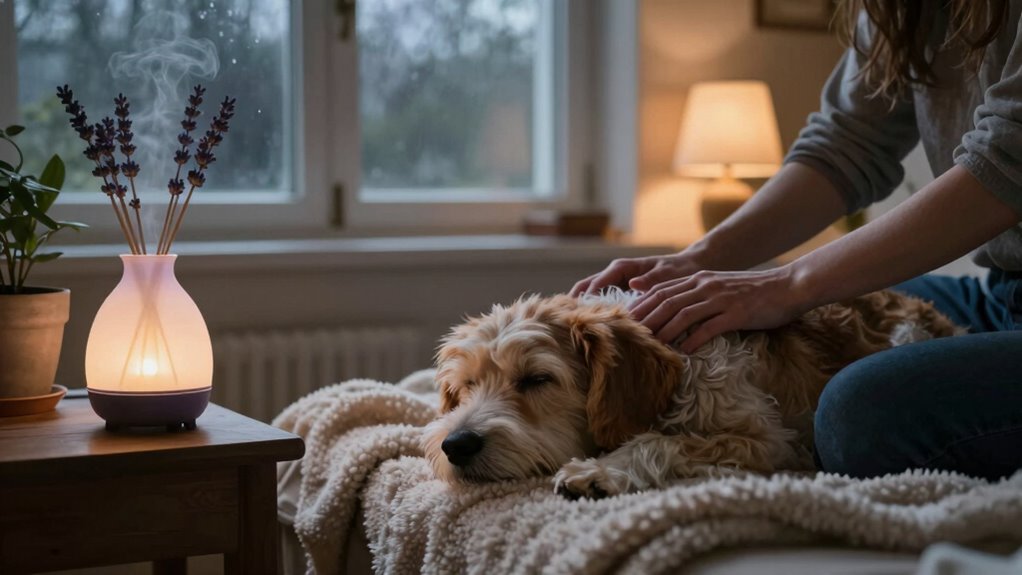
You can help soothe your pet’s storm anxiety with gentle massage techniques that focus on specific areas like the shoulders or behind the ears. Use soft, calming strokes to create a sense of safety and relaxation in a quiet, calm environment. By combining gentle touch with a serene setting, you’ll help ease your pet’s stress during storms. Incorporating relaxation techniques such as slow, deliberate movements can further enhance your pet’s comfort and confidence. Understanding how touch influences stress responses can also guide you in applying these techniques more effectively. Additionally, applying calming pressure in targeted areas can promote deeper relaxation and reduce anxiety levels. Being aware of sound and sensory factors can help you create an optimal environment that supports your pet’s peace of mind. Recognizing the benefits of gentle massage can motivate you to incorporate these calming practices regularly.
Gentle Touch Techniques
Gentle massage techniques can be highly effective in soothing pets during storm anxiety by promoting relaxation and reducing stress. Using a calming massage with a gentle touch helps your pet feel safe and secure. To maximize the calming effect, consider these tips:
- Start with slow, gentle strokes along the pet’s back to build trust.
- Use soft, circular motions on areas like the shoulders and neck.
- Maintain steady pressure to avoid startling your pet.
- Observe their reactions, adjusting pressure and speed as needed.
Focused Pet Areas
Focusing your massage on specific pet areas can enhance its calming effect during storms. By targeting your pet’s focused area, you help create a calm pet and reduce anxiety. For example, gently massaging behind the ears, along the shoulders, or at the base of the tail can promote relaxation. These areas are rich in nerve endings and can quickly help your pet feel more secure. Use slow, gentle strokes and pay attention to your pet’s responses. Consistently focusing on these zones during storms can condition your pet to associate touch with calmness. Remember, a calm pet is more likely to weather the storm with less fear. Keep your movements soothing and purposeful, and your pet will begin to associate focused massage with comfort and safety.
Calm Environment Setup
Creating a calm environment is essential for soothing your pet during storms, and gentle massage techniques play a key role in this process. These pet calming techniques help reduce noise sensitivity and promote relaxation. To set up an effective calm environment:
- Use soft, dim lighting to create a cozy space.
- Play calming background sounds or white noise to mask storm noise.
- Provide a comfortable, secure area where your pet feels safe.
- Incorporate gentle massages focusing on the neck, shoulders, and back to help ease tension.
These steps help lower anxiety levels and make your pet feel more secure amid loud storm noises. Combining a calm environment with gentle massage techniques can considerably improve your pet’s storm experience.
Easy Distraction Strategies to Keep Your Pet Calm
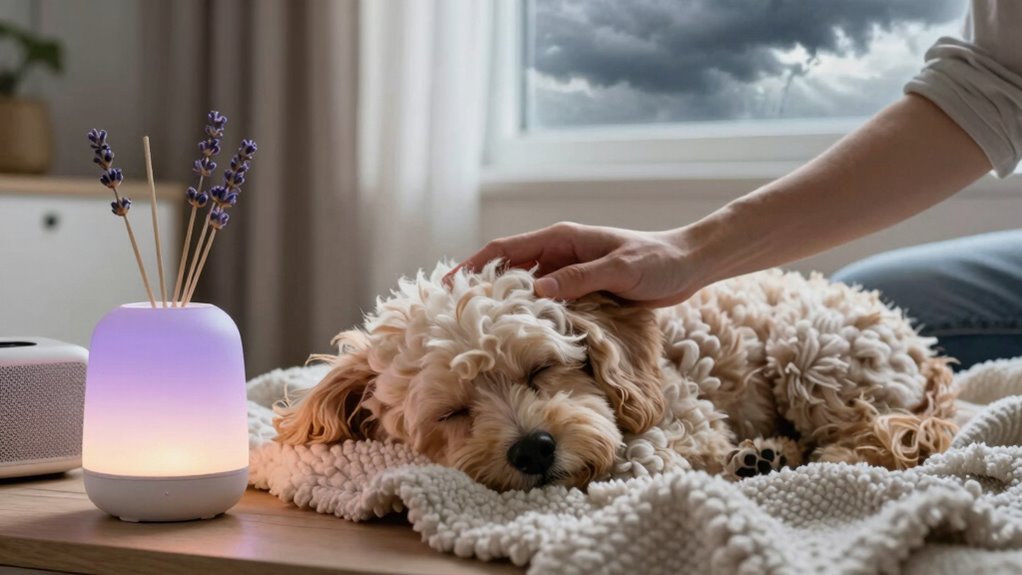
When thunderstorms roll in, distracting your pet with simple activities can help keep them calm. Offering calming treats can redirect their focus and provide comfort during loud storms. These treats not only soothe but also create a positive association with stormy sounds. Additionally, distraction toys are excellent tools to keep your pet engaged and prevent anxiety from taking over. Puzzle toys or chew toys can occupy their mind and reduce stress. Keep a few of these within easy reach, so you can quickly introduce them when the weather turns stormy. The goal is to shift their attention away from the noise and fear, helping them feel more secure. Consistent use of calming treats and distraction toys can make storm days less stressful for both of you.
Should You Use Anxiety Wraps or Thundershirts? How and When

To get the most benefit from anxiety wraps or Thundershirts, you need to apply them correctly and at the right times. Consider your pet’s specific triggers, like weather changes or loud noises, and choose the proper fit to guarantee comfort. Proper application techniques and timing can make a real difference in calming your pet during storms.
Proper Application Techniques
Choosing the right application technique for anxiety wraps or Thundershirts can make a significant difference in calming your pet during storms. Proper application guarantees comfort and effectiveness. Keep these technique tips in mind:
- Measure carefully to ensure a snug but comfortable fit—avoid tightness that restricts movement or breathing.
- Wrap the garment smoothly, avoiding wrinkles or bunching that could cause discomfort.
- Secure fasteners firmly but gently, so the shirt stays in place without pinching.
- Observe your pet for signs of stress or discomfort during application, adjusting as needed.
Timing and Weather Triggers
Applying an anxiety wrap or Thundershirt at the right time can greatly improve its calming effects. Monitoring weather patterns and storm forecasting helps you anticipate when your pet might become anxious. Start applying the wrap early, ideally before thunder or lightning begins. Keep an eye on weather updates so you can time it perfectly, giving your pet a sense of security before triggers escalate. Waiting too long often reduces effectiveness, as pets may already be overwhelmed. Consistency is key—using the wrap proactively during known storm periods can help your pet associate it with comfort. Remember, weather triggers vary; some pets react to specific cues like darkening skies or wind. Being attentive to these signals allows you to implement the calming routine more effectively.
Choosing the Right Fit
When deciding between anxiety wraps and Thundershirts, it’s important to contemplate your pet’s size, coat type, and specific needs. Both can aid in behavior modification and pet training by providing calming pressure, but they aren’t one-size-fits-all solutions. Consider these factors:
- Size and Fit – Ensure the garment fits snugly without restricting movement.
- Coat Type – Thick or long coats may require different materials or adjustments.
- Sensitivity – Some pets respond better to gentle pressure than others.
- Usage Timing – Use the garment during storms or training sessions for maximum effectiveness.
Choosing the right fit enhances your pet’s comfort and results, making these tools more effective for calming storm anxiety and supporting behavior modification efforts.
Establishing a Routine to Reduce Storm Stress
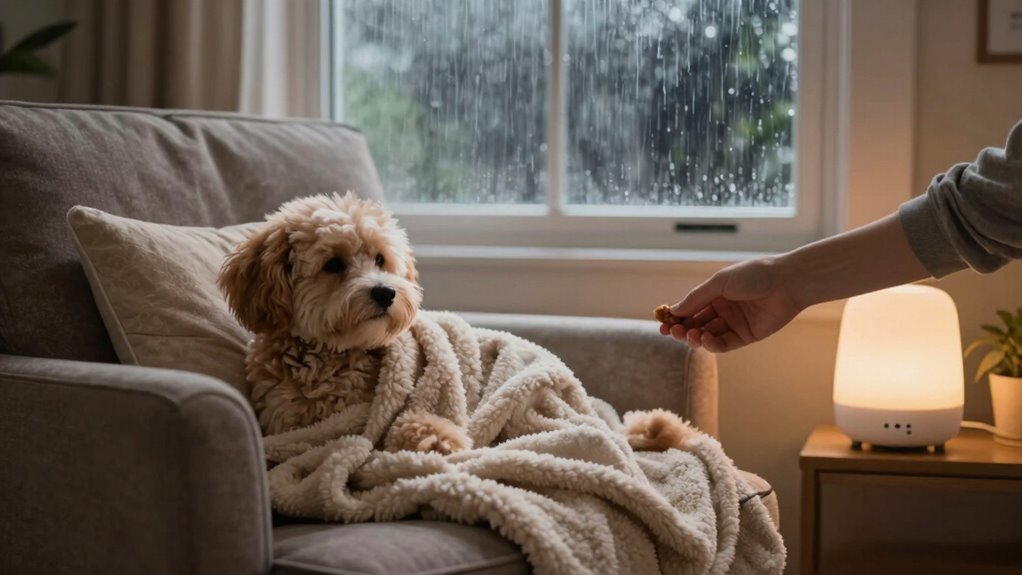
Establishing a consistent daily routine can substantially help your pet feel more secure during storms. When you stick to regular feeding, walking, and playtimes, your pet gains a sense of predictability that eases anxiety. Incorporate calming techniques into your routine, such as gentle petting or soft talking, to reinforce feelings of safety. Routine consistency reduces uncertainty, making your pet less prone to panic when thunderstorms roll in. Keep activities calm and predictable, avoiding sudden changes that could heighten stress. By maintaining this structure, you help your pet associate certain times and behaviors with security, not fear. Over time, this routine becomes a reassuring anchor, making storm-related anxiety easier to manage and reducing the overall stress your pet experiences during weather disturbances.
Natural Remedies and Supplements for Storm Anxiety
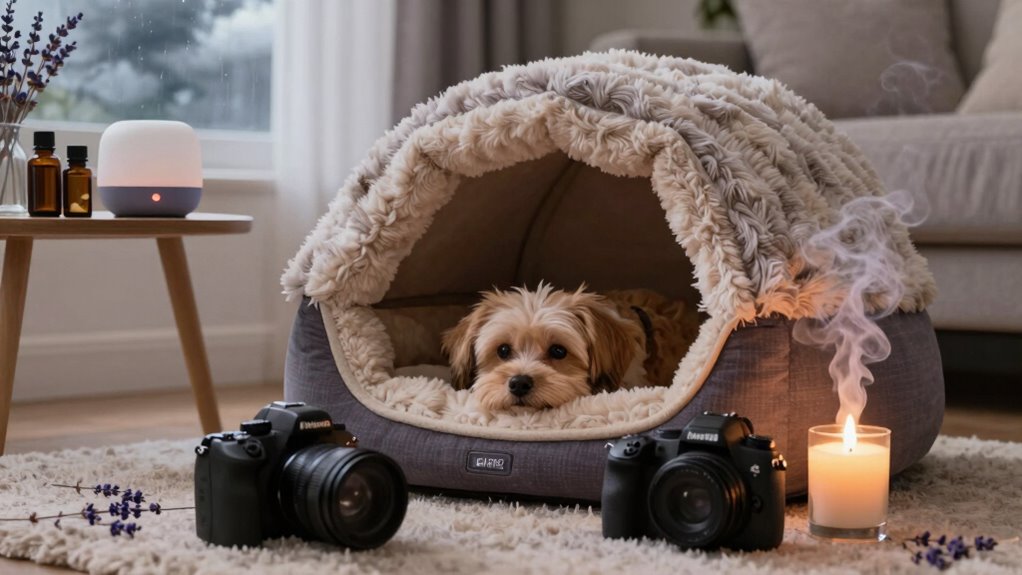
Natural remedies and supplements can offer gentle support to help your pet cope with storm anxiety. Herbal supplements like chamomile, valerian root, or lavender can promote relaxation. Aromatherapy diffusers, infused with calming essential oils such as lavender or frankincense, create a soothing environment. To maximize their benefits, consider these tips:
- Use herbal supplements as directed to avoid overdosage.
- Diffuse calming scents in your pet’s space before the storm begins.
- Combine aromatherapy with a comfortable, quiet hiding spot.
- Monitor your pet’s reaction and adjust the routine accordingly.
These natural options can complement your calming routine, reducing stress without the use of medications. Always consult your veterinarian before introducing new supplements or therapies.
When to Seek Professional Help for Severe Storm Fear
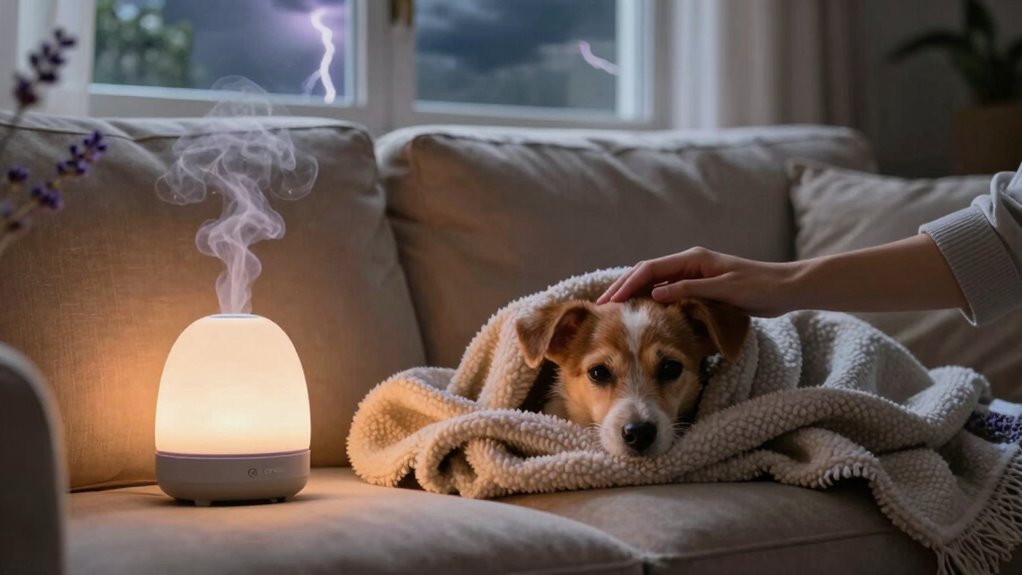
Severe storm fear in pets signals that you should seek professional help promptly. If your pet’s anxiety is extreme—such as excessive trembling, hiding for hours, destructive behavior, or attempts to escape—you need expert guidance. A veterinary consultation can determine if underlying health issues contribute to their fear or if medication might help. Additionally, professional pet training techniques can address severe storm phobia through behavior modification. Don’t wait until the fear worsens or causes harm; early intervention is key. Professionals can develop a tailored plan combining training, environmental management, and possibly medication to help your pet cope better. Remember, seeking help isn’t a sign of failure—it’s a responsible step toward easing your pet’s distress and ensuring their safety.
Preparing Your Pet for Future Storms: Long-Term Comfort Tips
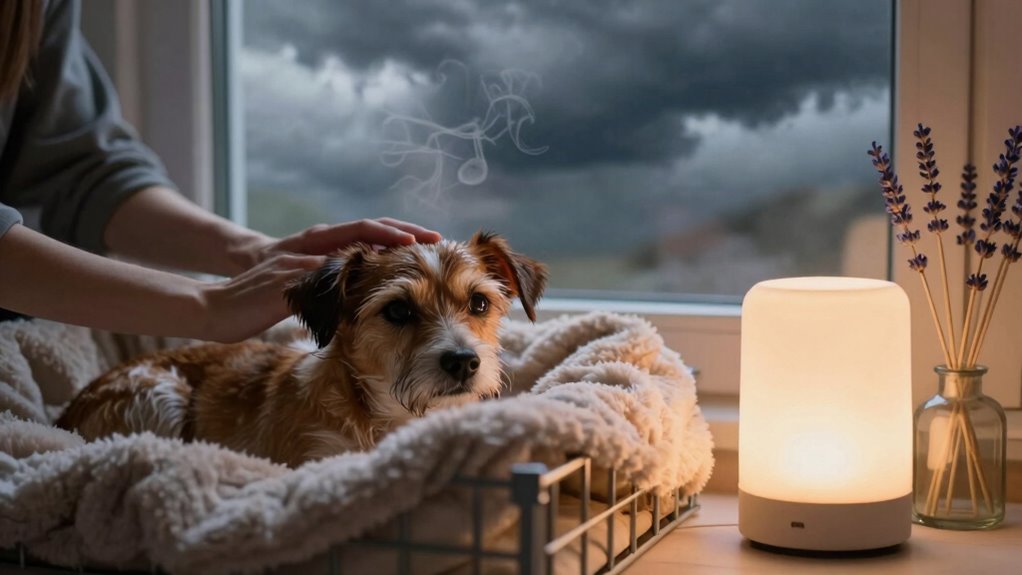
To help your pet stay calmer during future storms, you can implement long-term comfort strategies that build their resilience and reduce anxiety over time. Consistent stress management techniques and positive associations are key. Consider these steps:
- Gradually expose your pet to storm sounds at a low volume, increasing intensity slowly.
- Create a safe, cozy space where they can retreat during storms, reinforcing feelings of security.
- Use calming aids like pheromone diffusers or calming music regularly.
- Maintain a predictable routine to reduce overall stress and foster pet resilience.
Frequently Asked Questions
How Can I Tell if My Pet’s Storm Fear Is Severe?
You can tell if your pet’s storm fear is severe by observing their noise sensitivity and behavioral changes. If they panic, hide for long periods, or exhibit destructive behaviors during storms, their anxiety severity is high. Watch for physical signs like trembling or excessive drooling. If these signs persist or worsen, it indicates a more serious issue, and you should consider consulting your veterinarian for tailored support and possible treatment options.
Are There Specific Breeds More Prone to Storm Anxiety?
Certain breeds are more prone to storm anxiety due to breed predispositions and genetic factors. You might notice smaller or more sensitive breeds, like Chihuahuas, Dachshunds, or Terriers, tend to be more affected. These breeds often inherit heightened anxiety traits, making them more reactive during storms. Understanding your pet’s breed background can help you prepare and implement calming strategies tailored to their specific needs.
Can Diet Changes Help Reduce My Pet’s Storm Fears?
While diet changes won’t eliminate storm fears completely, they can help soothe your pet. Incorporate diet modifications like calming nutritional supplements and nutrient-rich foods to promote relaxation. These adjustments support your pet’s nervous system and reduce anxiety symptoms during storms. Remember, consistent feeding routines and quality ingredients make a difference, providing a calming foundation that complements other calming strategies for storm-related fears.
What Signs Indicate My Pet Needs Professional Behavioral Help?
You should seek professional behavioral help if your pet shows persistent signs like excessive hiding, trembling, or destructive behavior during storms. A behavioral assessment can identify underlying anxiety triggers and determine if your pet needs specialized intervention. If these signs last beyond typical storm reactions or worsen over time, it’s a clear indication that expert guidance can help manage their storm anxiety more effectively, ensuring your pet feels safe and secure.
How Long Does It Typically Take to See Improvement With Calming Routines?
You’ll usually notice progress within a few weeks of maintaining routine consistency, but it varies per pet. The key is to track your pet’s responses regularly, so you can see gradual improvements. Stay patient and consistent, as calming routines build a sense of security over time. With dedication, your pet should become more relaxed during storms, and you’ll see positive changes in their behavior as you monitor their progress.
Conclusion
By creating a comforting haven and using gentle techniques, you become your pet’s anchor amid stormy seas. With patience and consistency, you can turn thunderous nights into calm, peaceful waves. Remember, you’re their lighthouse—guiding them safely through the storm and back to serenity. Together, you’ll transform fear into trust, proving that even the fiercest storms can’t drown out the soothing power of your love.